

You may suppose brand choice doesn’t matter provided you’re just after raw specs, but it still shapes long-term performance, support, and upgrades. You’ll find options from business-focused Lenovo and Dell to creative-ready Apple and ASUS, each balancing reliability, connectivity, and GPU choices differently. Should you want a setup that fits a specific workflow—gaming, content creation, or enterprise—you’ll want to compare how these brands stack up.
| Lenovo IdeaCentre Business Tower Desktop (Intel Ultra 5) |

| Small Business Workhorse | Processor: Intel Core Ultra 5 225 (10-core, up to 4.9 GHz) | Memory (RAM): 16 GB DDR5 | Primary Storage: 512 GB PCIe 4.0 NVMe SSD | VIEW LATEST PRICE | Read Our Analysis |
| HP Desktop Tower PC i5-13500 32GB 1TB SSD |
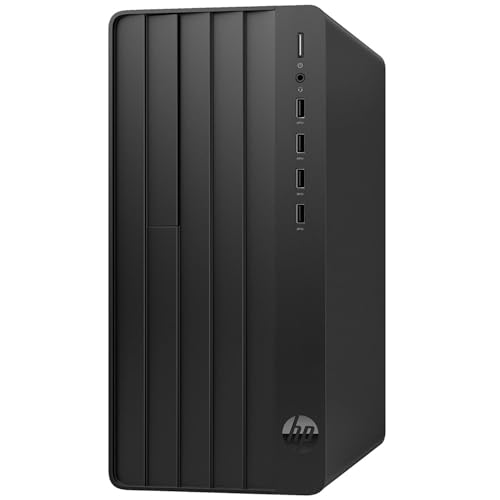
| Multitasker Value | Processor: Intel Core i5-13500 (14 cores, up to 4.8 GHz) | Memory (RAM): 32 GB DDR4 | Primary Storage: 1 TB PCIe SSD | VIEW LATEST PRICE | Read Our Analysis |
| Dell OptiPlex 7040 Desktop i7-6700 32GB 512GB |

| Refurbished Reliable | Processor: Intel Core i7-6700 (4 cores/8 threads, up to 4.0 GHz) | Memory (RAM): 32 GB DDR4 | Primary Storage: 512 GB M.2 NVMe SSD | VIEW LATEST PRICE | Read Our Analysis |
| HP OmniDesk M03 AI Desktop – Core Ultra 7 32GB |
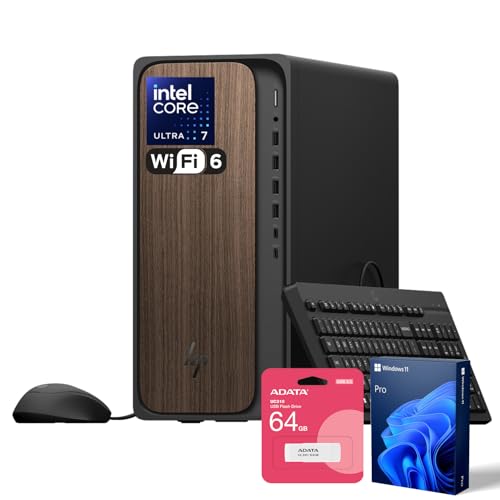
| AI Powerhouse | Processor: Intel Core Ultra 7 265 (20 cores, up to 5.3 GHz) | Memory (RAM): 32 GB DDR5 | Primary Storage: 1 TB PCIe M.2 SSD | VIEW LATEST PRICE | Read Our Analysis |
| Dell Optiplex 3060 Desktop i5-8500 32GB 1TB SSD |

| Enterprise Refurb Pick | Processor: Intel Core i5-8500 (base 3.2 GHz) | Memory (RAM): 32 GB DDR4 | Primary Storage: 1 TB SSD | VIEW LATEST PRICE | Read Our Analysis |
| Apple MacBook Air 15″ (M4 16GB 256GB) – Midnight |

| Ultra-Portable Power | Processor: Apple M4 chip (Apple Silicon) | Memory (RAM): 16 GB (unified memory) | Primary Storage: 256 GB SSD | VIEW LATEST PRICE | Read Our Analysis |
More Details on Our Top Picks
Lenovo IdeaCentre Business Tower Desktop (Intel Ultra 5)
Should you’re equipping a small business or classroom that needs reliable multitasking and fast boot times, the Lenovo IdeaCentre Business Tower with the Intel Core Ultra 5 delivers—its 10‑core (6P + 4E) CPU, 16 GB DDR5, and PCIe 4.0 NVMe SSD give you the responsive performance and storage mix for office apps, video meetings, and everyday content creation. You’ll get Turbo up to 4.9 GHz and 20 MB cache for smooth multitasking, plus a 512 GB NVMe and 500 GB HDD for quick access and file capacity. Wi‑Fi 6E, Bluetooth 5.2, Gigabit Ethernet, and flexible I/O ease deployment in teams.
- Processor:Intel Core Ultra 5 225 (10-core, up to 4.9 GHz)
- Memory (RAM):16 GB DDR5
- Primary Storage:512 GB PCIe 4.0 NVMe SSD
- Operating System:Windows 11 Pro
- Wireless Connectivity:Wi‑Fi 6E (2×2) + Bluetooth 5.2
- Video/Display Outputs:HDMI 2.1 + VGA (plus support for external monitors)
- Additional Feature:Front USB‑C port
- Additional Feature:Additional 500 GB HDD
- Additional Feature:Windows 11 Pro
HP Desktop Tower PC i5-13500 32GB 1TB SSD
Provided that you need a dependable workhorse for multitasking and light content creation, the HP Desktop Tower with an Intel Core i5-13500 and 32 GB of RAM delivers the performance and memory headroom to keep dozens of browser tabs, virtual machines, and office apps responsive. Its 14-core, 20-thread CPU and 24 MB cache balance single-threaded bursts (up to 4.8 GHz) and background efficiency. A 1 TB PCIe SSD supplies fast storage; Intel UHD Graphics 770 handles basic media. You get Wi‑Fi 6, Bluetooth 5.3, ample USB, HDMI and VGA ports, wired keyboard and mouse, and Windows 11 Home preinstalled for business or home use.
- Processor:Intel Core i5-13500 (14 cores, up to 4.8 GHz)
- Memory (RAM):32 GB DDR4
- Primary Storage:1 TB PCIe SSD
- Operating System:Windows 11 Home (64-bit)
- Wireless Connectivity:Wi‑Fi 6 (Realtek RTL8852BE 2×2) + Bluetooth 5.3
- Video/Display Outputs:HDMI + VGA (integrated Intel UHD Graphics 770)
- Additional Feature:Includes keyboard and mouse
- Additional Feature:USB‑A 5 Gbps front ports
- Additional Feature:Intel UHD Graphics 770
Dell OptiPlex 7040 Desktop i7-6700 32GB 512GB
Should you need a reliable office workhorse that won’t break the bank, the Dell OptiPlex 7040 with an i7-6700, 32 GB RAM, and a 512 GB NVMe SSD delivers solid multithreaded performance and fast storage for productivity tasks. You’ll get a renewed Microsoft Authorized Refurbisher unit with Windows 11 Pro preloaded, TPM 1.2 onboard (note: TPM 2.0 is recommended for full Windows 11 security features), and plenty of ports: two DisplayPort 1.2, one HDMI 1.4, six USB‑A 3.0 and four USB‑A 2.0. Built‑in Intel 7260 provides 802.11ac Wi‑Fi and Bluetooth, and refurbishment reduces e‑waste.
- Processor:Intel Core i7-6700 (4 cores/8 threads, up to 4.0 GHz)
- Memory (RAM):32 GB DDR4
- Primary Storage:512 GB M.2 NVMe SSD
- Operating System:Windows 11 Pro (refurbished)
- Wireless Connectivity:Wi‑Fi 5 (Intel 7260 802.11ac) + Bluetooth (integrated)
- Video/Display Outputs:2 × DisplayPort 1.2 + HDMI 1.4
- Additional Feature:Renewed / refurbished
- Additional Feature:Dual DisplayPort outputs
- Additional Feature:TPM 1.2 security
HP OmniDesk M03 AI Desktop – Core Ultra 7 32GB
In case you need a business-ready desktop that blends AI-enhanced productivity with strong multitasking, the HP OmniDesk M03 with an Intel Core Ultra 7 and 32 GB DDR5 is a solid pick—its 20-core Ultra 7 and 1 TB PCIe M.2 SSD deliver responsive performance for heavy office workloads, while Windows 11 Pro’s Copilot and AI tools streamline professional workflows. You’ll get integrated Intel graphics, Wi‑Fi 6, Bluetooth, and a broad port array including USB-C front access and HDMI/DisplayPort rear outputs. The bundle adds wired keyboard, mouse, and a 64 GB A-DATA flash drive; upgraded RAM/SSD carry a one-year PCOnline US warranty.
- Processor:Intel Core Ultra 7 265 (20 cores, up to 5.3 GHz)
- Memory (RAM):32 GB DDR5
- Primary Storage:1 TB PCIe M.2 SSD
- Operating System:Windows 11 Pro (with AI features)
- Wireless Connectivity:Wi‑Fi 6 + Bluetooth
- Video/Display Outputs:DisplayPort + HDMI (integrated GPU)
- Additional Feature:Bundled 64 GB USB
- Additional Feature:1-year RAM/SSD warranty
- Additional Feature:Windows 11 AI integration
Dell Optiplex 3060 Desktop i5-8500 32GB 1TB SSD
Should you need a reliable, business-ready desktop that’s been refreshed for modern workloads, the Dell Optiplex 3060 with an i5-8500, 32 GB RAM and 1 TB SSD delivers responsive performance and secure manageability for professionals and small teams. You’ll get a solid Intel i5-8500 CPU (base 3.2 GHz), Windows 11 Pro, and renewed condition backed through a Microsoft Authorized Refurbisher with quality guarantee and free tech support. The 32 GB DDR4 and 1 TB SSD handle multitasking and fast storage. Built-in Wi‑Fi (adapter) and Bluetooth aid connectivity, while the RGB side panel adds customizable lighting and visual flair.
- Processor:Intel Core i5-8500 (base 3.2 GHz)
- Memory (RAM):32 GB DDR4
- Primary Storage:1 TB SSD
- Operating System:Windows 11 Professional (refurbished)
- Wireless Connectivity:Built-in Wi‑Fi (via adapter) + Bluetooth
- Video/Display Outputs:(Typical OptiPlex outputs; includes external display support) — listed ports imply standard display outputs
- Additional Feature:RGB side panel lighting
- Additional Feature:Microsoft Authorized Refurbisher
- Additional Feature:Free tech support
Apple MacBook Air 15″ (M4 16GB 256GB) – Midnight
Should you need a lightweight, long‑lasting laptop that still handles creative work and casual gaming, the MacBook Air 15″ (M4, 16GB, 256GB) — Midnight fits the bill with its powerful M4 chip and up to 18 hours of battery life. You’ll enjoy fluid multitasking, faster video edits, and smoother graphics while Apple Intelligence helps with writing and task automation without exposing your data. The 15.3-inch Liquid Retina screen delivers sharp text and rich color, while a 12MP Center Stage camera, three mics, and six speakers amplify calls. You get Thunderbolt 4, MagSafe, Wi‑Fi 6E, and tight iPhone integration.
- Processor:Apple M4 chip (Apple Silicon)
- Memory (RAM):16 GB (unified memory)
- Primary Storage:256 GB SSD
- Operating System:macOS (Apple M4)
- Wireless Connectivity:Wi‑Fi 6E + Bluetooth 5.3
- Video/Display Outputs:Supports up to two external displays via Thunderbolt 4 (plus internal Liquid Retina display)
- Additional Feature:15.3″ Liquid Retina
- Additional Feature:MagSafe charging port
- Additional Feature:Spatial Audio speakers
Factors to Consider When Choosing Desktop Computer Brands
When choosing a desktop brand, consider about the performance you need and the typical workloads you’ll run. Check processor cores, clock speeds, and how much memory and storage the system supports, plus whether the graphics and display meet your tasks. Also confirm the connectivity options and ports match your peripherals and future upgrades.
Performance And Workload
Match a desktop’s CPU, memory, storage, and GPU to the tasks you actually do: more cores, threads, and higher turbo clocks benefit heavy multitasking and content-creation, while everyday office work runs fine on fewer cores with moderate clocks. Choose DDR5 16–32 GB in case you handle large datasets or dozens of tabs; 8 GB DDR4 can bottleneck productivity. Prefer PCIe NVMe SSDs (PCIe 3.0/4.0) for OS, apps, and active projects, and add HDDs or secondary SSDs for archives and media. Decide between integrated and discrete graphics: integrated suits office, streaming, and light editing, whereas discrete GPUs speed 3D rendering, video encode, and ML tasks. Finally, check cooling and sustained-boost behavior—better thermal headroom keeps clocks higher during long renders or simulations.
Processor And Cores
Pick a processor that fits the work you do: prioritize more high‑performance (P) cores and higher single‑core turbo clocks for gaming and single‑threaded apps, add efficiency (E) cores to keep background tasks responsive, and look at core/thread counts, cache size, IPC, TDP, and platform support to guarantee the CPU can sustain boost clocks and fully use features like PCIe lanes, memory speeds, and SMT. You should match core/thread counts to workloads—6–10 cores for mainstream use, 16+ for heavy rendering or virtualization. Favor CPUs with larger caches and higher IPC for latency‑sensitive tasks. Check TDP and cooling needs because high‑core chips require stronger coolers and power delivery. Finally verify socket, chipset, and feature support so the motherboard can expose PCIe lanes, SMT, and full platform capabilities.
Memory And Storage
After you settle on a CPU and platform, balance its muscle with the right memory and storage so your system actually performs. Choose RAM type and capacity to match workloads: DDR5 unless you want higher bandwidth, DDR4 for value. For general use 8–32 GB suffices; pick 32+ GB for heavy multitasking or content creation. Favor higher MHz and dual/quad‑channel layouts to enhance bandwidth and responsiveness, especially with integrated graphics. Make a PCIe NVMe SSD your primary drive for far faster boot, app load, and transfers versus SATA SSDs or HDDs. Use a fast NVMe (256–1,000+ GB) for OS/apps and larger HDDs or secondary SSDs for bulk media and backups. Verify upgradeability: spare DIMM slots, M.2/SATA connectors, and max supported capacities.
Graphics And Display Needs
At the point you’re choosing a desktop brand, consider about whether the system needs only integrated graphics for everyday tasks or a discrete GPU for gaming, 3D work, or GPU-accelerated apps—discrete cards offer far more shader cores, VRAM, and dedicated performance. Match GPU memory to your workload: 4–6 GB for 1080p and general creative tasks, 8–12 GB for 1440p and higher-res textures, and 16+ GB for 4K editing or large 3D scenes. Check display outputs and supported standards (HDMI, DisplayPort, USB‑C with Alt Mode; HDMI 2.1, DP 1.4) to meet your monitor’s resolution and refresh rate. Prioritize panel type and color accuracy—IPS or mini‑LED with wide sRGB/Adobe RGB coverage and factory calibration—if color-critical work matters. Factor multi‑monitor support and simultaneous high‑res/high‑refresh capability.
Connectivity And Ports
Beyond graphics and display choices, you’ll want to check a desktop’s connectivity and ports to make sure it fits how you work and expand. Prioritize the types and counts you use daily: USB‑C (10 Gbps or Thunderbolt) for fast drives and displays, multiple USB‑A 3.2 ports for keyboards and mice, plus at least one HDMI or DisplayPort for an external monitor. Confirm video outputs support your preferred resolution and refresh rate for 4K or multi‑monitor setups. Check modern wireless standards (Wi‑Fi 6/6E, Bluetooth 5.x) for low latency and better multi‑device performance. Verify physical port placement, audio jacks, and SD card readers match your workflow. Also make certain internal connectivity—M.2 PCIe, SATA, spare USB headers—so you can add drives or front‑panel ports later.
Upgrade And Expansion
Because you’ll likely keep a desktop for several years, pick a design that makes future upgrades simple and cost‑effective. Check the motherboard form factor and PCIe slot count and generation so you can add GPUs, NVMe cards or other expansion cards without bottlenecks. Verify RAM slot count and supported speeds/capacity (DDR4 vs DDR5, max 64GB/128GB) to plan straightforward memory upgrades. Confirm M.2 NVMe sockets, SATA ports and drive bays so you can add high‑speed SSDs or larger HDDs without swapping existing storage. Evaluate the power supply’s wattage, connector types (8‑pin/6‑pin GPU, SATA power) and whether it’s a standard ATX unit to support future components. Favor cases with tool‑less bays, removable panels and good cable management for easier, faster installs.
Warranty And Support
Should you plan to keep a desktop for years, check warranty length, what it actually covers, and how you’ll get repairs—on‑site, carry‑in, or mail‑in—so you won’t be surprised by downtime or costs. You should compare one‑year and multi‑year warranties against how long you expect to use the machine. Verify response times (next‑business‑day vs. multi‑week) and which components and damage types are covered—parts, labor, accidental damage, or only manufacturing defects—and take into account exclusions and maintenance conditions. Confirm included technical support channels (phone, chat, email), hours of availability, and whether firmware, driver, and software updates are provided during warranty. Finally, weigh optional extended plans for priority service or accidental protection and compare their price to likely repair costs.
