

Like finding a reliable compass in a fog, you’ll want a desktop that points you true without costing a fortune. You’ll compare small-form Dells, renewed powerhouses, a practical Lenovo, and an all-in-one that packs modern connectivity. I’ll show which specs matter most and which systems punch above their price, so you can pick a machine that stays useful longer—keep going to see the best low‑price options for 2026.
| Dell OptiPlex 3060 Desktop i5-8500 16GB 500GB SSD |

| Reliable Performer | Processor: Intel Core i5-8500 (6-core, 3.2 GHz base) | RAM: 16 GB DDR4 | Primary Storage: 500 GB SSD | VIEW LATEST PRICE | Read Our Analysis |
| Dell Optiplex 3050 SFF Desktop PC i5 16GB |

| Compact Workhorse | Processor: Intel Core i5-6500 (quad-core, up to 3.6 GHz) | RAM: 16 GB DDR4 | Primary Storage: 256 GB SSD | VIEW LATEST PRICE | Read Our Analysis |
| Lenovo ThinkCentre M710 SFF Desktop PC (Renewed) |
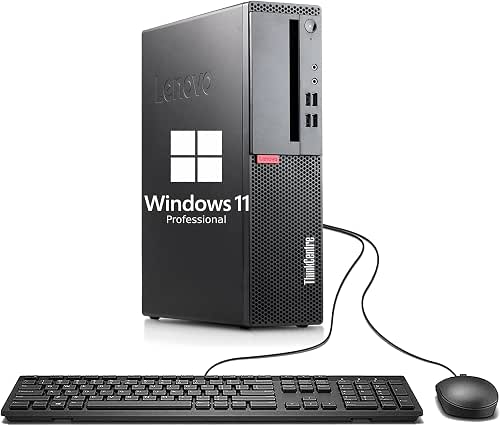
| Affordable Office Starter | Processor: Intel Core i3-6100 (dual-core, 3.7 GHz) | RAM: 8 GB (likely DDR4) | Primary Storage: 256 GB SSD | VIEW LATEST PRICE | Read Our Analysis |
| HP 2026 22″ All-in-One PC 13th Gen Intel | Space-Saving All‑in‑One | Processor: Intel N100 (13th Gen, 4 cores, up to 3.4 GHz) | RAM: 16 GB DDR5 | Primary Storage: 128 GB UFS (internal) + 500 GB external HDD included | VIEW LATEST PRICE | Read Our Analysis | |
| Dell Optiplex 3060 Desktop i5-8500 32GB 1TB SSD |

| Power Upgrade | Processor: Intel Core i5-8500 (6-core, 3.2 GHz base) | RAM: 32 GB DDR4 | Primary Storage: 1 TB SSD | VIEW LATEST PRICE | Read Our Analysis |
| Dell OptiPlex 7040 Desktop i7-6700 32GB 512GB (Renewed) |

| Professional Powerhouse | Processor: Intel Core i7-6700 (quad-core, 3.4 GHz base, up to 4.0 GHz) | RAM: 32 GB DDR4 | Primary Storage: 512 GB M.2 NVMe SSD | VIEW LATEST PRICE | Read Our Analysis |
More Details on Our Top Picks
Dell OptiPlex 3060 Desktop i5-8500 16GB 500GB SSD
Should you need a reliable workhorse on a budget, the Dell OptiPlex 3060 delivers—its 8th‑Gen i5‑8500 hexa‑core and 16GB of DDR4 handle multitasking, streaming, and heavy browser use without stuttering. You’ll get a snappy 500GB SSD and Windows 11 Pro for fast booting and secure, familiar productivity. The system supports 4K displays and includes a Wi‑Fi adapter, so you can set up a crisp home office or HTPC without extra parts. A side‑panel RGB lighting kit adds flair with 13 modes. Renewed through a Microsoft Authorized Refurbisher, it comes with quality assurance and free technical support.
- Processor:Intel Core i5-8500 (6-core, 3.2 GHz base)
- RAM:16 GB DDR4
- Primary Storage:500 GB SSD
- Operating System:Windows 11 Professional
- Wireless Connectivity:Included Wi‑Fi adapter
- Condition / Refurbishment:Renewed (Microsoft Authorized Refurbisher)
- Additional Feature:Side-panel RGB lighting
- Additional Feature:4K display support
- Additional Feature:Suitable HTPC streaming
Dell Optiplex 3050 SFF Desktop PC i5 16GB
Provided that you need a reliable, no-frills workhorse for office tasks or home productivity, the Dell Optiplex 3050 SFF with an i5 and 16GB RAM delivers solid performance at a low price point. You get an Intel i5-6500 quad-core (up to 3.6 GHz), 16 GB DDR4, and a responsive 256 GB SSD running Windows 11 Pro. Dual-display support and 4K output suit multitasking and clearer visuals. Ports include front and rear USBs, DisplayPort, HDMI, and Ethernet. It’s certified refurbished with a 90-day warranty, bundled keyboard, mouse, USB WiFi adapter, and a 30-day Office trial.
- Processor:Intel Core i5-6500 (quad-core, up to 3.6 GHz)
- RAM:16 GB DDR4
- Primary Storage:256 GB SSD
- Operating System:Windows 11 Pro 64-bit
- Wireless Connectivity:USB WiFi adapter included
- Condition / Refurbishment:Certified Refurbished (minimum 90-day warranty)
- Additional Feature:Dual-display capable
- Additional Feature:Includes keyboard & mouse
- Additional Feature:Front and rear ports
Lenovo ThinkCentre M710 SFF Desktop PC (Renewed)
Should you need a compact, budget-friendly business PC that won’t slow you down for everyday tasks, the renewed Lenovo ThinkCentre M710 SFF fits the bill. You get a small form factor with a 6th-gen Intel Core i3-6100 (dual-core, 3.70 GHz) that handles web browsing, document editing, and media playback smoothly. Its 8 GB RAM and 256 GB SSD mean fast boots and responsive apps with reduced load times. Ports include USB 2.0, USB 3.1 Gen1, DisplayPort, VGA, Ethernet, and audio jacks for peripherals and networking. Windows 11 Pro adds modern security, productivity tools, and multilingual support.
- Processor:Intel Core i3-6100 (dual-core, 3.7 GHz)
- RAM:8 GB (likely DDR4)
- Primary Storage:256 GB SSD
- Operating System:Windows 11 Pro
- Wireless Connectivity:Ethernet + likely WiFi via adapter not specified (has USB/Wired ports) — primary networking: RJ-45 Ethernet
- Condition / Refurbishment:Renewed
- Additional Feature:Compact small form factor
- Additional Feature:Multilingual Windows support
- Additional Feature:DisplayPort and VGA
HP 2026 22″ All-in-One PC 13th Gen Intel
Space-Saving All‑in‑One
View Latest PriceShould you need a compact, affordable all‑in‑one for everyday tasks, the HP 2026’s 13th Gen Intel N100 and 16 GB DDR5 make it a responsive choice for web browsing, streaming, and office work. You’ll get a 21.5″ Full HD anti‑glare display, integrated Intel UHD Graphics, and dual stereo speakers for clear media playback. Boot and apps load quickly on 128 GB UFS, with a 500 GB WOWPC external drive for extra files. Connectivity includes USB‑C, multiple USB‑A ports, HDMI‑out, Ethernet, WiFi‑6, and Bluetooth 5.3. Windows 11, an HD webcam with shutter, and remote desktop round it out.
- Processor:Intel N100 (13th Gen, 4 cores, up to 3.4 GHz)
- RAM:16 GB DDR5
- Primary Storage:128 GB UFS (internal) + 500 GB external HDD included
- Operating System:Windows 11 (64-bit)
- Wireless Connectivity:Built-in WiFi 6
- Condition / Refurbishment:New (retail all‑in‑one; not listed as renewed)
- Additional Feature:Built-in HD webcam
- Additional Feature:21.5″ Full HD display
- Additional Feature:Built-in WiFi 6
Dell Optiplex 3060 Desktop i5-8500 32GB 1TB SSD
Provided that you need a dependable workhorse for office tasks and light content creation without spending much, the Dell Optiplex 3060 with an i5-8500, 32GB RAM, and 1TB SSD delivers solid multitasking and fast storage at a low price. You’ll get an invigoratingly responsive system with a 3.2 GHz base Intel CPU, ample DDR4 memory for heavy browser tabs and spreadsheets, and roomy, speedy SSD space. It ships renewed with Windows 11 Pro from a Microsoft Authorized Refurbisher, including quality assurance, free tech support, and award-winning service. Built-in Wi‑Fi, Bluetooth, and an RGB side-panel add practical connectivity and flair.
- Processor:Intel Core i5-8500 (6-core, 3.2 GHz base)
- RAM:32 GB DDR4
- Primary Storage:1 TB SSD
- Operating System:Windows 11 Professional
- Wireless Connectivity:Built-in WiFi (via included Wi‑Fi adapter) + Bluetooth
- Condition / Refurbishment:Renewed (Microsoft Authorized Refurbisher)
- Additional Feature:32GB high RAM
- Additional Feature:1TB SSD storage
- Additional Feature:Bluetooth included
Dell OptiPlex 7040 Desktop i7-6700 32GB 512GB (Renewed)
Should you need a reliable, workhorse desktop on a budget, the renewed Dell OptiPlex 7040 with an i7-6700, 32GB RAM, and a 512GB NVMe SSD delivers strong multitasking and snappy responsiveness for office, content-creation, or home-lab use. You’ll get an Intel Core i7-6700 (3.4–4.0 GHz, 8 MB cache), TPM 1.2, and Windows 11 Pro 64-bit preinstalled. Ports include dual DisplayPort 1.2, HDMI 1.4, six USB‑A 3.0 and four USB‑A 2.0. Built-in Intel 7260 provides 802.11ac Wi‑Fi and Bluetooth. Refurbishment through a Microsoft Authorized Refurbisher cuts e‑waste while offering tested, dependable hardware.
- Processor:Intel Core i7-6700 (quad-core, 3.4 GHz base, up to 4.0 GHz)
- RAM:32 GB DDR4
- Primary Storage:512 GB M.2 NVMe SSD
- Operating System:Windows 11 Pro 64-bit
- Wireless Connectivity:Built-in Intel 7260 (802.11ac Wi‑Fi) + Bluetooth
- Condition / Refurbishment:Renewed (Microsoft Authorized Refurbisher)
- Additional Feature:M.2 NVMe SSD
- Additional Feature:Multiple DisplayPorts
- Additional Feature:Intel 7260 Wi‑Fi/Bluetooth
Factors to Consider When Choosing a Low Price Desktop Computer
Upon selecting a budget desktop, you’ll want to match the processor and memory to the tasks you plan to run so performance and multitasking stay smooth. Consider SSD versus HDD for storage speed and capacity, and check the graphics support provided should you need sharper displays or light gaming. Also inspect build quality and durability to make sure the machine lasts without surprise repairs.
Processor Performance Needs
Should you mostly use your PC for browsing, email, and office suites, a dual‑core or low‑power quad‑core CPU running around 2.5–3.5 GHz will feel snappy. In case you multitask or do light content creation, pick a quad‑core chip with higher base/turbo clocks and 4–8 threads so multiple apps and tabs stay responsive. For CPU‑intensive work—video encoding, large spreadsheets, or VMs—prioritize 6+ cores and strong turbo frequencies to cut processing time. Also check cache size and instruction support (AVX2, etc.), since larger caches and modern ISAs enhance real‑world performance. Finally, consider thermal design: higher‑TDP CPUs can throttle in compact, budget systems, so look for sustained boost specs or adequate cooling to maintain performance under load.
Memory And Multitasking
A good rule of thumb is to aim for at least 8 GB of RAM for everyday multitasking, but grab 16 GB should you often run many browser tabs, virtual machines, or photo‑editing apps. You’ll notice fewer pauses whenever switching apps because extra RAM cuts disk‑based swap and page‑file activity. Use dual‑channel kits—two matched sticks—to enhance memory bandwidth and responsiveness versus a single module. Check that the desktop has spare RAM slots and supports higher capacities so you can upgrade from 8→16 GB or 16→32 GB later. Monitor typical usage in Task Manager; add roughly 25–50% headroom above your baseline to accommodate background services and heavy browser memory use. Prioritize upgradeability and dual‑channel configurations for lasting multitasking smoothness.
Storage Type Options
Pick storage that matches how you use the PC: fast NVMe drives speed up booting, app loads, and large-file transfers, while SATA SSDs and HDDs give cheaper capacity for photos, media, and backups. You’ll notice NVMe (PCIe) drives deliver the best sequential and random speeds, so multitasking and moving big files feel snappier. SATA SSDs still cut boot and app times versus HDDs, and budget capacities commonly run 128 GB–1 TB. Should you need bulk storage, HDDs cost roughly $0.02–$0.03 per GB, making them ideal for media libraries and backups. Watch for soldered eMMC or UFS in low-cost systems: they save power and money but are slower and often not upgradable. Prefer systems with 2.5″ bays or M.2 slots for future upgrades.
Graphics And Display Support
Storage choices affect how fast files load, but you’ll also want to confirm the graphics and display capabilities match how you plan to use the PC. Initially, check whether the GPU is integrated or discrete: integrated graphics handle browsing and video but struggle with modern 3D gaming and GPU-accelerated tasks. Confirm maximum resolution and refresh-rate support (for example 1080p@60Hz or 4K@30–60Hz) so your monitor and media play correctly. Inspect video outputs (HDMI, DisplayPort, VGA, USB-C) and their versions since they determine resolution, color depth, and multi-monitor ability. Verify how many independent displays the system can drive for productivity. Lastly, look for hardware video codecs and playback acceleration (HEVC/H.265, VP9) to guarantee smooth high-resolution streaming and lower CPU load.
Build Quality And Durability
Inspect the chassis and internal build closely—metal or thick ABS with reinforced mounts will hold up better than thin, flexible plastic, and screw‑mounted drives, secured power supplies, and tidy cable routing cut down on vibration and connector wear. You should also evaluate cooling: fan count and placement, ventilation openings, and heatsink size affect temperatures and long‑term component life. Prefer motherboards with solid‑state capacitors, clean soldering, and sturdy expansion slots so upgrades or swaps don’t loosen connectors. Check warranty length and whether the unit underwent refurbishment or factory testing; longer warranties and documented testing hint at reliability. Finally, confirm availability of spare parts and service options to simplify repairs. These checks help guarantee a budget desktop stays functional and upgradeable.
Connectivity And Ports
Good build quality means the ports and connectors will last, so after checking the chassis and internals you should evaluate connectivity and ports to make sure the system actually fits your setup. Make sure the desktop has at least four USB ports—two USB 3.0 for high‑speed peripherals and two USB 2.0 for legacy devices—so you won’t rely on hubs. Look for at least one HDMI or DisplayPort output (DisplayPort 1.2+ or HDMI 2.0 preferred) to drive modern monitors and 4K at 60 Hz. Verify Gigabit Ethernet (RJ‑45, 1 Gbps) for stable large‑file transfers whenever Wi‑Fi falters. Confirm built‑in Wi‑Fi is 802.11ac or Wi‑Fi 6 (802.11ax) and includes Bluetooth in case you use wireless peripherals. Check audio jacks and options for dual‑monitor setups.
Upgradeability And Expansion
In case you intend to keep a budget desktop for years, prioritize upgradeability so you can add drives, memory, or a GPU without replacing the whole machine. Check internal bays and spare SATA or M.2 slots so you can add 2.5″/3.5″ SSDs or HDDs later. Confirm RAM slot count and maximum supported capacity (for example, 2 DIMMs up to 32–64 GB) so you can improve memory without discarding modules. Verify motherboard PCIe slot count and versions—at least one PCIe x16 and one x1—should you plan to add a discrete GPU, NVMe RAID card, or other add-in cards. Choose a removable power supply with 300–500W headroom and standard connectors. Make certain an accessible layout and BIOS/UEFI support for NVMe booting and XMP.
Warranty And Support
Because repairs and tech help can be the biggest concealed costs, check a desktop’s warranty and support before you buy so you’re not stuck paying later. Look at warranty length and type—90 days vs. 1–3 years from the manufacturer or refurbisher—since longer coverage lowers out‑of‑pocket repairs. Verify what’s covered: parts, labor, accidental damage, and whether SSDs, power supplies, or peripherals are excluded. Confirm technical support channels and response times (phone, email, chat) and whether support is free during the warranty to avoid long downtime. Ask about return, exchange, and RMA policies, restocking fees, required packaging, and typical turnaround for repairs or replacements. Finally, compare on‑site vs. mail‑in service and any paid extended plans to assess long‑term value.
