

Recall the time a nearby toaster shorted and you only smelled smoke because your old alarm slept through the initial puff—like a guard who forgot his post. You’ll want detectors that do more than shout: they sense smoke, carbon monoxide, gas, and climate, send alerts to your phone, and link across the house. I’ll walk you through four practical picks and the features to prioritize so you can upgrade with confidence.
| 5-in-1 Smoke CO Gas Detector with Sensors | All-in-One Protection | Detection types: Smoke, CO, combustible gas, temperature, humidity | Alerts / Alarms: Audible alarm and real-time monitoring (plug-in) | Power type: Plug-in (continuous power) | VIEW LATEST PRICE | Read Our Analysis | |
| Kidde Hardwired Smart Smoke & Carbon Monoxide Detector |
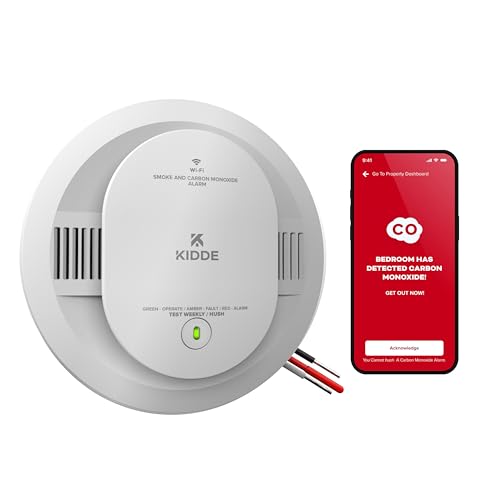
| Smart Home Ready | Detection types: Smoke, CO | Alerts / Alarms: Audible alarm, mobile push alerts, phone hush | Power type: Hardwired with AA battery backup | VIEW LATEST PRICE | Read Our Analysis |
| 6-Pack Interconnected Smoke & Carbon Monoxide Alarms | Whole-Home Pack | Detection types: Smoke (photoelectric), CO (electrochemical) | Alerts / Alarms: 85 dB audible alarm, flashing LED, LCD concentration display | Power type: Battery powered | VIEW LATEST PRICE | Read Our Analysis | |
| Kidde Smoke & Carbon Monoxide Detector 3-Pack |

| Fast-Response Standard | Detection types: Smoke, CO | Alerts / Alarms: 85 dB audible alarm, red LED, voice alerts (“Fire” / “Warning, Carbon Monoxide”) | Power type: Battery powered (2× AA included) | VIEW LATEST PRICE | Read Our Analysis |
More Details on Our Top Picks
5-in-1 Smoke CO Gas Detector with Sensors
All-in-One Protection
View Latest PriceIn case you want an all-in-one safety solution for a home, hotel room, or RV, the 5-in-1 plug-in detector is a smart choice — it combines smoke, CO, combustible gas, temperature, and humidity sensing in a single unit so you don’t have to juggle multiple devices. You plug it in, and it continuously monitors for smoke, carbon monoxide, and a wide range of combustible gases — natural gas, propane, methane, LPG, gasoline and more — while reporting temperature and humidity. You’ll get earlier warnings of fire, leaks, or unsafe conditions, simplifying protection and helping you act fast.
- Detection types:Smoke, CO, combustible gas, temperature, humidity
- Alerts / Alarms:Audible alarm and real-time monitoring (plug-in)
- Power type:Plug-in (continuous power)
- Interconnection / Whole-home capability:Single integrated unit (replaces multiple) — designed for continuous in-room monitoring (plug-in)
- False-alarm reduction / sensing tech:Uses dedicated sensors (smoke, CO, gas) to reduce missed detections (environmental sensing)
- Intended installation / use:Indoor: homes, hotels, RVs (plug-in locations)
- Additional Feature:Plug-in continuous power
- Additional Feature:Humidity & temperature readouts
- Additional Feature:Detects wide gas range
Kidde Hardwired Smart Smoke & Carbon Monoxide Detector
Should you want whole-home peace of mind and fast mobile alerts, the Kidde Hardwired Smart Smoke & Carbon Monoxide Detector is a solid pick. You get dual smoke and CO sensing with smoke detection claimed to be three times more precise, plus alerts for smoke, CO, and low battery. Add one Kidde smart alarm and all hardwired units send real-time mobile notifications via 2.4 GHz Wi‑Fi, so you’ll know what’s happening at home or away. Improved sensing cuts nuisance cooking alarms, and you can hush false alerts from your phone. It’s hardwired with AA backup, interconnected, UL- and FCC-tested, and includes everything you need.
- Detection types:Smoke, CO
- Alerts / Alarms:Audible alarm, mobile push alerts, phone hush
- Power type:Hardwired with AA battery backup
- Interconnection / Whole-home capability:Interconnected hardwired capability / whole-home smart connectivity
- False-alarm reduction / sensing tech:Enhanced sensing technology to reduce nuisance alarms; phone hush feature
- Intended installation / use:Home hardwired installation (residential whole-home use)
- Additional Feature:Mobile push notifications
- Additional Feature:2.4 GHz Wi‑Fi setup
- Additional Feature:Phone hush/remote silence
6-Pack Interconnected Smoke & Carbon Monoxide Alarms
Whole-Home Pack
View Latest PriceHomeowners who want whole-house protection with minimal setup will appreciate this 6-pack of interconnected smoke and carbon monoxide alarms. You get 2-in-1 detection—photoelectric smoke and electrochemical CO sensors—in palm-sized, battery-powered units that fit bedrooms, basements, and other spaces. Should one senses danger, all alarms trigger an 85 dB alert, flashing LED, and LCD concentration readout. Setup takes about two minutes: select detector A, press any other unit three seconds until green flashes, then press A once to sync. A test/silence button lets you manually check or mute alarms. The compact design keeps operation simple and reliable.
- Detection types:Smoke (photoelectric), CO (electrochemical)
- Alerts / Alarms:85 dB audible alarm, flashing LED, LCD concentration display
- Power type:Battery powered
- Interconnection / Whole-home capability:Interconnects wirelessly with other units for synchronized alarms
- False-alarm reduction / sensing tech:Photoelectric smoke sensor (less prone to cooking false alarms)
- Intended installation / use:Home installation—bedrooms, basements, general household locations
- Additional Feature:Fast 2-minute setup
- Additional Feature:LCD concentration display
- Additional Feature:Compact palm-sized units
Kidde Smoke & Carbon Monoxide Detector 3-Pack
Provided you want reliable, code‑compliant protection that detects both smoke and carbon monoxide, the Kidde 3‑pack is a smart pick—its advanced sensors detect smoke over 25% faster and cut down false alarms from cooking or steam. You’ll get 2‑in‑1 detection with voice alerts that clearly announce “Fire” or “Warning, Carbon Monoxide,” plus an 85 dB alarm and red LED status light. Battery powered with two included AA cells and compact 5‑inch units, they meet UL 217 (10th), UL 2034 (5th) and FCC standards. A 10‑year limited warranty backs long‑term, code‑compliant protection for homes and rental properties.
- Detection types:Smoke, CO
- Alerts / Alarms:85 dB audible alarm, red LED, voice alerts (“Fire” / “Warning, Carbon Monoxide”)
- Power type:Battery powered (2× AA included)
- Interconnection / Whole-home capability:Interconnected-capable (pack of 3 designed for home coverage)
- False-alarm reduction / sensing tech:Enhanced sensing claimed to reduce false alarms and detect faster
- Intended installation / use:Home installation for homeowners, property managers, contractors
- Additional Feature:Voice “Fire/CO” alerts
- Additional Feature:10-year limited warranty
- Additional Feature:5″ compact form factor
Factors to Consider When Choosing a Smart Smoke Alarm
Upon choosing a smart smoke alarm, you’ll want to check what detection types it covers so you get protection against both smoke and carbon monoxide. Make sure its connectivity and integration work with your hub or phone, and consider power options and backup to avoid outages. Also pay attention to false-alarm resistance and where you can install it for reliable coverage.
Detection Types Covered
Balancing detection types helps you cover the full range of fire and gas risks: photoelectric sensors catch slow, smoky smolders while ionization sensors react faster to flaming fires, so units that combine both give broader protection. You should also look for electrochemical CO sensors when you have fuel-burning appliances; they should meet UL 2034 and report ppm or trigger at standard thresholds. Should your home use natural gas, propane or LPG, choose detectors with semiconductor or catalytic bead sensors rated for those gases. Environmental sensors for temperature and humidity won’t replace primary detectors but help reduce nuisance alarms and flag conditions that suggest fire risk. For whole-home safety, prefer combination units that monitor smoke, CO and combustible gas to minimize blind spots and simplify upkeep.
Connectivity And Integration
After covering detection types, you’ll want to take into account how alarms communicate and fit into your home’s systems. Make sure units support whole‑home interconnection—wired or wireless—so one detection triggers every alarm for faster notification. Prefer devices with remote mobile alerts over Wi‑Fi (2.4 GHz compatibility is common) so you get real‑time warnings whenever you’re away. Check integration with smart‑home ecosystems (Zigbee, Z‑Wave, voice assistants) to enable automations like lighting or HVAC responses during an event. Look for two‑way control from the app—silence, hush, and test—to reduce nuisance alarms and manage units without physical access. Finally, confirm interoperable standards, encrypted communications, and firmware update capability for reliable, secure long‑term operation.
Power And Backup
Plan for reliable power and clear backups, since your smoke alarm’s ability to warn you depends on uninterrupted energy and timely low‑battery notifications. Prefer hardwired units with battery backup for permanent installs: hardwiring gives continuous primary power while the battery keeps the alarm running during outages. Should you go battery‑only, choose models with sealed lithium batteries rated about 10 years to cut maintenance. Confirm the alarm reports battery status and sends mobile low‑battery alerts so you don’t rely on local chirps alone. Assess backup behavior and duration—some maintain full function for years, others switch to limited modes when cells weaken. Lastly, check compatibility with your home power and network (120V AC hardwire, 2.4 GHz Wi‑Fi) to make certain reliable connectivity and notifications.
False-Alarm Resistance
Minimize nuisance alarms through choosing sensors and features that tell real fires apart from everyday smoke and steam. Pick detectors with photoelectric sensing or advanced algorithms that distinguish cooking smoke and steam from dangerous combustion. Consider multi-criteria units that combine optical, heat, and CO inputs so alarms require corroborating signals before triggering. Look for adjustable sensitivity or a hush/silence function to temporarily reduce responsiveness during nonemergency events without disabling protection. Prefer devices with interference-resistant wireless communication to avoid false triggers from transient signals. Maintain alarms regularly: clean sensors and replace batteries per manufacturer intervals to prevent particulate buildup that raises false-alarm rates. These choices keep alerts meaningful while preserving reliable detection whenever it counts.
Installation And Placement
Upon selecting and positioning smart smoke alarms, consider room-by-room so you get coverage where fires are most likely and where people sleep; install units on every level, inside each bedroom, and outside sleeping areas to guarantee prompt detection and whole-house protection. Mount ceiling units at least 4 inches from the nearest wall and place wall units 4–12 inches below the ceiling to avoid dead air and secure dependable sensing. Keep alarms at least 10 feet from cooking appliances and 3 feet from bathrooms and HVAC vents to reduce nuisance triggers. In multi-level homes, add units on stairway landings and near mechanical rooms or gas appliances. Follow manufacturer spacing (typically one per 900–1,200 sq ft) and position a central unit for trustworthy communication.
Interconnectivity And Alerts
Whenever alarms are interconnected, a single detector will wake the whole house—so you’ll get immediate, unmistakable alerts no matter where a fire or CO event starts. You want whole‑home notification: whenever one unit senses danger, every alarm sounds and shows visual indicators so everyone hears and sees the warning, even on different floors. Choose systems offering wired or wireless interconnectivity—hardwired signaling or RF/Wi‑Fi synchronization—depending on your home and retrofit needs. Prefer reliable, simple pairing (single‑button or short‑press setup) and strong range so signals reach all units in larger or multi‑story houses. Make certain simultaneous audible alerts at or above 85 dB plus clear visual cues. Also pick systems that send mobile push notifications so you get remote, real‑time alerts.
Certification And Compliance
Because smart alarms combine life‑safety sensing with wireless electronics, you should verify certifications and code compliance before buying. Check for recognized standards—UL 217 for smoke, UL 2034 for CO in the U.S., EN 14604 in Europe, or relevant ISO standards—to make certain tested detection and regulatory acceptance. Confirm the specific edition required for your local building code (for example, UL 217 — 10th Edition) so the unit’s allowed for new construction or replacements. For wireless models, look for FCC, CE, or equivalent electromagnetic and radio certifications to avoid interference and guarantee reliable connectivity. Seek documented third‑party testing for combined sensors and false‑alarm reduction claims. Finally, validate required labeling and instructions for installation, power, maintenance, and end‑of‑life warnings.
