

Should you be shopping for a reverse osmosis system in 2026, you’ll want units that blend efficiency, certifications, and sensible maintenance. I’ll compare tankless high-flow options and reliable smaller systems, highlight recovery ratios and filter tech, and point out what actually matters for installation and ongoing costs—so you can choose the right fit for your home and budget.
| Waterdrop G2 7-Stage Tankless RO Under-Sink System |

| Space-Saving Efficiency | Filtration Type: Reverse osmosis (7-stage composite RO) | Installation Location: Under-sink | Tankless or Tank: Tankless | VIEW LATEST PRICE | Read Our Analysis |
| VIOMI Tankless Reverse Osmosis Water Filtration System |
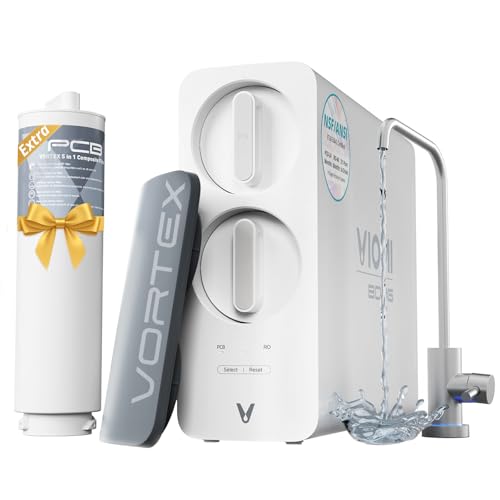
| High-Flow Performance | Filtration Type: Reverse osmosis (9-stage RO) | Installation Location: Under-sink | Tankless or Tank: Tankless | VIEW LATEST PRICE | Read Our Analysis |
| Waterdrop G3P800 Tankless Under-Sink RO System |
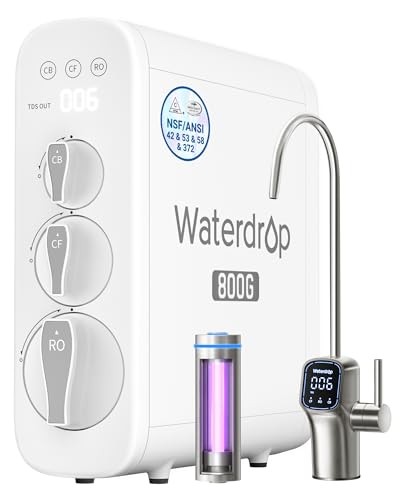
| Smart Quality Pick | Filtration Type: Reverse osmosis (10-stage RO) | Installation Location: Under-sink | Tankless or Tank: Tankless | VIEW LATEST PRICE | Read Our Analysis |
| Premium 5-Stage Reverse Osmosis Water Filter System |
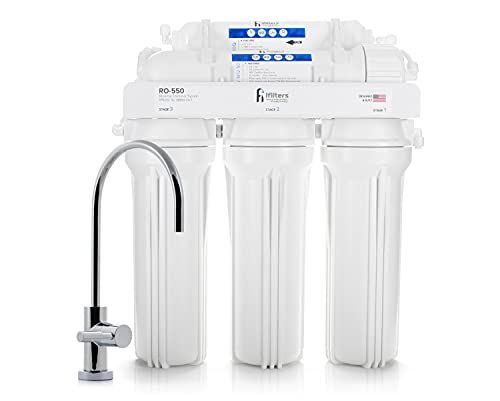
| Traditional Reliability | Filtration Type: Reverse osmosis (5-stage RO) | Installation Location: Under-sink | Tankless or Tank: Includes storage tank (traditional RO) | VIEW LATEST PRICE | Read Our Analysis |
| NU Aqua 5-Stage Under Sink 100 GPD RO System | Customer-Focused Value | Filtration Type: Reverse osmosis (5-stage RO) | Installation Location: Under-sink | Tankless or Tank: Undersink tank included | VIEW LATEST PRICE | Read Our Analysis |
More Details on Our Top Picks
Waterdrop G2 7-Stage Tankless RO Under-Sink System
Should you want fast, space-saving purified water with minimal waste, the Waterdrop G2 7-Stage Tankless RO is a strong pick: its tankless under‑sink design frees over 70% of storage space, delivers up to 400 GPD (a cup in ~12 seconds), and uses a 1:1 pure-to-drain ratio to cut water waste compared with ordinary RO systems. You’ll get NSF/ANSI 372 lead-free materials, FCC-listed USA tech, and seven-stage composite filtration that tackles TDS, PFAS, PFOA, PFOS, vinyl chloride, and monobutyl ether. Installation’s under 30 minutes but needs power and drilling; twist-and-pull filters swap in about three seconds.
- Filtration Type:Reverse osmosis (7-stage composite RO)
- Installation Location:Under-sink
- Tankless or Tank:Tankless
- Certifications:NSF/ANSI 372 (lead-free); FCC listed (USA tech)
- Flow/Capacity (daily or speed indicators):Up to 400 GPD; ~12 sec per cup
- Contaminant Reduction Highlights:Reduces TDS, PFAS/PFOA/PFOS, vinyl chloride, monobutyl ether
- Additional Feature:Twist-and-pull filters
- Additional Feature:1:1 pure-to-drain
- Additional Feature:Airtight, low-noise housing
VIOMI Tankless Reverse Osmosis Water Filtration System
Provided you want space-saving, high-efficiency drinking water on demand, the VIOMI tankless RO is a smart fit—its compact under‑sink design frees up 65% of space while supplying a fast 800 GPD flow and lab-verified contaminant reduction (up to 99.6% for PFOS/PFOA). You’ll get NSF/ANSI 372, 53, 42 certified protection from chlorine, lead, microplastics and more via a 9-stage RO at 0.0001 μm precision. The unit fills a 7 oz cup in about six seconds, runs off an outlet, and installs in roughly 20 minutes (two holes required). Tool-free filter swaps, a 3:1 pure-to-drain ratio, and up to four years of filter life keep maintenance minimal.
- Filtration Type:Reverse osmosis (9-stage RO)
- Installation Location:Under-sink
- Tankless or Tank:Tankless
- Certifications:NSF/ANSI 372, 53, 42
- Flow/Capacity (daily or speed indicators):800 GPD; ~6 sec per 7 oz cup
- Contaminant Reduction Highlights:Reduces TDS (~90%), PFOS/PFOA (~99.6%), chlorine, lead, microplastics
- Additional Feature:Smart LED faucet reminder
- Additional Feature:3:1 pure-to-drain
- Additional Feature:800 GPD fast flow
Waterdrop G3P800 Tankless Under-Sink RO System
Should you want fast, space-saving purified water without a storage tank, the Waterdrop G3P800 is built for you — it delivers up to 800 GPD tankless production and fills a cup in about five seconds. You get NSF/ANSI 58, 42, 53 and 372 certifications and a 10-stage SGS-validated filter stack that targets PFAS, fluoride, heavy metals, salts, radium and various organics. The smart faucet shows TDS and water quality with an LED rated up to 50 years. Its 3:1 pure-to-drain ratio balances efficiency and performance. Installation needs two drilled holes; Waterdrop offers 30-day price protection and customer support.
- Filtration Type:Reverse osmosis (10-stage RO)
- Installation Location:Under-sink
- Tankless or Tank:Tankless
- Certifications:NSF/ANSI 58, 42, 53, 372 (IAPMO R&T / NSF-certified)
- Flow/Capacity (daily or speed indicators):800 GPD; ~5 sec per cup
- Contaminant Reduction Highlights:Reduces TDS, PFAS, fluoride, heavy metals (lead, chromium, iron), salts, vinyl chloride, radionuclides
- Additional Feature:Smart TDS faucet
- Additional Feature:LED lifespan ~50 years
- Additional Feature:10-stage validated filtration
Premium 5-Stage Reverse Osmosis Water Filter System
Whenever you want consistently pure, great-tasting water for drinking and cooking, the Premium 5-Stage Reverse Osmosis system is built to deliver—50 GPD capacity with long-lasting filters that remove up to 99% of contaminants including arsenic, lead, fluoride, chlorine, bacteria, and viruses. You’ll get high-quality, bottle-beating water from tap or well sources, produced through a dependable, noise-free unit built in the USA. Certified food-grade tubing and a chrome faucet guarantee contamination-free delivery and durable use. The system targets heavy metals and 1,000+ other contaminants, offering household safety, superior taste, and long-term reliability backed by premium components.
- Filtration Type:Reverse osmosis (5-stage RO)
- Installation Location:Under-sink
- Tankless or Tank:Includes storage tank (traditional RO)
- Certifications:Built in USA (implied standards); claims broad contaminant removal (no specific NSF listed)
- Flow/Capacity (daily or speed indicators):50 GPD
- Contaminant Reduction Highlights:Removes ~99% of contaminants; targets arsenic, chlorine, lead, fluoride, bacteria, viruses
- Additional Feature:Built in USA
- Additional Feature:Chrome included faucet
- Additional Feature:Food-grade tubing
NU Aqua 5-Stage Under Sink 100 GPD RO System
Customer-Focused Value
View Latest PriceShould you want a high-output, under-sink RO that’s ready for a busy kitchen, the NU Aqua 5-Stage 100 GPD system delivers fast, reliable purified water with professional-grade fittings and an NSF lead-free stainless faucet. You’ll get five-stage filtration, a HydraCoil membrane that yields up to 50% cleaner water, and carbon filters with higher adsorption for finer particulate removal—rejecting up to 99% of 1,000+ contaminants including arsenic, chlorine, fluoride, and lead. Installation is typically under an hour with color-coded tubing, quick-connects, and a clear manual. It includes an undersink tank, PPM meter, 120-day trial, three-year warranty, and lifetime support.
- Filtration Type:Reverse osmosis (5-stage RO)
- Installation Location:Under-sink
- Tankless or Tank:Undersink tank included
- Certifications:100% lead-free faucet; warranty/support (no specific NSF listed in summary)
- Flow/Capacity (daily or speed indicators):100 GPD
- Contaminant Reduction Highlights:Up to 99% rejection of 1,000+ contaminants including arsenic, chlorine, fluoride, lead
- Additional Feature:120-day trial
- Additional Feature:Undersink storage tank
- Additional Feature:Includes PPM meter
Factors to Consider When Choosing a Reverse Osmosis Water Purifier
When choosing an RO purifier, you should check the filtration stages and types to know which contaminants are removed. Consider the water efficiency ratio, flow rate and capacity, and whether the unit has relevant certifications for safety. Also consider about installation requirements and space so the system fits your home and maintenance routine.
Filtration Stages And Types
Although more stages often mean broader contaminant removal, you should judge a reverse osmosis system on the specific stages it uses and their proven performance rather than on stage count alone. Look for a true RO membrane—its semipermeable barrier rejects over 90% of dissolved solids and microscopic contaminants (~0.0001 μm), removing salts, heavy metals, and many organics. Pre-filters (sediment and carbon) protect that membrane through removing chlorine, particulates, and organics that foul or degrade performance. Post-filters and polishing stages—activated carbon, remineralization, or UV—improve taste, restore beneficial minerals, or add disinfection RO might miss. Don’t equate more stages with better results: verify specific stage functions and validated removal claims or certifications (NSF/ANSI) for contaminants you care about.
Water Efficiency Ratio
A few key numbers will tell you how wasteful a given RO system really is: the water efficiency ratio (also called pure-to-drain or recovery ratio) shows how many gallons of purified water you get for every gallon sent down the drain, typically ranging from about 1:1 (50% recovery) to 3:1 (75% recovery) or better. You’ll prefer higher recovery ratios to cut wastewater and operating water costs, but they usually need better membranes and pumps, increasing system complexity. Compare ratios or percentage recovery in specs and tests. Recall higher recovery can concentrate contaminants, raising maintenance needs and potentially shortening membrane life unless prefiltration isn’t adequate. Whenever sizing a household unit, factor recovery into daily purified demand to estimate wastewater and make certain your drain can handle it.
Flow Rate And Capacity
Consider flow rate and capacity as how much purified water you can actually get at the moment you need it: GPD ratings (from ~50 to 800+), cup-or-fill times, and whether the unit is tankless or tank-based determine whether you’ll have steady on-demand water or a stored reserve that refills between draws. Decide based on your household’s peak demands—estimate daily potable needs for drinking and cooking, then pick a GPD comfortably above that. Note cup-or-fill times (often 5–12 seconds per cup) to avoid bottlenecks during busy periods. Choose tankless should you want continuous flow; pick tank-based should you prefer a ready reserve. Finally, consider pure-to-drain ratio: a more efficient system wastes less input water for the same output capacity.
Certifications And Safety
Flow rate and capacity matter, but they won’t protect you from contaminants—certifications and safety prove a purifier actually delivers the quality you expect. You should prioritize NSF/ANSI 58 to verify TDS and dissolved contaminant reduction. In case chlorine, taste, lead or VOCs concern you, look for NSF/ANSI 42 and 53 listings. NSF/ANSI 372 (or equivalent) confirms lead-free materials for housings, fittings and faucets, reducing leaching risk. Seek independent lab reports (SGS, IAPMO R&T) showing specific reduction percentages for PFAS, PFOA/PFOS and TDS so you can compare real performance. Also check for additional safety listings like FCC for electronics and make certain the RO membrane manual documents reductions for local contaminants such as fluoride, nitrates or vinyl chloride.
Installation And Space Needs
As you’re fitting an RO system into your kitchen, measure the under-sink cabinet depth and width initially so you don’t buy a unit that won’t fit; tankless models can save 60–80% of space compared with tanked systems. Also confirm a nearby grounded outlet in case you pick a tankless or powered unit, since many high-flow models need under-sink power. Check whether installation requires drilling one or two holes for faucet and drain and verify your sink or countertop can accept those sizes. Should you decide on a separate storage tank, allow about 12–18 inches vertical clearance plus room for tubing. Finally, leave several inches of front clearance for housings or modules so you can perform quick, tool-free filter changes without dismantling surrounding cabinetry.
Maintenance And Filter Lifespan
Now that you’ve planned for fit and hookups, consider ongoing upkeep: filter and membrane replacements determine both water quality and the system’s lifetime. Replace pre-filters (sediment/carbon) every 6–12 months to prevent membrane clogging and preserve flow and taste. Post-filters (carbon polishing) also need swapping every 6–12 months to avoid taste and odor issues and to maintain final contaminant removal. Expect RO membranes to last 2–5 years; high TDS, hardness, or contamination shortens that span. Monitor performance with a TDS meter and watch for reduced flow—both signal replacement time. Follow manufacturer schedules, keep housings and quick-change fittings clean, and compare long-term costs and ease of replacement whenever choosing a system so upkeep won’t surprise you.
