

In case you travel often or need a compact networking backup, you’ll want a portable router that balances speed, features, and ease of use. I’ll walk you through four standout 2026 options—from lightweight budget picks to power users who want OpenWrt and VPN flexibility—so you can match one to your routine and tech needs. Stay with me to see which fits your setup best.
| TP-Link AX3000 Dual‑Band Travel Router TL‑WR3002X |

| Best High-Performance | Wireless capability: Dual-band Wi‑Fi 6 (2.4 GHz + 5 GHz) | Portable / travel form factor: Compact travel router (pocketable, 4.13 × 3.6 × 1.18 in) | USB power / USB port: USB‑C power (5V PD) and USB 3.0 port for storage | VIEW LATEST PRICE | Read Our Analysis |
| GL.iNet Mango GL-MT300N-V2 Portable Travel VPN Router |
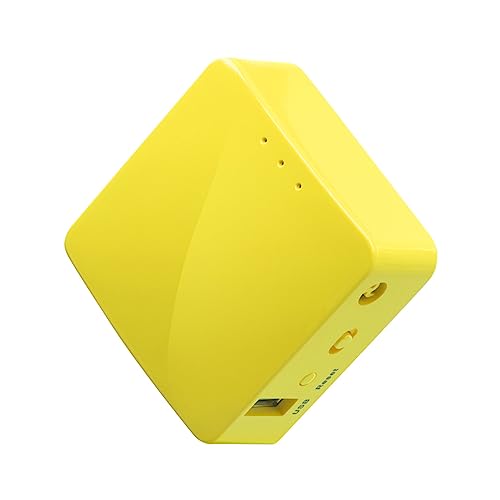
| Best for Privacy | Wireless capability: 2.4 GHz Wi‑Fi only | Portable / travel form factor: Pocket-sized mini (39 g) | USB power / USB port: USB‑powered (USB 2.0) and USB disk support | VIEW LATEST PRICE | Read Our Analysis |
| TP-Link TL-WR802N N300 Portable Nano Travel Router |

| Best Budget Compact | Wireless capability: 2.4 GHz Wi‑Fi (300 Mbps) | Portable / travel form factor: Pocket-sized nano travel router | USB power / USB port: Micro‑USB power input (5V/1A) | VIEW LATEST PRICE | Read Our Analysis |
| TP-Link AC750 Portable Nano Travel Router (TL-WR902AC) |

| Best Dual-Band Versatile | Wireless capability: Dual-band (2.4 GHz + 5 GHz, 802.11ac/n) | Portable / travel form factor: Pocketable nano travel router | USB power / USB port: Micro‑USB power input and USB 2.0 port (can power devices) | VIEW LATEST PRICE | Read Our Analysis |
More Details on Our Top Picks
TP-Link AX3000 Dual‑Band Travel Router TL‑WR3002X
In case you need near‑desktop Wi‑Fi 6 performance on the road, the TP‑Link AX3000 TL‑WR3002X is built for you: it packs dual‑band AX3000 speeds (2402 Mbps on 5 GHz + 574 Mbps on 2.4 GHz) with a 2.5 Gbps WAN/LAN port, USB‑3.0 storage support, and USB‑C power so you can plug into a power bank and get reliable, low‑latency connections for remote work, gaming, or sharing hotel Wi‑Fi. You’ll get MU‑MIMO, OFDMA, beamforming, TWT, HT160 and DFS with a 1.3 GHz dual‑core MTK CPU. Switch modes between router, hotspot, AP or repeater, use WireGuard/OpenVPN, and plug in a drive or microSD for local sharing. It’s compact, travel‑ready, and manageable via the Tether app.
- Wireless capability:Dual-band Wi‑Fi 6 (2.4 GHz + 5 GHz)
- Portable / travel form factor:Compact travel router (pocketable, 4.13 × 3.6 × 1.18 in)
- USB power / USB port:USB‑C power (5V PD) and USB 3.0 port for storage
- Multiple operation modes:Router, Hotspot, AP, Range Extender (RE), tethering
- File/drive sharing support:USB 3.0 + microSD (up to 512 GB) for file sharing/backups
- Security / VPN features:OpenVPN & WireGuard client/server, PPTP/L2TP, firewall, 2FA
- Additional Feature:2.5 Gbps WAN/LAN port
- Additional Feature:MTK 1.3 GHz dual-core
- Additional Feature:microSD up to 512 GB
GL.iNet Mango GL-MT300N-V2 Portable Travel VPN Router
Provided you need a lightweight, budget-friendly pocket router that’s built for secure travel, the GL.iNet Mango GL-MT300N-V2 fits the bill—its compact 39 g design and OpenWrt firmware make it easy to turn public wired or wireless networks into a private VPN-backed hotspot. You’ll get a 2.4 GHz-only mini router with two Ethernet ports, USB 2.0, and USB-disk support. It runs on 128 MB RAM/16 MB flash, supports OpenVPN and 30+ providers, and offers tethering, UART/GPIO for DIY projects, and app or web management. Power comes via USB; update firmware and enjoy a two-year warranty.
- Wireless capability:2.4 GHz Wi‑Fi only
- Portable / travel form factor:Pocket-sized mini (39 g)
- USB power / USB port:USB‑powered (USB 2.0) and USB disk support
- Multiple operation modes:Repeater/convert public wired/wireless to private Wi‑Fi, tethering
- File/drive sharing support:USB disk support (USB 2.0)
- Security / VPN features:OpenWrt firmware with OpenVPN client preinstalled (VPN provider compatible)
- Additional Feature:OpenWrt pre-installed
- Additional Feature:UART/GPIO hardware pins
- Additional Feature:128 MB RAM
TP-Link TL-WR802N N300 Portable Nano Travel Router
Upon traveling light and needing reliable, pocket-sized Wi‑Fi, the TP‑Link TL‑WR802N N300 is built for you — it delivers up to 300 Mbps on 2.4 GHz while fitting in your pocket and runs multiple modes (router, AP, client, repeater, WISP) to plug into whatever network you encounter. You’ll use it as a hotspot, bridge, or range extender to enhance coverage and share a secure connection with family. It’s powered via micro USB (5V/1A), works with Chromecast, and includes pre-encryption for an initial SSID/password. TP‑Link backs it with a two‑year warranty and 24/7 technical support.
- Wireless capability:2.4 GHz Wi‑Fi (300 Mbps)
- Portable / travel form factor:Pocket-sized nano travel router
- USB power / USB port:Micro‑USB power input (5V/1A)
- Multiple operation modes:Router, AP, Client, Repeater, WISP (bridge/range extender)
- File/drive sharing support:(No dedicated USB file share) — pre‑encryption only; (power via USB)
- Security / VPN features:WPA/WPA2 pre‑encryption and standard router security features
- Additional Feature:Chromecast compatible
- Additional Feature:Pre-encryption SSID/password
- Additional Feature:Ultra-compact pocketable size
TP-Link AC750 Portable Nano Travel Router (TL-WR902AC)
Should you travel often and need a pocketable router that balances decent dual‑band speeds with flexible power options, the TP‑Link AC750 (TL‑WR902AC) fits the bill. You get 2.4 GHz and 5 GHz support with combined rates up to 733 Mbps, suitable for HD streaming depending on distance and obstacles. Switch modes quickly between Router, Hotspot, Extender, Client, AP, and Bridge, and use WPS for fast security setup. The micro USB input accepts wall adapters, power banks, or laptops, while the USB 2.0 port shares files and can charge devices up to 5V/2A. Compact, durable, and supported.
- Wireless capability:Dual-band (2.4 GHz + 5 GHz, 802.11ac/n)
- Portable / travel form factor:Pocketable nano travel router
- USB power / USB port:Micro‑USB power input and USB 2.0 port (can power devices)
- Multiple operation modes:Router, Hotspot, Range Extender, Client, AP, Bridge
- File/drive sharing support:USB 2.0 port for file/media sharing via browser
- Security / VPN features:Standard WPA/WPA2 security, WPS; firmware updates via Tether app
- Additional Feature:Built-in plug adapter
- Additional Feature:USB can charge devices
- Additional Feature:One‑touch WPS button
Factors to Consider When Choosing a Portable Router
Upon selecting a portable router, you’ll want to prioritize wireless performance and available bands so your devices get fast, reliable connections. Consider portability and power—battery life and size matter—as well as security features and VPN support to keep your traffic safe. Check which connectivity modes, compatibility with your devices, and options for expanding storage or ports will fit your travel and work needs.
Wireless Performance & Bands
Often you’ll pick a portable router based on its wireless bands and real‑world performance, since those determine range, speed, and how well it handles multiple devices. Choose dual‑band models (2.4 GHz + 5 GHz) so you get 2.4 GHz for range and wall penetration and 5 GHz for higher throughput and less interference close‑in. Prefer Wi‑Fi 6 (802.11ax) whenever you need superior efficiency—OFDMA, MU‑MIMO, and Target Wake Time improve multi‑device performance and aggregate throughput versus Wi‑Fi 5. Check radio streams and antenna config (e.g., 2×2 vs 1×1 MIMO): more spatial streams raise peak rates and client capacity. Look for beamforming, MU‑MIMO, channel width options (20/40/80/160 MHz). Match rated band speeds to your WAN speed and expected distances/obstacles.
Portability And Power
Because portability shapes how and where you’ll actually use a router, pay attention to size, weight, and power flexibility: aim for pocketable units (~4 inches, a few ounces) whenever you travel, prefer USB‑C/USB‑A input with PD or power‑bank compatibility, and consider built‑in battery capacity (mAh) plus whether the device can both draw and supply power (OTG/charging). Also check the required input (5V/1A vs 5V/2A) so you know charger and bank compatibility. Favor models with rigid cases, collapsible antennas, or ruggedized builds whenever you pack frequently or use them outdoors. Built‑in batteries give hours of standalone use; higher mAh typically means longer uptime but adds weight. Balance runtime, durability, and true pocketability for your use case.
Security And VPN Support
Portability and power dictate where your router goes, but security determines what it safely carries with it—your data and access. You should pick a model supporting modern VPN protocols like WireGuard or OpenVPN; WireGuard usually gives lower latency and higher throughput. Make sure the hardware — multi‑core CPU or crypto acceleration — can handle encryption without massive speed loss. Confirm the device can act as both VPN client and server and offers VPN passthrough for downstream routers or devices.
Also check built‑in protections: SPI/DoS mitigation, firewall, IP/MAC filtering, and two‑factor admin login. Prefer routers with easy, secure setup (web admin, mobile app, captive portal) and a vendor that provides timely firmware updates to patch vulnerabilities and maintain VPN compatibility.
Connectivity Modes Offered
Should you pick a portable router, check the connectivity modes it supports so the device adapts to whatever network role you need—router, access point, repeater/ extender, client/bridge, or hotspot. Verify which physical ports are present—Ethernet WAN/LAN (multi‑gigabit or 10/100), USB‑A/USB‑C or micro‑USB—so you can plug into modems, wired networks, or external storage. Confirm USB or phone tethering and power‑bank operation in case you’ll share mobile data or need mains‑free use. Look for built‑in VPN client/server and pass‑through should you want encrypted remote access or to protect devices on public networks. Finally, make certain guest network or captive‑portal hotspot modes are available to securely share Wi‑Fi and isolate visitors from your main network.
Compatibility And Expandability
Now that you’ve checked modes and ports, make sure the router will actually work with your gear and grow with your needs. Confirm supported wireless bands and standards (2.4 GHz, 5 GHz, 802.11n/ac/ax) so each client gets peak speeds. Inspect Ethernet speeds, USB type/version, and microSD support for wired devices, storage sharing, or tethering. Verify multi‑mode operation (router/AP/repeater/client/hotspot) and built‑in VPN client/server functions to integrate with existing networks or change roles on the fly. Favor devices with updatable firmware and, should you require deep customization, check OpenWrt or other open‑source support. Finally, evaluate CPU, RAM, flash, and exposed interfaces (GPIO/UART, external storage) to make certain the router can handle VPNs, file services, and future feature growth.
