

You’re choosing a smarter way to control home heat, and a reliable 4‑wire thermostat matters more than you believe. These six picks balance steady 24 VAC power, full fan/cool/heat control, and easy remote scheduling so you can stop guessing about comfort. Each offers simple setup, voice support, and options like PEKs or C‑wire adapters to avoid wiring headaches—keep going to see which fits your system and lifestyle best.
| Sensi Touch 2 Smart Thermostat (ST76) |

| Best Balance of Features | Connectivity: Wi‑Fi (app control), Bluetooth used for setup | Energy/Certifications: ENERGY STAR certified; claims ~23% HVAC savings | Scheduling & Automation: Programmable scheduling, remote scheduling via app, geofencing-like features | VIEW LATEST PRICE | Read Our Analysis |
| Honeywell Home RTH9600WF Smart Wi‑Fi Color Thermostat |
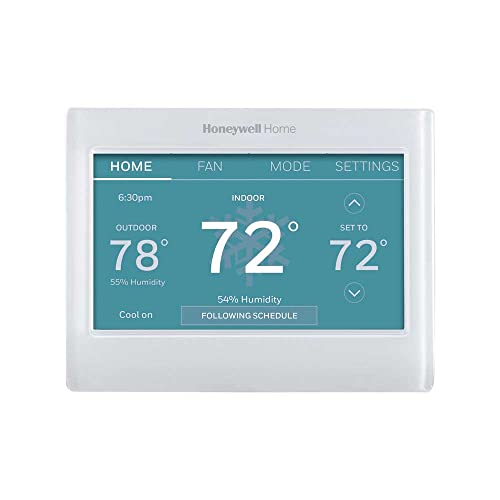
| Customizable Display | Connectivity: Wi‑Fi (remote app control), integrates with smart assistants | Energy/Certifications: ENERGY STAR certified; tracks usage and offers savings tips/rebates | Scheduling & Automation: Flexible programming and automated scheduling or manual control | VIEW LATEST PRICE | Read Our Analysis |
| Sensi Lite Smart Thermostat (Wi‑Fi Alexa Compatible) |

| Budget-Friendly Smart | Connectivity: Wi‑Fi (app control), Alexa/Google/SmartThings compatible | Energy/Certifications: ENERGY STAR certified | Scheduling & Automation: Flexible scheduling, geofencing, programmable control | VIEW LATEST PRICE | Read Our Analysis |
| ecobee Smart Thermostat Premium with Air Quality Monitor |

| Premium Air Quality | Connectivity: Wi‑Fi (app control), works with Alexa/Google/Apple HomeKit/SmartThings | Energy/Certifications: ENERGY STAR certified; energy‑saving thermostat features | Scheduling & Automation: Programmable with geofencing, occupancy sensing and automation | VIEW LATEST PRICE | Read Our Analysis |
| Meross Smart Thermostat for Electric Baseboard & Heaters |

| Best for Baseboards | Connectivity: Wi‑Fi (Meross app), integrates with Siri/Alexa/Google/SmartThings | Energy/Certifications: Energy monitoring via app (no ENERGY STAR listed) | Scheduling & Automation: 7×24 programmable schedule via app, automation triggers supported | VIEW LATEST PRICE | Read Our Analysis |
| ecobee Smart Thermostat Enhanced — Wi‑Fi Smart Thermostat |
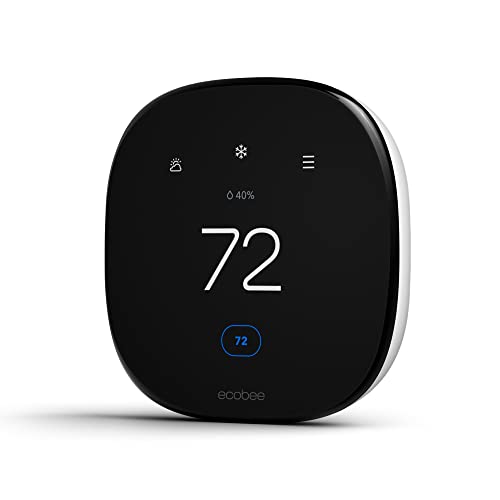
| Smart Energy Saver | Connectivity: Wi‑Fi (ecobee app), works with Siri/Alexa/Google Assistant | Energy/Certifications: ENERGY STAR certified; claims up to 26% annual savings | Scheduling & Automation: Learns schedule, automatic away adjustments, occupancy preheat/precool | VIEW LATEST PRICE | Read Our Analysis |
More Details on Our Top Picks
Sensi Touch 2 Smart Thermostat (ST76)
In case you want a user‑friendly, energy‑focused smart thermostat that’s easy to install yourself, the Sensi Touch 2 (ST76) is a strong choice — it requires a common (C) wire, pairs with optional room sensors to balance temperatures, and gives you a color touchscreen plus remote scheduling, usage reports, and maintenance alerts to keep your HVAC running efficiently. You’ll get ENERGY STAR savings (around 23% potential), Wi‑Fi control, and app setup using Bluetooth. The app guides DIY installation, and the package includes the thermostat, mounting hardware, manuals, and warranty. Sensi also won’t sell your personal information to third parties.
- Connectivity:Wi‑Fi (app control), Bluetooth used for setup
- Energy/Certifications:ENERGY STAR certified; claims ~23% HVAC savings
- Scheduling & Automation:Programmable scheduling, remote scheduling via app, geofencing-like features
- Installation / C‑Wire Support:DIY install with app guidance; C‑wire required
- Display / Interface:Touchscreen color display
- Smart Home Assistant Integration:Works with smart assistants via app (Wi‑Fi) — setup via Bluetooth; compatible ecosystems implied
- Additional Feature:Equipment performance alerts
- Additional Feature:Maintenance reminders (filters)
- Additional Feature:Touchscreen color display
Honeywell Home RTH9600WF Smart Wi‑Fi Color Thermostat
Should you want a Wi‑Fi thermostat that balances energy savings with a full-color touchscreen, the Honeywell Home RTH9600WF is a strong pick for homes with a common C‑wire. You’ll get ENERGY STAR certification, usage tracking, personalized savings tips, and potential utility rebates with eligible programs. It supports forced air, hot water, steam, and heat pumps with electric backup but won’t work with electric baseboard heat or heating-only oil systems unless a C‑wire exists. The package includes the thermostat, wall plate, screws, guides, and wire labels. Control it remotely via app or voice assistants, and customize the HD color touchscreen to suit your home.
- Connectivity:Wi‑Fi (remote app control), integrates with smart assistants
- Energy/Certifications:ENERGY STAR certified; tracks usage and offers savings tips/rebates
- Scheduling & Automation:Flexible programming and automated scheduling or manual control
- Installation / C‑Wire Support:DIY/installer compatible; C‑wire required (may need adapter)
- Display / Interface:Customizable high‑definition color touchscreen
- Smart Home Assistant Integration:Works with Amazon Alexa, Google Assistant, Microsoft Cortana, and others
- Additional Feature:Outdoor weather display
- Additional Feature:Customizable display color
- Additional Feature:Energy provider rebates eligible
Sensi Lite Smart Thermostat (Wi‑Fi Alexa Compatible)
Should you want a simple, ENERGY STAR‑rated smart thermostat that won’t overcomplicate installation, the Sensi Lite (ST25) is a solid pick—it’s designed for DIY setup, works with Alexa and Google Assistant, and runs on included AAA batteries or a C‑Wire as required. You’ll get a compact, rectangular Wi‑Fi thermostat with an LCD backlight, flexible scheduling, geofencing, remote access, usage reports, auto changeover and filter alerts. Installation includes level, mounting hardware and wire labels; C‑wire is only required for some systems. Emerson backs it with a three‑year warranty and a privacy policy that won’t sell your data.
- Connectivity:Wi‑Fi (app control), Alexa/Google/SmartThings compatible
- Energy/Certifications:ENERGY STAR certified
- Scheduling & Automation:Flexible scheduling, geofencing, programmable control
- Installation / C‑Wire Support:Easy DIY install; C‑wire required for some systems, battery option for others
- Display / Interface:LCD with backlight (simple display)
- Smart Home Assistant Integration:Works with Alexa, Google Assistant, SmartThings
- Additional Feature:Battery-powered option
- Additional Feature:Low-voltage detection
- Additional Feature:Lightweight compact design
ecobee Smart Thermostat Premium with Air Quality Monitor
Choose the ecobee Smart Thermostat Premium should you want an energy‑saving, all‑in‑one controller that also monitors your home’s air quality. You’ll get a programmable Wi‑Fi thermostat with built‑in air quality monitor, SmartSensor, doorbell Live View, radar occupancy sensing, and geofencing to optimize comfort and save energy. It’s ENERGY STAR certified, supports Siri, Alexa, Google Assistant, HomeKit, and SmartThings, and includes a SmartSensor, backplate, PEK for C‑wire‑less installs, and mounting hardware. The metal, matte rectangular unit (2.9 x 4.09 x 4.09 in, 1.32 lb) offers a vivid display, speaker, three‑year warranty, and broad 24 VAC system compatibility.
- Connectivity:Wi‑Fi (app control), works with Alexa/Google/Apple HomeKit/SmartThings
- Energy/Certifications:ENERGY STAR certified; energy‑saving thermostat features
- Scheduling & Automation:Programmable with geofencing, occupancy sensing and automation
- Installation / C‑Wire Support:Includes Power Extender Kit for C‑wire‑less homes; easy DIY install
- Display / Interface:Large vibrant cinematic touchscreen with speaker and voice options
- Smart Home Assistant Integration:Works with Alexa, Google Assistant, Apple HomeKit (Siri), SmartThings
- Additional Feature:Built‑in air quality monitor
- Additional Feature:Doorbell Live View
- Additional Feature:Built‑in speaker (media)
Meross Smart Thermostat for Electric Baseboard & Heaters
Provided you run high-voltage electric baseboard or convector heaters and have a 4‑wire setup, the Meross Smart Thermostat is a strong choice for precise, app-driven control. You’ll get compatibility with 120–240V baseboard, convector, fan-forced, and in-ceiling radiant systems, plus a 16A max load (1920W at 120V, 3840W at 240V). Installation typically takes under 30 minutes and requires four or more wires. Features include power-off memory, open-window detection, 24/7 programmable schedules, summer mode, and integrations with Meross, HomeKit, Alexa, Google, and SmartThings. The ±1°F accuracy, 41°–95°F range, white LCD, and built-in energy meter round out its capabilities.
- Connectivity:Wi‑Fi (Meross app), integrates with Siri/Alexa/Google/SmartThings
- Energy/Certifications:Energy monitoring via app (no ENERGY STAR listed)
- Scheduling & Automation:7×24 programmable schedule via app, automation triggers supported
- Installation / C‑Wire Support:High‑voltage install (120–240V) for baseboard heaters; requires multi‑wire box
- Display / Interface:Pure white LCD display, flush wall integration
- Smart Home Assistant Integration:Works with Siri (HomeKit), Alexa, Google Assistant, SmartThings
- Additional Feature:High‑voltage (120–240V) support
- Additional Feature:Built‑in electricity meter
- Additional Feature:Open‑window detection
ecobee Smart Thermostat Enhanced — Wi‑Fi Smart Thermostat
In case you want precise, room-by-room comfort and energy savings, the ecobee Smart Thermostat Enhanced is a strong pick—it uses built‑in radar and optional SmartSensors to preheat or precool rooms based on occupancy while trimming up to 26% off yearly HVAC costs. You’ll get automatic away adjustments, learned schedules, and humidity‑aware control so your system isn’t running whenever it shouldn’t. It supports additional SmartSensors for true room-specific comfort and works with about 90% of 24 VAC systems—gas, oil, electric, heat pumps, and boilers. PEK and trim kit simplify DIY installs without a C‑wire; control it via app or voice.
- Connectivity:Wi‑Fi (ecobee app), works with Siri/Alexa/Google Assistant
- Energy/Certifications:ENERGY STAR certified; claims up to 26% annual savings
- Scheduling & Automation:Learns schedule, automatic away adjustments, occupancy preheat/precool
- Installation / C‑Wire Support:Includes PEK for homes without C‑wire; DIY install
- Display / Interface:Touchscreen display (ecobee UI)
- Smart Home Assistant Integration:Works with Siri, Alexa, Google Assistant
- Additional Feature:Radar occupancy sensing
- Additional Feature:Learns temperature preferences
- Additional Feature:No‑battery hardwired operation
Factors to Consider When Choosing a 4 Wire Smart Thermostat
Upon selecting a 4‑wire smart thermostat, you’ll want to confirm wiring and compatibility with your HVAC system and check the power requirements it needs to run reliably. Consider whether built‑in or remote sensors and room control suit your home, and how it will integrate with your existing smart home ecosystem. Also compare energy‑saving features so you pick a model that actually reduces consumption and utility costs.
Wiring And Compatibility
Although smart thermostats add convenience, you’ll initially need to confirm electrical compatibility and wiring prior to buying one. Verify the thermostat requires a C‑wire and that your HVAC control board provides a dedicated 24 VAC common conductor to power the electronics. Make certain your existing 4‑wire cable contains the correct conductors—typically R, W, Y, G—and map each wire to the thermostat terminals so heating, cooling, fan, and power align. Check your system uses 24 VAC control signals and whether it’s single‑stage, multi‑stage, or a heat pump to confirm compatibility. Should you lack a C‑wire or run high‑voltage baseboard or line‑voltage heating (120–240 V), plan for a compatible adapter, power extender kit, or a high‑voltage thermostat. Prior to installation, turn off power, label and photograph wiring, and consult a wiring checker or qualified technician whenever labels don’t match.
Power Requirements Needed
Because a 4‑wire smart thermostat needs steady low‑voltage power, you’ll want to confirm your system supplies a dedicated 24 VAC common (C) plus the R hot lead and the appropriate W and Y/G control wires so the unit—and any Wi‑Fi, sensors, or displays—won’t reboot or drain batteries. Check the HVAC transformer VA rating (commonly 20–40 VA) to make certain it can handle the thermostat plus accessories; an undersized transformer causes brownouts. In case you lack a C‑wire or have a weak transformer, plan to use a power‑extender kit or adapter that borrows power from terminals. Verify wire gauge and terminal condition (18–22 AWG typical), correct labeling, and secure connections to guarantee voltage stability and avoid intermittent power issues.
Sensor And Room Control
Sensor placement and control strategy make the biggest difference in multi‑room comfort, so you’ll want to plan where and how sensors report temperatures before you buy. You’ll usually add wireless or wired room sensors because a single thermostat sensor can’t represent every space. Place sensors away from direct sunlight, drafts, vents, and appliances so readings reflect actual occupant comfort. Choose a system that lets you prioritize occupied rooms or average multiple sensors to reduce hot and cold spots and enhance HVAC efficiency. Look for occupancy or motion sensors to enable automatic setbacks whenever rooms are empty, saving energy. Finally, verify compatibility, wireless range, wiring needs, and the maximum number of supported sensors to guarantee full coverage.
Smart Home Integration
Once you integrate a 4‑wire smart thermostat into your home, check that it works with the voice assistants and smart platforms you already use so automations and control stay consistent. Verify compatibility with your hub or ecosystem—Zigbee, Z‑Wave, Matter, or a proprietary cloud—so local scenes and triggers keep running. Look for native support or easy pairing of occupancy and room sensors so temperature follows presence, motion, or door/window status. Confirm open APIs or compatibility with IFTTT, Home Assistant, SmartThings when you plan custom automations or third‑party data sharing. Finally, review privacy and cloud options: can it operate locally, what are data retention policies, and do integrations demand constant cloud access for reliable, secure control?
Energy Savings Features
Upon selecting a 4‑wire smart thermostat, prioritize features that actually cut runtime and waste—ENERGY STAR ratings, flexible scheduling, geofencing or occupancy sensing, and adaptive learning all translate to measurable savings. Pick an ENERGY STAR‑certified model or equivalent to tap verified efficiency; combined with smart schedules you can see typical HVAC savings around 20–26%. Make sure it supports multi‑event or 7‑day/24‑hour programs plus geofencing/occupancy sensing so temperatures shift automatically whenever you’re away. Remote access and clear usage reports give actionable tips tied to runtime and temperature patterns. Favor adaptive learning, auto‑changeover, and preconditioning to prevent short‑cycling and inefficient starts. Finally, choose a thermostat that reminds you about maintenance and can track humidity or IAQ to refine comfort setpoints and efficiency.
Frequently Asked Questions
Can a 4-Wire Thermostat Control Multiple Heating Zones in My Home?
Yes — a 4-wire thermostat can control multiple heating zones provided it’s part of a zone-control system. You’ll need zone dampers or valves and a compatible controller or relay panel; otherwise each zone needs its own thermostat.
Will a 4-Wire Smart Thermostat Work With a Heat Pump System?
Yes — but check compatibility: many 4-wire smart thermostats support heat pumps, and you’ll need matching wiring, a common (C) wire or adapter, and correct settings; consult specs, or have a pro verify wiring and control functions.
How Do I Know if My Home Has a C-Wire Available?
Check your thermostat wiring: open the cover and look for a blue or common-labeled wire on the C terminal. In case no C wire exists, inspect the air handler control board for an unused common connection or call a pro.
Can I Install a 4-Wire Thermostat Myself Without Professional Help?
Yes, you can install a 4-wire thermostat yourself provided you’re comfortable with basic wiring and follow safety steps. Shut power off, label wires, follow instructions, test carefully, and call a pro should you’re unsure or see hazards.
Do 4-Wire Thermostats Integrate With My Smart Home Hub (Google/Alexa/Smartthings)?
Yes — many 4-wire thermostats integrate with Google, Alexa, and SmartThings, but you’ll want to confirm each model’s compatibility, enable skill/device links, and keep firmware updated so features and voice controls work reliably.
Final Thoughts
You’ve got six solid 4‑wire options to simplify heating—each balances reliable 24 VAC power, full fan/cool/heat control, and smart features like remote scheduling, voice control, and adapters or PEKs for tricky installs. Pick the one that fits your system and habits: ecobee should you desire sensors and automation, Sensi for simplicity and ENERGY STAR efficiency, Honeywell for broad compatibility, or Meross for electric baseboards. Your comfort, upgraded—no more guessing.
