

Like a reliable coach in cold weather, a good 2-wire programmable thermostat keeps your home comfortable without fuss. You’ll get straightforward controls, simple installation, and battery-powered reliability for single-stage heating systems. I’ll walk you through six solid options—from basic digital units to touchscreen smart models—and what wiring and voltage to watch for so you pick the right fit for your setup. Want a concise comparison next?
| Honeywell TH1100DV1000 Pro-Digital 2-Wire Heat Only |

| Simple Heat-Only | Power: Battery powered (Honeywell brand) | Display: Backlit display, shows ambient temperature continuously | Programmable/Scheduling: Adjustable temperature scale (no detailed schedule noted) — heat‑only digital control (basic adjustable settings) | VIEW LATEST PRICE | Read Our Analysis |
| T21 Programmable 2 Heat/1 Cool Thermostat |

| Versatile Programmer | Power: 24VAC or 2×AA batteries | Display: Backlit LCD screen (F/°C) | Programmable/Scheduling: 5+2 programmable schedule (weekdays/weekend) | VIEW LATEST PRICE | Read Our Analysis |
| Honeywell Home RTH7560E 7-Day Programmable Thermostat |
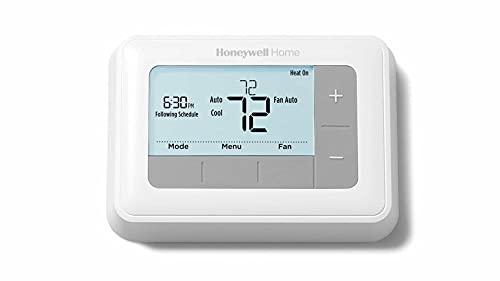
| Smart Scheduling | Power: (Requires low-voltage power; retains program during outages) — battery/low-voltage backup implied (memory retention) | Display: Extra‑large backlit display (shows time, room temp, set point) | Programmable/Scheduling: 7‑day flexible programmable scheduling (multiple modes) | VIEW LATEST PRICE | Read Our Analysis |
| HYO6BW 2-Wire Digital Programmable Thermostat with LCD |

| Budget Digital | Power: Battery powered | Display: Large LCD display, easy to read in dark (K‑type) | Programmable/Scheduling: Programmable schedule and timer (holiday hold) | VIEW LATEST PRICE | Read Our Analysis |
| Programmable Home Thermostat – 2 Heat/1 Cool |

| Pro-Level Flexibility | Power: Low‑voltage thermostat (typical 24VAC/system powered; battery backup implied for memory) | Display: Large, clear backlit LCD display (white backlight) | Programmable/Scheduling: 7‑day or 5/1/1 programmable schedules; factory pre‑set option | VIEW LATEST PRICE | Read Our Analysis |
| Sensi Touch 2 Smart Thermostat (ST76) |

| Smart Touch Control | Power: Requires common wire (C‑wire) / mains low‑voltage power (Wi‑Fi enabled) | Display: Touchscreen color display | Programmable/Scheduling: Programmable scheduling with remote access and app control | VIEW LATEST PRICE | Read Our Analysis |
More Details on Our Top Picks
Honeywell TH1100DV1000 Pro-Digital 2-Wire Heat Only
Provided that you’re installing or replacing a simple heat-only system, the Honeywell TH1100DV1000 Pro-Digital is a straightforward, battery-powered 2-wire option that keeps setup quick and maintenance minimal. You’ll appreciate its backlit display that constantly shows ambient temperature, so you’re never guessing current conditions. The adjustable temperature scale covers a practical 40–90°F range, letting you tailor comfort precisely. Designed specifically for heat-only systems, it uses a 2-wire connection for compatibility with basic setups. Battery power means no C-wire hassle, and Honeywell’s Pro-Digital branding signals reliable operation. It’s a practical, no-frills thermostat for straightforward heating control.
- Power:Battery powered (Honeywell brand)
- Display:Backlit display, shows ambient temperature continuously
- Programmable/Scheduling:Adjustable temperature scale (no detailed schedule noted) — heat‑only digital control (basic adjustable settings)
- System Compatibility:Designed for heat‑only systems (2‑wire)
- Temperature Display/Range:Displays ambient temp; scale 40–90°F
- Memory/Retention or Reliability Features:Simple digital settings (no detailed memory feature specified)
- Additional Feature:Heat-only system design
- Additional Feature:Continuous ambient display
- Additional Feature:Simple 2-wire connection
T21 Programmable 2 Heat/1 Cool Thermostat
Provided that you need a simple, budget-friendly thermostat that handles two heating stages and one cooling stage, the T21 is a solid choice — especially for homes with conventional multi-stage systems or heat pumps up to 2H/1C. You’ll appreciate dual power options (24VAC or two AA batteries), though a C-wire is recommended for stable operation in 2H/1C setups. It supports single-stage systems, hydronic heating, boilers, gas fireplaces (24V), and 750 mV systems. The 5+2 programmable schedule lets you set weekday/weekend temps for savings. A backlit LCD, concealed controls, easy DIY installation, and memory retention add convenience and reliability.
- Power:24VAC or 2×AA batteries
- Display:Backlit LCD screen (F/°C)
- Programmable/Scheduling:5+2 programmable schedule (weekdays/weekend)
- System Compatibility:Supports conventional and heat pump systems up to 2H/1C; wide compatibility (C‑wire recommended)
- Temperature Display/Range:Displays temperature in °F or °C (range not specified)
- Memory/Retention or Reliability Features:Memory retention preserves settings during power outages
- Additional Feature:5+2 weekday/weekend schedule
- Additional Feature:Cover-protected controls
- Additional Feature:Memory retention during outages
Honeywell Home RTH7560E 7-Day Programmable Thermostat
Provided you want a simple, reliable 7-day programmable thermostat that adapts to your schedule, the Honeywell Home RTH7560E delivers with Smart Response Learning to time heating and cooling so rooms reach your set temperatures at the moments you expect them. You’ll get flexible 7-day programming—day-to-day, weekends-only, or a single weekly schedule—and Smart Response learns run times so temperature hits your set point as scheduled. The extra-large backlit display shows time, current temp, and set point at once, no menu paging. UWP mounting simplifies installation and future upgrades, while filter alerts, low-battery alerts, and memory retention protect your settings.
- Power:(Requires low-voltage power; retains program during outages) — battery/low-voltage backup implied (memory retention)
- Display:Extra‑large backlit display (shows time, room temp, set point)
- Programmable/Scheduling:7‑day flexible programmable scheduling (multiple modes)
- System Compatibility:Compatible with common residential HVAC systems (heating/cooling control)
- Temperature Display/Range:Shows current room temperature and set point
- Memory/Retention or Reliability Features:Program retained in memory during power interruptions; Smart Response learning
- Additional Feature:Smart Response Learning
- Additional Feature:Extra-large backlit display
- Additional Feature:UWP uniform wiring system
HYO6BW 2-Wire Digital Programmable Thermostat with LCD
Should you need a simple, battery-powered thermostat that’s ideal for controlling an oil or fuel boiler, the HYO6BW 2‑wire digital programmable thermostat is a smart pick. You’ll get a large, easy-to-read K-type LCD that stays visible in the dark and shows room temperature from its internal sensor across a 0–40°C (32–104°F) range. It switches with a 0.5°C differential for stable control and offers a single heating or cooling output. You can set programmable schedules, timers, and maintain heating during holidays to cut energy use and reduce heating costs without complex wiring or setup.
- Power:Battery powered
- Display:Large LCD display, easy to read in dark (K‑type)
- Programmable/Scheduling:Programmable schedule and timer (holiday hold)
- System Compatibility:Single heating or single cooling output; controls oil‑fuel boiler
- Temperature Display/Range:Display range 0–40°C (32–104°F)
- Memory/Retention or Reliability Features:Maintains programmed heating during holidays (holds schedule)
- Additional Feature:0–40°C (32–104°F) range
- Additional Feature:0.5°C switching differential
- Additional Feature:Holiday/program hold feature
Programmable Home Thermostat – 2 Heat/1 Cool
Provided that you’ve got a straightforward heating and cooling setup—like two-stage heating with one cooling stage or a single-stage conventional system—this 2-Heat/1-Cool programmable thermostat is a smart pick because it lets you optimize comfort and energy use with simple, flexible scheduling. You’ll find compatibility with heat pumps (with or without auxiliary/emergency heat), conventional single-stage systems, forced air, electric furnaces, hot water or steam systems, millivolt setups, and gas fireplaces. It’s not for two-transformer, multi-stage conventional, dual-fuel, line-voltage, or mini-split systems. Installation is quick (about 30 minutes) using a universal sub-base, and the white backlit LCD plus factory energy program makes programming straightforward. Customer support is available 24/7.
- Power:Low‑voltage thermostat (typical 24VAC/system powered; battery backup implied for memory)
- Display:Large, clear backlit LCD display (white backlight)
- Programmable/Scheduling:7‑day or 5/1/1 programmable schedules; factory pre‑set option
- System Compatibility:Broad compatibility list (heat pumps, conventional single‑stage, hot water, millivolt, etc.)
- Temperature Display/Range:Setpoint display on backlit LCD (range typical for home thermostats; not explicitly listed)
- Memory/Retention or Reliability Features:Factory pre‑set program and memory for user schedules (retains programming)
- Additional Feature:Universal sub-base terminals
- Additional Feature:Factory energy-efficient preset
- Additional Feature:7-day or 5/1/1 schedules
Sensi Touch 2 Smart Thermostat (ST76)
Provided that you want a touchscreen smart thermostat that’s easy to set up yourself and works with two‑wire systems, the Sensi Touch 2 (ST76) is a strong choice — it pairs with optional Sensi Room Sensors to balance temperatures, offers remote access and usage reports, and requires a common wire for reliable operation. You’ll get a color touchscreen, programmable scheduling, alerts, maintenance notifications, and ENERGY STAR efficiency that can cut HVAC energy about 23%. Wi‑Fi and universal Bluetooth simplify setup via the app, which guides DIY installation. The package includes the thermostat, mounting hardware, manuals, and a warranty; Sensi won’t sell your personal data.
- Power:Requires common wire (C‑wire) / mains low‑voltage power (Wi‑Fi enabled)
- Display:Touchscreen color display
- Programmable/Scheduling:Programmable scheduling with remote access and app control
- System Compatibility:Compatible with most home HVAC equipment; works with Sensi sensors
- Temperature Display/Range:Room temperature display with touchscreen color interface
- Memory/Retention or Reliability Features:Remote/cloud features, usage reports, and app setup with saved schedules
- Additional Feature:Touchscreen color display
- Additional Feature:Wi‑Fi remote access
- Additional Feature:ENERGY STAR certified
Factors to Consider When Choosing a 2 Wire Programmable Thermostat
Before picking a 2‑wire programmable thermostat, you’ll want to check system compatibility and wiring requirements to make sure it’ll work with your setup. Consider power source options and programming flexibility so the unit runs reliably and fits your schedule. Finally, look at the display and controls to confirm they’re intuitive and easy for you to use.
System Compatibility
Upon choosing a 2‑wire programmable thermostat, make sure it matches your system’s wiring, voltage, and control type so you don’t end up with a unit that can’t power or properly control your heating equipment. Check that the thermostat supports two‑wire heat‑only or heat/cool setups rather than multi‑stage or heat‑pump systems—2‑wire units usually handle a single heating call. Confirm voltage type (24VAC, millivolt, or line voltage) and whether the thermostat needs a common (C) wire or can run on batteries; wrong expectations will prevent stable power. Verify compatibility with your heat source—boiler, hydronic, oil, gas, electric, or millivolt—since control logic varies. Finally make certain the thermostat’s output type (single relay, separate heat/cool, or heat‑pump reversing valve) matches your system inputs.
Wiring Requirements
Now that you’ve checked system compatibility, look closely at wiring requirements—these determine whether a 2‑wire programmable thermostat will actually work in your setup. A 2‑wire unit typically uses two low‑voltage conductors (R and W) that both power the thermostat from the heating control circuit and call for heat. Confirm those wires are low‑voltage (usually ~24 VAC), not line‑voltage (110–240 V), because 2‑wire thermostats aren’t compatible with electric baseboard or other line‑voltage systems. Check that the two conductors are dedicated to the heating control and aren’t shared with other zones or transformers to avoid conflicts or damage. Finally, take into account that should you need fan control, cooling, or smart features, a 2‑wire setup won’t suffice; you’ll need more wires or a C wire.
Power Source Options
Upon selecting a 2‑wire programmable thermostat, consider how it will be powered and what that means for reliability and features: most rely solely on AA or AAA batteries (lasting months to years), while some accept a 24VAC common or an adapter to stabilize power and support advanced displays or wireless functions. You should check battery type and expected life, and prefer models with clear low‑battery alerts and program memory retention so schedules aren’t lost during swaps or outages. Take into account display and feature power draw: backlighting, touchscreens, or Wi‑Fi increase consumption versus basic LCDs. Finally, confirm compatibility with millivolt or other low‑voltage systems so the thermostat won’t interfere with operation or force extra transformers.
Programming Flexibility
Upon choosing a 2‑wire programmable thermostat, focus on the scheduling flexibility it gives you so daily routines and energy goals match up. Check whether it supports 5+2, 5/1/1, or full 7‑day programming so you can separate weekday and weekend schedules or set each day individually. Look for multiple program periods per day—wake, leave, return, sleep—so different activities have appropriate temperatures and you save energy. Verify hold and temporary override functions so you can change temperatures without losing your schedule. Consider adaptive or learning-run-time features that shift start times to reach setpoints at the times you expect them. Finally, prefer units with an easy programming interface or remote/app scheduling for convenient edits and monitoring.
Display And Controls
How easy is it to read and operate your thermostat while you’re rushing out the door or checking it at night? Pick a unit with a clear backlit LCD or touchscreen so ambient and setpoint temps are readable in low light. Prefer displays that show current temperature, setpoint, and time at once so you don’t have to page through menus for basics. Choose intuitive controls — a rotary dial, large buttons, or responsive touchscreen — and a concealed cover to prevent accidental program changes. Confirm the thermostat can display °F or °C and lets you adjust the temperature scale and range for your region. Finally, make certain the interface supports easy 5+2 or 7-day programming and retains settings during power interruptions.
Installation Ease
Now that you’ve considered display and controls, it’s equally vital to contemplate about how the thermostat will actually get installed and maintained. Verify the wiring first: confirm the wall control uses only two low-voltage thermostat wires (typically R and W) and mark them before disconnecting to avoid miswiring. Check power requirements: two-wire units are usually battery-powered—ensure batteries are accessible and observe expected life to avoid frequent replacements. Assess mounting compatibility by measuring the existing footprint and wire spacing so the new base aligns and conceals old screw holes or paint marks. Review the control interface for clear, backlit displays and protected buttons to prevent accidental changes. Finally, confirm the thermostat supports your heat-only or single-stage system and terminal labeling for simple setup.
Energy Savings Features
As you’re choosing a 2‑wire programmable thermostat, focus initially on features that actually cut energy use: flexible schedules (5+2 or 7‑day) let you set consistent setbacks, adaptive run‑time and learning controls preheat/pre‑cool to hit setpoints efficiently, and precise cycle control with small differentials reduces short cycling. Choose schedules that allow 4–7°F setbacks at night or during absences to capture the typical 10–30% HVAC savings. Favor learning or adaptive algorithms so the system times heat/cool starts and avoids overshoot. Look for multi‑stage or adaptive cycle control with tight differentials (around 0.5°C) to protect equipment and limit waste. Finally, make certain battery or low‑power memory retention so your programmed savings persist through outages.
Frequently Asked Questions
Will These Thermostats Work With a Heat Pump System?
They probably won’t work with a heat pump system without extra wiring or an adapter, so you’ll need to check compatibility, consult the thermostat manual, or contact a technician to confirm whether installation and controls will function properly.
Can I Install a 2-Wire Thermostat Myself Safely?
A neighbor safely installed one last summer through turning off power, labeling wires, and following the manual. You can do it provided you’re comfortable with basic electrical work, but don’t hesitate to hire a pro for tricky systems.
Do 2-Wire Thermostats Support Humidification Control?
Mostly no — 2-wire thermostats usually don’t control humidification directly because they only switch heat. You’ll need additional wiring or an external humidistat/interface to manage a humidifier, and you could want professional help for wiring.
How Do Firmware Updates Get Applied to Non-Smart Models?
You can’t update them remotely; you replace firmware through swapping chips or sending units back for factory reflashing, and you rely on technicians for physical updates, and you accept hardware limitations whenever features need newer software.
Are There Energy Rebate Programs for Upgrading to Programmable Thermostats?
Yes — you can often get rebates for upgrading to programmable thermostats through utility companies, state incentives, or federal energy-efficiency programs; check local utility websites and ENERGY STAR listings to see available offers and qualification requirements.
Final Thoughts
Consider your home as a ship and the thermostat as its compass: pick a simple, reliable 2‑wire model and you’ll steer warmth steadily through cold nights. Whether you want basic backlit control, oil‑boiler precision, week‑long scheduling, or touchscreen smart access, choose the unit whose wiring and voltage match your system. With the right thermostat, you’ll sail into coziness, avoid rough cycling, and keep energy use on a steady, efficient course.
