

Energy-conscious shoppers often seek bulbs that lower bills without sacrificing brightness. This roundup compares five efficient LED options—from high-output corn cob units for large spaces to compact A19s for everyday rooms. Each entry records lumen output, color temperature, lifespan, and safety listings to help buyers weigh performance against cost. The next section outlines key selection factors and which bulbs fit specific needs.
| 10500-Lumen 70W LED Corn Cob Bulb (2-Pack) |
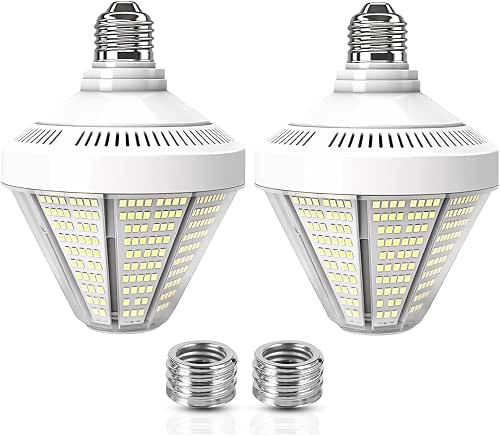
| High-Powered Choice | Base Type: E26 (also references E39 compatibility) | LED Technology: LED (corn-cob LED) | Color Temperature Specified: 5000K (daylight) | VIEW LATEST PRICE | Read Our Analysis |
| Linkind A19 60W Equivalent 2700K LED Bulbs (6-Pack) |
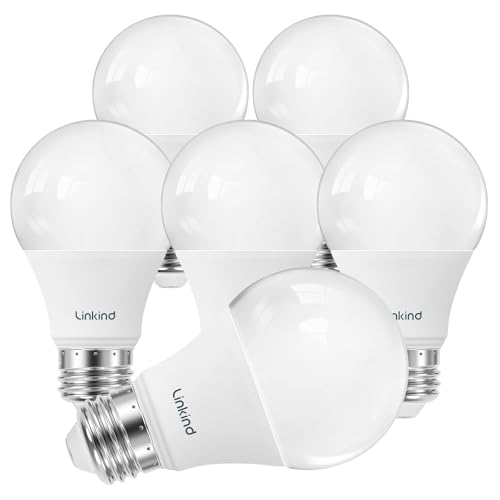
| Warm Home Favorite | Base Type: E26 | LED Technology: LED (A19 LED) | Color Temperature Specified: 2700K (soft white) | VIEW LATEST PRICE | Read Our Analysis |
| SANSI 5000 Lumens 5000K A19 LED Bulbs (2-Pack) |

| Premium Daylight Performance | Base Type: A19 (standard medium base — implied E26) | LED Technology: LED (A19 LED) | Color Temperature Specified: 5000K (daylight) | VIEW LATEST PRICE | Read Our Analysis |
| Energetic 24-Pack A19 60W Equivalent Daylight LEDs |

| Bulk Daylight Value | Base Type: E26 | LED Technology: LED (A19 LED) | Color Temperature Specified: 5000K (daylight) | VIEW LATEST PRICE | Read Our Analysis |
| ENERGETIC LIGHTING 24-Pack A19 60W LED Bulbs |
| Neutral-Tone Bulk Pack | Base Type: E26 | LED Technology: LED (A19 LED) | Color Temperature Specified: 4000K (cool/neutral) | VIEW LATEST PRICE | Read Our Analysis |
More Details on Our Top Picks
10500-Lumen 70W LED Corn Cob Bulb (2-Pack)
Should you need bright, reliable lighting for large spaces, the 10500-lumen 70W LED corn cob (2-pack) is a smart choice—its 5000K daylight output and 360° omni-directional design give you crisp, shadow-free illumination while using about one-tenth the energy of comparable incandescent bulbs. You’ll get a tapered cone shape for extra down-lighting, no start-up delay, and low heat output. The bulbs fit standard E26 fixtures (and E39 where applicable), run on 100–277V, and last about 50,000 hours. They cut energy use, reduce replacements, and come with 24/7 support plus a five-year warranty for peace of mind.
- Base Type:E26 (also references E39 compatibility)
- LED Technology:LED (corn-cob LED)
- Color Temperature Specified:5000K (daylight)
- Wattage (LED Power):70W
- Lifespan / Rated Hours:50,000 hours
- Non-flicker / Instant On:No start-up delay; no flicker
- Additional Feature:Tapered cone shape
- Additional Feature:Omni-directional 360° output
- Additional Feature:100–277V wide voltage
Linkind A19 60W Equivalent 2700K LED Bulbs (6-Pack)
Assuming you want warm, energy-efficient lighting for inhabited spaces or bedside lamps, the Linkind A19 60W-equivalent (2700K) six-pack delivers soft, cozy light while cutting electricity use—each bulb uses just 8.5W for an 800-lumen output and lasts about 15,000 hours. You’ll get soft white 2700K warmth, 80+ CRI, a wide 200° beam, and instant-on, flicker-free performance. These non-dimmable A19 bulbs fit standard E26 sockets, run on 100–120V, and emit minimal heat while saving up to 85% versus incandescent. Confirm compatibility before installation; alternatives in 4000K and 5000K are available should you prefer cooler tones.
- Base Type:E26
- LED Technology:LED (A19 LED)
- Color Temperature Specified:2700K (soft white)
- Wattage (LED Power):8.5W
- Lifespan / Rated Hours:15,000 hours
- Non-flicker / Instant On:Instant on; no flickering
- Additional Feature:App control listed
- Additional Feature:200° beam angle
- Additional Feature:88.89 lm/W efficiency
SANSI 5000 Lumens 5000K A19 LED Bulbs (2-Pack)
In case you need daylight-bright output for a large room while cutting energy bills, the SANSI 5000-lumen A19 LED pair delivers — producing intense 5000K light at just 35W each (about a 300W incandescent equivalent) so you get bright, efficient illumination and up to 95% estimated energy savings. You’ll appreciate 5000 lumens from up to 144 LED chips with flicker-free, quiet operation. These non-dimmable bulbs use a patented ceramic heat sink and hollow design for fast heat dissipation and longer life. Safety features include V0 flame retardance, reinforced insulation, ETL listing, a 22.5-year rating, and a five-year plan.
- Base Type:A19 (standard medium base — implied E26)
- LED Technology:LED (A19 LED)
- Color Temperature Specified:5000K (daylight)
- Wattage (LED Power):35W
- Lifespan / Rated Hours:~22.5 years rating (listed lifetime) / implied 50,000? (patented ceramic; 22.5 years stated)
- Non-flicker / Instant On:Flicker-free; no noise
- Additional Feature:Ceramic heat sink
- Additional Feature:Hollow heat-dissipation
- Additional Feature:ETL listed
Energetic 24-Pack A19 60W Equivalent Daylight LEDs
Should you want bright, daylight-quality lighting across multiple rooms without hiking your electric bill, the Energetic 24-pack of A19 LEDs is a smart fit—each 8W bulb delivers 760 lumens (a 60W incandescent equivalent) and cuts energy use approximately 87%, so you can replace fixtures throughout your home and see immediate savings. You’ll get 5000K daylight, frosted 180° beam coverage, and a CRI of 80 for accurate colors. These E26, AC120V bulbs are non-dimmable, ETL-listed, instant-on, and flicker-free with no mercury or lead. Expect about 15,000 hours life and a seller-backed quality guarantee; notice no California shipments.
- Base Type:E26
- LED Technology:LED (A19 LED)
- Color Temperature Specified:5000K (daylight)
- Wattage (LED Power):8W
- Lifespan / Rated Hours:15,000 hours
- Non-flicker / Instant On:Instant-on; no flickering
- Additional Feature:24-bulb bulk pack
- Additional Feature:No breakable parts
- Additional Feature:Not shippable to California
ENERGETIC LIGHTING 24-Pack A19 60W LED Bulbs
Should you want reliable, cost-cutting replacement bulbs for everyday indoor fixtures, the ENERGETIC LIGHTING 24-pack A19 LEDs are a smart pick—each 8W bulb delivers about 750–760 lumens (a 60W incandescent equivalent) at a neutral 4000K with instant, flicker-free light and an ETL listing for safety. You’ll screw these A19 E26-base bulbs into lamps, ceiling fixtures, or sconces and get wide 180° coverage, CRI 80 color accuracy, no IR, and an eye-friendly non-dazzling output. Rated 15,000 hours, they cut energy use approximately 86.7%, use no mercury, are lightweight plastic, and include vendor warranty support.
- Base Type:E26
- LED Technology:LED (A19 LED)
- Color Temperature Specified:4000K (cool/neutral)
- Wattage (LED Power):8W
- Lifespan / Rated Hours:15,000 hours
- Non-flicker / Instant On:Instant; no flicker
- Additional Feature:4000K neutral white
- Additional Feature:Adjustable light direction
- Additional Feature:ETL listed
Factors to Consider When Choosing Energy Saving Light Bulbs
At the time of selecting energy saving light bulbs, attention should be paid to brightness (lumens) and color temperature to match task and ambiance. Buyers must also compare energy consumption (watts for given lumens), make certain base compatibility with fixtures, and confirm dimmability and control options. Considering these factors together helps optimize performance, savings, and user experience.
Brightness And Lumens
Brightness is best judged via lumens, the measure of actual light output, so buyers should match lumen levels to room size and task—about 200–500 lm for ambient bedroom lighting, 700–1,100 lm for general residential areas, and 2,000+ lm for garages or workspaces. Lumens quantify perceived brightness; wattage no longer indicates output for LEDs. Compare lumens per watt (efficacy) to select efficient options that deliver more light for less power. Account for beam angle and bulb shape: omnidirectional types spread lumens widely, while narrow-beam lamps concentrate the same lumen count into a focused area, changing perceived brightness. Finally, check lumen maintenance and rated lifetime (L70 or similar) so the bulb retains adequate brightness over time rather than only at initial install.
Color Temperature Choices
How does color temperature influence both mood and function in a space? Color temperature, measured in Kelvin, spans warm (~2700–3000K), cool (~3500–4100K), and daylight (~5000–6500K) ranges. Warm white yields yellowish tones that promote relaxation, suited to residential rooms and bedrooms. Cool white delivers a neutral, alert feel appropriate for kitchens and work areas. Daylight mimics noon sun, enhancing visibility and contrast for garages, workshops, and detailed tasks. Very high temperatures (5000K+) increase perceived brightness but can suppress melatonin, so they are ill-advised in bedrooms or evening settings. Color Rendering Index complements temperature; select CRI ≥80 for acceptable color accuracy and ≥90 when true color matters, such as in design, art, or color-critical tasks.
Energy Consumption Efficiency
In choosing energy-saving bulbs, efficiency should be gauged via measurable outputs rather than marketing claims: lumens per watt (lm/W) indicates how much visible light is produced per unit of electricity, so higher lm/W values mean lower energy use for the same light level. Compare lm/W—modern LEDs typically deliver 80–150 lm/W versus about 10–17 lm/W for incandescents—favoring higher figures. Check rated wattage against claimed incandescent equivalents to reveal real energy savings; an 8–10W LED replacing a 60W incandescent saves roughly 50W. Estimate annual consumption through multiplying wattage through daily hours and days per year (a 10W bulb at three hours/day ≈ 10.95 kWh/year). Factor rated lifetime and replacement frequency to lower aggregate energy and material impacts. Confirm operating voltage and dimmer compatibility to avoid performance losses.
Bulb Base Compatibility
Bulb-base compatibility is a practical checkpoint: the physical socket type (for example, E26 or E39), the fixture’s rated voltage, and the bulb’s driver requirements must match to guarantee safe operation and proper performance. Buyers should confirm the socket type so the base physically fits, and verify voltage ranges—residential 100–120V versus commercial 100–277V—for safe operation. Check that bulbs intended for enclosed or recessed fixtures fit the base and shape while allowing ventilation and conforming to the fixture’s rating. Whenever a dimmable circuit is involved, make certain the bulb’s base and driver electronics are compatible with the dimmer system, noting many LEDs are non-dimmable. Use only rated adapters or converters to change base sizes, and confirm they meet electrical safety and code requirements.
Dimmability And Controls
Evaluating dimmability and control compatibility is essential while selecting energy-saving bulbs, since many LEDs are not designed for dimming and mismatches with dimmer types or control systems can cause flicker, buzzing, reduced lifespan, or limited functionality. Buyers should confirm bulbs are explicitly labeled dimmable and match them to the dimmer type—triac/leading-edge versus ELV/trailing-edge—to avoid buzzing, unstable output, or narrow dimming ranges. Dimmable LEDs might require minimum load or LED-specific dimmers to achieve smooth reduction from 100% to low levels without flicker. Consider control method compatibility: standard wall dimmers, smart apps, remotes, hubs, and multi-way switches each impose different requirements. Finally, consult manufacturer specifications for dimming range and frequency compatibility to predict real-world performance.
Lifespan And Durability
Consider lifespan and durability as primary selection criteria, since rated hours, warranty, and construction predict real-world longevity. LED bulbs rated 15,000–50,000 hours translate to roughly 4–23 years depending on daily use; consumers should convert hours to expected years given their habits. Seek explicit hour ratings and warranties (commonly 3–5 years) as indicators of manufacturer confidence. Assess thermal management features—heat sinks, ceramic or hollow-body designs and lower operating temperatures—which reduce chip and driver stress and extend life. Beware of factors that shorten lifespan: frequent on/off cycling, incompatible dimmers, and high ambient temperatures. Finally, prefer products with safety and durability certifications (ETL/UL), flame-retardant materials, and reinforced insulation to guarantee safer, longer-term performance.
Heat Dissipation Design
Having covered lifespan and durability, attention turns to how heat dissipation design directly affects LED longevity and performance. Effective thermal management lowers junction temperature—reductions of 10–20°C can significantly extend rated life measured in tens of thousands of hours. Materials with high thermal conductivity, such as ceramic or aluminum heat sinks, and direct mounting of LED chips to the substrate reduce thermal resistance and improve heat transfer. Heat-sink geometry—finned, hollow, or tapered—and greater surface area with airflow paths enhance convective cooling. Driver efficiency and operating voltage range also influence thermal load, since inefficient drivers produce excess heat that the thermal design must manage. Poor dissipation accelerates lumen depreciation and color shift; consequently, check specified thermal metrics (Tc, thermal resistance) or rated life at stated operating temperatures.
Safety Certifications And Warranty
Upon selecting energy‑saving bulbs, verified safety certifications and clear warranty terms are essential indicators of product reliability and user protection. Buyers should seek nationally or internationally recognized marks such as ETL, UL, or CE, demonstrating testing for electrical safety and fire risk. Documentation ought to list rated lifespan and specify warranty coverage—typical periods run one to five years—and whether the manufacturer offers repair or replacement for premature failures. Materials and safety ratings (flame retardant class, insulation standards) reduce overheating, shock, and corrosion risks. Product specs must state operating voltage ranges (for example 100–277V or 120V) and any restrictions (non‑dimmable, not for enclosed fixtures) so users do not void warranties or create hazards. Retain receipts and register if required to maintain claim eligibility.
