

Suppose you’ve just swapped an old dial thermostat for Honeywell’s RTH9585WF1004 and cut your heating bill while controlling zones from your phone. You’ll want options should you’re after plug‑in simplicity, commercial ruggedness, or fireplace‑safe RF control. I’ll outline seven top 2026 models, what they do best, and which setup fits your space—so you can pick the right balance of features, budget, and reliability.
| DIGITEN Wireless Programmable Temperature Controller Outlet Plug |
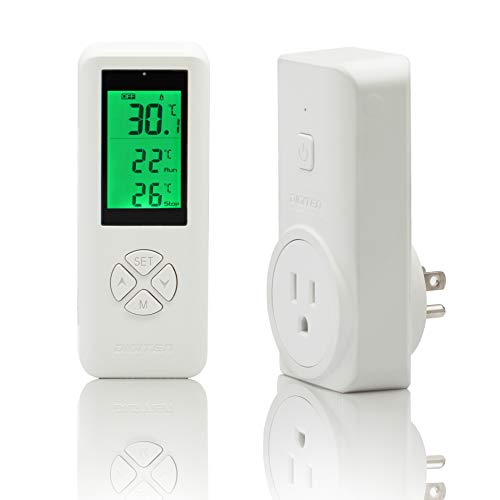
| Best Plug-In Thermostat | Connectivity: Wireless (Wi‑Fi listed; remote detects temp) | Remote Control: Remote control included (wireless) | Temperature Display: Digital LCD with backlight (℃/℉) | VIEW LATEST PRICE | Read Our Analysis |
| Skytech 9800328 SKY-1001 TH Fireplace Remote Control and Thermostat |

| Best for Fireplaces | Connectivity: RF (battery‑operated RF transmitter) | Remote Control: Handheld RF transmitter included | Temperature Display: LCD shows room/thermostat temp (℃/℉) | VIEW LATEST PRICE | Read Our Analysis |
| Honeywell Home RTH6580WF Wi-Fi 7-Day Programmable Thermostat White |

| Best for Smart Homes | Connectivity: Wi‑Fi | Remote Control: App/remote control via Wi‑Fi (mobile app) | Temperature Display: Large backlit digital display | VIEW LATEST PRICE | Read Our Analysis |
| Fireplace Remote Control Kit for Millivolt Gas |
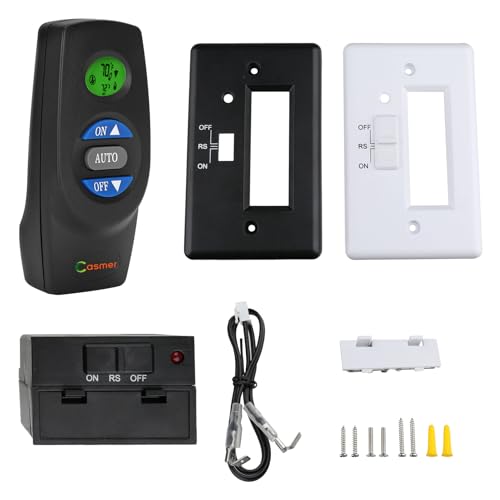
| Best for Millivolt Systems | Connectivity: RF (millivolt remote/receiver) | Remote Control: Transmitter (remote) included | Temperature Display: Receiver/transmitter provide thermostat control (includes display on transmitter) | VIEW LATEST PRICE | Read Our Analysis |
| DIGITEN WTC100 Wireless Plug-in Thermostat for Home |

| Best Easy Setup Plug-In | Connectivity: RF/IR (listed RF and IR) | Remote Control: Remote controller included (battery powered) | Temperature Display: Large LCD with backlight (℃/℉) | VIEW LATEST PRICE | Read Our Analysis |
| W1609-101 TH-1609 Refrigeration Temperature Controller Thermostat |
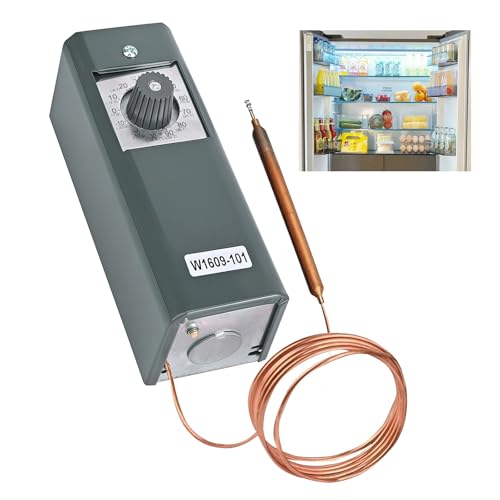
| Best for Refrigeration | Connectivity: Remote capillary/remote bulb (remote sensing connection) | Remote Control: Remote sensing/remote thermostat operation | Temperature Display: Mechanical/readout for setpoint (thermostat control range) | VIEW LATEST PRICE | Read Our Analysis |
| Honeywell Home RTH9585WF1004 Wi‑Fi Smart Color Thermostat |
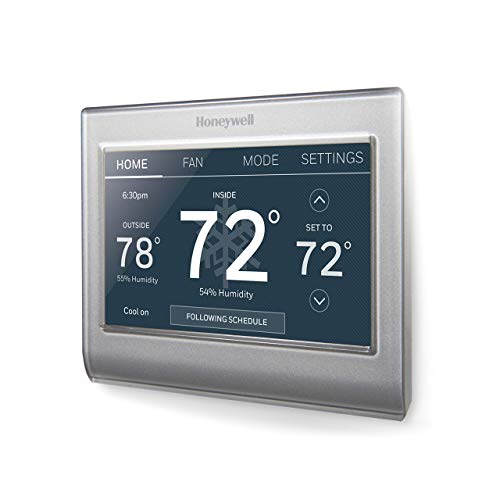
| Best Feature-Rich Smart Thermostat | Connectivity: Wi‑Fi | Remote Control: Mobile/remote control via Wi‑Fi app | Temperature Display: Color touchscreen display (configurable) | VIEW LATEST PRICE | Read Our Analysis |
More Details on Our Top Picks
DIGITEN Wireless Programmable Temperature Controller Outlet Plug
Provided you want an affordable, portable thermostat plug that you can program and control from across the room, the DIGITEN WTC-100 stands out for its remote-controlled temperature sensing and straightforward digital display. You’ll use the wireless remote and Wi‑Fi connectivity to set temps, view the backlit LCD, and switch ℃/℉. It stores settings after power loss, warns with high/low alarms, and houses a precise sensor in a compact, wall-mountable white plastic case. With a 15A/1650W capacity and 50–100 m open range, it’s suited for greenhouses, brewing, reptile setups, and home heating or cooling devices.
- Connectivity:Wireless (Wi‑Fi listed; remote detects temp)
- Remote Control:Remote control included (wireless)
- Temperature Display:Digital LCD with backlight (℃/℉)
- Programmability / Modes:Programmable (remote programmable)
- Power Source:Electric (receiver plugs into outlet); remote battery
- Intended Heating/Cooling Use Cases:Home heaters, greenhouse, reptile, brewing, space heaters, fans, coolers
- Additional Feature:High/low temp alarms
- Additional Feature:Saves settings after power loss
- Additional Feature:15A / 1650W max load
Skytech 9800328 SKY-1001 TH Fireplace Remote Control and Thermostat
In case you want a simple, battery-powered remote that doubles as a thermostat for gas fireplaces, the Skytech 9800328 SKY-1001 TH is a solid pick because it combines an RF four-button transmitter with a clear LCD showing room and set temperatures in °F or °C. You’ll get ON, OFF, Mode and Set controls, a flame icon and low-battery indicator, plus over 1,048,567 security codes for reliable pairing. The receiver learns two extra Skytech transmitters, mounts on a snap-on wall plate, and includes 18 wires and connectors. It runs on four AA batteries, measures 6.4 x 3.4 x 3 inches, and remains available.
- Connectivity:RF (battery‑operated RF transmitter)
- Remote Control:Handheld RF transmitter included
- Temperature Display:LCD shows room/thermostat temp (℃/℉)
- Programmability / Modes:Basic set/mode functions (ON/OFF/Mode/Set) — thermostat control
- Power Source:Batteries for transmitter (4×AA included); receiver wired
- Intended Heating/Cooling Use Cases:Gas heating appliances / fireplaces
- Additional Feature:Receiver learn function
- Additional Feature:Snap-on wall plate
- Additional Feature:1,048,576+ security codes
Honeywell Home RTH6580WF Wi-Fi 7-Day Programmable Thermostat White
Provided you want a straightforward, budget‑friendly smart thermostat that you can set up yourself, the Honeywell Home RTH6580WF is a solid pick — it gives you Wi‑Fi control via the Total Connect Comfort or Honeywell Home app and works with Alexa, Google Assistant, and Cortana. You’ll install it DIY whether your system supplies a C‑wire (20–30 VAC); verify compatibility initially since it won’t work with electric baseboard heat. You get a 7‑day programmable schedule, Smart Response learning, a large backlit display, and ENERGY STAR efficiency. It’s compatible with common forced‑air, hot‑water, steam, and heat‑pump systems.
- Connectivity:Wi‑Fi
- Remote Control:App/remote control via Wi‑Fi (mobile app)
- Temperature Display:Large backlit digital display
- Programmability / Modes:7‑day programmable schedule
- Power Source:Hardwired (C‑wire required; 20–30 VAC)
- Intended Heating/Cooling Use Cases:Forced air systems, heat pumps, hot water, steam (not baseboard)
- Additional Feature:Smart Response learning
- Additional Feature:ENERGY STAR certified
- Additional Feature:Voice assistant compatible
Fireplace Remote Control Kit for Millivolt Gas
Should you run a millivolt gas fireplace and want simple temperature control without rewiring, this remote kit is a great choice because it replaces common ambient remotes/receivers (RCM-RX, RMC RX, and similar) and works with a wide range of transmitters like RCT, RCMT, and WMTD. You get a transmitter, receiver box, wall plate, clip, screws, 18-inch wires, and manual. It’s for standard millivolt propane/LPG valves and isn’t OEM. Install both components together and keep the receiver under 120°F. Batteries (3 AAA, 4 AA) are sold separately. Lifetime service covers non‑human damage.
- Connectivity:RF (millivolt remote/receiver)
- Remote Control:Transmitter (remote) included
- Temperature Display:Receiver/transmitter provide thermostat control (includes display on transmitter)
- Programmability / Modes:Thermostatic control (on/off temp control — millivolt)
- Power Source:Batteries required for transmitter (3×AAA, 4×AA); receiver wired to millivolt circuit
- Intended Heating/Cooling Use Cases:Millivolt gas fireplaces and stoves (propane/LPG)
- Additional Feature:Millivolt gas compatible
- Additional Feature:Lifetime nonhuman-damage guarantee
- Additional Feature:Max operating temp 120°F
DIGITEN WTC100 Wireless Plug-in Thermostat for Home
Ideal for renters or anyone needing a simple, portable temperature controller, the DIGITEN WTC100Pro uses a plug‑in receiver and remote with a built‑in sensor to automatically switch heating or cooling devices at your set temperature. You’ll appreciate the three-button interface, large backlit LCD, and plug-and-play setup—no programming required. Switch between heating and cooling or ℃/℉ instantly. The battery-powered remote senses ambient temperature and communicates via RF to control the receiver; IR is also listed. It supports fans, ACs, greenhouses, reptile enclosures, and more. Wall-mountable and compact, the WTC100Pro is practical for non-permanent, smart-home–compatible installations.
- Connectivity:RF/IR (listed RF and IR)
- Remote Control:Remote controller included (battery powered)
- Temperature Display:Large LCD with backlight (℃/℉)
- Programmability / Modes:Non‑programmable automatic heating/cooling modes (preset target control)
- Power Source:Receiver plugs in; remote battery powered
- Intended Heating/Cooling Use Cases:Air conditioners, fans, greenhouse, reptile, plant cultivation, home/outdoor
- Additional Feature:Built-in remote sensor
- Additional Feature:Plug-and-play three-button
- Additional Feature:RF + IR listed connectivity
W1609-101 TH-1609 Refrigeration Temperature Controller Thermostat
Should you need a reliable remote thermostat for commercial refrigeration, the W1609-101 (TH-1609) delivers precise temperature control with a 5-inch capillary and a wide -30°F to 90°F (-34°C to 32°C) range—perfect for walk-in coolers and remote-bulb setups. You’ll get a mechanical remote temperature controller built for refrigeration systems that demands accuracy and durability. Its sturdy design stands up to cold environments, while the remote bulb/capillary configuration offers flexible installation across varied setups. Through maintaining tight temperature control, the TH-1609 helps improve energy efficiency and can reduce operating costs, making it a practical choice for commercial refrigeration.
- Connectivity:Remote capillary/remote bulb (remote sensing connection)
- Remote Control:Remote sensing/remote thermostat operation
- Temperature Display:Mechanical/readout for setpoint (thermostat control range)
- Programmability / Modes:Settable temperature range for refrigeration control
- Power Source:Mechanical/refrigeration wired (capillary/remote bulb)
- Intended Heating/Cooling Use Cases:Refrigeration systems, walk‑in coolers (refrigeration control)
- Additional Feature:Remote bulb capillary
- Additional Feature:-30°F to 90°F range
- Additional Feature:Designed for walk-in coolers
Honeywell Home RTH9585WF1004 Wi‑Fi Smart Color Thermostat
Provided you want a feature‑rich smart thermostat with a customizable color touchscreen and detailed energy reports, the Honeywell Home RTH9585WF1004 is a strong pick for tech‑minded homeowners who want remote control and utility program compatibility. You’ll get a 7‑day programmable gray touchscreen that you can color‑customize to match décor, plus Wi‑Fi app control and Alexa/Google voice support. It supports most forced‑air, hot water, steam, and heat‑pump systems but not electric baseboard heat; a C‑wire is required. ENERGY STAR certification, monthly energy reports, demand‑response eligibility, and possible utility rebates round out its efficiency features.
- Connectivity:Wi‑Fi
- Remote Control:Mobile/remote control via Wi‑Fi app
- Temperature Display:Color touchscreen display (configurable)
- Programmability / Modes:7‑day programmable schedules (touchscreen)
- Power Source:Hardwired (C‑wire required) with internal power for Wi‑Fi
- Intended Heating/Cooling Use Cases:Forced air systems, heat pumps, hot water, steam (not baseboard)
- Additional Feature:Customizable color display
- Additional Feature:Monthly energy reports
- Additional Feature:Utility demand-response compatible
Factors to Consider When Choosing a Remote Control Thermostat
Before you buy, check that the thermostat works with your heating and cooling system and whether it needs a common (C) wire. Consider how you’ll connect—Wi‑Fi, Bluetooth, or proprietary hubs—and where the sensor will sit so readings are accurate. Also consider how flexible the programming and scheduling are to match your routine.
Compatibility With Heating Systems
Because thermostats need to match your specific equipment, check voltage and wiring, system type, and control features before buying a remote unit. Verify the thermostat’s voltage and wiring requirements—many smart models need a 24 VAC C‑wire, while line‑voltage electric baseboards require 120–240 VAC or relay‑style units. Confirm compatibility with your system type (forced‑air, heat pump, hydronic/boiler, steam, or millivolt) because control algorithms and relay outputs differ. Make sure the unit supports single‑stage or multi‑stage setups and extras like O/B reversing valves, auxiliary heat, humidifier/dehumidifier, or fan outputs. For electric resistance heating, use thermostats rated for high current or approved external relays sized to the heater amperage. In case your system uses proprietary wireless controls, verify protocol support or an appropriate receiver/adapter.
Remote Connectivity Options
How will you want to control your thermostat while you’re away versus at home? Choose Wi‑Fi provided that you need global access, mobile apps, and voice assistant integration—just know it relies on your internet and typically continuous power. Pick RF remotes for simple, local wireless control without internet; they pair easily, have low latency, and work across tens to a few hundred meters in open air. Use IR only for short‑range, line‑of‑sight control indoors. Prioritize encrypted or proprietary RF protocols with large code spaces to reduce interference and improve security over unencrypted signals. Finally, weigh range, latency, and power: Wi‑Fi gives broad reach but higher latency and steady power needs, whereas battery RF/IR offers fast local response but limited range and battery life.
Power Requirements And C‑Wire
Connectivity choices affect power needs, so next you should check how the thermostat is powered and whether your HVAC wiring can support it. Many Wi‑Fi and smart models might need a common C‑wire (24 VAC) for continuous power, while simpler remotes or programmable units could run on batteries without a C‑wire. Typical low‑voltage systems deliver 20–30 VAC between R/RC and C; lacking a C‑wire, you’ll need a C‑wire adapter or a thermostat that converts power‑stealing. For line‑voltage setups (120–240 VAC), match the thermostat to the circuit and use proper mains wiring. Consider battery life and backups—batteries preserve settings briefly but require replacement and can limit features. Always verify the thermostat’s power method, transformer voltage, and whether wiring changes or adapters are needed.
Temperature Sensing Location
Whenever you pick locations for the thermostat sensor and any remotes, consider about where temperature actually matters most—usually the primary dwelling or sleeping area—and place sensors about 4–5 feet above the floor, away from direct sun, doors, vents, and drafts to avoid biased readings. Put remotes near occupant activity zones (living room seating, bedroom center) so control matches comfort. Keep sensors several feet from heat sources (lamps, electronics, fireplaces) and cold sources (windows, uninsulated exterior walls) to avoid localized skew. For multi‑sensor setups, distribute sensors across rooms and use averaging or priority rules to prevent over‑cooling or over‑heating a single space. Finally, confirm sensor‑to‑receiver range, test signal strength, and monitor battery life for consistent, accurate readings.
Programming And Scheduling Flexibility
Because routines change and comfort needs vary, pick a remote thermostat with flexible programming so you can set distinct weekday/weekend schedules, multiple daily setpoints, and reliable backups. Verify it supports multi‑day programming (7‑day, 5‑2, or single weekly) so you can tailor profiles for weekdays and weekends. Check how many setpoint periods per day it offers—morning, away, home, night—and the maximum program slots for fine‑grained control. Prefer models with learning or adaptive scheduling that adjust runtimes to reach target temps whenever you want them. Make sure you can change schedules remotely through an app or cloud access and that the device confirms updates. Finally, confirm it retains schedules after power loss or provides battery/backup options to avoid reprogramming.
Load Capacity And Safety
Although small thermostats look interchangeable, you need to match their load capacity and safety features to the equipment they’ll control. Check the thermostat’s maximum switched current and power ratings so they meet or exceed the device’s requirements (a typical plug‑in limit is 15 A, 1650 W); in the absence of that, plan a relay or contactor. Verify control circuit voltage/type—low‑voltage dry contacts, millivolt, or line‑voltage AC/DC—to avoid wiring errors. Confirm overcurrent protection or proper fusing is built in or specified externally and sized to the load. Respect ambient and enclosure temperature ratings during installation to prevent thermal stress. Finally, use units with recognized safety certifications (UL, CE) and follow manufacturer diagrams and local electrical codes for high‑power or inductive loads.
Smart Home Integration
Besides matching load and safety specs, you’ll also want to confirm a thermostat plays nicely with your smart home ecosystem—voice assistants, apps, and automation platforms shape day‑to‑day use more than wiring does. Check native support for the platforms you use (Alexa, Google Assistant, or a vendor app) so you can use voice control and native automations. Verify network needs—most Wi‑Fi models require 2.4 GHz and a solid signal for remote access and cloud features. Confirm power requirements: a C‑wire or adapter is often necessary for full smart functionality. Prefer devices with open APIs, IFTTT, or documented integrations to link sensors, lights, and occupancy systems. Finally, evaluate privacy and cloud dependency; local control and clear policies are best.
Size, Installation, Portability
Upon choosing a remote control thermostat, check the unit and receiver dimensions so they won’t block outlets, vents, or fit awkwardly on the wall, and confirm whether the setup needs a C‑wire, specific wiring types (millivolt or line‑voltage), or a plug‑in receiver so installation is straightforward. Measure available wall space and outlet clearance, and note receiver plug size if it occupies adjacent sockets. Verify wiring access and compatibility to avoid unsafe hookups or extra adapters. Decide whether you want a portable battery‑powered remote or a hardwired wall unit; consider weight, mount options, and whether you’ll move the controller between rooms. Check environmental limits, required clearances from heat sources, and communication range; plan for extenders or wall plates if distance or obstacles could weaken the signal.
Frequently Asked Questions
Can Smart Thermostats Integrate With Solar Panel Systems?
Yes — you can integrate smart thermostats with solar systems; they’ll optimize heating and cooling based on solar production, shift loads to sunny periods, and coordinate with inverters or home energy systems provided compatibility and communication protocols match.
Do Remote Thermostats Work During Power Outages?
About 60% of smart thermostats lose full functionality in outages. You’ll usually lose remote control whenever power’s out unless your thermostat has battery backup or whole-home backup; local manual controls often still work during outages.
Are There Models Compatible With Multi-Stage HVAC Systems?
Yes — many remote thermostats support multi-stage HVAC systems. You’ll find models handling two- to five-stage heat and cooling, offering configurable wiring, advanced staging settings, and installer options to match compressors, heat pumps, and multi-zone setups.
How Do Remote Thermostats Affect Home Insurance Premiums?
They can gently nudge your premiums downward: should your remote thermostat adds security, leak alerts, or energy efficiency, insurers might offer discounts. You should check with your provider, since savings depend on features and documented usage.
Can Remote Thermostats Be Used for Vacation Rental Management?
Yes — you can use remote thermostats for vacation rental management. You’ll control temperatures, set automated schedules, monitor energy use, and lock settings remotely, helping reduce costs, prevent misuse, and improve guest comfort and readiness.
