

Like finding the right watch for a long trip, choosing a Wi‑Fi programmable thermostat means matching features to your home’s rhythm. I’ve tested and compared seven top 2026 models so you can see which balances comfort, savings, and smart‑home ease. I’ll point out compatibility gotchas, installation tips, and the few tradeoffs that matter most — and one surprising detail you’ll want to know before you buy.
Honeywell Home RTH6580WF Wi-Fi 7-Day Programmable Thermostat, White

Should you want an affordable, Energy Star–rated smart thermostat that’s easy to install yourself and works with popular voice assistants, the Honeywell Home RTH6580WF is a solid pick—just make sure your system provides a C‑wire, since it needs 20–30 VAC to power its Wi‑Fi and Smart Response features. You’ll control it remotely via the Total Connect Comfort or Honeywell Home app and with Alexa, Google Assistant, or Cortana. It fits most forced air, hot water, steam, and heat pump systems (not electric baseboard). The large backlit display and learning Smart Response mode simplify scheduling and save energy; confirm C‑wire availability before buying.
Best For: homeowners with standard HVAC or heat pump systems who want an affordable, Energy Star–rated smart thermostat with easy DIY installation and voice/app control, provided they have a C‑wire.
Pros:
- Energy Star rated with Smart Response learning to optimize comfort and savings.
- Easy DIY installation and compatible with popular voice assistants and Honeywell/Total Connect Comfort apps.
- Large backlit display and 7-day programmable scheduling for intuitive everyday use.
Cons:
- Requires a C‑wire (20–30 VAC) — not suitable for homes without one unless you add an adapter.
- Not compatible with electric baseboard heating (120–240V).
- Lacks some advanced features found in higher-end smart thermostats (e.g., room sensors, geofencing).
Honeywell Home RTH21B Programmable Single-Stage Thermostat

Should you have a simple single-stage heating and cooling system and want reliable programmability without smart-home complexity, the Honeywell Home RTH21B is a strong choice, offering flexible 7-/5-1-1-/5-2-day scheduling and a backlit, easy-to-read display so you can set temperatures quickly and see them at a glance. You’ll get compatibility with 1 heat/1 cool setups, including 750 mV, hot water, and forced-air systems, but not electric baseboard heat. The push-button thermostat runs on two AA batteries, mounts on a UWP wall plate, swaps into older RTH2510/RTH2410 spots, offers filter alerts, decorative accents, and manufacturer support.
Best For: homeowners with a simple single-stage (1 heat/1 cool) HVAC system who want reliable, programmable temperature control without smart-home features.
Pros:
- Simple, flexible scheduling (7-/5-1-1-/5-2-day) that fits varied routines.
- Clear backlit LCD and interchangeable accents for easy use and aesthetic matching.
- Compatible with many single-stage systems (including 750 mV, hot water, forced air) and directly replaces older RTH2510/RTH2410 units.
Cons:
- Not compatible with electric baseboard heat (120–240V) or multi-stage systems.
- Lacks smart features (Wi‑Fi/app control, remote access, learning algorithms).
- Requires 2 AA batteries and manual programming, which may need occasional maintenance.
ecobee Smart Thermostat Premium with Air Quality Monitor

Should you prioritize indoor air quality alongside smart home convenience, the ecobee Smart Thermostat Premium with Air Quality Monitor is a top pick—it’s ideal for homeowners who want ENERGY STAR energy savings plus continuous air-quality alerts and HVAC notifications. You’ll save up to 26% annually and get a SmartSensor (valued at $50) for targeted comfort; alerts pause HVAC whenever windows/doors stay open (with SmartSensor + subscription). It fits 95% of HVAC systems, includes a PEK for C-wire-less installs, and links via Wi‑Fi/Bluetooth to Siri, Alexa, Google, HomeKit, and SmartThings. Built-in AQ monitor, filter alerts, and smoke detection enhance safety.
Best For: Homeowners who want ENERGY STAR energy savings plus smart-home convenience and continuous indoor air-quality monitoring for improved comfort and safety.
Pros:
- ENERGY STAR certified and can save up to 26% annually on heating/cooling, with included SmartSensor for targeted comfort.
- Built-in air quality monitor, filter reminders, and smoke alarm detection enhance indoor air quality and safety.
- Broad compatibility (95% of HVAC systems), includes PEK for C-wire-less installs, and works with Siri/Alexa/Google/HomeKit/SmartThings.
Cons:
- HVAC pause alerts for open windows/doors require SmartSensor for doors/windows plus an ecobee Smart Security subscription.
- Some advanced features (Siri control) require an Apple home hub and use of Wi‑Fi/Bluetooth may raise privacy or connectivity concerns.
- Premium price and added components (subscription for certain features) may be overkill for users wanting only basic thermostat functionality.
Honeywell Home RTH8560D 7 Day Programmable Touchscreen Thermostat

Should you want precise weekly control and automatic comfort tuning, the Honeywell Home RTH8560D is a great pick—its 7-day touchscreen lets you set different schedules for each day while Smart Response Learning adapts cycle times to hit your target temperature more efficiently. You’ll get a bright blue backlit touchscreen showing temperature and humidity, plus filter-change alerts. It supports battery or hard-wire power and keeps time and schedules through outages. The package includes thermostat and receiver, and compatibility covers single- and multistage systems, heat pumps (with or without aux heat), furnaces, central AC, hot water, steam, gravity, 750 mV, and gas fireplaces.
Best For: Homeowners who want precise weekly scheduling with adaptive, energy-saving temperature control and a clear touchscreen interface.
Pros:
- 7-day programmable touchscreen allows different schedules for each day for precise comfort control.
- Smart Response Learning adapts cycle times to reach target temperatures more efficiently.
- Bright blue backlit display shows temperature and humidity and includes filter-change reminders; battery or hard-wire power keeps settings during outages.
Cons:
- Touchscreen interface may be less preferred by users who like physical buttons or simpler controls.
- Might be more complex to program for users who want a set-and-forget, basic thermostat.
- Requires compatibility checks for some legacy or specialized heating systems despite broad support.
Google Nest Smart Thermostat (Snow)

Should you want a simple, energy-focused smart thermostat that works for most homes without extra wiring, the Google Nest Smart Thermostat (Snow) is a strong choice. You’ll get ENERGY STAR-certified efficiency, Savings Finder suggestions, and Nest Renew for cleaner, cost-aware energy use. Wi‑Fi lets you control temperature from phone, tablet, or laptop; most systems don’t need a C-wire, though some setups require one or a power accessory. It integrates with Google Home, Alexa, Matter assistants, and offers HVAC alerts plus maintenance notifications. You can set energy-efficient schedules, use voice control via compatible devices, and check compatibility online before buying.
Best For: homeowners and renters who want an easy-to-install, energy-focused smart thermostat that works with most HVAC systems and integrates with major smart home platforms.
Pros:
- ENERGY STAR-certified with Savings Finder and Nest Renew features for improved energy savings and cleaner energy prioritization.
- Works without a C‑wire in most homes and offers Wi‑Fi and remote control via phone, tablet, or laptop.
- Integrates with Google Home, Alexa, Matter-certified assistants, and provides HVAC alerts and maintenance reminders.
Cons:
- Some heating/cooling configurations (heating-only, cooling-only, zone-controlled, heat pump) may still require a C‑wire or power accessory.
- Lacks a physical lock feature to prevent local changes.
- Advanced users may find feature set or customization options more limited compared with higher-end smart thermostats.
ecobee Smart Thermostat Essential — Wi‑Fi Voice Assistant

Should you want a budget-friendly smart thermostat that still delivers solid energy savings and easy voice control, the ecobee Smart Thermostat Essential is a great choice—its eco+ features and Energy Star certification help cut up to 23% off heating and cooling bills while integrating with Alexa, Google Assistant, and HomeKit. You’ll enjoy auto-away scheduling, humidity detection, time-of-use preheat/precool, and energy tracking via the app. It fits most HVAC systems (check ecobee’s Compatibility Checker), installs easily—PEK available in case you lack a C-wire—and works with optional SmartSensors. The compact touchscreen, free software updates, and manufacturer support keep performance reliable.
Best For: Homeowners or renters seeking a budget-friendly, Energy Star–rated smart thermostat that delivers solid energy savings, easy voice control, and seamless integration with major smart home ecosystems.
Pros:
- Saves up to 23% annually on heating and cooling with eco+ features like auto-away, humidity detection, and time-of-use preheat/precool.
- Works with Alexa, Google Assistant, and Apple HomeKit, and pairs with optional SmartSensors for room-specific monitoring.
- Easy DIY installation with PEK option for homes without a C-wire, compact touchscreen design, and free software updates.
Cons:
- Not compatible with about 15% of HVAC systems—compatibility must be verified via ecobee’s Compatibility Checker.
- SmartSensor sold separately, so full room-by-room monitoring requires additional purchase.
- Limited physical controls compared with higher-end ecobee models (fewer advanced features and accessories).
Google Nest Smart Thermostat – Charcoal
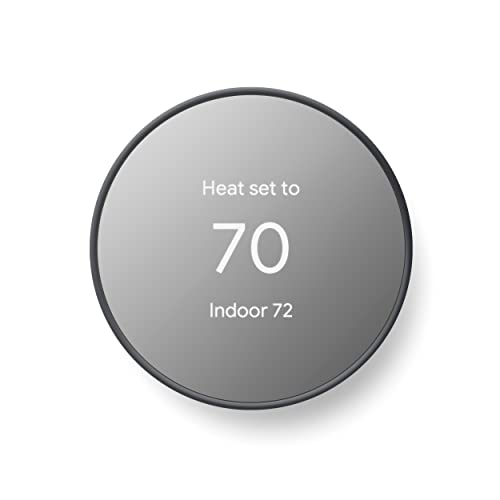
Should you want a straightforward, energy-focused smart thermostat that’s easy to install and control from anywhere, the Google Nest Smart Thermostat in Charcoal is a strong choice. You’ll program schedules via the Google Home app on Android or iPhone, control temperature remotely, or use voice assistants like Google Assistant or Alexa. ENERGY STAR certification and Auto-Away reduce energy use; Savings Finder suggests further tweaks. It supports common HVAC setups but might need a C wire or power accessory. Installation typically takes under 30 minutes. The unit includes HVAC alerts, a one-year warranty, 2 AA batteries, and a steel mounting plate.
Best For: users seeking an easy-to-install, energy-saving smart thermostat that’s controllable remotely via the Google Home app and voice assistants.
Pros:
- ENERGY STAR certified with Auto-Away and Savings Finder to reduce energy use and suggest optimizations.
- Simple, typically sub-30-minute self-install with clear components included (mounting plate, screws, 2 AA batteries).
- Remote control and voice assistant compatibility (Google Assistant, Alexa, Matter-certified assistants) for convenient temperature management.
Cons:
- May require a C wire or power accessory for some HVAC systems, adding complexity or extra cost.
- Limited diagnostics—HVAC alerts are informational and not a professional diagnosis.
- No local lock feature for thermostat settings, which may be an issue in shared or rental situations.
Factors to Consider When Choosing a Wifi Programmable Thermostat
Before you pick a Wifi programmable thermostat, I check that it’s compatible with my HVAC system and meets the power requirements for my home. I also look for seamless smart home integration, flexible scheduling, and features like adaptive learning or energy reports that actually save on bills. Those factors together tell me which model will fit my setup and lifestyle.
Compatibility With HVAC
How do you know a Wi‑Fi thermostat will actually work with your HVAC? I always start upon verifying system type: forced air (gas, oil, electric), heat pump with aux heat, boiler, hot water, steam, or multi‑stage setups. I check whether the thermostat supports single‑ or multi‑stage heating/cooling, zone control, or electric baseboard heat specific to my system. I confirm voltage compatibility—most HVAC controls use 20–30 VAC—and whether the thermostat can integrate with existing control wiring. Because many Wi‑Fi units need continuous power, I look for C‑wire requirements or a compatible power adapter. I also use manufacturer compatibility checkers and system verification tools to confirm wiring, voltage, and technology match prior to buying or installing anything.
Power Source Needs
Having confirmed system type and wiring compatibility, I next focus on how the thermostat will be powered—because a Wi‑Fi model needs a reliable, continuous energy source to stay connected and run smart functions. I check for a C-wire initially, since most Wi‑Fi thermostats expect a common terminal from the HVAC system. In the absence of a C‑wire, I consider models that include a power extender kit or an adapter, or those that can draw power from heating/cooling terminals—though that can affect performance and compatibility. I also weigh battery-powered options, mindful they demand periodic replacement or recharging. Bottom line: verify your home’s wiring and the thermostat’s power requirements before buying to avoid installation issues and guarantee uninterrupted smart operation.
Smart Home Integration
When evaluating smart home integration, I focus on whether a Wi‑Fi thermostat will actually work with the apps and voice assistants I use daily—Alexa, Google Assistant, and for some homes, Apple HomeKit—because cross-platform compatibility determines how smoothly I can control the system hands‑free or remotely. I check supported platforms up front and prioritize models that cover multiple ecosystems to avoid vendor lock‑in. I also verify simple setup with my existing hub and look for native support of automation features like geofencing and occupancy sensing so the thermostat reacts to presence without extra apps. Finally, I confirm it can communicate with other devices—cameras, door sensors, or smart vents—to enable coordinated routines that improve comfort and save energy.
Scheduling Flexibility
Because my daily routine varies, I prioritize thermostats that let me set distinct schedules—7-day, 5-1-1, 5-2, or fully customizable days—so each weekday and weekend can match real occupancy patterns. I look for models that allow multiple temperature periods per day so mornings, work hours, and evenings each have personalized setpoints. Some devices add smart learning, which I value whenever I want the thermostat to adapt without constant input, though I still expect manual override. I also appreciate non-programmable or simple preset modes for guests or in case I want one-touch control. Clear programming interfaces and easy remote adjustments matter to me because they save time and reduce frustration when my calendar changes unexpectedly.
Energy Saving Features
While I want comfort, I care most about features that actually cut energy use and costs, so I look for thermostats with ENERGY STAR certification, smart learning, and reliable away/eco modes that automatically lower heating or cooling at any point the house is empty. I prioritize ENERGY STAR because it proves measurable efficiency and helps lower bills. Smart learning matters next: it adapts schedules to real patterns, reducing unnecessary run time. Remote apps and clear scheduling let me tweak settings from anywhere, avoiding wasted heating or cooling. Integration with utility programs and time-of-use controls is a bonus — shifting load to off-peak times saves money and eases grid strain. Taken together, these features deliver consistent, verifiable energy savings without sacrificing comfort.
Installation Complexity
Should you be comfortable with basic wiring, you can often install a Wi‑Fi thermostat yourself, but you’ll want to check system compatibility and power needs initially. I recommend verifying whether your system needs a C‑wire; some thermostats include power extender kits, but others won’t function without proper power. Check that wiring is plug‑and‑play and clearly labeled—those make DIY swaps painless, especially whenever wall plate adapters fit existing holes. Provided you have multi‑stage heat/cool, forced air, hot‑water, or steam systems, expect more complex wiring and consider a pro. Also factor in app setup and Wi‑Fi configuration time; remote control is great but adds steps. In case of doubt, consult compatibility guides or an HVAC technician to avoid mistakes.
Display And Controls
Once I choose a Wi‑Fi thermostat, the display and controls are the initial things I inspect because they determine day‑to‑day ease of use; a large, backlit LCD or digital screen and a responsive touchscreen make reading and adjusting settings fast in any light. I prefer touchscreens for intuitive programming and quicker tweaks than button-only models. Clear menus that show customizable schedules let me confirm or edit routines without diving into the app. Extra on-screen data—indoor humidity, filter alerts, and system status—helps me monitor comfort and maintenance at a glance. Still, I want straightforward physical controls for guests or quick changes. Finally, seamless remote app control should complement the display so I can adjust temperatures from anywhere whenever I’m away.
Warranty And Support
Good displays and responsive controls make daily use simple, but I also check warranty and support before I buy so I’m protected in the event that something goes wrong. I look for one- to three-year manufacturer warranties that cover defects and malfunctions, and I confirm that customer support includes help with installation, troubleshooting, and operation. I keep receipts and follow installation guidelines because many warranties require proof of purchase and proper installation to remain valid. In the event that I’m concerned about long-term coverage, I consider buying an extended warranty or additional support services. I also take note of exclusions—damage from improper installation, misuse, or unauthorized repairs is typically not covered—so I often opt for professional installation to preserve warranty benefits.
