

You could be surprised how silently CO2 and related combustion gases can build up in your home. You’ll want detectors that use lab‑grade sensors, loud alarms, and backup power so you’re warned before levels become dangerous. In the list below I compare five reliable models—from advanced NDIR monitors to practical plug‑ins—so you can pick the right balance of accuracy, features, and budget.
| Temtop M2000 2nd Air Quality CO2 & PM Monitor |

| Best Multi-Parameter | Power Type: Rechargeable battery (battery powered; includes 1 AAA) | Alarm / Alert: Audible alarm (configurable) | Sensor Type / Detection: NDIR CO2 sensor (plus particle/HCHO sensors) | VIEW LATEST PRICE | Our Analysis |
| Kidde Plug-In Carbon Monoxide Detector with Battery Backup |
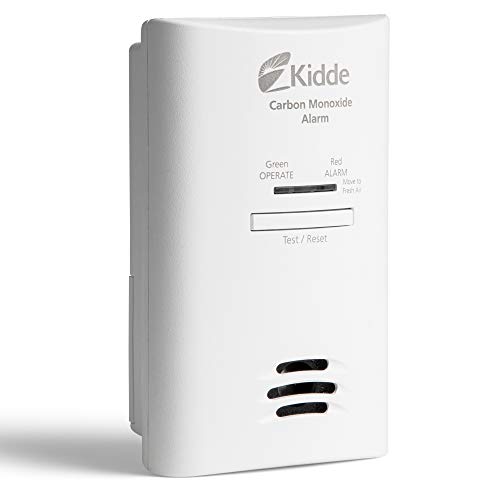
| Reliable Plug-In | Power Type: 120V plug-in with 2 × AA battery backup | Alarm / Alert: 85 dB audible alarm | Sensor Type / Detection: Carbon monoxide electrochemical/standard CO detector (plug-in) | VIEW LATEST PRICE | Our Analysis |
| Battery-Powered Carbon Monoxide Detector with LCD Alert | Battery-Powered Essential | Power Type: Battery powered (3 × AA) | Alarm / Alert: ≥85 dB audible alarm (specified) | Sensor Type / Detection: Advanced electrochemical CO sensor | VIEW LATEST PRICE | Our Analysis | |
| 3-Pack Battery Carbon Monoxide Detectors with LCD | Best for Multiple Rooms | Power Type: Battery powered (3 × AA) | Alarm / Alert: 85 dB audible alarm + red LED flash | Sensor Type / Detection: Advanced electrochemical CO sensor (UL 2034 compliant) | VIEW LATEST PRICE | Our Analysis | |
| MARCALA 3-Pack Portable Carbon Monoxide & Gas Detectors | Travel & Coverage | Power Type: Plug-in with backup battery | Alarm / Alert: Loud alarm with flashing light | Sensor Type / Detection: Upgraded sensors for CO and natural gas detection | VIEW LATEST PRICE | Our Analysis |
More Details on Our Top Picks
Temtop M2000 2nd Air Quality CO2 & PM Monitor
Should you need a portable, all-in-one monitor that tracks CO2 alongside particles and formaldehyde, the Temtop M2000 2nd is a strong choice—its SenseAir NDIR CO2 sensor plus professional particle and HCHO sensors give you lab-grade readings on a color TFT display, and you can log or export months of data via USB for analysis or reporting. You’ll monitor CO2, PM2.5, PM10, particle count, HCHO, temperature, and humidity with audible, configurable alarms. It’s battery powered with recharge, ergonomic, and includes a carry case. Built-in calibration, >3 months RAM, and 12-month warranty make it practical for home or field use.
- Power Type:Rechargeable battery (battery powered; includes 1 AAA)
- Alarm / Alert:Audible alarm (configurable)
- Sensor Type / Detection:NDIR CO2 sensor (plus particle/HCHO sensors)
- Display:Color TFT display with backlight and color-coded indicator
- Portability / Mounting:Portable/ergonomic; carry case included; indoor/outdoor use
- Power-failure Protection:Battery powered — operates without mains power (rechargeable)
- Additional Feature:Multi-parameter logging
- Additional Feature:USB data export
- Additional Feature:Built-in calibration program
Kidde Plug-In Carbon Monoxide Detector with Battery Backup
Should you want a simple, always-on carbon monoxide solution for a home or rental, the Kidde plug-in detector with AA battery backup is a great fit because it combines continuous 120V power with battery protection during outages. You just plug it into a standard outlet and add two AA batteries for uninterrupted monitoring. An 85-decibel alarm warns you in case CO appears, and Peak Level Memory logs the last detection or test. A Test-Hush button lets you verify operation or silence nuisance alerts. Installation is effortless, and its core purpose is to detect carbon monoxide promptly so you and others can act fast.
- Power Type:120V plug-in with 2 × AA battery backup
- Alarm / Alert:85 dB audible alarm
- Sensor Type / Detection:Carbon monoxide electrochemical/standard CO detector (plug-in)
- Display:(No detailed numeric display specified) — basic indicator with peak memory (plug-in CO detector)
- Portability / Mounting:Plug-in unit (portable between outlets) with battery backup
- Power-failure Protection:2 × AA battery backup maintains protection during outages
- Additional Feature:Peak level memory
- Additional Feature:Test‑Hush button
- Additional Feature:85 dB audible alarm
Battery-Powered Carbon Monoxide Detector with LCD Alert
Battery-Powered Essential
View Latest PriceAssuming you want reliable, portable CO protection that still shows real-time readings, this battery-powered carbon monoxide detector with an LCD alert is a smart choice — its advanced electrochemical sensor and 24-hour display give you fast, accurate detection and continuous visibility even during power outages. You’ll mount it on a wall or ceiling with included screws, power it with three AA batteries, and rely on thresholds that warn at 50 ppm (60–90 min), 100 ppm (10–40 min), and ≥300 ppm (≈3 min). The alarm exceeds 85 dB, covers 215–430 ft², and can halve CO-related death risk if used properly.
- Power Type:Battery powered (3 × AA)
- Alarm / Alert:≥85 dB audible alarm (specified)
- Sensor Type / Detection:Advanced electrochemical CO sensor
- Display:LCD display showing real-time CO levels
- Portability / Mounting:Battery unit; wall or ceiling mount (screws included)
- Power-failure Protection:Battery powered — unaffected by power outages (3 × AA)
- Additional Feature:Advanced electrochemical sensor
- Additional Feature:24‑hour real-time LCD
- Additional Feature:Fast-response thresholds
3-Pack Battery Carbon Monoxide Detectors with LCD
Best for Multiple Rooms
View Latest PriceShould you need reliable, portable carbon monoxide protection for multiple rooms or while traveling, this 3-pack of battery-powered CO detectors with LCD is a smart choice. You’ll mount them quickly using included screws or carry them on trips; they run on three 1.5V AA batteries (not included) and keep monitoring during outages. The electrochemical sensor meets UL 2034 for accuracy. You’ll get an 85 dB alarm, flashing red LED, and blue-backlit LCD on alert. The screen shows real-time CO, recalls dangerous readings, and displays “Err” or “Lb” for faults or low battery. Self-test and startup cues simplify operation.
- Power Type:Battery powered (3 × AA)
- Alarm / Alert:85 dB audible alarm + red LED flash
- Sensor Type / Detection:Advanced electrochemical CO sensor (UL 2034 compliant)
- Display:LCD with blue backlight showing real-time CO levels and status codes
- Portability / Mounting:Battery unit; wall or ceiling mount (screws included)
- Power-failure Protection:Battery powered — continuous monitoring during power failures (battery life ~36 months)
- Additional Feature:UL 2034 compliant
- Additional Feature:Error/low‑battery indicators
- Additional Feature:36‑month battery life
MARCALA 3-Pack Portable Carbon Monoxide & Gas Detectors
Travel & Coverage
View Latest PriceShould you travel frequently or need wide coverage at home, the MARCALA 3-Pack is a smart choice—each plug-in unit with backup battery gives you portable, around-the-clock detection of carbon monoxide, natural gas, temperature, and humidity. You’ll get three compact detectors ideal for kitchens, bedrooms, garages, RVs, hotels, and camping, expanding protection beyond a single unit. Upgraded sensors deliver faster, more reliable readings; the large HD color display shows live CO, gas, temperature, and humidity values. If thresholds are exceeded, a loud alarm and flashing light alert you immediately. American family-owned support and replacement policy back your purchase.
- Power Type:Plug-in with backup battery
- Alarm / Alert:Loud alarm with flashing light
- Sensor Type / Detection:Upgraded sensors for CO and natural gas detection
- Display:Large HD color display with live readings (CO, gas, temp, humidity)
- Portability / Mounting:Travel-friendly portable design; plug-in with backup battery
- Power-failure Protection:Backup battery ensures function during power outages
- Additional Feature:4‑in‑1 detection
- Additional Feature:HD color display
- Additional Feature:Lifetime support/replacement
Factors to Consider When Choosing a CO2 Detector
Upon selecting a CO2 detector, you’ll want to compare sensor types and accuracy so readings are reliable. Check response time and alert options, plus power source and backup to guarantee uninterrupted protection. Also consider data logging, connectivity, portability, and installation ease to match your use case.
Accuracy And Sensor Type
Although CO2 readings can seem straightforward, sensor type and stated accuracy determine how much you can trust a monitor’s numbers. Choose NDIR sensors whenever feasible — they deliver ppm resolution and long-term stability compared with chemical sensors. Check the stated accuracy (for example ±30 ppm or ±3% of reading) and the measurement range; most home units cover ~400–5,000 ppm and perform best across 400–2,000 ppm. Consider sensor drift and calibration: NDIR units usually need calibration only every few months to years or use automatic baseline correction, while other technologies might degrade faster and require manual recalibration. Verify environmental limits and compensation (humidity, temperature, contaminants) so the sensor maintains accuracy under real indoor conditions.
Response Time And Alerts
Because CO2 levels can rise and fall quickly in occupied spaces, pick a detector with a short, manufacturer‑specified response time so you get near‑real‑time readings rather than long averages. You’ll want response times measured in seconds to a few minutes so elevated concentrations are reported promptly. Choose units that provide both loud (≥85 dB) audible alarms and clear visual cues—color codes or flashing lights—so alerts register in noisy rooms or during sleep. Prefer detectors with configurable thresholds and peak‑level memory so you can set action points (for example, ventilation at 1000 ppm, concern above 2000 ppm) and review exposures. Devices that log time‑stamped data or export records help you correlate events and verify how fast levels drop after you ventilate. Consider pre‑alarms for advance advisories.
Power Source And Backup
Many buyers balance continuous monitoring against placement flexibility, so decide whether you need mains-powered units for uninterrupted operation or battery-powered models for easy relocation and outage resilience. Check for mains units with built-in battery backup or battery-only models that advertise months-to-years of run time; you want operation to continue during outages. Compare backup types — rechargeable internal cells versus replaceable AA/AAA — and prefer devices that give low-battery alerts and clear replacement indicators. Verify installation options (plug-in, hardwired, or battery-only) and power requirements so your intended mounting location stays powered. Finally, choose detectors that retain recent CO readings and peak history whenever power’s lost, enabling meaningful post-event review without relying on continuous connectivity.
Data Logging And Connectivity
Storing and sharing CO2 data lets you move from one-off readings to meaningful exposure trends and automated responses. You’ll want onboard logging that keeps weeks to months of readings (>72 hours to >3 months) so you can review trends without constant connection. Check storage capacity and sampling-interval specs—1‑minute vs 5‑minute averages affect memory use and trend resolution. Prefer units that timestamp entries and record metadata (temperature, humidity, firmware) to aid interpretation and calibration. Look for USB, SD, Bluetooth or Wi‑Fi options to export raw logs, back up records, or feed building-management systems. Verify export formats (CSV, JSON, proprietary) and whether tools or APIs exist for visualization and automated alerts so the detector fits your workflow.
Portability And Installation
When you pick a CO2 detector, consider about how and where you’ll use it—do you need something truly portable for travel or short-term checks, or a permanently installed unit that stays powered during outages. Choose battery-powered, plug-in with battery backup, or rechargeable based on whether you need continuous operation during power loss and where you’ll place the detector. For portability, pick lightweight (under 1 kg) or compact designs that fit a travel bag or temporary mounting in rentals. Check mounting options—wall, ceiling, or free-standing—since dispersion and recommended heights vary. Verify battery type and expected life (AA cells ~1–3 years; rechargeable listed in hours). Make certain clear mounting hardware or built-in plug, readable display, and audible alarm for intended locations.
Certification And Standards
Because accurate CO2 readings underpin health, comfort, and regulatory decisions, you should prioritize detectors that meet recognized standards and independent certification. Look for models aligned with ANSI/ASHRAE guidance or the ISO 16000 series so you get baseline accuracy and performance. Confirm the sensor type (NDIR is preferred) and that an accredited lab has tested the complete device to stated tolerances (for example ±50 ppm or ±3%). Check calibration and traceability: NIST-traceable documentation and clear instructions for on-board or professional calibration matter. Also verify electrical and safety compliance like UL or CE and any regional alarm rules. Should you require the unit for regulatory, industrial, or HVAC work, choose devices with published specs, data-logging, and third-party validation that match your range, resolution, and response-time needs.
