

Let’s say your old router isn’t exactly state-of-the-art anymore — and that’s okay; you’re ready to upgrade. You’ll want a mesh system that actually handles gigabit speeds, with multi‑gig ports or a dedicated backhaul and strong 6 GHz or HE160 radios. I’ll walk through six top contenders for 2026 and what makes each one fit for true gigabit performance, so you can pick the right balance of speed, coverage, and features.
| Amazon eero 6+ Mesh WiFi System 3-Pack |

| Best for Smart Homes | Wi‑Fi Technology: Wi‑Fi 6 (802.11ax) with 160 MHz | Mesh System: Yes — eero mesh system (3‑pack) | Coverage: Up to 4,500 sq. ft. (3‑pack) | VIEW LATEST PRICE | Read Our Analysis |
| TP-Link Deco XE75 AXE5400 Wi‑Fi 6E Mesh System |

| Best for Future‑Proofing | Wi‑Fi Technology: Wi‑Fi 6E (tri‑band, includes 6 GHz) | Mesh System: Yes — Deco tri‑band mesh system | Coverage: Up to 7,200 sq. ft. | VIEW LATEST PRICE | Read Our Analysis |
| TP-Link Deco XE70 Pro AXE4900 Mesh Wi‑Fi Router |

| Best for Performance | Wi‑Fi Technology: Wi‑Fi 6E (tri‑band) | Mesh System: Yes — Deco Mesh router (single unit but mesh capable) | Coverage: Up to 2,900 sq. ft. (1‑pack) | VIEW LATEST PRICE | Read Our Analysis |
| Amazon eero 6+ Mesh WiFi System 3-Pack |
| Easiest Setup | Wi‑Fi Technology: Wi‑Fi 6 (802.11ax) with 160 MHz | Mesh System: Yes — eero mesh system (3‑pack) | Coverage: Up to 4,500 sq. ft. (3‑pack) | VIEW LATEST PRICE | Read Our Analysis |
| TP-Link Deco S4 Mesh WiFi System (3-Pack) |
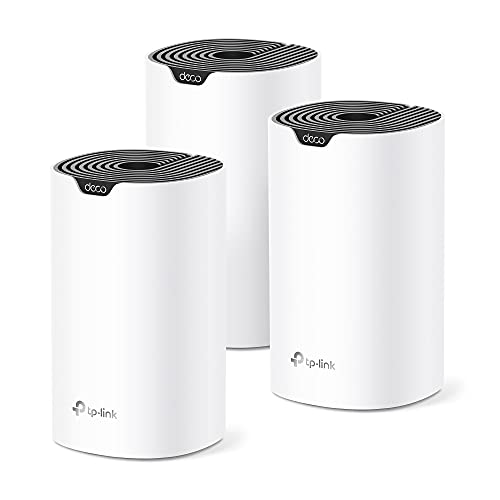
| Best Budget Mesh | Wi‑Fi Technology: Wi‑Fi 5 (AC1900) — Deco Mesh (note: older generation) | Mesh System: Yes — Deco Mesh (3‑pack) | Coverage: Up to 5,500 sq. ft. (3‑pack) | VIEW LATEST PRICE | Read Our Analysis |
| TP-Link Deco X55 AX3000 WiFi 6 Mesh (3-Pack) |

| Best Coverage Value | Wi‑Fi Technology: Wi‑Fi 6 (AX3000) | Mesh System: Yes — Deco mesh system (3‑pack) | Coverage: Up to 6,500 sq. ft. (3‑pack) | VIEW LATEST PRICE | Read Our Analysis |
More Details on Our Top Picks
Amazon eero 6+ Mesh WiFi System 3-Pack
Should you need whole‑home gigabit Wi‑Fi that handles heavy multitasking and dozens of smart devices, the Amazon eero 6+ 3‑pack is a strong choice: it delivers Wi‑Fi 6 with a 160 MHz channel for up to 1 Gbps speeds, covers about 4,500 sq. ft., and can support 75+ devices while its TrueMesh routing and built‑in Thread/Zigbee hub keep streams and smart‑home connections steady. You’ll set it up with the eero app, manage remotely, and get automatic updates for security. It’s backward‑compatible with older eeros, offers optional subscription security features, and includes US phone and email support.
- Wi‑Fi Technology:Wi‑Fi 6 (802.11ax) with 160 MHz
- Mesh System:Yes — eero mesh system (3‑pack)
- Coverage:Up to 4,500 sq. ft. (3‑pack)
- Device Capacity:Connects 75+ devices
- App Management:eero app for setup and remote management
- Security / Parental Controls:Optional eero subscription for advanced security & parental controls
- Additional Feature:Built‑in Thread/Zigbee hub
- Additional Feature:eero TrueMesh routing
- Additional Feature:Alexa integration available
TP-Link Deco XE75 AXE5400 Wi‑Fi 6E Mesh System
Should you need a future-ready mesh that handles lots of Wi‑Fi 6E devices and high-bandwidth tasks, the TP‑Link Deco XE75 is a strong pick — it uses a dedicated 6 GHz band (which can act as backhaul provided) to deliver gigabit-class throughput across large homes. You’ll get tri-band AXE5400 speeds (up to 5,400 Mbps aggregate), coverage to 7,200 sq. ft., and support for about 200 devices. The 6 GHz band cuts legacy interference and can be a backhaul or client-facing network. AI-driven optimization, a guided Deco app, Alexa integration, and HomeShield security round out a capable, manageable mesh.
- Wi‑Fi Technology:Wi‑Fi 6E (tri‑band, includes 6 GHz)
- Mesh System:Yes — Deco tri‑band mesh system
- Coverage:Up to 7,200 sq. ft.
- Device Capacity:Supports up to 200 devices
- App Management:Deco app for guided setup and remote management
- Security / Parental Controls:TP‑Link HomeShield (free basic features; premium available)
- Additional Feature:Dedicated 6 GHz backhaul
- Additional Feature:AI‑driven mesh optimization
- Additional Feature:5,400 Mbps aggregate speed
TP-Link Deco XE70 Pro AXE4900 Mesh Wi‑Fi Router
In case you need gigabit‑class Wi‑Fi for dense homes or many devices, the TP‑Link Deco XE70 Pro delivers with Wi‑Fi 6E tri‑band performance (including the new 6 GHz band) and up to 4.9 Gbps across six streams—ideal for simultaneous 4K/8K streaming, online gaming, and supporting up to 200 devices with minimal congestion. You’ll cover about 2,900 sq. ft. per unit, use 2.5 Gbps wired or wireless backhaul, and connect via one 2.5 Gbps WAN/LAN plus two 1 Gbps LAN ports. Deco Mesh and AI‑roaming keep you on the best node, HomeShield secures devices, and setup’s handled in the Deco app.
- Wi‑Fi Technology:Wi‑Fi 6E (tri‑band)
- Mesh System:Yes — Deco Mesh router (single unit but mesh capable)
- Coverage:Up to 2,900 sq. ft. (1‑pack)
- Device Capacity:Supports up to 200 devices
- App Management:Deco app for setup and remote management
- Security / Parental Controls:HomeShield security service & parental controls
- Additional Feature:2.5 Gbps WAN/LAN port
- Additional Feature:AI‑roaming seamless switching
- Additional Feature:Launched March 2024
Amazon eero 6+ Mesh WiFi System 3-Pack
In case you need reliable whole‑home gigabit speeds and support for lots of smart devices, the Amazon eero 6+ 3‑pack is a strong choice thanks to Wi‑Fi 6 with a 160 MHz channel and coverage up to 4,500 sq. ft. You’ll connect 75+ devices, benefit from TrueMesh to reduce drop‑offs, and keep older eeros in the network since it’s backward compatible. Built‑in Thread and Zigbee hub support with Alexa removes separate hubs for smart home gear. The eero app guides setup and remote management; eero Plus adds security, parental controls, ad/tracker blocking, and auto‑renewing subscription after a one‑month trial.
- Wi‑Fi Technology:Wi‑Fi 6 (802.11ax) with 160 MHz
- Mesh System:Yes — eero mesh system (3‑pack)
- Coverage:Up to 4,500 sq. ft. (3‑pack)
- Device Capacity:Connects 75+ devices
- App Management:eero app for setup and remote management
- Security / Parental Controls:eero Plus subscription for advanced security & parental controls
- Additional Feature:Eliminates separate smart hubs
- Additional Feature:eero Plus subscription option
- Additional Feature:US phone/email support
TP-Link Deco S4 Mesh WiFi System (3-Pack)
Should you need whole-home coverage for lots of devices without fuss, the TP‑Link Deco S4 (3‑pack) is a practical choice. You’ll get Deco Mesh technology that blankets up to 5,500 sq. ft., removes dead zones, and offers seamless roaming with a single network name and password. The AC1900 (3×3, 6‑stream) system supports up to 100 devices and lets you use wired Ethernet backhaul for better performance. Each unit has two Gigabit LAN ports, and any can be the primary router, replacing a separate router and extender. Setup runs through the Deco app, with strong parental controls and Alexa‑controllable guest Wi‑Fi.
- Wi‑Fi Technology:Wi‑Fi 5 (AC1900) — Deco Mesh (note: older generation)
- Mesh System:Yes — Deco Mesh (3‑pack)
- Coverage:Up to 5,500 sq. ft. (3‑pack)
- Device Capacity:Supports up to 100 devices
- App Management:Deco app (Android/iOS) for setup and management
- Security / Parental Controls:Robust parental controls via Deco app (free)
- Additional Feature:AC1900 6‑stream Wi‑Fi
- Additional Feature:Two Gigabit ports/unit
- Additional Feature:5,500 sq.ft. coverage
TP-Link Deco X55 AX3000 WiFi 6 Mesh (3-Pack)
Should you need effortless whole‑home gigabit Wi‑Fi that handles lots of devices, the TP‑Link Deco X55 AX3000 (3‑pack) is built for you: its Wi‑Fi 6 speeds and AI‑driven mesh cover up to 6,500 sq. ft., support about 150 devices, and let any unit act as the router while using wired Ethernet backhaul for the most reliable connections. You’ll get AX3000 throughput (2402 Mbps on HE160 + 574 Mbps), three‑unit mesh that replaces router and extenders, and three Gigabit LAN ports per node. HomeShield provides no‑cost security, QoS, and parental controls, and the Deco app guides setup and remote management. A modem is required for most ISPs.
- Wi‑Fi Technology:Wi‑Fi 6 (AX3000)
- Mesh System:Yes — Deco mesh system (3‑pack)
- Coverage:Up to 6,500 sq. ft. (3‑pack)
- Device Capacity:Connects up to 150 devices
- App Management:Deco app for guided setup and remote management
- Security / Parental Controls:TP‑Link HomeShield basic security and parental controls (no‑cost features)
- Additional Feature:HE160 2×2 support
- Additional Feature:Three Gigabit ports/unit
- Additional Feature:Covers up to 6,500 sq.ft.
Factors to Consider When Choosing Mesh Wifi For Gigabit Internet
Upon choosing mesh WiFi for gigabit service, you’ll want to check bandwidth and channel support so your wireless links can actually carry gigabit speeds. Look at backhaul options (wired vs. wireless), Ethernet port speeds, and whether any nodes offer multi‑gig interfaces for true WAN/LAN throughput. Also consider device capacity limits so the system can handle all your clients without bottlenecking.
Bandwidth And Channels
Because gigabit Internet demands both high peak rates and sustained multi‑client capacity, you’ll want mesh nodes with Wi‑Fi 6 or 6E, wide channel support (up to 160 MHz/HE160), and enough spatial streams to push close to a gigabit per device while handling several clients at once. Check aggregate multi‑band capacity and spatial streams—4×4 radios and higher aggregated Mbps let the system serve multiple gigabit clients simultaneously. Use tri‑band kits with a dedicated extra 5 GHz or 6 GHz radio to keep client traffic off the backhaul and reduce contention. Recall wider channels (40/80/160 MHz) enhance peak rates but are interference‑sensitive and reduce range, so you might need closer nodes or wired backhaul. Verify adaptive channel selection and band steering to sustain real‑world throughput.
Backhaul Type Options
Backhaul choice matters: pick wired Ethernet should you want the most consistent gigabit performance, use a dedicated wireless band (extra 5 GHz or 6 GHz radio) should running cables isn’t practical, or combine both in a hybrid setup to balance flexibility and speed. Wired Ethernet (Gigabit or multi‑gig) gives the steadiest node‑to‑node throughput through avoiding wireless contention. Dedicated wireless backhaul can approach gigabit rates but depends upon distance, interference, channel width (80/160 MHz) and spatial streams, and suffers whenever the same band serves clients. Hybrid meshes let some nodes use wired links while others rely on wireless, improving placement and overall result versus all‑wireless. Match your mesh hardware and cabling to your ISP speed—use 1 Gbps or 2.5/10 Gbps Ethernet when you need headroom.
Ethernet Port Speeds
Pick mesh nodes with multi‑gig Ethernet should you want your gigabit ISP plan to actually reach wired and high‑speed wireless clients. Prioritize at least one 2.5 Gbps WAN/LAN or multi‑gig port to avoid bottlenecking a single wired uplink at 1 Gbps. Should you’ll use wired backhaul, make certain every node’s LAN ports are gigabit minimum — 2.5 Gbps preferred — so inter‑node traffic and client throughput aren’t limited.
When nodes only offer 1 Gbps ports, expect wired links to cap near that rate, preventing full use of >1 Gbps service. For NAS, gaming PCs, or link aggregation, look for multiple LAN ports supporting aggregation or a dedicated multi‑gig port. Even with wireless backhaul, confirm strong LAN port performance for wired clients.
Multi‑Gig Support
Any mesh system you buy should include at least one 2.5 Gbps (or faster) multi‑gig WAN/LAN port so your gigabit service and wired clients aren’t throttled via a 1 Gbps link. You ought to verify node‑to‑node backhaul options—prefer multi‑gig wired (2.5G/5G Ethernet) or dedicated multi‑gig wireless/6 GHz backhaul—to preserve full gigabit speeds across the mesh. Check each node’s per‑device LAN port speeds should you need multi‑gig wired transfers; nodes with only 1 Gbps ports will limit fast clients. Confirm the system’s aggregate throughput (radios plus backhaul capacity) exceeds your ISP line rate so multiple users can actually use gigabit bandwidth simultaneously. Finally, look for QoS and link aggregation (dual‑WAN/port trunking) for performance scaling and redundancy.
Device Capacity Limits
Having the right multi‑gig ports and backhaul is only part of the story; you also need a mesh that can actually handle the number and type of devices you’ll run on a gigabit line. Check the system’s maximum concurrent clients—50, 100, 200+—and pick one that comfortably exceeds your current and near‑future device count. Look at aggregate throughput per node and any per‑band device limits, since radios with few spatial streams can bottleneck under many clients. Prefer tri‑band or a model with a dedicated backhaul to offload inter‑node traffic and free client‑serving radios. Match capacity to your device mix: many IoT sensors differ from multiple 4K streams or gaming sessions. Leave 20–30% headroom beyond your present total for growth.
Latency And QoS
Because gigabit speeds mean little provided latency spikes under load, you should prioritize mesh systems and settings that keep delays—and jitter—low for real‑time apps. Choose nodes with wired backhaul (Gigabit or multi‑Gig ports) so traffic avoids wireless hop latency and preserves near‑line‑rate throughput. Prefer systems with dedicated or high‑capacity backhaul channels—separate bands or 160 MHz—to cut contention and queuing delays over multi‑hop links. Confirm support for low‑latency Wi‑Fi features like OFDMA and MU‑MIMO and firmware optimizations that improve scheduling and retransmission to reduce jitter. Use QoS that can prioritize VoIP, gaming, and video conferencing and reserve bandwidth per device or app. Finally, monitor and tweak traffic‑shaping settings and place latency‑critical gear on wired ports anytime possible.
Security And Updates
At any time you’re running gigabit speeds, security and reliable updates matter as much as raw throughput: pick mesh systems that push automatic firmware updates, support modern encryption like WPA3, and let you manage devices locally or via optional cloud controls so your network stays protected even in case a vendor service goes offline. You should prioritize vendors that publish clear security policies, maintain a fast vulnerability disclosure/patch cadence, and promise long‑term firmware support. Confirm support for secure management protocols (HTTPS, SSH) and built‑in protections like intrusion detection, malware/IoT scanning, and ad/tracker blocking — and check which are subscription features. Finally, favor systems that let you retain local control (on‑prem DNS, local admin) so essential functions survive cloud outages.
Mesh Management App
Whenever you’re operating a gigabit network, the mesh management app becomes your control center — it should guide setup, let you manage nodes and SSIDs remotely, and give clear diagnostics (real‑time mesh health, backhaul status, signal strength) so you can keep throughput consistent. Choose an app that delivers guided setup, remote configuration of nodes, SSIDs, and passwords, plus automatic firmware updates to avoid performance regressions. Look for clear diagnostics and per-device bandwidth monitoring so you can spot bottlenecks and prioritize latency‑sensitive traffic with granular QoS. Pick software with strong security and parental controls—device schedules, content filters, and threat detection—to protect many clients. Finally, guarantee seamless expansion and roaming: single SSID, auto‑reassociation, and simple add/remove of nodes for consistent gigabit speeds across large areas.
