

Should you want reliable whole‑home Wi‑Fi in 2026, you’ve got options that fit every budget and tech need. From affordable Deco and eero packs to high‑capacity Orbi and Wi‑6E XE70 Pro systems, each mesh kit balances coverage, speed, and smart‑home features differently. I’ll walk you through the strengths and tradeoffs so you can match a system to your home size, device load, and future‑proofing goals—starting with the best fits for most households.
| Amazon eero 6+ Mesh WiFi System 3-Pack |

| Reliable Family Mesh | Wi‑Fi Generation: Wi‑Fi 6 | Coverage (3‑pack stated): Up to 4,500 sq. ft. | Device Capacity (supported devices): Connects 75+ devices | VIEW LATEST PRICE | Read Our Analysis |
| NETGEAR Orbi 770 WiFi 7 Mesh System (RBE773) |

| Performance Powerhouse | Wi‑Fi Generation: WiFi 7 | Coverage (3‑pack stated): Up to 8,000 sq. ft. | Device Capacity (supported devices): Supports up to 100 devices | VIEW LATEST PRICE | Read Our Analysis |
| Amazon eero 6+ Mesh WiFi System (3-Pack) |
| Smart-Home Ready | Wi‑Fi Generation: Wi‑Fi 6 | Coverage (3‑pack stated): Up to 4,500 sq. ft. | Device Capacity (supported devices): Connects 75+ devices | VIEW LATEST PRICE | Read Our Analysis |
| TP-Link Deco XE70 Pro AXE4900 Tri-Band WiFi Mesh |

| Wi‑Fi 6E Power | Wi‑Fi Generation: Wi‑Fi 6E | Coverage (3‑pack stated): Up to 2,900 sq. ft. per 3‑pack (region-dependent note) | Device Capacity (supported devices): Handles up to 200 devices | VIEW LATEST PRICE | Read Our Analysis |
| TP-Link Deco X20 WiFi 6 Mesh System (3-Pack) |
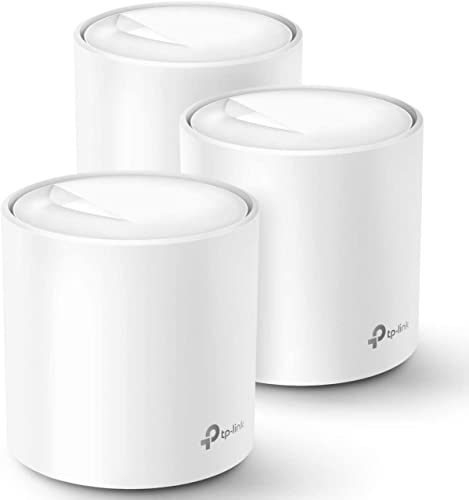
| Value Wi‑Fi 6 | Wi‑Fi Generation: Wi‑Fi 6 | Coverage (3‑pack stated): Up to 5,800 sq. ft. | Device Capacity (supported devices): Supports up to 150 devices | VIEW LATEST PRICE | Read Our Analysis |
| TP-Link Deco S4 Mesh AC1900 WiFi System (3-Pack) |
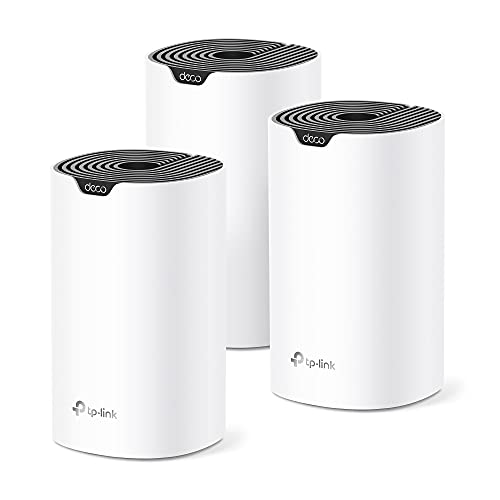
| Budget Mesh Solution | Wi‑Fi Generation: Wi‑Fi (AC / Wi‑Fi 5 class) — marketed as AC1900 | Coverage (3‑pack stated): Up to 5,500 sq. ft. | Device Capacity (supported devices): Supports up to 100 devices | VIEW LATEST PRICE | Read Our Analysis |
More Details on Our Top Picks
Amazon eero 6+ Mesh WiFi System 3-Pack
Should you need fast, reliable whole‑home Wi‑Fi for many devices, the Amazon eero 6+ 3‑pack is a smart choice. You’ll get Wi‑Fi 6 with a 160 MHz channel and up to 1 Gbps speeds, coverage for about 4,500 sq. ft., and support for 75+ devices. eero TrueMesh reduces dead spots, and the system works with older eero units. A built‑in smart‑home hub handles Thread and Zigbee and integrates with Alexa. The eero app guides setup, offers remote management and automatic updates, and you can add subscription security and advanced network controls should you desire.
- Wi‑Fi Generation:Wi‑Fi 6
- Coverage (3‑pack stated):Up to 4,500 sq. ft.
- Device Capacity (supported devices):Connects 75+ devices
- Mesh Technology / Seamless Roaming:TrueMesh (eero TrueMesh)
- App‑based Setup & Management:eero app guided setup & remote management
- Security / Premium Subscription Options:Automatic updates; optional paid online security/advanced management
- Additional Feature:Built‑in Thread hub
- Additional Feature:Zigbee smart‑home hub
- Additional Feature:eero TrueMesh routing
NETGEAR Orbi 770 WiFi 7 Mesh System (RBE773)
In case you need rock-solid, whole-home WiFi for heavy streaming, gaming, and dozens of smart devices, the NETGEAR Orbi 770 WiFi 7 Mesh System (RBE773) is built for that use: its tri-band WiFi 7 design with improved backhaul and up to 11 Gbps theoretical throughput delivers sustained multi-device performance across as much as 8,000 sq. ft., while backward compatibility and a 2.5 Gb internet port keep your existing gear working smoothly. You’ll get a router plus two satellites, support for about 100 devices, 360° coverage from high-performance antennas, automatic firmware updates, and Advanced Router Protection for ongoing security.
- Wi‑Fi Generation:WiFi 7
- Coverage (3‑pack stated):Up to 8,000 sq. ft.
- Device Capacity (supported devices):Supports up to 100 devices
- Mesh Technology / Seamless Roaming:Tri‑band mesh with enhanced backhaul (Orbi mesh)
- App‑based Setup & Management:App/cloud management with security/updates (NETGEAR app/Orbi)
- Security / Premium Subscription Options:Built‑in security with automatic updates; Advanced Router Protection (ongoing updates)
- Additional Feature:WiFi 7 tri‑band
- Additional Feature:2.5 Gig internet port
- Additional Feature:Up to 11 Gbps
Amazon eero 6+ Mesh WiFi System (3-Pack)
Should you want straightforward whole‑home coverage without juggling extra hubs, the Amazon eero 6+ (3‑pack) gives up to 4,500 sq ft of Wi‑Fi 6 performance, supports 75+ devices, and includes a built‑in Thread and Zigbee smart‑home hub so you can connect smart devices directly through Alexa. You’ll get Wi‑Fi 6 with a 160 MHz channel, patented TrueMesh to reduce dead spots, and backward compatibility with earlier eeros and select Echo devices. The eero app walks you through setup and remote management. Optional eero Plus adds security, parental controls, ad/tracker blocking; take note the subscription auto‑renews.
- Wi‑Fi Generation:Wi‑Fi 6
- Coverage (3‑pack stated):Up to 4,500 sq. ft.
- Device Capacity (supported devices):Connects 75+ devices
- Mesh Technology / Seamless Roaming:TrueMesh (eero TrueMesh)
- App‑based Setup & Management:eero app guided setup & remote management
- Security / Premium Subscription Options:eero Plus / subscription for advanced digital security, parental controls
- Additional Feature:eero Built‑in Echo compatibility
- Additional Feature:Ad & tracker blocking
- Additional Feature:eero Plus subscription
TP-Link Deco XE70 Pro AXE4900 Tri-Band WiFi Mesh
In case you need blistering multi‑device performance across a large home, the TP‑Link Deco XE70 Pro is built for you: the Wi‑Fi 6E tri‑band design adds a dedicated 6 GHz band and up to 4.9 Gbps across six streams so you can stream 4K, game, and back up NAS drives without congestion. You’ll cover about 2,900 sq. ft. with a 3‑pack and support up to 200 devices. Deco Mesh and AI‑roaming keep a single SSID and seamless handoffs; wired options include a 2.5 Gbps WAN/LAN plus two Gigabit ports. HomeShield, CISA pledge, and Deco app simplify security and management.
- Wi‑Fi Generation:Wi‑Fi 6E
- Coverage (3‑pack stated):Up to 2,900 sq. ft. per 3‑pack (region-dependent note)
- Device Capacity (supported devices):Handles up to 200 devices
- Mesh Technology / Seamless Roaming:Deco Mesh with AI‑roaming
- App‑based Setup & Management:Deco app for setup, remote management & optimization
- Security / Premium Subscription Options:HomeShield premium security (TP‑Link) and Secure‑by‑Design features
- Additional Feature:Dedicated 6 GHz band
- Additional Feature:2.5 Gbps WAN/LAN port
- Additional Feature:AI‑roaming self‑learning
TP-Link Deco X20 WiFi 6 Mesh System (3-Pack)
Should you need reliable whole‑home Wi‑Fi that handles lots of devices without breaking the bank, the TP‑Link Deco X20 (3‑pack) is a solid pick because it combines Wi‑Fi 6 performance with mesh coverage up to about 5,800 sq ft and supports wired backhaul for stable connections. You’ll get AX1800 dual‑band speeds, support for up to 150 devices, and suitability for internet plans up to 1 Gbps. Setup is fast via the Deco app with remote management and Alexa voice controls. Six total Ethernet ports and ISP compatibility simplify wiring. HomeShield provides security, basic parental controls, QoS, and device monitoring.
- Wi‑Fi Generation:Wi‑Fi 6
- Coverage (3‑pack stated):Up to 5,800 sq. ft.
- Device Capacity (supported devices):Supports up to 150 devices
- Mesh Technology / Seamless Roaming:Deco mesh whole‑home mesh
- App‑based Setup & Management:Deco app quick setup and remote control
- Security / Premium Subscription Options:TP‑Link HomeShield premium security (paid tier) and built‑in protections
- Additional Feature:Covers up to 5,800 sq.ft.
- Additional Feature:Supports 150 devices
- Additional Feature:6 total Ethernet ports
TP-Link Deco S4 Mesh AC1900 WiFi System (3-Pack)
Should you want reliable whole-home coverage on a budget, the TP‑Link Deco S4 Mesh AC1900 (3‑pack) gives you up to 5,500 sq. ft. of seamless Wi‑Fi with unified network naming so devices roam without dropping connections. You’ll get AC1900 (3×3, 6‑stream) speeds and support for up to 100 devices, plus wired Ethernet backhaul to enhance performance. Each unit has two Gigabit ports, any can act as the primary router, and the kit replaces a separate router and range extender. Setup and controls are handled in the Deco app, with strong parental controls and Alexa‑controllable guest Wi‑Fi. Modem required.
- Wi‑Fi Generation:Wi‑Fi (AC / Wi‑Fi 5 class) — marketed as AC1900
- Coverage (3‑pack stated):Up to 5,500 sq. ft.
- Device Capacity (supported devices):Supports up to 100 devices
- Mesh Technology / Seamless Roaming:Deco Mesh (seamless roaming, single SSID)
- App‑based Setup & Management:Deco app setup and remote network control
- Security / Premium Subscription Options:HomeShield security features and parental controls (premium available)
- Additional Feature:AC1900 (6‑stream) Wi‑Fi
- Additional Feature:Two Gigabit ports/unit
- Additional Feature:Any unit as router
Factors to Consider When Choosing a Mesh Network Router
Whenever picking a mesh router, you should match coverage area and device capacity to your home or office so performance stays consistent. Check wired port options and Wi‑Fi generation support to make certain compatibility with your existing gear and future upgrades. Also prioritize security and management features so you can control access, updates, and parental or guest settings easily.
Coverage Area Required
Because the size of your home only tells part of the story, start measuring total square footage (including all floors) and then factor in layout, materials, device density, and placement constraints to estimate how many nodes you’ll actually need. Compare that total to a mesh system’s rated coverage—2,500–4,500 sq. ft. needs more nodes than 1,000 sq. ft.—but don’t stop there. Identify walls, floors, and materials like concrete, brick, or metal studs that cut range and could force extra access points. Check where you can place nodes: centralized locations and wired backhaul improve real-world reach instead of edge placement. Plan for overlap and growth through choosing a system that’s easy to expand and provides roughly 10–30% extra coverage to avoid future dead zones.
Device Capacity Needs
Should you’ve counted devices and added a buffer for growth, you’re already ahead—now match that total to a mesh system’s stated device capacity and plan for at least 20–30% headroom. Estimate simultaneous clients by totaling phones, laptops, TVs, speakers, cameras and sensors, then add expected future devices. Recall different devices stress networks differently: streaming TVs and consoles need sustained throughput, while IoT sensors send tiny bursts. Choose systems that explicitly list supported device counts and avoid exceeding them—doing so raises latency, packet loss and drops even though bandwidth isn’t maxed. In case you’ll host high‑density zones or expand with cameras and guests, prioritize higher device capacity and multi‑band system designs to spread clients and reduce contention over time.
Wired Port Options
You counted devices and left headroom—now check how you’ll physically hook them up. Inspect each node’s Ethernet assortment: at minimum you want one Gigabit WAN/LAN and extra Gigabit LAN ports for PCs, consoles, or a dedicated uplink. In case your ISP or NAS can exceed 1 Gbps, prefer a 2.5 Gbps or multi‑gig WAN/LAN to prevent a wired bottleneck. Confirm nodes can switch WAN/LAN roles and support multi‑gig wired backhaul so you can use Ethernet between units for steadier throughput and lower latency. Look for link aggregation (LACP) on router or satellites should you combine ports for higher server or switch speed. Finally, count total usable ports across the pack and observe any reserved for backhaul.
Wi‑Fi Generation Support
While newer Wi‑Fi generations keep pushing raw speeds and capacity, focus on the generation that matches your devices and needs: Wi‑Fi 6 and up bring OFDMA, MU‑MIMO, and more spatial streams for better multi‑client performance, while Wi‑Fi 6E/7 add 6 GHz access and wider channels for less congestion and higher peak throughput—provided your clients support them. You should balance router capability with your internet plan, concurrent-device count, and heavy uses like 4K streaming or cloud gaming. Backward compatibility means older devices still connect, but you only get higher throughput and advanced features whenever both router and clients support the same generation. Should your ISP or local transfers won’t use multi‑Gbps speeds, prioritize capacity and efficiency over chasing peak numbers.
Security And Management
Because attacks and misconfigurations can come from anywhere, pick a mesh system that keeps security management simple and proactive. You’ll want automatic firmware updates so patches arrive without you lifting a finger, plus built‑in protections like intrusion detection/prevention, malware and phishing blocks, and device isolation to stop lateral movement should one gadget be compromised. Confirm the admin interface supports role‑based access, multiple admin accounts, and secure remote management (TLS/HTTPS with MFA) to prevent unauthorized changes. Look for granular parental controls and content filtering with schedules, age categories, per‑device policies, and logging/reporting for oversight. Prefer solutions that support VLANs, guest networks, and QoS so you can segment traffic, protect sensitive devices, and prioritize latency‑sensitive apps.
