

Like finding the fabled fountain of signal, you want Wi‑Fi that actually reaches every corner of your home. You’ve probably wrestled with dropouts and slow streams, and you’re done with dead spots. In the list below you’ll see practical extenders and a mesh option that fix different needs, so you can pick the right fit and get back to reliable coverage—starting with the simplest, most effective choices.
| TP-Link AC1200 WiFi Extender RE315 |

| Best Compact Extender | Bands: Dual‑band (2.4 GHz + 5 GHz) | Ethernet Port: One fast Ethernet port | Setup Method: App (TP‑Link Tether) + one‑touch/WPS | VIEW LATEST PRICE | Read Our Analysis |
| TP-Link AC1900 WiFi Range Extender RE550 |

| Best Performance Pick | Bands: Dual‑band (2.4 GHz + 5 GHz) | Ethernet Port: One Gigabit Ethernet port | Setup Method: App (Tether) + intelligent indicator + WPS/GUI | VIEW LATEST PRICE | Read Our Analysis |
| Dual-Band WiFi Extender 1.2Gbps with Ethernet |

| Best for Thick Walls | Bands: Dual‑band (2.4 GHz + 5.8/5 GHz) | Ethernet Port: One 100 Mbps Ethernet port | Setup Method: One‑tap WPS or plug‑and‑play / browser setup | VIEW LATEST PRICE | Read Our Analysis |
| WiFi Range Extender & Signal Booster (Alexa Compatible) |

| Best for Smart Homes | Bands: Dual‑band (2.4 GHz + higher‑speed 5 GHz) | Ethernet Port: Fast Ethernet port | Setup Method: One‑tap WPS or browser/app configuration | VIEW LATEST PRICE | Read Our Analysis |
| TP-Link Deco S4 AC1900 Mesh WiFi System (3-Pack) |
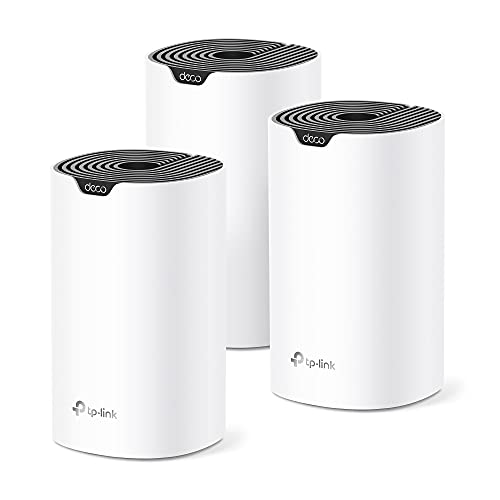
| Best Whole-Home Mesh | Bands: Dual‑band (AC1900, 2.4 GHz + 5 GHz) | Ethernet Port: Two Gigabit Ethernet ports per unit (three units) | Setup Method: App (Deco) guided setup | VIEW LATEST PRICE | Read Our Analysis |
More Details on Our Top Picks
TP-Link AC1200 WiFi Extender RE315
Should you need a simple, budget-friendly way to banish dead zones in a small to medium home, the TP‑Link AC1200 RE315 is a strong choice — it extends coverage up to about 1,500 sq. ft. and supports roughly 30–32 devices, so it’s built for everyday streaming, video calls, and smart‑home gear. You’ll get dual‑band performance (867 Mbps on 5 GHz, 300 Mbps on 2.4 GHz) with two adjustable external antennas to optimize reach. Setup’s one-touch or via the Tether app with an intelligent signal indicator, one Gigabit Ethernet port, EasyMesh support, and improved security from TP‑Link’s Secure‑by‑Design pledge.
- Bands:Dual‑band (2.4 GHz + 5 GHz)
- Ethernet Port:One fast Ethernet port
- Setup Method:App (TP‑Link Tether) + one‑touch/WPS
- Coverage Claim:Up to ~1,500 sq. ft.
- Security Protocols / Compliance:TP‑Link secure design; modern security practices (CISA pledge)
- Compatibility / Modes:Universal compatibility; EasyMesh‑compatible (not Deco)
- Additional Feature:Two external antennas
- Additional Feature:Adaptive Path Selection
- Additional Feature:One-touch Tether app
TP-Link AC1900 WiFi Range Extender RE550
Should you need to fill dead zones and support lots of devices without replacing your router, the TP‑Link AC1900 RE550 is a solid pick—its dual‑band AC1900 speeds (up to 1.9 Gbps) and three external antennas boost coverage to roughly 2,100–2,200 sq. ft. while handling up to 32 connected devices. You’ll get improved signal reliability (actual throughput could be around half of your ISP speed) plus an intelligent signal indicator and Smart Roaming for seamless handoffs. A Gigabit Ethernet port lets you hard‑wire a device or run AP mode; EasyMesh and Tether app support simplify setup and management.
- Bands:Dual‑band (2.4 GHz + 5 GHz)
- Ethernet Port:One Gigabit Ethernet port
- Setup Method:App (Tether) + intelligent indicator + WPS/GUI
- Coverage Claim:Up to ~2,100–2,200 sq. ft.
- Security Protocols / Compliance:Advanced security; TP‑Link CISA Secure‑by‑Design pledge
- Compatibility / Modes:Universal compatibility; AP mode + EasyMesh‑compatible (not Deco)
- Additional Feature:Three external antennas
- Additional Feature:Gigabit Ethernet + AP
- Additional Feature:Smart adaptive roaming
Dual-Band WiFi Extender 1.2Gbps with Ethernet
In case you need reliable coverage across large homes or multiroom spaces, the Dual-Band WiFi Extender M-97A (1.2 Gbps) is a solid pick—its dual 2.4 GHz/5.8 GHz bands and claimed reach up to 10,000 sq. ft. let you connect dozens of devices while reducing dead zones. You’ll get up to 1.2 Gbps combined throughput, penetration for thick walls and cement floors, and support for 36 devices. Set it up with one-tap WPS or use AP mode over its 100 Mbps Ethernet for wired TVs or consoles. Security includes WEP/WPA/WPA2, encrypted module, and over-voltage protection.
- Bands:Dual‑band (2.4 GHz + 5.8/5 GHz)
- Ethernet Port:One 100 Mbps Ethernet port
- Setup Method:One‑tap WPS or plug‑and‑play / browser setup
- Coverage Claim:Up to 10,000 sq. ft. (manufacturer claim)
- Security Protocols / Compliance:WEP, WPA, WPA2; encrypted module and encryption chip
- Compatibility / Modes:Repeater and AP modes; compatible with standard routers via WPS
- Additional Feature:10,000 sq.ft. claim
- Additional Feature:Bionic Encryption Chip
- Additional Feature:One-tap WPS setup
WiFi Range Extender & Signal Booster (Alexa Compatible)
Assuming you need reliable whole-home Wi‑Fi that reaches dead zones, the Alexa‑compatible WiFi Range Extender & Signal enhancer is a smart choice — it uses advanced chips and dual‑band performance to cover up to 5,000 sq. ft. You’ll get up to 300 Mbps on 2.4 GHz, a 360° high-speed link for streaming and gaming, and support for up to 45 devices. It’s compatible with 99% of routers, Echo/Alexa, iOS/Android, consoles, and more. Choose Repeater or AP mode, set up via 1-tap WPS or browser, or use the Ethernet port for stable wired backhaul. WPA/WPA2 security and vented housing keep it reliable.
- Bands:Dual‑band (2.4 GHz + higher‑speed 5 GHz)
- Ethernet Port:Fast Ethernet port
- Setup Method:One‑tap WPS or browser/app configuration
- Coverage Claim:Up to 5,000 sq. ft.
- Security Protocols / Compliance:WEP, WPA, WPA2 supported
- Compatibility / Modes:Repeater and AP modes; compatible with ~99% of routers; Alexa compatible
- Additional Feature:Alexa compatible
- Additional Feature:Plug-wall compact design
- Additional Feature:360° high-speed connection
TP-Link Deco S4 AC1900 Mesh WiFi System (3-Pack)
Should you need reliable whole-home coverage without fuss, the TP‑Link Deco S4 AC1900 (3‑pack) is a strong choice for households that want seamless roaming and easy setup. You’ll get mesh coverage up to 5,500 sq. ft., AC1900 speeds with 6 streams, and support for about 100 devices. Three identical units create a single network name and automatically hand off devices to the fastest node. Each unit has two Gigabit LAN ports and supports wired backhaul. Setup and management run through the Deco app, with guest Wi‑Fi via Alexa and resilient parental controls for profiles, time limits, and content blocking.
- Bands:Dual‑band (AC1900, 2.4 GHz + 5 GHz)
- Ethernet Port:Two Gigabit Ethernet ports per unit (three units)
- Setup Method:App (Deco) guided setup
- Coverage Claim:Up to 5,500 sq. ft. (3‑pack whole‑home)
- Security Protocols / Compliance:Built‑in security features and parental controls (app managed)
- Compatibility / Modes:Deco mesh system (router replacement) and works with major ISPs; mesh roaming across units
- Additional Feature:Wired Ethernet backhaul
- Additional Feature:Three-unit mesh system
- Additional Feature:Supports 100 devices
Factors to Consider When Choosing a WiFi Router Extender
When choosing a WiFi extender, you’ll want to match its coverage area to your home’s layout so dead zones disappear. Check bandwidth and speeds, make sure it supports the range of devices you use, and confirm strong security and privacy features. Also consider how easy setup and ongoing management will be so you can keep the network running smoothly.
Coverage Area Needed
To pick the right extender, start starting from measuring the square footage you need to cover and compare that to the unit’s claimed range, keeping in mind to add 25–50% extra for thick walls, floors, and appliances that cut signal strength. Measure rooms or whole floors (single room ~200–400 sq. ft., small apartment ~500–900 sq. ft., large home >2,000 sq. ft.) and choose an extender whose coverage meets or slightly exceeds that adjusted figure. Plan placement at the midpoint between router and dead zone so the extender receives a strong upstream signal. Account for device density and heavy uses—streaming, gaming, video calls—which might need overlapping coverage or multiple units. For seamless whole‑home roaming, budget for mesh nodes or paired extenders rather than one device.
Bandwidth And Speeds
Because an extender’s listed speeds rarely match what you’ll actually get, focus on its total and per‑band throughput and on real‑world expectations before you buy. Check the combined and per‑band maximums (for example, 1.2 Gbps total or 867 Mbps on 5 GHz + 300 Mbps on 2.4 GHz) to make sure they align with your router and typical use. Anticipate 40–60% of rated speeds in a normal home because extenders repeat wireless signals. Prefer dual‑band or tri‑band models so high‑bandwidth devices can use 5 GHz while 2.4 GHz handles longer‑range needs. Look for true concurrent dual‑band operation to avoid halved bandwidth when bridging. Should you require stable wired throughput for gaming or streaming, pick an extender with a gigabit Ethernet port.
Device Compatibility Range
How well will an extender fit into your existing network? You’ll want one that supports the same Wi‑Fi standard as your router (802.11ac/ax) so devices get expected speeds and nothing’s held back through an older protocol. Match frequency bands—2.4 GHz, 5 GHz, or dual‑band—so gadgets don’t get forced onto slower channels. Check maximum client capacity and throughput to handle your device count and usage without congestion. Confirm setup methods (WPS, web GUI, mobile app) and compatible security protocols (WPA2/WPA3) for seamless pairing. Finally, make certain the extender supports features your router uses—mesh/EasyMesh, AP mode, roaming/Smart Connect—so handoffs stay smooth and your network behaves consistently across coverage areas.
Security And Privacy
Coverage and compatibility matter, but don’t overlook security and privacy as you add an extender to your network. Choose extenders that support modern encryption—WPA3 unless possible, WPA2 AES at minimum—so your data stays protected against replay and brute‑force attacks. Make sure you can disable WPS and remote management, and that firmware updates are supported (automatic updates are best) to patch vulnerabilities quickly. Prefer devices with secure defaults: no factory passwords, UPnP off, and secure‑by‑design practices. Look for strong admin controls—unique admin passwords, role‑based access, HTTPS/SSH management—and logging so you can spot unauthorized attempts. Finally, use guest network and SSID isolation features to keep IoT and visitors segmented from sensitive devices.
Setup And Management
As you’re choosing an extender, prioritize easy setup and sturdy management tools so you can get it running quickly and keep it performing well over time. Look for one‑touch WPS, a clear mobile app with step‑by‑step guidance, or simple browser setup to cut installation time. Prefer devices that offer repeater, access‑point and wired AP modes plus an Ethernet port so you can adapt placement and integrate with a wired network. Check for automatic signal optimization or smart roaming so the extender selects the best band or access point without manual changes. Make sure the interface includes an intelligent signal indicator or placement assistant and supports remote firmware updates. Finally, confirm multi‑device controls like guest networks, device prioritization and parental controls in the app.
