

A sturdy lock is like a firm handshake at your front door—quietly telling visitors what to expect. You’ll want convenience, durability, and real security, so I’ll compare four top 2026 picks that balance Wi‑Fi, biometrics, and simple PIN operation. Whether you prefer remote access, lightning‑fast fingerprint entry, or a reliable standalone deadbolt, the right choice depends on how you use your door—let’s walk through what matters next.
| TEEHO TE001 Keyless Smart Deadbolt Lock (Oil-Rubbed Bronze) |
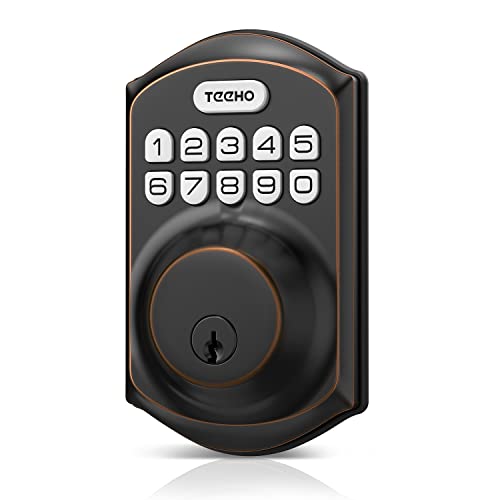
| Practical & Reliable | Power Source: 4 AA batteries (not included) | Key Backup: 2 SC1 physical backup keys included | Keyless Entry Modes: Numeric keypad passcodes (up to 20 users, one-time codes) | VIEW LATEST PRICE | Read Our Analysis |
| Schlage Encode Smart WiFi Deadbolt Lock Satin Nickel |

| Best for Smart Homes | Power Source: 4 AA batteries (included) | Key Backup: One physical backup key included | Keyless Entry Modes: Touchscreen passcodes (manage up to 100 codes) | VIEW LATEST PRICE | Read Our Analysis |
| Schlage Encode Smart WiFi Deadbolt Lock Satin Nickel |

| Premium Connected Lock | Power Source: 4 AA batteries (included) | Key Backup: One physical backup key included | Keyless Entry Modes: Touchscreen passcodes and app-managed codes (up to 100) | VIEW LATEST PRICE | Read Our Analysis |
| Veise Fingerprint Keyless Door Lock with Handles |

| Biometric Security Leader | Power Source: 4 AA batteries (not included) | Key Backup: 2 physical backup keys included | Keyless Entry Modes: Fingerprint + keypad passcodes (up to 20 codes, one-time codes) | VIEW LATEST PRICE | Read Our Analysis |
More Details on Our Top Picks
TEEHO TE001 Keyless Smart Deadbolt Lock (Oil-Rubbed Bronze)
Provided that you want a simple, no-frills smart deadbolt that’s built for everyday use, the TEEHO TE001 delivers. You get a keypad deadbolt in oil-rubbed bronze with an oval aluminum-alloy body (5.12 x 2.95 x 1.3 in, 1.76 lb). It supports up to 20 user codes, one-time PINs, anti-peep entry, vacation mode, and wrong-entry limits. One-touch lock and programmable auto-lock (10–99s) add convenience; keypad is backlit and mutes. It’s standalone (no connectivity), runs on 4 AA batteries (≈365 days) with low-battery alert, fits 2-1/8″ holes, and includes keys, latch, strike, and a 2-year warranty.
- Power Source:4 AA batteries (not included)
- Key Backup:2 SC1 physical backup keys included
- Keyless Entry Modes:Numeric keypad passcodes (up to 20 users, one-time codes)
- Auto-lock / One-touch Lock:One-touch lock; programmable auto-lock (10–99s; off default)
- Weather / IP Rating:IP54 weather resistance
- Easy DIY Installation:Installs in minutes with a screwdriver; fits 2-1/8 in hole
- Additional Feature:Up to 20 user codes
- Additional Feature:One-time temporary PIN
- Additional Feature:2-year warranty
Schlage Encode Smart WiFi Deadbolt Lock Satin Nickel
In case you want reliable, standalone Wi‑Fi access without adding a hub, the Schlage Encode Smart WiFi Deadbolt is a top pick: its built‑in Wi‑Fi lets you lock, release, and manage up to 100 access codes from anywhere via the Schlage Home app, with optional Alexa and Google Home voice control. You get a touchscreen plus one physical key, one‑touch exterior locking, and configurable auto‑lock. Installation is simple with Snap ’n Stay and fits standard door thicknesses and backsets. Security includes encrypted connections, a customizable alarm, and BHMA top ratings. Four AA batteries last about six months; low‑battery alerts warn you in advance.
- Power Source:4 AA batteries (included)
- Key Backup:One physical backup key included
- Keyless Entry Modes:Touchscreen passcodes (manage up to 100 codes)
- Auto-lock / One-touch Lock:One-touch lock; configurable auto-lock delay or off
- Weather / IP Rating:Weather/durable rated (BHMA highest residential rating; touchscreen fingerprint-resistant)*
- Easy DIY Installation:Snap ’n Stay design; installs with a screwdriver; fits standard door thickness 1-3/8–1-3/4 in
- Additional Feature:Built-in Wi‑Fi
- Additional Feature:Up to 100 access codes
- Additional Feature:Works with Alexa/Google
Schlage Encode Smart WiFi Deadbolt Lock Satin Nickel
Choose the Schlage Encode Smart WiFi Deadbolt provided you want a no-hub, Wi‑Fi–connected lock that lets you manage up to 100 access codes and control/monitor your door from anywhere via the Schlage Home app. You’ll get a satin nickel, oval-century design that fits standard door thicknesses and backsets, installs with a screwdriver using Snap ’n Stay, and includes four AA batteries and a backup key. Built-in Wi‑Fi, Alexa and Google Home support, encrypted connections, auto-lock, activity history, and a customizable alarm give practical security. BHMA‑graded durability, a fingerprint‑resistant touchscreen, and limited warranties round out its reliable feature set.
- Power Source:4 AA batteries (included)
- Key Backup:One physical backup key included
- Keyless Entry Modes:Touchscreen passcodes and app-managed codes (up to 100)
- Auto-lock / One-touch Lock:One-touch lock; configurable auto-lock delay or off
- Weather / IP Rating:Weather/durable rated (BHMA highest residential rating; touchscreen fingerprint-resistant)*
- Easy DIY Installation:Snap ’n Stay design; installs with screwdriver; fits doors 1-3/8–1-3/4 in
- Additional Feature:Lock history & notifications
- Additional Feature:Built‑in customizable alarm
- Additional Feature:Snap ’n Stay installation
Veise Fingerprint Keyless Door Lock with Handles
Homeowners who want fast, reliable biometric access will appreciate the Veise KS02B’s flagship fingerprint sensor, which uses self-learning AI to recognize prints in 0.3 seconds and complete an entry in about a second. You can enroll up to 20 fingerprints, 20 family codes, and one-time temporary codes; two physical keys provide backup. It’s ANSI/BHMA Grade 3, pry-resistant, IP54-rated, and tested for 200,000 cycles. You’ll get auto-lock, one-touch lock, vacation and silent modes, and passage mode. Powered via 4 AA batteries (≈1 year), it fits standard doors, installs with a screwdriver, and includes a two-year warranty.
- Power Source:4 AA batteries (not included)
- Key Backup:2 physical backup keys included
- Keyless Entry Modes:Fingerprint + keypad passcodes (up to 20 codes, one-time codes)
- Auto-lock / One-touch Lock:One-touch lock; configurable auto-lock (10–99s)
- Weather / IP Rating:IP54 waterproof rating
- Easy DIY Installation:DIY install with screwdriver; fits standard left/right doors, thickness 1-3/8–2 in (requires two 2-1/8 in holes)
- Additional Feature:500 DPI fingerprint sensor
- Additional Feature:ANSI/BHMA Grade 3
- Additional Feature:Passage & Vacation modes
Factors to Consider When Choosing a Smart Entry Door Lock and Deadbolt
Upon choosing a smart lock, you’ll want to prioritize proven security, relevant certifications, and how you manage user access. Consider power sources and battery life, ease of installation and door compatibility, and whether the lock connects reliably with your smart home system. These factors determine convenience, safety, and long-term reliability.
Security And Certifications
Because your lock is the last line of defense, prioritize proven security standards and independent certifications before anything else. Check ANSI/BHMA grading—Grade 1 for heavy-duty, Grade 2 for typical residential, Grade 3 for basic—to match strength and expected cycle life to your location. Verify electronic protections: AES‑level or similar encrypted communications, secure credential storage, and tamper/forced‑entry alarms to reduce remote or physical compromise. Confirm third‑party testing or listings (UL, BHMA performance tests) for pick/drill resistance and forced‑entry protection. Check IP ratings (IP54+) and operating temperature ranges so the lock survives your climate and mounting spot. Finally, make certain battery backup, low‑battery alerts, and a reliable fail‑safe (physical key or mechanical override) for power outages.
Access And User Management
Although a strong lock stops intruders, effective access and user management guarantees the right people can get in whenever they need to—so check how many unique users it supports, what credential types it accepts (PINs, biometrics, physical keys, virtual keys), and whether it offers time‑limited or single‑use codes and scheduled access windows for guests or contractors. You’ll want a lock that supports dozens to 100+ users in case your household, caregivers, or rentals are frequent. Prioritize multi‑mode access so you can assign appropriate levels: permanent codes for family, temporary codes for contractors, and biometrics for quick entry. Make sure an admin/master account can add, delete, or modify users easily, enable vacation or passage mode, and view audit trails. Remote credential creation and revocation give real-time control and accountability.
Power And Battery Life
Typically, you’ll want to treat power and battery life as a top priority, since a dead battery can leave you locked out or scrambling for a backup. Check the battery type—AA cells or rechargeable packs—and whether it uses standard or proprietary cells so replacements are easy. Compare advertised runtime (months to a year) but factor in heavy use: frequent remote access, alarms, or touchscreen lighting shorten life. Choose locks with clear low-battery warnings (LED, chime, or app) and a stated minimum-voltage cutoff to avoid surprises. Confirm emergency power options like external terminals, micro-USB, or mechanical backup keys for one-time access. Finally, account for power-hungry features—built-in Wi‑Fi, biometrics, and lighting—and match capacity and notifications to your expected usage.
Installation And Compatibility
Upon selecting a smart deadbolt, start alongside matching the lock to your door’s physical specs—hole diameter, backset, and thickness—so the hardware fits without modification. Verify the common 2-1/8-inch face hole, typical door thicknesses (1-3/8 to 1-3/4 inches), and backsets of 2-3/8 or 2-3/4 inches. Confirm handing support or reversible handing and that the latch and strike plate align with your mortise and jamb. Check electrical needs and battery placement—many units use four AA cells and require internal clearance. Decide whether you’ll DIY (screwdriver-only or snap-in) or need a pro, and make certain the kit includes latch, strike plate, and screws. For exterior use, pick at least IP54/weather-resistant models; rentals might require remote/code management.
Connectivity And Smart Home
While evaluating connectivity, start choosing the radio that matches your needs—built‑in Wi‑Fi for direct remote access, Bluetooth for close‑range control, or Z‑Wave/Zigbee should you want hub‑based mesh reliability and less Wi‑Fi congestion. Next, confirm platform compatibility (Alexa, Google Assistant, HomeKit) and whether voice control, routines, and automations suit your setup. Prioritize locks with end‑to‑end encryption and secure cloud/app authentication to block unauthorized remote access. Look for companion‑app features like activity logs, push notifications, and time‑limited guest codes so you can manage access and audit events remotely. Finally, make certain sensible offline fallbacks: local PINs or a physical key option and basic locking/unlocking in case Wi‑Fi or a hub goes down so you’re never locked out.
Durability And Weather Resistance
Because your smart lock spends most of its life exposed to the elements, you should prioritize weather resistance and mechanical durability to avoid failures and costly replacements. Check IP or ingress ratings—IP54 or higher for outdoor use—to confirm dust and water spray protection. Pick locks made from corrosion‑resistant metals like stainless steel, aluminum alloy, or zinc‑alloy and finished to resist fading, peeling, and pitting. Look for BHMA/ANSI grades and high cycle counts (for example, 200,000 cycles) to gauge long‑term wear. Verify operating temperature ranges (e.g., −30°F to 158°F) so electronics and batteries work in extreme heat or cold. Inspect seals and gasketing around keypads/biometrics and insist on UV‑resistant components to prevent moisture ingress and sun degradation.
