

Envision a row of drives humming quietly like a tiny data library on your desk — and envision picking the one that fits your workflow best. You’ll want capacity, speed and durability balanced against price, and the right choice depends on whether you’re gaming, editing or building a 24/7 server. Below are six top desktop HDDs for 2026 and the factors that should steer your decision.
| Seagate BarraCuda 8TB 3.5″ SATA Internal HDD |
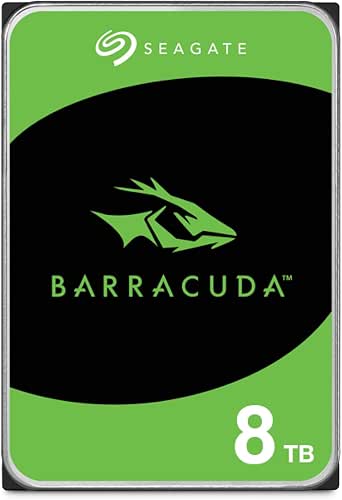
| Best for Capacity | Capacity: 8 TB | Form factor: 3.5-inch | Interface: SATA 6 Gb/s | VIEW LATEST PRICE | Read Our Analysis |
| Seagate BarraCuda 2TB 3.5″ Internal HDD |

| High-Performance Pick | Capacity: 2 TB | Form factor: 3.5-inch | Interface: SATA 6 Gb/s | VIEW LATEST PRICE | Read Our Analysis |
| Western Digital WD Blue 1TB 3.5″ Internal HDD |

| Reliable Everyday Drive | Capacity: 1 TB | Form factor: 3.5-inch | Interface: SATA 6 Gb/s | VIEW LATEST PRICE | Read Our Analysis |
| Seagate BarraCuda 6TB 3.5″ SATA Internal HDD |
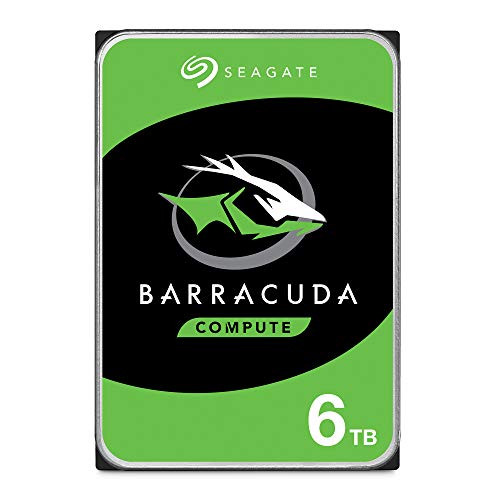
| Value Capacity | Capacity: 6 TB | Form factor: 3.5-inch | Interface: SATA 6 Gb/s | VIEW LATEST PRICE | Read Our Analysis |
| Seagate BarraCuda 1TB 3.5″ Internal HDD |

| Fast Boot/OS Drive | Capacity: 1 TB | Form factor: 3.5-inch | Interface: SATA 6 Gb/s | VIEW LATEST PRICE | Read Our Analysis |
| Seagate BarraCuda 5TB 2.5″ SATA Internal HDD |

| Laptop-Friendly Hybrid | Capacity: 5 TB | Form factor: 2.5-inch | Interface: SATA 6 Gb/s | VIEW LATEST PRICE | Read Our Analysis |
More Details on Our Top Picks
Seagate BarraCuda 8TB 3.5″ SATA Internal HDD
In case you need high-capacity, cost-effective storage for a desktop—especially for gaming libraries, photo and video projects, or large media collections—the Seagate BarraCuda 8TB delivers a large 3.5″ SATA drive with 256 MB cache and 5,400 RPM performance that balances capacity and quiet operation for everyday multitasking. You’ll get 8 TB of space, 6 Gb/s SATA throughput, and a sustained transfer rate around 190 MB/s, making it suited for gaming, editing, and media streaming. The bare mechanical drive fits standard PC bays, weighs 1.45 pounds, ships in anti-static packaging, and benefits from Seagate’s decades of HDD experience.
- Capacity:8 TB
- Form factor:3.5-inch
- Interface:SATA 6 Gb/s
- Target platform / use:Desktop PC / gaming / multimedia
- Cache:256 MB
- Rotational speed:5,400 RPM
- Additional Feature:256 MB cache
- Additional Feature:Frustration-free packaging
- Additional Feature:190 MB/s sustained
Seagate BarraCuda 2TB 3.5″ Internal HDD
Choose the Seagate BarraCuda 2TB should you need fast, reliable desktop storage—its 7200 RPM spindle and 256 MB cache deliver responsive performance for gaming, photo/video editing, and everyday PC use. You’ll get a 3.5-inch SATA 6 Gb/s drive (models ST2000DM008, ST2000DMZ08) offering 2 TB for media, projects, and apps. Seagate includes DiscWizard for cloning and data migration, so upgrading is straightforward. BarraCuda’s long heritage and proven reliability back your investment, and frustration-free packaging simplifies installation. Should you desire a balanced, high-performance internal HDD for a desktop or gaming rig, this is a solid choice.
- Capacity:2 TB
- Form factor:3.5-inch
- Interface:SATA 6 Gb/s
- Target platform / use:Desktop PC / gaming / multimedia
- Cache:256 MB
- Rotational speed:7,200 RPM
- Additional Feature:256 MB cache
- Additional Feature:Includes DiscWizard cloning
- Additional Feature:7200 RPM spindle
Western Digital WD Blue 1TB 3.5″ Internal HDD
Should you need a reliable, high-performance primary desktop drive, the Western Digital WD Blue 1TB (WD10EZEX) delivers 7200 RPM speed, a 64 MB cache, and SATA 6 Gb/s throughput for smooth everyday computing and office use. You’ll get a standard 3.5″ form factor, 1 TB storage, and compact 5.8 x 4 x 1 inch dimensions approximating about 15.5 ounces. It’s compatible with common PC platforms and older macOS releases, and includes Acronis True Image WD Edition for cloning. Backed with WD’s reputation and available across the Blue series up to 6 TB, it’s a solid budget-focused primary drive.
- Capacity:1 TB
- Form factor:3.5-inch
- Interface:SATA 6 Gb/s
- Target platform / use:Desktop PC / everyday computing
- Cache:64 MB
- Rotational speed:7,200 RPM
- Additional Feature:Acronis True Image bundled
- Additional Feature:64 MB cache
- Additional Feature:Wide OS compatibility
Seagate BarraCuda 6TB 3.5″ SATA Internal HDD
Should you need lots of reliable storage for a desktop or gaming rig, the Seagate BarraCuda 6TB 3.5″ SATA drive delivers high capacity with a 256 MB cache and SATA 6 Gb/s throughput to keep large media and game libraries responsive. You’ll get a 3.5-inch, 5400 RPM design (model ST6000DMZ03) aimed at desktops, gaming rigs, and multimedia workstations. The 6TB helps you store music, video, photos, and sizeable game collections without frequent swaps. BarraCuda’s long-standing tech focus promises consistent performance and dependability, and Seagate backs it with a two-year limited warranty. It ships in frustration-free packaging for easy installation.
- Capacity:6 TB
- Form factor:3.5-inch
- Interface:SATA 6 Gb/s
- Target platform / use:Desktop PC / gaming / multimedia
- Cache:256 MB
- Rotational speed:5,400 RPM
- Additional Feature:256 MB cache
- Additional Feature:Two-year limited warranty
- Additional Feature:5400 RPM spindle
Seagate BarraCuda 1TB 3.5″ Internal HDD
Should you need a straightforward, high-capacity drive for desktop work—like gaming, photo/video editing, or multi‑app workflows—the Seagate BarraCuda 1TB 3.5″ (ST1000DMZ10) delivers 1TB of storage with a 7200 RPM spindle and 64MB cache for responsive performance on a SATA 6 Gb/s interface. You’ll find it suits PC builds, gaming rigs, and creative workloads, offering optimized read/write caching and Seagate’s long-standing BarraCuda tech. The 3.5-inch mechanical drive weighs 3.58 ounces, fits standard bays, and ships in frustration-free packaging. Check manufacturer warranty details and retailer return policies; available capacity might vary, so back up critical data.
- Capacity:1 TB
- Form factor:3.5-inch
- Interface:SATA 6 Gb/s
- Target platform / use:Desktop PC / gaming / multimedia
- Cache:64 MB
- Rotational speed:7,200 RPM
- Additional Feature:7200 RPM spindle
- Additional Feature:64 MB cache
- Additional Feature:Frustration-free packaging
Seagate BarraCuda 5TB 2.5″ SATA Internal HDD
Provided you need lots of high-density storage in a compact drive, the Seagate BarraCuda 5TB 2.5″ SATA hybrid HDD is a strong choice—especially whenever you run a small-form-factor desktop or upgrade a laptop and want a balance of capacity and improved responsiveness from built-in flash caching. You get 5 TB in a 2.5-inch ST5000LM000 with SATA 6 Gb/s, 5400 RPM, 128 MB cache and hybrid flash for smarter read/write caching. At 3.95 x 2.75 x 0.59 inches and 3.17 ounces, it fits laptops and desktops, suits multitasking, media editing and casual gaming, and remains supported through Seagate.
- Capacity:5 TB
- Form factor:2.5-inch
- Interface:SATA 6 Gb/s
- Target platform / use:Laptop & desktop (portable/desktop use)
- Cache:128 MB
- Rotational speed:5,400 RPM
- Additional Feature:Hybrid HDD + flash
- Additional Feature:128 MB cache
- Additional Feature:Laptop-compatible 2.5″ form factor
Factors to Consider When Choosing Internal Hdd For Desktop Pc
At the time of picking an internal HDD for your desktop, you’ll want to weigh capacity against your storage needs and how fast you need data to move. Check form factor and interface compatibility so the drive fits and talks to your motherboard, and consider RPM, cache size, and all-around performance for smooth operation. Balancing these factors helps you choose the right drive for everyday use or heavy workloads.
Capacity And Storage Needs
A few practical steps will help you pick the right HDD capacity: tally your typical files (movies, games, RAW photos), match that total to use-case ranges (e.g., 500 GB–1 TB for basic use, 2–4 TB for gamers, 6–10+ TB for editors/archives), and add at least 20–30% headroom so the drive stays fast and usable. Estimate sizes—25–50 GB per 4K movie, 3–5 GB per game, 100–300 MB per RAW photo—to avoid constant cleanup. Consider splitting roles: use an SSD for OS/programs and one or more HDDs for bulk data to reduce wear. Plan backups and redundancy: RAID mirroring or parity lowers usable capacity, so factor that into your procurement to guarantee effective storage meets real needs.
Speed And Performance
Now that you’ve matched capacity to needs and planned backups, it’s time to look at how fast those drives will actually feel in daily use. Focus initially on rotational speed: 7200 RPM drives usually give lower seek times and higher sustained transfer rates than 5400 RPM models, so they’ll feel snappier. Check cache size—bigger DRAM buffers (128–256 MB) smooth bursty workloads and cut stutter. Compare sustained sequential transfer rates in MB/s for large file moves and media editing. Confirm the interface (SATA III 6 Gb/s) can handle the drive’s throughput to avoid bottlenecks. Finally, should you run mixed workloads, pick drives with advanced caching and firmware tuned for random I/O to get lower latency and better multitasking performance.
Form Factor Compatibility
Because desktop cases and drive bays vary, you should confirm the HDD’s physical dimensions and mounting requirements before buying. Make certain your case supports 3.5-inch or 2.5-inch drives—standard desktop HDDs are usually 3.5-inch while laptop-sized drives are 2.5-inch. Verify bay thickness and mounting hole alignment; some enclosures need spacers or adapter brackets for 2.5-inch units. Check clearance for drive height and nearby components, since tall coolers or dense cages can block thicker drives. In the event you plan multiple drives, confirm the case supports the total count and offers airflow and vibration isolation for packed bays. Finally, even as form factor fits, confirm connector orientation matches your motherboard and cabling to avoid installation hassles.
Interface And Connectivity
Upon choosing an internal HDD, make sure it uses SATA III (6 Gb/s) so you get full compatibility and modern transfer rates. Next, confirm the drive’s form factor—3.5-inch for standard desktops, 2.5-inch for compact builds—and guarantee the connector lines up with your chassis bays and mounting points. Verify your motherboard has free SATA ports and that your power supply provides SATA power connectors or adapters. Provided you plan RAID or multi-drive arrays, check that the motherboard or controller supports the RAID level you want and enough concurrent connections; consider an add-in controller otherwise. Also look for interface features like NCQ and, for hybrid drives, TRIM support to help maintain performance and longevity.
Cache And Buffer Size
Alongside connectors and RAID support, you should also look at a drive’s cache or DRAM buffer, since it shapes real-world responsiveness. Cache stores recently accessed metadata and data blocks; larger sizes (64–256 MB) reduce latency and improve sustained read/write for repeated or random access. A bigger buffer helps the drive manage read-ahead and write-back caching, increasing throughput during multitasking and burst transfers. For desktop workloads with many small random I/O operations—OS tasks and apps—increased cache yields noticeably smoother responsiveness compared with purely sequential large-file transfers. Bear in mind cache complements, not replaces, rotational speed and platter design: a large buffer can mitigate slower RPMs but won’t match higher-RPM raw sustained throughput. Firmware algorithms also matter—capacity alone isn’t the whole story.
Warranty And Reliability
During the time you pick an internal HDD, warranty and reliability are as vital as capacity and speed because they determine long-term cost and data safety; look for longer limited warranties (typically 2–5 years) and published AFR/MTBF figures to gauge expected lifespan. You should favor drives with lower AFR or higher MTBF and those rated for heavier duty cycles (NAS/enterprise) in case you run sustained or 24/7 workloads. Prioritize models with strong error recovery, advanced ECC, and proven firmware to minimize silent data corruption and premature failure. Read warranty terms closely—what’s covered, return procedures, registration requirements, and required proof of purchase—since these affect replacement ease and potential out-of-pocket costs should a drive fail.
