

Envision a gentle breeze skimming the glass surface of your aquarium, lifting heat without disturbing your fish. You’ll want fans that stay whisper-quiet, resist corrosion, and fit different rim styles while offering precise speed control. I’ll compare top 2026 picks—from USB minis to sturdy 140mm units and dual-fan systems—so you can pick a safe, efficient solution that matches your tank’s size and setup.
| AC Infinity MULTIFAN Mini USB Cooling Fan |

| Compact & Portable | Power Type: USB-powered (5V via USB) | Adjustable Speed: Multi-speed controller (variable fan speed) | Mounting/Clip Style: Small portable positioning (flat or upright; clip/placement for gear/helmets—portable) | VIEW LATEST PRICE | Read Our Analysis |
| Wathai 140mm AC Computer Fan with Speed Controller |

| High Airflow Performer | Power Type: AC mains with controller (100–240V in, 3–12V DC out) | Adjustable Speed: Multi-speed variable speed controller | Mounting/Clip Style: Standard fan mount (can be mounted flat or upright) | VIEW LATEST PRICE | Read Our Analysis |
| Aquarium Chillers Aquarium Fan Fish Tank Cooling Fan Marine 2 Fan |

| Dual-Fan Cooler | Power Type: 12V DC | Adjustable Speed: Two-speed wind control | Mounting/Clip Style: Adjustable clamp/jaws for tank rim (fits ≤12mm) | VIEW LATEST PRICE | Read Our Analysis |
| Aquarium Chiller Cooling Fan System (1-Fan) |

| Simple Single-Fan Solution | Power Type: AC adapter (external AC→DC power) | Adjustable Speed: Two variable speed settings | Mounting/Clip Style: Stable clamp for aquarium lip (<1/2 inch) | VIEW LATEST PRICE | Read Our Analysis |
| Aquarium Chiller Fish Tank Fan Aquarium Cooling Fan 1 Yr Warranty |
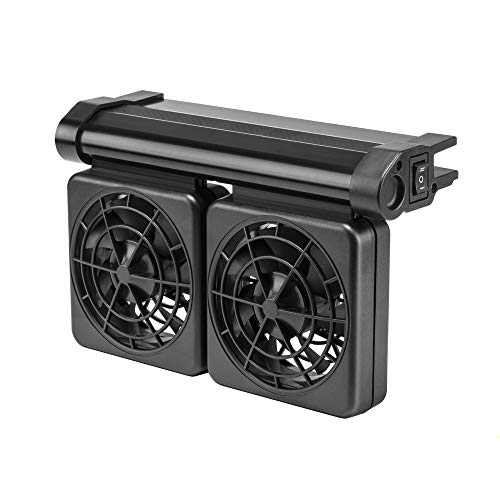
| Quiet & Durable | Power Type: 12V low-voltage (DC) | Adjustable Speed: Two-level wind speed adjustment | Mounting/Clip Style: Aluminum alloy clip for aquarium edge | VIEW LATEST PRICE | Read Our Analysis |
More Details on Our Top Picks
AC Infinity MULTIFAN Mini USB Cooling Fan
Should you need a tiny, low-noise solution for spot-cooling small tanks or equipment, the AC Infinity MULTIFAN Mini USB is a great choice; you’ll get a compact 40mm x 20mm fan providing 12 CFM at just 18 dBA. You can power it from any USB port or portable power bank, and position it flat or upright to suit your setup. A multi-speed controller lets you dial airflow versus noise precisely, and dual-ball bearings promise about 67,000 hours of reliable service. It’s energy-efficient, compatible with routers, Raspberry Pi, cosplay, helmets, and small aquariums needing focused cooling.
- Power Type:USB-powered (5V via USB)
- Adjustable Speed:Multi-speed controller (variable fan speed)
- Mounting/Clip Style:Small portable positioning (flat or upright; clip/placement for gear/helmets—portable)
- Cooling Effect (Temperature Reduction):Provides localized cooling (no specific ° listed)
- Safety/Low Voltage:Low-voltage USB power (safer to handle)
- Adjustable Angle / Positioning:Can be positioned flat or standing; portable placement
- Additional Feature:Dual-ball bearing lifespan
- Additional Feature:USB/portable power compatible
- Additional Feature:Multi-speed controller included
Wathai 140mm AC Computer Fan with Speed Controller
Should you need a simple, adjustable cooling solution for a medium-to-large aquarium or equipment cabinet, the Wathai 140mm AC fan with its included multi-speed controller is a top pick — it lets you dial airflow between whisper-quiet low speeds and a high 3000 RPM increase to match your tank’s heat load. You’ll get 140 x 25 mm sizing, dual-ball bearings for ~50,000 hours, and 143 CFM (±10%) while drawing under 6W. The controller accepts 100–240V and outputs 3–12V up to 2A. At 37 dB it’s suitable for cabinets, chillers, grow tents, and AV gear needing reliable, quiet ventilation.
- Power Type:AC mains with controller (100–240V in, 3–12V DC out)
- Adjustable Speed:Multi-speed variable speed controller
- Mounting/Clip Style:Standard fan mount (can be mounted flat or upright)
- Cooling Effect (Temperature Reduction):Improves ventilation/air exchange (no specific ° listed)
- Safety/Low Voltage:Uses DC output via controller (lower voltage output)
- Adjustable Angle / Positioning:Mountable flat or upright (adjustable orientation)
- Additional Feature:High 143 CFM airflow
- Additional Feature:Wide voltage AC input
- Additional Feature:3000 RPM max speed
Aquarium Chillers Aquarium Fan Fish Tank Cooling Fan Marine 2 Fan
Should you keep a mid-sized tank and need reliable, adjustable cooling, the Marine 2 Fan setup is a great choice—it’s designed for 40 cm aquariums and clamps to rims up to 12 mm thick. You’ll get two fans with adjustable jaws fitting cylinder walls within 1.2 cm, plus width and bracket angle flexibility up to 100°. Two-speed wind control typically drops water temperature 2–3°C, helping you maintain ideal conditions. It runs on safe 12V power and meets high security standards. Installation’s practical and portable. You also have 90-day returns, lifetime technical support, and prompt customer service within 24 hours.
- Power Type:12V DC
- Adjustable Speed:Two-speed wind control
- Mounting/Clip Style:Adjustable clamp/jaws for tank rim (fits ≤12mm)
- Cooling Effect (Temperature Reduction):Lowers water temp by about 2–3°C
- Safety/Low Voltage:Operates at 12V safe voltage
- Adjustable Angle / Positioning:Bracket angle adjustable up to 100°
- Additional Feature:Fits up to 12mm rim
- Additional Feature:Two-fan configuration
- Additional Feature:24/7 lifetime support
Aquarium Chiller Cooling Fan System (1-Fan)
Should you run a small to medium tank and need a simple, clamp-on solution to shave a few degrees off your water temperature, the 1-fan chiller is a great choice because it clips securely to thin rims (under 1/2 inch) and delivers targeted cooling without complicated setup. You’ll get 2–4°C reduction to offset heat from lights and UV filters. The compact single-fan unit clamps firmly, needs no assembly, and includes an AC adapter. Two speed settings and a wide-angle, adjustable head let you aim airflow where it helps most. It’s suitable for both saltwater and freshwater aquariums.
- Power Type:AC adapter (external AC→DC power)
- Adjustable Speed:Two variable speed settings
- Mounting/Clip Style:Stable clamp for aquarium lip (<1/2 inch)
- Cooling Effect (Temperature Reduction):Lowers water temp by about 2–4°C
- Safety/Low Voltage:Uses AC adapter with safe DC output (implied low-voltage)
- Adjustable Angle / Positioning:Wide angle adjustable for targeted airflow
- Additional Feature:Includes AC adapter
- Additional Feature:No-assembly installation
- Additional Feature:Stable strong clamp
Aquarium Chiller Fish Tank Fan Aquarium Cooling Fan 1 Yr Warranty
In case you keep tropical fish in a small to medium tank and worry about summer heat spikes, this Aquarium Chiller Fish Tank Fan is a smart pick — it delivers 4°F–6°F cooling with two-speed airflow and a sturdy clip so you can set it and forget it. You’ll get uniform wind for effective heat dissipation, adjustable direction (90°–190°) and an aluminum alloy clip that grips securely without tools. Built from engineering-grade ABS, it’s durable and quiet—10–12 dB quieter than rivals—running on safe 12V low-voltage power. The fan includes a one-year warranty and 24-hour customer support from DaToo.
- Power Type:12V low-voltage (DC)
- Adjustable Speed:Two-level wind speed adjustment
- Mounting/Clip Style:Aluminum alloy clip for aquarium edge
- Cooling Effect (Temperature Reduction):Lowers water temp by about 4°F–6°F (~2–3°C)
- Safety/Low Voltage:12V low-voltage power for safety
- Adjustable Angle / Positioning:Wind direction adjustable 90°–190°
- Additional Feature:Aluminum alloy clip
- Additional Feature:1-year warranty
- Additional Feature:Ultra-quiet motor (10–12 dB quieter)
Factors to Consider When Choosing a Cooling Fan for Aquarium
At the time of choosing a cooling fan for your aquarium, consider how well it matches your tank size and the cooling capacity you actually need. Check noise and vibration levels, the power source type, and whether the fan’s mounting and adjustability suit your setup. These factors will help you pick a fan that cools effectively without disturbing your fish or decor.
Tank Size Compatibility
How well a cooling fan fits your tank makes a big difference in performance and safety; you’ll need one that mounts securely to the rim or wall (typically up to 12 mm thick) and delivers enough airflow for your tank’s volume. Check wall/rim thickness and choose adjustable mounts or slim-profile fans so the bracket grips firmly without stressing glass. Match fan capacity to tank size: small tanks might need a single low-power unit, while larger systems often require multiple fans or higher airflow to achieve a 2–6°C drop. Confirm fan dimensions allow unobstructed airflow across the water surface and that mounts position blades for ideal direction. Incorrect sizing risks poor cooling, instability, and safety issues.
Noise And Vibration
After confirming your fan fits the rim and provides adequate airflow, you’ll want to assess noise and vibration, since they directly affect fish welfare and the longevity of your setup. Low noise levels are essential to prevent stress in fish and keep the room peaceful; aim for fans near or below 20 dB. Check for vibration: even small tremors can disturb aquatic life and loosen fittings. Prefer fans with dual-ball bearings—they run more smoothly and stay quieter over time. Use an adjustable speed controller so you can dial airflow down during quiet hours to reduce noise and vibration. Finally, mount the fan securely with proper clamps or isolation pads to cut transmission and stop rattling against the tank frame.
Cooling Capacity Needed
Because tank size, water volume, and heat sources directly determine how much cooling you need, estimate your aquarium’s cooling load before buying a fan. Measure tank dimensions and calculate volume to gauge heat generation; larger volumes need greater cooling capacity. Aim for a fan that can lower water temperature approximately 1–3°C (2–6°F) depending on sensitivity of livestock and ambient conditions. Check CFM ratings to guarantee airflow matches heat dissipation demands, and prefer models with multiple speed or airflow settings so you can fine-tune cooling as room temperature shifts. For long tanks or heavy bio-loads, consider using multiple fans to secure uniform coverage rather than relying on a single high-speed unit.
Power Source Type
Once you’ve estimated the cooling capacity needed, pick a fan with a power source that fits your setup and safety preferences. Low-voltage DC units (commonly 12V) are the safest and most energy-efficient choice, minimizing shock risk and excess heat. USB-powered fans give you placement flexibility—plug into a computer, USB hub, or power bank for easy relocation. In case you need broad regional compatibility, consider AC models with 110–240V support, but be mindful of higher voltages near water. Prioritize low power consumption (often under 1W to a few watts) to reduce added heat while maintaining airflow. Fans with external adapters or USB plugs integrate cleanly without drilling or altering your tank, simplifying installation and future swaps.
Mounting And Adjustability
While choosing a fan, make sure its mounting system will grip your tank securely—adjustable clamps or brackets that fit different rim and wall thicknesses prevent wobble and accidental drops. Check compatibility with your aquarium’s size and lip width so the mount isn’t unstable or flimsy. Prefer mounts with swivel brackets or adjustable angles so you can aim airflow precisely across the water surface for better cooling. Combine that with variable speed fans to control both intensity and distribution of airflow. Also favor units that install easily without tools or complex assembly so you can reposition or remove the fan quickly for maintenance. Secure, adjustable mounting makes cooling effective, safe, and user-friendly without compromising your setup.
Build Material Quality
Although you could focus on airflow and noise initially, the materials a fan’s made from determine reliability and safety in your aquarium’s humid environment. You’ll want engineering-grade ABS or aluminum alloy for the body and mounting hardware; they resist warping, provide strong, secure attachment, and simplify installation. Corrosion-resistant finishes and stainless fasteners enhance longevity in wet, salty, or humid conditions so you won’t replace the unit prematurely. Sturdy construction also minimizes vibration and operational wear, which reduces noise over time. Durable clips or clamps keep the fan stable and prevent accidental detachment that could stress equipment or disturb livestock. Choosing quality materials lets you rely on consistent performance and fewer maintenance headaches.
Safety And Voltage
Because aquarium setups sit in humid, sometimes splash-prone areas, you’ll want a fan that runs on low voltage—commonly 12V DC—to limit shock and overheating risks while still moving air efficiently. Choose fans that meet recognized safety standards and have protective housings to prevent water intrusion. Inspect wiring and connectors for durable insulation and corrosion-resistant materials; well-sealed plugs and strain reliefs reduce failure points. Low-voltage designs inherently cut shock risk, and manufacturers often add thermal cutoff or motor protection to avoid fan-generated heat. During installation, position cables away from splash zones and secure connections with waterproofing where needed. Prioritize models with clear safety certifications and sturdy electrical construction to keep your tank and equipment protected.
Energy Efficiency
Want to cut power bills without sacrificing cooling? Choose low-voltage, 12V fans so you lower consumption and stay safe. Look for optimized motors that draw minimal watts—many models use under 6W at full speed—so continuous operation won’t spike your energy use. Prefer dual-ball bearing designs; they last longer, so you won’t replace units often, saving embodied energy and money. Get a fan with a variable speed controller so you can dial airflow to exact needs instead of running full blast constantly. Also check noise ratings: 10–18 dBA usually signals efficient motor performance, meaning less energy lost to vibration and sound. Together, these features give quieter, cheaper, and greener cooling.
