

In case you’re trying to replace an old two‑wire thermostat without overloading your system, you’ll want choices that actually cut energy use and avoid short cycling. I’ll walk you through six solid models—covering low‑voltage, line‑voltage, and C‑wire‑adapter options—plus the features that matter most, so you can pick the right fit for your wiring and goals. Keep an eye on compatibility and energy‑saving modes; the differences matter.
| Sensi Touch 2 Smart Thermostat (ST76) |

| Best Overall | Compatibility (HVAC type / system): Compatible with most home HVAC equipment; works with Sensi Room Sensors (sold separately) | Smart/Home Integration: Wi‑Fi; app control; works with Sensi ecosystem (voice/smart assistant support implied) | Scheduling & Remote Control: Programmable scheduling; remote access via app | VIEW LATEST PRICE | Read Our Analysis |
| Meross Smart Wi‑Fi Thermostat (Matter Alexa HomeKit) |

| Best for Smart Homes | Compatibility (HVAC type / system): Suitable for ~95% of 24V HVAC systems (heat pump, AC, furnace, boiler, dehumidifier, humidifier); not for line-voltage baseboards or millivolt | Smart/Home Integration: Wi‑Fi and Matter; Apple Home, Alexa, Google Assistant, SmartThings, Home Assistant | Scheduling & Remote Control: 24/7 flexible scheduling; remote app control | VIEW LATEST PRICE | Read Our Analysis |
| Honeywell Home RTH9600WF Smart Color Wi‑Fi Thermostat |
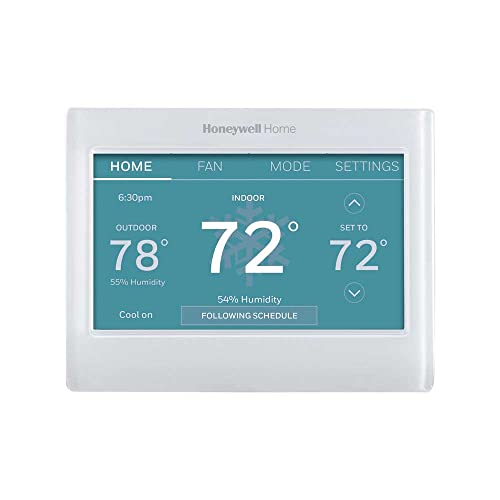
| Energy Savings Leader | Compatibility (HVAC type / system): Compatible with forced air (gas/oil/electric), hot water, steam, and heat pumps (not 120–240V baseboard) | Smart/Home Integration: Wi‑Fi; smartphone app; compatible with Alexa, Google Assistant, Cortana, others | Scheduling & Remote Control: Flexible programming options; remote smartphone control | VIEW LATEST PRICE | Read Our Analysis |
| Sensi Lite Smart WiFi Thermostat (ST25) |

| Budget-Friendly Pick | Compatibility (HVAC type / system): Works with most HVAC systems; C‑wire required for some systems and heat pump systems | Smart/Home Integration: Wi‑Fi; app control; works with Alexa, Google Assistant, SmartThings | Scheduling & Remote Control: Programmable/flexible scheduling; remote access and geofencing | VIEW LATEST PRICE | Read Our Analysis |
| Honeywell Home Smart WiFi Thermostat X2S (Gray) |

| Best Matter Integration | Compatibility (HVAC type / system): Optimized for conventional and heat pump systems (multi-stage support); C‑wire required | Smart/Home Integration: Wi‑Fi and Matter; Apple HomeKit, Alexa, Google Assistant; Resideo/First Alert app | Scheduling & Remote Control: Multiple scheduling options (5-1-1, 5-2, 7-day, etc.); app/remote control | VIEW LATEST PRICE | Read Our Analysis |
| Mysa Smart Thermostat for Electric Baseboard Heaters |

| Best for Baseboards | Compatibility (HVAC type / system): Designed only for high/line-voltage electric heating systems (120–240V) — electric baseboards, convectors, radiant ceiling | Smart/Home Integration: Wi‑Fi; Apple HomeKit, Alexa, Google Assistant; app control and voice control | Scheduling & Remote Control: Scheduling via app; remote control and geofencing | VIEW LATEST PRICE | Read Our Analysis |
More Details on Our Top Picks
Sensi Touch 2 Smart Thermostat (ST76)
In case you want a touchscreen smart thermostat that’s easy to install yourself and works with most home HVAC systems, the Sensi Touch 2 (ST76) is a strong choice—you’ll get a color touchscreen, app-guided DIY setup, and compatibility with Sensi room sensors to balance temperatures throughout your home (a common wire is required). You’ll program schedules, access controls remotely, and get usage reports plus alerts for equipment and maintenance like filter changes. ENERGY STAR certification and features claim about 23% HVAC energy savings. Wi‑Fi and Bluetooth simplify setup, privacy promises no selling of personal data, and the package includes everything needed for installation.
- Compatibility (HVAC type / system):Compatible with most home HVAC equipment; works with Sensi Room Sensors (sold separately)
- Smart/Home Integration:Wi‑Fi; app control; works with Sensi ecosystem (voice/smart assistant support implied)
- Scheduling & Remote Control:Programmable scheduling; remote access via app
- Energy / Efficiency Focus:ENERGY STAR certified; claims ~23% HVAC energy savings; usage reports
- Power Requirement / Source:Requires common wire (C‑wire)
- Included Components / Package Contents:Thermostat, mounting hardware, installation guide, warranty booklet, owner’s manual
- Additional Feature:Touchscreen color display
- Additional Feature:Maintenance reminders/alerts
- Additional Feature:Uses Sensi Room Sensors
Meross Smart Wi‑Fi Thermostat (Matter Alexa HomeKit)
Should you want a compact, Matter‑compatible thermostat that works with most 24V HVAC setups, the Meross MTS300 is a strong pick—especially should you rely on Apple Home, Alexa, or Google for local control. You’ll get Matter and Wi‑Fi connectivity, app and voice control, and 7x24h scheduling with energy modes and HVAC usage tracking. It fits heat pumps, AC, furnaces, boilers, humidifiers/dehumidifiers but not line‑voltage baseboards, millivolt, or two‑wire systems; some installs need a C‑wire. The square LED display is lockable and programmable, includes a three‑year warranty, and offers setup support through the meross app.
- Compatibility (HVAC type / system):Suitable for ~95% of 24V HVAC systems (heat pump, AC, furnace, boiler, dehumidifier, humidifier); not for line-voltage baseboards or millivolt
- Smart/Home Integration:Wi‑Fi and Matter; Apple Home, Alexa, Google Assistant, SmartThings, Home Assistant
- Scheduling & Remote Control:24/7 flexible scheduling; remote app control
- Energy / Efficiency Focus:Energy saving modes; HVAC usage tracking in app; energy-focused features
- Power Requirement / Source:24V (corded); C‑wire required for some configurations
- Included Components / Package Contents:Thermostat, backplate, trim plate, screws & anchors, wiring sticker, user manual
- Additional Feature:Matter protocol support
- Additional Feature:Lockable thermostat UI
- Additional Feature:3‑year warranty
Honeywell Home RTH9600WF Smart Color Wi‑Fi Thermostat
In case you want a feature-rich thermostat that still needs a C‑wire, the Honeywell Home RTH9600WF is a strong choice for homeowners who value energy tracking and smart control. You’ll get ENERGY STAR certification, usage tracking, personalized tips, and eligibility for provider rebates and ongoing incentives. It supports forced air, hot water, steam, and heat pumps with electric backup, but not electric baseboard heat and needs a C‑wire (or adapter) — verify wiring before buying. The HD color touchscreen shows indoor/outdoor temps, humidity, and forecast. Remote app control and Alexa, Google, and Cortana integration let you automate schedules and save energy.
- Compatibility (HVAC type / system):Compatible with forced air (gas/oil/electric), hot water, steam, and heat pumps (not 120–240V baseboard)
- Smart/Home Integration:Wi‑Fi; smartphone app; compatible with Alexa, Google Assistant, Cortana, others
- Scheduling & Remote Control:Flexible programming options; remote smartphone control
- Energy / Efficiency Focus:ENERGY STAR certified; tracks usage and gives energy-saving tips; rebate eligibility
- Power Requirement / Source:C‑wire required (may need adapter)
- Included Components / Package Contents:Thermostat unit, wall plate, screws & anchors, Quick Start Guide, thermostat ID card, wire labels, user guide
- Additional Feature:Customizable color display
- Additional Feature:Shows outdoor weather
- Additional Feature:Tracks humidity levels
Sensi Lite Smart WiFi Thermostat (ST25)
Should you want a straightforward, budget‑friendly smart thermostat that’s easy to set up yourself, the Sensi Lite ST25 is a great pick — it pairs simple app control and ENERGY STAR efficiency with a slim, wall‑mounted design and works with Alexa, Google Assistant, and most HVAC systems. You’ll install it yourself with included hardware, wire labels, and a built‑in level; C‑wire isn’t required for most systems but is needed for heat pumps and heat/cool only setups. It runs on two AAA batteries or 24V C‑wire, offers geofencing, scheduling, remote access, usage reports, and a three‑year warranty.
- Compatibility (HVAC type / system):Works with most HVAC systems; C‑wire required for some systems and heat pump systems
- Smart/Home Integration:Wi‑Fi; app control; works with Alexa, Google Assistant, SmartThings
- Scheduling & Remote Control:Programmable/flexible scheduling; remote access and geofencing
- Energy / Efficiency Focus:ENERGY STAR certified; usage reports and energy features
- Power Requirement / Source:Battery or C‑wire (includes 2×AAA); C‑wire required for some systems
- Included Components / Package Contents:Thermostat, installation guide, mounting hardware, wire labels, 2 AAA batteries
- Additional Feature:Battery-powered option
- Additional Feature:Built-in leveling tool
- Additional Feature:Geofencing support
Honeywell Home Smart WiFi Thermostat X2S (Gray)
Should you need a compact, Matter‑certified smart thermostat that plays nicely with Alexa, Google, and HomeKit, the Honeywell Home X2S (RTH2CWF) is a strong pick for smaller or 2‑stage conventional systems and heat pumps. You’ll get Wi‑Fi and Matter connectivity, app and voice control, and Energy Star efficiency in a slim, wall‑mounted plastic body. It supports flexible schedules, auto‑away, filter alerts, humidity display, and demand response. A C‑wire is required (adapter might be necessary). The 6.57‑inch LCD and interchangeable accents suit most decors, and Resideo backs it with a two‑year warranty.
- Compatibility (HVAC type / system):Optimized for conventional and heat pump systems (multi-stage support); C‑wire required
- Smart/Home Integration:Wi‑Fi and Matter; Apple HomeKit, Alexa, Google Assistant; Resideo/First Alert app
- Scheduling & Remote Control:Multiple scheduling options (5-1-1, 5-2, 7-day, etc.); app/remote control
- Energy / Efficiency Focus:ENERGY STAR certified; demand response capable and energy-focused scheduling
- Power Requirement / Source:Corded electric; C‑wire required (adapter may be needed)
- Included Components / Package Contents:Thermostat, interchangeable decorative accent pieces, user manual
- Additional Feature:Interchangeable accent pieces
- Additional Feature:Demand response capable
- Additional Feature:Extended low‑heat setpoint
Mysa Smart Thermostat for Electric Baseboard Heaters
In case you’ve got high‑voltage electric baseboard or radiant ceiling heating and want smart control without rewiring low‑voltage lines, the Mysa V2 is built for you: it handles 120–240 V systems (up to 3800 W at 240 V), requires a neutral or second live wire, and gives app, touch, and voice control with HomeKit, Alexa, and Google Assistant. You’ll get adaptive display brightness, geofencing, scheduling, energy analytics, and temperature/humidity alerts. It’s not for low‑voltage or two‑wire systems, and needs at least four conductors. Installation includes mounting screws and wire nuts; vendor warranty and a 30‑day return option apply.
- Compatibility (HVAC type / system):Designed only for high/line-voltage electric heating systems (120–240V) — electric baseboards, convectors, radiant ceiling
- Smart/Home Integration:Wi‑Fi; Apple HomeKit, Alexa, Google Assistant; app control and voice control
- Scheduling & Remote Control:Scheduling via app; remote control and geofencing
- Energy / Efficiency Focus:Energy insights and scheduling aimed at reducing energy use (specifically for electric baseboards)
- Power Requirement / Source:Corded high/line-voltage (120–240V); no batteries
- Included Components / Package Contents:Thermostat (V2), welcome booklet, 2 mounting screws, 3 wire nuts, wiring instructions
- Additional Feature:High/line‑voltage support
- Additional Feature:Adaptive brightness display
- Additional Feature:Supports up to 3800W
Factors to Consider When Choosing a 2 Wire Smart Thermostat
Before you pick a 2-wire smart thermostat, check wiring compatibility and confirm the unit can draw the power it needs from your setup. Make sure it’s compatible with your HVAC type, and consider how well it will integrate with your smart home platform. Also weigh energy-efficiency features to get the best savings and comfort.
Wiring Compatibility Checks
Upon selecting a 2‑wire smart thermostat, start upon confirming exactly what kind of two‑wire system you have—true millivolt or simple on/off, or a low‑voltage 24VAC setup—because many smart models need a 24V common (C) wire to power themselves. Check for a C‑wire at the thermostat junction through measuring between C and R with a multimeter (about 24VAC) or visually inspect the cable bundle for a dedicated conductor. In the absence of a C‑wire, confirm compatibility with alternatives: power‑stealing thermostats, a C‑wire adapter/power extender module, or using a spare control‑board terminal to avoid short cycling. Verify your system type—furnace, heat pump, millivolt, line‑voltage baseboard, or two‑wire boiler—since many smart models won’t support high/line‑voltage or millivolt systems. Document terminal labels and photograph wiring and the control board before purchase or consultation.
Power Source Requirements
Having confirmed your system type and wiring, next focus on how the thermostat will get power: many smart models need a continuous 24VAC common (C) or reliable battery backup to run Wi‑Fi, displays, and background services, and a two‑wire run often won’t provide that without a C‑wire adapter, power‑stealing design, or pulling an extra conductor. Verify whether your setup supplies a C‑wire or whether the thermostat supports battery operation. In the event you have line‑voltage baseboard heat (120–240V), pick a high‑voltage thermostat, not a low‑voltage 24V model. Consider adding a C‑wire via pulling a conductor, adapter, or external power module—each has cost and compatibility tradeoffs. Check minimum power draw to avoid fast battery drain, Wi‑Fi drops, or reboots.
HVAC System Compatibility
Compatibility is about matching the thermostat to your system’s control type and power needs, so confirm whether your two‑wire setup is a low‑voltage 24V control, a high‑voltage (120–240V) baseboard, or a millivolt/dry‑contact heat circuit. You’ll need to know whether the circuit is heat‑only, a dry‑contact relay for a boiler, or part of a more complex HVAC with accessories—many smart models require a C‑wire or won’t support millivolt/two‑wire heat‑only systems. Check the heating equipment type (baseboard, furnace, heat pump, boiler, radiant) and whether zone controls or humidifiers need extra conductors. Verify line‑voltage thermostats are rated for the correct volts and amperage. Inspect the control board for a transformer, C‑wire, or available adapter; some setups can use power‑extender modules to power smart thermostats.
Smart Home Integration
Upon integrating a two‑wire smart thermostat into your home, start confirming it speaks the same smart‑home languages and network bands you use—Matter, HomeKit, Alexa, Google Assistant, 2.4 GHz vs 5 GHz Wi‑Fi, or Thread—so it can join your automations, voice controls, and connectivity topology without surprises. Next, verify whether it connects locally or relies on cloud services; local control reduces latency and privacy risks, while cloud features can add remote access but create outage dependency. Check that it joins your Wi‑Fi band or Matter-over-Thread topology and that firmware matches your hub’s requirements. Make sure it exposes the automations, APIs, and device types you need—schedules, scenes, geofencing, multi‑zone or sensor sharing—so it participates fully in routines and coordinated temperature control.
Energy Efficiency Features
While two‑wire smart thermostats for line‑voltage systems often don’t include all the advanced savings features of low‑voltage models, you should still prioritize adaptive scheduling, occupancy awareness, and clear energy reporting so you actually reduce runtime and costs. Check for setback capabilities that trim heating or cooling during unoccupied periods and adaptive anticipatory control that prevents wasted warm‑up or cool‑down cycles. Prefer units with geofencing, motion sensing, or learning algorithms to switch to energy‑saving setpoints automatically. Look for precise setpoint control and optimized cycle minimums to avoid short cycling. Choose thermostats that show runtime tracking, usage summaries, and trend graphs so you can quantify percent reductions. Finally, consider demand‑response and utility compatibility to earn rebates and lower peak charges.
Installation Difficulty Level
Because two‑wire systems usually lack a C‑wire, installing a smart thermostat can be trickier than swapping a simple programmable unit; you’ll need to decide whether to run a new wire, fit a C‑wire adapter or choose a model designed for two‑wire operation, and each choice changes the time, skill and cost involved. Check your transformer voltage and capacity before you start—incorrect voltage or an undersized transformer can stop a thermostat from working. Factor in physical access: cramped junction boxes, stacked breakers or unlabeled wires add time and risk. In case you’re unsure about electrical compatibility, local codes, or working near line/high voltage, hire a licensed HVAC tech or electrician. Professional installation raises cost but reduces wiring errors and safety hazards.
Security And Privacy
Should you’re picking a two‑wire smart thermostat, prioritize security and privacy from the start: make sure the device and app use end‑to‑end encryption (TLS 1.2/1.3) and encrypt data at rest. Also confirm the thermostat supports local‑only control or Matter/local APIs so core functions work without cloud dependence, reducing breach exposure. Choose vendors offering strong authentication—unique account credentials, multi‑factor authentication, or OAuth sign‑in—to block unauthorized access. Read the privacy policy for promises not to sell personal data, clear data retention limits, and exactly what telemetry or sensor data are collected and shared. Finally, verify firmware updates are automatic, digitally signed, and securely validated so vulnerabilities get patched promptly and attackers can’t install malicious firmware.
Frequently Asked Questions
Can a 2‑Wire Thermostat Power Other Smart Home Devices?
Yes — but it’s limited. A 2‑wire thermostat can sometimes power low‑draw smart devices via its wiring or add‑ons, yet you’ll likely need a power extender, adapter, or separate power source to avoid reliability or compatibility issues.
Do Any of These Models Support Geofencing for Presence-Based Control?
Yes — some support geofencing for presence-based control, though functionality and reliability vary across model and app; you’ll need the manufacturer’s app and phone permissions enabled, and occasional location hiccups can affect automatic switching.
Are There Firmware Update Risks That Can Brick a 2‑Wire Unit?
Yes, there are risks: should an update fail or power cuts during flashing, your 2‑wire unit can be bricked. You should follow instructions, backup settings whenever possible, and update with reliable power and network.
Can a 2‑Wire Thermostat Be Used With Multi‑Zone HVAC Systems?
Like a conductor guiding many instruments, you can use a 2‑wire thermostat with multi‑zone HVAC only provided that each zone’s equipment supports simple control or you add zone controllers/relays; otherwise you’ll need dedicated thermostats per zone.
What Warranties Cover Compressor or Heat Pump Damage From Thermostat Failure?
Most manufacturer warranties don’t cover compressor or heat pump damage from thermostat failure; you’ll need extended equipment or installer warranties, HVAC contractor guarantees, or specific manufacturer protective clauses—so check terms, exclusions, and required thermostat compatibility documentation.
Final Thoughts
You’re steering your comfort ship, and the right two‑wire thermostat is your compass—pick one that matches voltage, wiring quirks, and smart features so it won’t lead you into short‑cycling shoals. ENERGY STAR models and adaptive scheduling act like a lighthouse, saving energy while keeping rooms cozy. Match system type (millivolt, 24VAC, or 120–240V), verify compatibility, and use geofencing and runtime analytics to turn small adjustments into big fuel‑saving voyages.
