

Let’s say your thermostat’s been, politely, underperforming — it’s costing more than it should and not keeping you as comfy. You’ll want options that actually lower bills without fuss, and I’ve picked five that fit different homes and budgets. Each brings distinct strengths — Alexa depth, baseboard power, adaptive learning, reliable scheduling, and budget smarts — so keep going to match the right one to your setup.
| Like-New Amazon Smart Thermostat (ENERGY STAR Alexa) |

| Refurbished Value | Wi‑Fi / Remote Control: Remote control via Alexa app (Wi‑Fi through Alexa ecosystem) | Voice Assistant Compatibility: Works with Alexa | Scheduling / Automation: Alexa can program and update temperatures; comfort zone automation | VIEW LATEST PRICE | Read Our Analysis |
| meross Matter Smart Wi‑Fi Thermostat for Electric Baseboards |
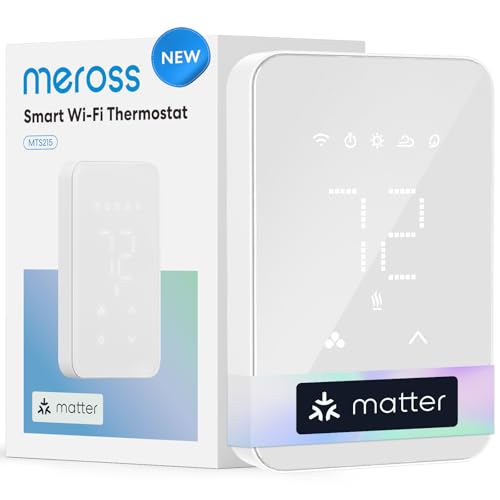
| Best for Baseboards | Wi‑Fi / Remote Control: Wi‑Fi connectivity; remote control via Meross app | Voice Assistant Compatibility: Matter compatible — works with Alexa, Apple Home/HomeKit, Google Home, SmartThings | Scheduling / Automation: 24/7 visual scheduling; automated open‑window detection | VIEW LATEST PRICE | Read Our Analysis |
| Nest T4000ES E Hubless Smart Thermostat |

| Learning Thermostat | Wi‑Fi / Remote Control: Requires Wi‑Fi; remote control via Nest app (phone/tablet/laptop) | Voice Assistant Compatibility: Works with Alexa, Google Assistant and other compatible smart speakers | Scheduling / Automation: Learns schedule and programs itself; adjustable schedule via app | VIEW LATEST PRICE | Read Our Analysis |
| Honeywell Home RTH7600D 7-Day Programmable Touchscreen Thermostat White |

| Programmable Classic | Wi‑Fi / Remote Control: Remote programming not stated (local touchscreen) — primary control is on‑device; install/operation focused (note: no explicit Wi‑Fi/remote feature listed) | Voice Assistant Compatibility: No direct voice assistant integration listed (primarily local touchscreen control) | Scheduling / Automation: 7‑day programmable schedule with four periods per day | VIEW LATEST PRICE | Read Our Analysis |
| ecobee Smart Thermostat Essential — Wi‑Fi Voice Compatible |

| Energy-Saving Smart | Wi‑Fi / Remote Control: Wi‑Fi connectivity; remote control via ecobee app | Voice Assistant Compatibility: Works with Alexa, Google Assistant, Siri/HomeKit | Scheduling / Automation: Auto‑Scheduling, schedule assistant, eco+ features for automated preheat/precool | VIEW LATEST PRICE | Read Our Analysis |
More Details on Our Top Picks
Like-New Amazon Smart Thermostat (ENERGY STAR Alexa)
Provided you want an affordable, Alexa‑ready thermostat that’s been professionally refurbished to look and work like new, the Like‑New Amazon Smart Thermostat is a smart pick — it pairs Honeywell Home technology with Alexa control, requires a C‑wire, and supports Echo temperature sensors so you can set comfort zones and control your HVAC remotely. You’ll get a certified refurbished unit with the same limited warranty as new, ENERGY STAR savings (about $50/year average), DIY install via the Alexa app, and customer support in case required. Alexa handles automatic comfort and remote adjustments, and you’ll receive rebate info through email.
- Wi‑Fi / Remote Control:Remote control via Alexa app (Wi‑Fi through Alexa ecosystem)
- Voice Assistant Compatibility:Works with Alexa
- Scheduling / Automation:Alexa can program and update temperatures; comfort zone automation
- Energy‑Saving / Efficiency Focus:ENERGY STAR certified; Alexa automatic comfort; EPA estimate ~$50/yr savings
- Compatibility with HVAC Types / Install Requirements:Uses Honeywell Home tech; C‑wire required
- App or Ecosystem Sensors / Multi‑zone Support:Supports temperature sensors and select Echo devices to create comfort zones/presence detection
- Additional Feature:Made with Honeywell tech
- Additional Feature:Creates comfort zones
- Additional Feature:ENERGY STAR certified
meross Matter Smart Wi‑Fi Thermostat for Electric Baseboards
Designed for homes with high-line electric heaters, the meross Matter Smart Wi‑Fi Thermostat is the best pick should you need simple, Matter-enabled control for 120–240 VAC baseboard, convector, or fan-forced heaters. You won’t use it with 24V HVAC systems, but you will get universal Matter compatibility—so Alexa, HomeKit, Google Home, SmartThings and other platforms share control. Wi‑Fi and the Meross app let you adjust temperatures remotely and use voice commands. Set 24/7 schedules, enable open-window detection to pause wasted heating, and monitor real-time and historical electricity consumption to spot savings and cut your carbon footprint.
- Wi‑Fi / Remote Control:Wi‑Fi connectivity; remote control via Meross app
- Voice Assistant Compatibility:Matter compatible — works with Alexa, Apple Home/HomeKit, Google Home, SmartThings
- Scheduling / Automation:24/7 visual scheduling; automated open‑window detection
- Energy‑Saving / Efficiency Focus:Energy monitoring and open‑window detection to reduce waste
- Compatibility with HVAC Types / Install Requirements:High‑line voltage 120–240 VAC for electric baseboards; not for 24V HVAC
- App or Ecosystem Sensors / Multi‑zone Support:App provides energy insights; no external room sensors noted (focus on per‑zone baseboard control)
- Additional Feature:Matter interoperability support
- Additional Feature:Open-window detection
- Additional Feature:Real-time energy monitoring
Nest T4000ES E Hubless Smart Thermostat
Should you want a hands-off, energy-saving thermostat that learns your routine, the Nest T4000ES E Hubless Smart Thermostat is a great pick — it programs itself over time and shows a Nest Leaf whenever you pick energy-saving temps. You’ll start with a simple schedule and the thermostat adapts as you adjust via the Nest app. Home/Away Assist flips to Eco whenever you leave, and HVAC monitoring alerts you to system issues and maintenance needs. Add a Nest Temperature Sensor for room-specific control. It’s hubless, fits most systems, installs in about an hour, and offers remote and voice control through Wi‑Fi.
- Wi‑Fi / Remote Control:Requires Wi‑Fi; remote control via Nest app (phone/tablet/laptop)
- Voice Assistant Compatibility:Works with Alexa, Google Assistant and other compatible smart speakers
- Scheduling / Automation:Learns schedule and programs itself; adjustable schedule via app
- Energy‑Saving / Efficiency Focus:Learns to save energy; Nest Leaf and Energy History with suggestions
- Compatibility with HVAC Types / Install Requirements:Compatible with ~95% of heating/cooling systems; easy install
- App or Ecosystem Sensors / Multi‑zone Support:Works with Nest Temperature Sensor (sold separately) for room‑specific control and Home/Away Assist
- Additional Feature:Learns preferred temperatures
- Additional Feature:HVAC monitoring alerts
- Additional Feature:Hubless frosted display
Honeywell Home RTH7600D 7-Day Programmable Touchscreen Thermostat White
Should you want a reliable, calendar-style schedule you can set once and forget, the Honeywell RTH7600D is a strong choice: its 7-day programming with four periods per day and a large backlit touchscreen makes daily tuning quick and intuitive. You’ll see room temperature and set point simultaneously, use a menu-driven interface, and rely on a real-time clock that auto-adjusts for Daylight Savings. Smart Response Technology learns equipment runtimes to hit targets efficiently, while compressor protection prevents short-cycling. It supports most residential systems, offers temporary or permanent holds, and can remind you about filters and low batteries should you enable alerts.
- Wi‑Fi / Remote Control:Remote programming not stated (local touchscreen) — primary control is on‑device; install/operation focused (note: no explicit Wi‑Fi/remote feature listed)
- Voice Assistant Compatibility:No direct voice assistant integration listed (primarily local touchscreen control)
- Scheduling / Automation:7‑day programmable schedule with four periods per day
- Energy‑Saving / Efficiency Focus:Smart Response Technology and programmable holds to save energy
- Compatibility with HVAC Types / Install Requirements:Compatible with single‑ and multi‑stage systems, heat pumps, boilers, 750 mV, gas fireplaces, etc.
- App or Ecosystem Sensors / Multi‑zone Support:No external sensor integration specified; local home/away temperature settings via schedule/holds
- Additional Feature:Smart Response Technology
- Additional Feature:Built-in compressor protection
- Additional Feature:Daylight Savings auto-adjust
ecobee Smart Thermostat Essential — Wi‑Fi Voice Compatible
Provided you want a straightforward, budget‑minded smart thermostat that still works with HomeKit, Alexa, and Google Assistant, the ecobee Smart Thermostat Essential is a solid pick. You’ll get a matte white, round LCD touchscreen that links via Wi‑Fi and shows energy use in the ecobee app. It’s Energy Star certified, supports eco+ features like humidity detection, schedule assistant, time‑of‑use preheat/precool, Auto‑Away and Auto‑Scheduling, and offers free software upgrades. It fits about 85% of HVAC systems, saves up to 23% annually versus a constant 72°F hold, and installs easily with optional PEK for no C‑wire.
- Wi‑Fi / Remote Control:Wi‑Fi connectivity; remote control via ecobee app
- Voice Assistant Compatibility:Works with Alexa, Google Assistant, Siri/HomeKit
- Scheduling / Automation:Auto‑Scheduling, schedule assistant, eco+ features for automated preheat/precool
- Energy‑Saving / Efficiency Focus:ENERGY STAR certified; claims up to 23% annual savings; eco+ features
- Compatibility with HVAC Types / Install Requirements:Compatible with ~85% of HVAC systems (most 24 VAC equipment); PEK available for no C‑wire installs
- App or Ecosystem Sensors / Multi‑zone Support:Works with ecobee SmartSensor (sold separately) for room temperature/motion sensing and improved zoning
- Additional Feature:eco+ preheat/precool features
- Additional Feature:Shows energy consumption
- Additional Feature:Battery powered (PEK option)
Factors to Consider When Choosing a Home Smart Thermostat
Before you pick a smart thermostat, check that it supports your heating and cooling system and meets your home’s power and wiring requirements. Consider how it will fit into your smart home, whether it can save energy, and provided that it supports extra sensors or zoning for better comfort. These factors determine ease of installation, ongoing savings, and how well the thermostat adapts to your home.
Compatibility With Systems
While picking a smart thermostat, make certain its electrical and system compatibility matches your home so you don’t end up with wiring headaches or limited functionality. Check the control voltage—most central HVAC use 24 VAC, while high‑line electric baseboards need 120–240 VAC—so the unit will actually drive your system. Verify whether you have a C‑wire or need a thermostat that supports power extenders or reliable battery operation. Confirm the thermostat supports your specific system type: single‑stage, multi‑stage, heat pump, boiler, or zone/line‑voltage setups. Make sure it can interface with any external sensors or zone controllers you plan to use for room‑level control. Finally, should you employ voice assistants or a smart‑home platform, pick a model with the right native or cross‑platform integrations.
Power And Wiring Needs
Now that you’ve checked system compatibility, look closely at power and wiring—these determine whether a smart thermostat will actually run in your home. Many models require a C‑wire (24 VAC) for continuous power; without one you’ll either install a C‑wire, fit a power‑extender kit, or pick a battery‑friendly unit. Confirm voltage: high‑line electric systems (120–240 VAC) use different wiring than low‑voltage HVAC. Some thermostats pull power from the heating circuit and might need a neutral or minimum current draw to avoid short cycling—important for multi‑stage systems and heat pumps. In the event wiring’s absent or nonstandard, you could need a pro installer or an add‑on module that matches specs. Also verify support for millivolt, line‑voltage baseboards, and 750 mV gas valves to prevent damage.
Smart Home Integration
Many smart thermostats can do more than change temperature, so make certain yours fits into your existing smart‑home ecosystem. Check support for the protocols you use (Matter, Wi‑Fi, or platform APIs) so devices interoperate without workarounds. Confirm compatibility with your preferred voice assistants and hubs to keep voice control and routines consistent.
Verify multi‑account discovery and secure remote app access so family members can control settings with proper permissions. Look for multi‑zone or sensor‑based integration—temperature, motion, or presence sensors—to enable automated comfort zones and occupancy routines. Finally, make sure the thermostat exposes useful integrations (schedules, open‑window detection, event triggers, and energy reporting) for the automation platforms and third‑party apps you plan to use.
Energy Savings Potential
Because a smart thermostat can learn patterns, use sensors, and shift operation to cheaper times, it’s one of the clearest ways to cut HVAC costs without sacrificing comfort. You’ll typically see modest direct savings: ENERGY STAR models average about $50 per year versus non‑smart units. Beyond that, adaptive learning and scheduling often produce double‑digit runtime reductions through lowering setpoints during unoccupied periods. Provided you use time‑of‑use plans, pre‑conditioning shifts heavy heating or cooling into lower‑cost windows. Real‑time monitoring and historical reports let you spot wasteful habits—long runtimes or excessive setbacks—and make targeted changes that improve seasonal efficiency. Together, these features compound: modest baseline savings plus behavior- and rate-aware automation can meaningfully trim your annual energy spend.
Sensors And Zoning Support
Those efficiency gains get much better once your thermostat understands how temperature varies through the house—so look closely at sensor and zoning support. Choose models that accept extra temperature sensors so you can average readings or prioritize rooms; that prevents one hot or cold room from biasing the whole-house setting. Prefer thermostats offering virtual zones via sensor groups or integration with motorized dampers and multiple thermostats for true independent heating and cooling. Occupancy and motion sensors let the system back off setpoints in unused rooms to save energy automatically. Check limits: maximum sensors or zones, per-sensor scheduling, and weighted averaging options—these determine how precisely you can control comfort. Finally, confirm compatibility with your wiring, hub, and multi-stage HVAC before buying.
Installation And Setup
Start via confirming your HVAC type and wiring so you don’t buy an incompatible thermostat—or risk a tricky retrofit. Verify system voltage (24 VAC vs 120–240 VAC baseboards) and heating/cooling type before you shop. Check for a common “C‑wire”; in case you don’t have one, plan to use a power‑extender/adapter or pick a model that supports battery operation. Choose units with DIY‑friendly installs, clear wiring diagrams, and guided in‑app steps—most take about 30–60 minutes. Make sure reliable Wi‑Fi at the thermostat location and have your network name and password ready for setup. Finally, plan any extra accessories or sensors up front, confirming placement, wiring or pairing needs so they’ll integrate smoothly during initial installation.
Remote Control Options
Once your thermostat is physically in place and talking to your HVAC, consider how you’ll control it from anywhere. Check whether the unit supports smartphone app control over Wi‑Fi or cloud so you can change settings remotely with internet access. Verify whether it needs a hub, bridge, or specific protocol (Matter, Wi‑Fi, Zigbee, Z‑Wave) to integrate with your smart‑home setup. Look for voice‑assistant compatibility so you want hands‑free adjustments through smart speakers. Confirm the app offers geofencing or presence‑based controls so temperatures change automatically whenever occupants come and go. Finally, assess whether the remote interface includes scheduling, multi‑zone control, and energy‑usage understanding so you can manage comfort and savings on the go.
Monitoring And Alerts
Regularly monitoring alerts and sensor data lets you catch HVAC problems promptly and keep comfort consistent. You should pick a thermostat that sends real-time fault alerts—system failures, short cycling, or compressor lockouts—so you can act prior to repairs get expensive. Get temperature and humidity notifications with customizable thresholds to avoid frozen pipes, mold risks, or uncomfortable rooms. Make sure occupancy or presence-based alerts flag unexpected away/home changes, which can reveal malfunctions or security issues. Prefer devices that log and display historical alerts and sensor readings so you can spot recurring issues and give technicians precise diagnostics. Finally, verify multi-zone and remote sensor alert support so you’ll be notified whenever any room strays from setpoints for targeted fixes.
