

Should you’re upgrading your home network for 2026, a Wi‑Fi 6 mesh can give you faster speeds, wider coverage, and smarter device handling without constant tweaking. You’ll want AX‑rated throughput, multi‑gig ports, wired backhaul, and solid security to handle gaming, 4K streaming, and dozens of smart devices. Below are top systems that balance real‑world performance and ease of use — and one surprise you could not expect.
| Amazon eero 6 Mesh WiFi System 3-Pack (4500 sq ft) |

| Reliable Whole‑Home | Wi‑Fi Standard: Wi‑Fi 6 | Mesh System: Yes (3‑pack router + extenders) | Coverage (sq ft): Up to 4,500 sq ft | VIEW LATEST PRICE | Our Analysis |
| TP-Link Deco X55 AX3000 WiFi 6 Mesh (2-Pack) |

| Performance Value | Wi‑Fi Standard: Wi‑Fi 6 (AX3000) | Mesh System: Yes (2‑pack mesh units) | Coverage (sq ft): Up to 4,500 sq ft | VIEW LATEST PRICE | Our Analysis |
| NETGEAR Orbi 370 WiFi 7 Mesh System (RBE373) |
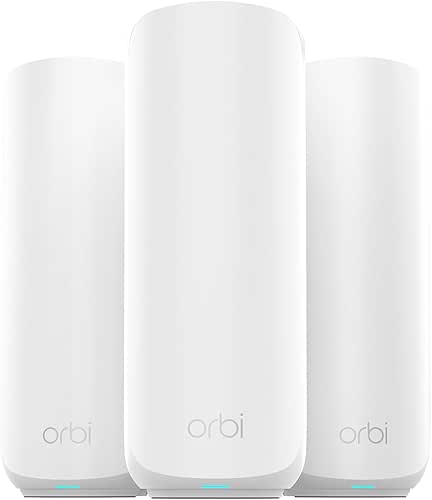
| Cutting‑Edge Power | Wi‑Fi Standard: Wi‑Fi 7 (backward compatible with older devices) | Mesh System: Yes (router + 2 extenders) | Coverage (sq ft): Up to 6,000 sq ft | VIEW LATEST PRICE | Our Analysis |
| TP-Link Deco X20 WiFi 6 Mesh System (3-Pack) |
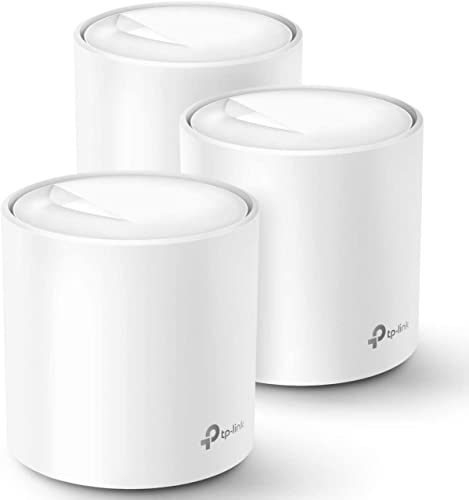
| Best for Coverage | Wi‑Fi Standard: Wi‑Fi 6 (AX1800) | Mesh System: Yes (3‑pack mesh) | Coverage (sq ft): Up to 5,800 sq ft | VIEW LATEST PRICE | Our Analysis |
| Amazon eero 6+ Mesh WiFi Router (1-Pack) |

| Smart Home Starter | Wi‑Fi Standard: Wi‑Fi 6 (with 160 MHz channel) | Mesh System: Yes (single unit scalable into mesh) | Coverage (sq ft): Up to 1,500 sq ft | VIEW LATEST PRICE | Our Analysis |
More Details on Our Top Picks
Amazon eero 6 Mesh WiFi System 3-Pack (4500 sq ft)
Looking for a simple, reliable mesh that handles a mid‑sized home? You’ll get whole‑home Wi‑Fi 6 coverage up to 4,500 sq ft with the Amazon eero 6 3‑pack (one router, two extenders). It supports internet plans up to 500 Mbps and optimizes mesh connections to reduce dead spots, so 4K streaming, gaming, and video calls stay smooth. The system’s cross‑compatibility lets you expand later. eero Plus adds advanced digital security, ad/tracker blocking, parental controls, and scheduling. Setup is quick via the app, updates are automatic, and US support is available seven days a week.
- Wi‑Fi Standard:Wi‑Fi 6
- Mesh System:Yes (3‑pack router + extenders)
- Coverage (sq ft):Up to 4,500 sq ft
- Parental Controls:eero Plus (schedules, content filters)
- Security & Automatic Updates:Advanced digital security (eero Plus) + automatic updates
- Mobile App Management / Easy Setup:eero app (quick setup, remote management)
- Additional Feature:Cross-compatible with eeros
- Additional Feature:Ad and tracker blocking
- Additional Feature:Free US support
TP-Link Deco X55 AX3000 WiFi 6 Mesh (2-Pack)
Should you need reliable whole‑home coverage for many devices, the TP‑Link Deco X55 AX3000 (2‑pack) delivers—covering up to 4,500 sq ft and handling as many as 150 connections while replacing both your router and extenders. You’ll get Wi‑Fi 6 speeds (AX3000: 2402 Mbps + 574 Mbps) with AI‑driven mesh that adapts to reduce dead zones and buffering. Each unit offers three Gigabit Ethernet ports and supports wired backhaul; any node can act as the primary router. Setup and remote management are simple via the Deco app, and TP‑Link HomeShield includes basic security, QoS, and parental controls.
- Wi‑Fi Standard:Wi‑Fi 6 (AX3000)
- Mesh System:Yes (2‑pack mesh units)
- Coverage (sq ft):Up to 4,500 sq ft
- Parental Controls:HomeShield (parental controls included)
- Security & Automatic Updates:HomeShield security features + secure‑by‑design pledge
- Mobile App Management / Easy Setup:Deco app (easy setup, visual guidance, remote control)
- Additional Feature:3 Gigabit Ethernet ports
- Additional Feature:AI-driven mesh optimization
- Additional Feature:Connects up to 150 devices
NETGEAR Orbi 370 WiFi 7 Mesh System (RBE373)
Provided you need blistering home speeds and room-to-room coverage for 4K streaming, gaming, and hybrid work, the NETGEAR Orbi 370 WiFi 7 Mesh System (RBE373) is made for homes that want next‑gen performance without constant tinkering. You get a router plus two BE5000 extenders covering up to 6,000 sq. ft., supporting about 70 devices and providing up to 5 Gbps—about 1.7x faster than WiFi 6. The dual-band mesh uses improved backhaul and a 2.5 GbE internet port for reliable whole‑home throughput. Built‑in security, automatic firmware updates, and Advanced Router Protection simplify maintenance for busy households.
- Wi‑Fi Standard:Wi‑Fi 7 (backward compatible with older devices)
- Mesh System:Yes (router + 2 extenders)
- Coverage (sq ft):Up to 6,000 sq ft
- Parental Controls:Advanced Router Protection (includes safety features)
- Security & Automatic Updates:Built‑in security + automatic firmware updates
- Mobile App Management / Easy Setup:(Manufacturer app-based management implied; supports setup/management)
- Additional Feature:WiFi 7 forward‑compatible
- Additional Feature:2.5 Gigabit internet port
- Additional Feature:Up to 5 Gbps throughput
TP-Link Deco X20 WiFi 6 Mesh System (3-Pack)
Should you need reliable whole‑home Wi‑Fi for a busy household or small office, the TP‑Link Deco X20 (3‑pack) delivers Wi‑Fi 6 performance across up to 5,800 sq. ft. You’ll get AX1800 dual‑band speeds, support for about 150 devices, and compatibility with gigabit internet plans. The three units replace routers and extenders, offer six Ethernet ports total, and support wired backhaul for stable links. Setup’s fast via the Deco app with visual guidance and remote control; Alexa can toggle guest Wi‑Fi. HomeShield adds security and parental controls, letting you monitor, limit, and prioritize devices with basic reports.
- Wi‑Fi Standard:Wi‑Fi 6 (AX1800)
- Mesh System:Yes (3‑pack mesh)
- Coverage (sq ft):Up to 5,800 sq ft
- Parental Controls:HomeShield (parental controls, profiles)
- Security & Automatic Updates:HomeShield security features + maintenance updates
- Mobile App Management / Easy Setup:Deco app (quick setup, visual guidance, remote control)
- Additional Feature:Covers up to 5,800 sq. ft.
- Additional Feature:Works with Alexa
- Additional Feature:6 total Ethernet ports
Amazon eero 6+ Mesh WiFi Router (1-Pack)
Should you need fast, reliable coverage for a small to medium home and want built‑in smart‑home support, the Amazon eero 6+ (1‑pack) delivers — Wi‑Fi 6 with a 160 MHz channel and TrueMesh routing give you extra bandwidth and fewer dead spots, while Thread and Zigbee hub support plus Alexa compatibility simplify smart device setup. You’ll cover about 1,500 sq. ft. and connect 75+ devices, scaling through adding more eeros. The eero app gets you running in minutes and lets you manage remotely. Optional eero Plus adds device security, ad/tracker blocking, parental controls. Support via [email protected] or +1-877-659-2347.
- Wi‑Fi Standard:Wi‑Fi 6 (with 160 MHz channel)
- Mesh System:Yes (single unit scalable into mesh)
- Coverage (sq ft):Up to 1,500 sq ft
- Parental Controls:eero Plus (schedules, content filters)
- Security & Automatic Updates:Advanced digital security (eero Plus) + automatic updates
- Mobile App Management / Easy Setup:eero app (setup in minutes, remote management)
- Additional Feature:Built‑in Thread and Zigbee
- Additional Feature:160 MHz channel support
- Additional Feature:eero Built‑in on Echo
Factors to Consider When Choosing a WiFi 6 Router Mesh
Before you pick a Wi‑Fi 6 mesh, figure out the coverage area you need and whether the system can handle your internet speed and number of devices. Check for wired backhaul support should you want the most reliable node-to-node links, and review security and privacy features like WPA3 and automatic updates. These factors will help you match a mesh to your home and usage habits.
Coverage Area Needed
Coverage matters more than raw speed whenever you’re planning a WiFi 6 mesh—measure your home’s total square footage (including all levels) and size your mesh to cover about 10–20% more area to compensate for walls and interference. Account for building materials: concrete, brick, metal studs, and thick plaster cut range dramatically, so add nodes or place them closer where those materials exist. For homes over roughly 3,000–4,000 sq ft, use a multi-node setup—at least two extenders plus a router—to avoid dead zones. Consider device density and high‑bandwidth zones (4K streaming, gaming) and place dedicated nearby nodes there. Finally, leave room for future expansion so you can add nodes for new rooms or detached structures without replacing the core system.
Internet Speed Support
While raw Wi‑Fi ratings look impressive, you’ll get the speeds you pay for only provided the mesh’s WAN ports, per‑node throughput, and backhaul match your ISP plan and home layout. Match AX ratings to your plan: AX1800/AX3000 can cap multi‑gig connections, while AX5000+ or Wi‑Fi 7‑class gear better handles 500 Mbps–1 Gbps and above. Check WAN port speeds (1 Gbps vs 2.5 Gbps) and whether nodes offer wired Ethernet backhaul or link aggregation to avoid bottlenecks across rooms. Look for 160 MHz channel support and MU‑OFDMA/MU‑MIMO so multiple clients share high throughput efficiently. Finally, consider the mesh’s design for concurrent devices—high device counts can shrink per‑device speed even with strong peak rates.
Device Capacity Limits
Because every smart home mixes phones, streaming TVs, cameras, and sensors, you should check a mesh system’s stated concurrent‑device capacity and plan for more than you currently need. Look for systems listing 50–150+ devices per node or system, then add 20–50% headroom for growth. Know that manufacturer numbers are upper bounds under ideal conditions; real throughput per device falls as multiple high‑bandwidth streams, gaming sessions, or video calls run. In the event many IoT sensors or low‑bandwidth gadgets dominate your setup, use separate IoT/guest networks to reduce contention on client‑handling resources. Prefer meshes that spread clients across nodes and support band steering, MU‑MIMO, and OFDMA so dozens of devices can operate concurrently with better responsiveness and fewer drops.
Wired Backhaul Options
In case you can run Ethernet between nodes, wired backhaul will give your mesh a big increase in speed and stability through taking inter‑node traffic off the air. You should use Gigabit or multi‑Gigabit links so backhaul doesn’t bottleneck clients; check that nodes offer 1 Gbps, 2.5 Gbps or higher ports to match your modem and ISP. Wired backhaul reduces latency and wireless congestion, improving 4K streaming, gaming, and multi‑device performance via eliminating the wireless hop penalty. Verify your home cabling—Cat5e versus Cat6/6a—and maximum cable runs. Look for systems that support link aggregation or multi‑Gig trunks for higher aggregate throughput and resiliency. Prefer meshes that let you mix wired and wireless backhaul and designate any node as the primary router.
Security And Privacy
Wired backhaul can bolster speed and stability, but it won’t protect you from internet threats or poorly configured devices—so security and privacy matter just as much as throughput whenever choosing a Wi‑Fi 6 mesh. You should pick a system that auto-applies firmware updates and delivers timely security patches to close vulnerabilities without manual effort. Choose WPA3 support to strengthen client-to-router encryption and resist password-guessing attacks. Verify network-level protections like intrusion detection/prevention, malware blocking, and DNS filtering to cut exposure to malicious sites and compromised devices. Prefer per-device segmentation—guest networks, VLANs, and IoT isolation—to limit lateral movement should something’s breached. Finally, confirm resilient account security: unique local admin access, optional multi-factor cloud login, and encrypted remote management (HTTPS/TLS).
Parental Controls Available
At any time you’re choosing a Wi‑Fi 6 mesh, prioritize parental controls that let you create individual profiles and apply device‑specific rules so kids, teens and guests get appropriate restrictions. Set schedules to automatically pause internet at bedtime or during homework across selected devices or profiles. Use age‑appropriate content filters and blocking categories—adult, social media, gaming—and the option to add or whitelist specific sites. Pick a system that gives remote management via a mobile app so you can monitor usage, enforce rules, and pause connectivity from anywhere. Look for usage monitoring and reporting (daily/weekly/monthly) to spot trends, and quality‑of‑service controls to limit bandwidth for particular devices or apps, keeping priority traffic smooth while controlling distractions.
App And Management
Parental controls are only one piece of the image; the app that manages your mesh often determines how well those controls actually work. You’ll want an app with guided setup and a visual network map so you can place nodes and confirm coverage quickly. Make sure it supports remote management so you can change settings, run speed tests, or reboot devices while you’re away. Check for per‑device controls and QoS to prioritize traffic and monitor bandwidth per client. Confirm scheduling, content filtering, and parental controls are included should you need timed access. Finally, verify the app handles automatic firmware updates, sends security alerts, and offers easy rollback or manual update options to keep your mesh secure and current.
Expandability And Compatibility
Even in case your house and device needs change, pick a mesh that’s easy to grow and play well with others: make sure it lets you add same‑family nodes or compatible third‑party units, supports Ethernet backhaul and multi‑Gig LAN ports, and uses open standards like Wi‑Fi 6 and Thread so new gadgets integrate smoothly. You’ll want wired Ethernet backhaul and several Gigabit or 2.5Gb LAN ports to connect switches, NAS, or extra APs without bottlenecks. Verify the system supports adding nodes without reducing device limits and that controller apps handle mixed node types and firmware versions. Prefer vendors that follow open protocols and offer clear interoperability advisories. Finally, confirm automatic updates won’t block adding legacy hardware later so your network stays flexible.
