

Most people don’t realize that photoelectric detectors paired with electrochemical CO sensors will warn you sooner for slow‑smoldering fires and toxic gas leaks. You’ll get real‑time app alerts, voice Heads‑Up messages, and whole‑home interconnectivity so everyone’s notified fast. These features cut false alarms and save lives, but the model you pick matters — keep going to see five top options and the key tradeoffs that’ll determine what’s best for your home.
| 3-Pack Smart Wi‑Fi Smoke & Carbon Monoxide Detectors | Smart Home Pack | Smoke + CO Detection: Photoelectric smoke + electrochemical CO | Mobile/App Notifications: Smart Life app push notifications & alarm history | Smart Home Compatibility / Connectivity: 2.4 GHz Wi‑Fi, Smart Home compatible | VIEW LATEST PRICE | Read Our Analysis | |
| Kidde Smart Smoke & Carbon Monoxide Detector (Ring Enabled) |
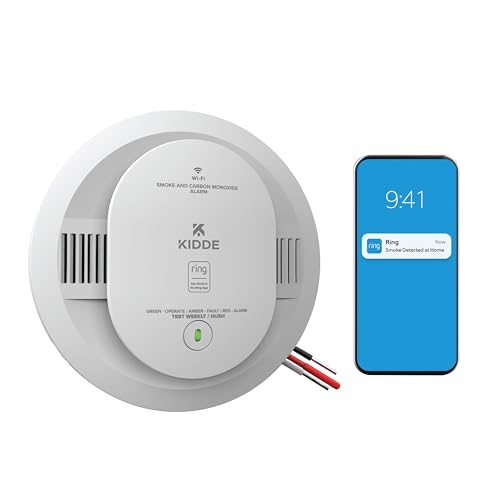
| Best Integrations | Smoke + CO Detection: Dual sensing smoke + CO (enhanced smoke sensing) | Mobile/App Notifications: Ring app real-time mobile notifications | Smart Home Compatibility / Connectivity: Ring-enabled; Alexa integration; whole-home connectivity | VIEW LATEST PRICE | Read Our Analysis |
| Smart Wi‑Fi Smoke & Carbon Monoxide Detector | Compact & Reliable | Smoke + CO Detection: Photoelectric smoke + electrochemical CO | Mobile/App Notifications: Smart Life app push notifications & alarm history | Smart Home Compatibility / Connectivity: 2.4 GHz Wi‑Fi via Smart Life app | VIEW LATEST PRICE | Read Our Analysis | |
| First Alert SC5 Hardwire Smart Smoke & CO Alarm |

| Best Hardwired | Smoke + CO Detection: Smoke + CO (Precision Detection Technology) | Mobile/App Notifications: First Alert app smart alerts to phone | Smart Home Compatibility / Connectivity: Smart home compatible; Google Nest Protect compatible | VIEW LATEST PRICE | Read Our Analysis |
| First Alert SC5 Battery Smart Smoke & CO Alarm |

| Battery-Powered Pick | Smoke + CO Detection: Smoke + CO (Precision Detection Technology) | Mobile/App Notifications: First Alert app notifications to phone | Smart Home Compatibility / Connectivity: Google Nest Protect compatible; interconnected smart alerts | VIEW LATEST PRICE | Read Our Analysis |
More Details on Our Top Picks
3-Pack Smart Wi‑Fi Smoke & Carbon Monoxide Detectors
Smart Home Pack
View Latest PriceShould you want reliable, easy-to-monitor home safety, this 3-pack Smart Wi‑Fi Smoke & Carbon Monoxide Detector is a strong choice — it combines a photoelectric smoke sensor and electrochemical CO sensor with real-time push alerts to your phone via the Smart Life app over 2.4 GHz Wi‑Fi, so you’ll know about danger whether you’re at home or away. You get three combo units with 85 dB alarms, audible and visual indicators, a high-def display, test/silence button, and app device sharing. Battery lasts 5–10 years (one Lithium Manganese Dioxide cell included). Units measure 4.21 inches and weigh 11.1 ounces.
- Smoke + CO Detection:Photoelectric smoke + electrochemical CO
- Mobile/App Notifications:Smart Life app push notifications & alarm history
- Smart Home Compatibility / Connectivity:2.4 GHz Wi‑Fi, Smart Home compatible
- Battery Backup / Long-life Power:Lithium metal battery included; 5–10 year expected life
- Nuisance Reduction / Precise Sensing:Photoelectric sensor (reduces false alarms vs ionization)
- Audible & Visual Alerts:85 dB alarm; three light indicators; HD display
- Additional Feature:3‑pack bundle
- Additional Feature:HD display
- Additional Feature:Smart Life app sharing
Kidde Smart Smoke & Carbon Monoxide Detector (Ring Enabled)
Should you want fast, connected protection across a hardwired system, the Kidde Smart Smoke & Carbon Monoxide Detector (Ring Enabled) is a strong pick — it combines dual smoke/CO sensing with Ring app alerts and whole‑home mobile notifications so you’ll get real‑time warnings and reduced nuisance alarms without a subscription. You’ll benefit from over 25% faster smoke detection versus a leading competitor and improved sensing that cuts false alarms. It hardwires into your system with an AA backup, links to Alexa, and sends mobile alerts for every linked alarm whenever one device is added. It’s UL 217 and FCC certified; optional Ring monitoring is sold separately.
- Smoke + CO Detection:Dual sensing smoke + CO (enhanced smoke sensing)
- Mobile/App Notifications:Ring app real-time mobile notifications
- Smart Home Compatibility / Connectivity:Ring-enabled; Alexa integration; whole-home connectivity
- Battery Backup / Long-life Power:Hardwired with AA battery backup
- Nuisance Reduction / Precise Sensing:Reduced nuisance alarms via enhanced sensing tech
- Audible & Visual Alerts:Audible alarm (meets standards) + mobile alerts; voice/Alexa notifications
- Additional Feature:Whole‑home connectivity
- Additional Feature:Ring app integration
- Additional Feature:Alexa voice notifications
Smart Wi‑Fi Smoke & Carbon Monoxide Detector
Compact & Reliable
View Latest PriceIn case you want hands‑off, real‑time protection for your home or office, a Smart Wi‑Fi Smoke & Carbon Monoxide Detector is the best choice — it sends push alerts to your phone, lets you mute alarms remotely, and shares access with family through the Smart Life app so you’re always connected to incidents as they happen. You’ll connect it to 2.4 GHz Wi‑Fi, view alarm history, check connectivity, and manage alerts from the app. Photoelectric smoke and electrochemical CO sensors provide real‑time monitoring. The built‑in battery lasts 5–10 years. A clear LCD, three‑color LED, and soft green standby light simplify status checks.
- Smoke + CO Detection:Photoelectric smoke + electrochemical CO
- Mobile/App Notifications:Smart Life app push notifications & alarm history
- Smart Home Compatibility / Connectivity:2.4 GHz Wi‑Fi via Smart Life app
- Battery Backup / Long-life Power:Built‑in battery lifespan 5–10 years
- Nuisance Reduction / Precise Sensing:Photoelectric sensor for early warning and stable operation
- Audible & Visual Alerts:Three‑color LED indicator; LCD display; app mute/notifications
- Additional Feature:Clear LCD display
- Additional Feature:Soft green standby light
- Additional Feature:Device sharing via app
First Alert SC5 Hardwire Smart Smoke & CO Alarm
Provided you want a hardwired alarm that combines reliable smoke and CO detection with smart phone alerts, the Initial Alert SC5 (SMCO600NV-AC) is a strong choice. You get 2-in-1 smoke and carbon monoxide sensing, Heads-Up voice alerts that name the hazard and location, and Precision Detection Technology to cut nuisance alarms. It hardwires to power yet includes battery backup (3V lithium pack and C cell) and a Quick Connect Plug for easy installation or replacement. The SC5 interconnects with compatible units, sends push notifications via the Initial Alert app, works with Google Nest Protect, and carries manufacturer support and a 30-day retail return option.
- Smoke + CO Detection:Smoke + CO (Precision Detection Technology)
- Mobile/App Notifications:First Alert app smart alerts to phone
- Smart Home Compatibility / Connectivity:Smart home compatible; Google Nest Protect compatible
- Battery Backup / Long-life Power:Hardwired with battery backup; includes 3V lithium pack / C battery
- Nuisance Reduction / Precise Sensing:Precision Detection Technology to reduce nuisance alarms
- Audible & Visual Alerts:Audible alarm; voice Heads‑Up alerts specifying type/location; LED indicators
- Additional Feature:Quick Connect Plug
- Additional Feature:Voice Heads‑Up alerts
- Additional Feature:Google Nest Protect compatible
First Alert SC5 Battery Smart Smoke & CO Alarm
In case you want a battery-powered alarm that pairs with Nest Protect and sends clear voice and app alerts, the First Alert SC5 (SMCO600NV) is a strong choice. You’ll get combined smoke and CO detection with Precision Detection Technology to cut down on nuisance alarms and deliver earlier warnings. It interconnects with compatible alarms so whenever one sounds, the whole home is alerted. Voice Heads-Up messages tell you the hazard and location, and the First Alert app pushes notifications to your phone. The unit runs on batteries, alerts you to low power, and comes as a single-pack for easy installation.
- Smoke + CO Detection:Smoke + CO (Precision Detection Technology)
- Mobile/App Notifications:First Alert app notifications to phone
- Smart Home Compatibility / Connectivity:Google Nest Protect compatible; interconnected smart alerts
- Battery Backup / Long-life Power:Battery-powered unit; low-battery notifications
- Nuisance Reduction / Precise Sensing:Precision Detection Technology to reduce nuisance alarms
- Audible & Visual Alerts:Voice Heads‑Up alerts; app notifications; low-battery chirp suppression
- Additional Feature:Heads‑Up voice alerts
- Additional Feature:Night‑friendly low‑battery notices
- Additional Feature:Google Nest Protect compatible
Factors to Consider When Choosing a Smart Smoke and Carbon Monoxide Detector
Upon selecting a smart smoke and CO detector, you’ll want to compare detection technologies, like photoelectric versus ionization, to match your home’s risks. Check connectivity and app support, power source with backup options, alarm loudness and alert types, and how easy installation and compatibility will be with your wiring or hub. These factors determine responsiveness, reliability, and whether the device fits your home’s setup.
Detection Technology Types
Although different sensing methods trade off speed, false alarms, and lifespan, you’ll want to match the detector’s technology to your home’s risks and routines. Photoelectric sensors use light scattering to spot smoldering, smoky fires quickly and tend to trigger less from cooking than ionization units. Ionization detectors catch fast‑flaming fires sooner through sensing ionized particles but can false‑alarm with steam or aerosols. Electrochemical CO sensors measure reactions that produce current, giving accurate ppm readings and long service life. Dual‑ or multi‑sensor models combine these approaches (photoelectric + electrochemical or photoelectric + ionization) to broaden and speed detection of smoldering, flaming, and CO hazards. Check typical sensor lifespans—about five to ten years—and plan timely replacement to maintain reliability.
Connectivity And App Support
Matching sensor types to your home’s risks is only part of choosing a smart detector; connectivity and app support determine how useful it is day-to-day. Make sure the detector supports your home Wi‑Fi band—most need 2.4 GHz—for reliable setup and remote notifications. Confirm the app delivers real‑time push alerts, stores historical alarm logs, and lets you mute or test alarms remotely for proper management. Check multi‑user sharing and family account features so everyone gets alerts and can change settings. Verify compatibility with your smart home ecosystem in case you want voice alerts or automation triggers. Finally, review the app’s notification policy and any monitoring plans: know whether mobile alerts require a subscription and whether hardwired interconnects still push notifications.
Power Source And Backup
Because a detector’s power setup determines whether it keeps you safe during outages, you’ll want to weigh hardwired, battery, and backup options carefully. Hardwired (AC) units give continuous primary power but must include battery backup so alarms work in a blackout. Battery-powered detectors offer flexible placement and keep running during outages; many use sealed lithium cells rated 5–10 years to avoid frequent swaps. Check backup options—replaceable AA/CR123 cells or sealed 3V lithium packs—and confirm expected life and whether you can replace them. Make sure the device notifies you of low battery with local chirps and remote push alerts so you can act before failure. Finally, for interconnected systems, verify primary and backup sources support whole-home interconnectivity during power loss.
Alarm Loudness And Alerts
How loud should your detector be, and will its alerts cut through noise and confusion at the moment it matters most? You want alarms rated at or above 85 dB at 10 feet to reliably wake sleeping adults. Prefer detectors that combine loud multi‑tone sirens with visual alerts — multi‑color LEDs or a clear display — to reach people in noisy rooms or with hearing loss. Voice or heads‑up alerts that name the hazard and location reduce confusion and speed responses. Make sure the unit sends remote push notifications to your phone so you get real‑time warnings whenever you’re away. Look for test/silence (hush) functions and alarm history logs so you can verify events and temporarily silence nuisances without disabling protection.
Installation And Compatibility
As you pick a smart smoke and CO detector, consider how it’ll power up, connect, and physically fit into your home so you don’t end up with compatibility headaches during installation. Decide between hardwired units with battery backup and battery-only models: hardwired gives constant power and is code-friendly, while battery units are easier to install but need regular battery changes. Verify Wi‑Fi requirements—many smart detectors need 2.4 GHz networks and won’t join 5 GHz bands. Check interoperability standards for app sharing, voice assistants, or whole‑home interconnects so the unit works with your ecosystem. Make certain the detector matches mounting clearance, electrical box type, and any quick‑connect plugs in your walls or ceilings. Finally, confirm UL listing and local code compliance for lawful installation.
Smart Home Integration
Upon choosing a smart smoke and CO detector, focus on how it will communicate with your home and who can control it: make sure the device uses the same wireless band/protocol as your hub (many require 2.4 GHz Wi‑Fi or Zigbee/Z‑Wave), offers two‑way features like push alerts, remote silence/test, and alarm history in the app, and lets you share access with multiple users while assigning roles or permissions. Beyond that, confirm whole‑home interconnectivity so one unit’s alarm can trigger others locally or via the cloud. Check integrations with voice assistants and automation platforms to run routines—flash lights, announce alerts, or notify emergency contacts. Prioritize clear, reliable notifications and manageable user access for effective remote monitoring and response.
Maintenance And Battery Life
Regularly checking maintenance and battery life keeps your smart smoke and CO detector reliable just as you need it most. Look for models with 5–10 year sealed batteries to cut replacements and make certain continuous protection. Choose alarms that send low-battery alerts and app notifications so you can act before power loss. In case you have hardwired units, confirm they include a battery backup and know the backup cell type and replacement interval to stay protected during outages. Test the alarm and use the silence button monthly, and review the app’s alarm and battery history to verify sensor and power health. Finally, replace the entire detector at the manufacturer’s end-of-life—typically seven to ten years—since sensors degrade over time.
