Do you often wish for more functional space in your home, especially within your bedroom? You can maximize utility by dividing your bedroom into two distinct areas. This approach immediately offers you increased privacy and enhanced peace, letting you customize your space for different activities. Our blog explores various practical and aesthetic room divider ideas, from temporary to more permanent solutions. You can transform your room to create a dedicated home office, a cozy nursery, or a separate sleeping area, making your home work better for you.
Key Takeaways
Plan your room division carefully. Think about why you want to divide the room. Consider the room’s size and how light, air, and electricity will work in both new areas.
Use non-permanent dividers for flexibility. Freestanding screens, curtains, bookshelves, or furniture can separate spaces easily. You can change these as your needs change.
Choose semi-permanent dividers for more privacy. Sliding doors, folding doors, glass walls, or half-walls offer clearer separation. They still avoid building a full wall.
Get creative with DIY dividers. Macrame, pallet walls, plant walls, or fabric panels add a personal touch. Always use safe materials, like heat-treated pallets.
Optimize light, sound, and airflow in your divided room. Use light-colored dividers. Add sound-dampening materials. Ensure good air circulation in both new spaces.
Planning Bedroom Division
Before you grab any tools or start moving furniture, you need a clear plan. Thinking through a few key points will make your division project much smoother.
Assess Needs and Goals
First, ask yourself why you want to divide your bedroom. What do you hope to achieve? Maybe you need more privacy in an open space. Perhaps you want to create a dedicated home office or a quiet reading nook. Many people divide a room to carve out a separate sleeping area in a studio apartment. You might also need a visual signal for alone time, especially if you share your living space with kids or roommates. This helps you distinguish between work and personal time, making the transition feel more concrete. Knowing your main goal helps you choose the best divider solution.
Consider Layout and Size
Next, look at your room’s layout and size. How big is your bedroom? Can you create two functional spaces without making either feel cramped? Think about traffic flow. Where will people walk in each new area? You want to make sure both sides of your new partition are easy to access and use. Measure everything carefully. This includes the length and width of the room, and the potential dimensions of your new spaces.
Light, Airflow, Electrical
Dividing a room can affect natural light, airflow, and electrical access. Think about how much light each new area will get. Will one side become too dark? For airflow, you want to optimize it in your newly divided space. Start by inspecting and cleaning your air ducts. Dirty ducts block airflow. You should also replace dirty air filters regularly. They restrict airflow too. Adjust ventilation dampers to control air distribution. Seal any leaks around doors, windows, and walls. These leaks waste energy. Make sure no furniture blocks your vents. For a scientific check, consider a professional airflow assessment. Finally, check your electrical outlets. Will both new areas have enough power access? You might need extension cords or a plan for additional outlets.
Non-Permanent Dividers
Sometimes you need a flexible solution. Non-permanent dividers are easy to set up and take down. They offer great versatility. You can change your space as your needs evolve.
Freestanding Screens
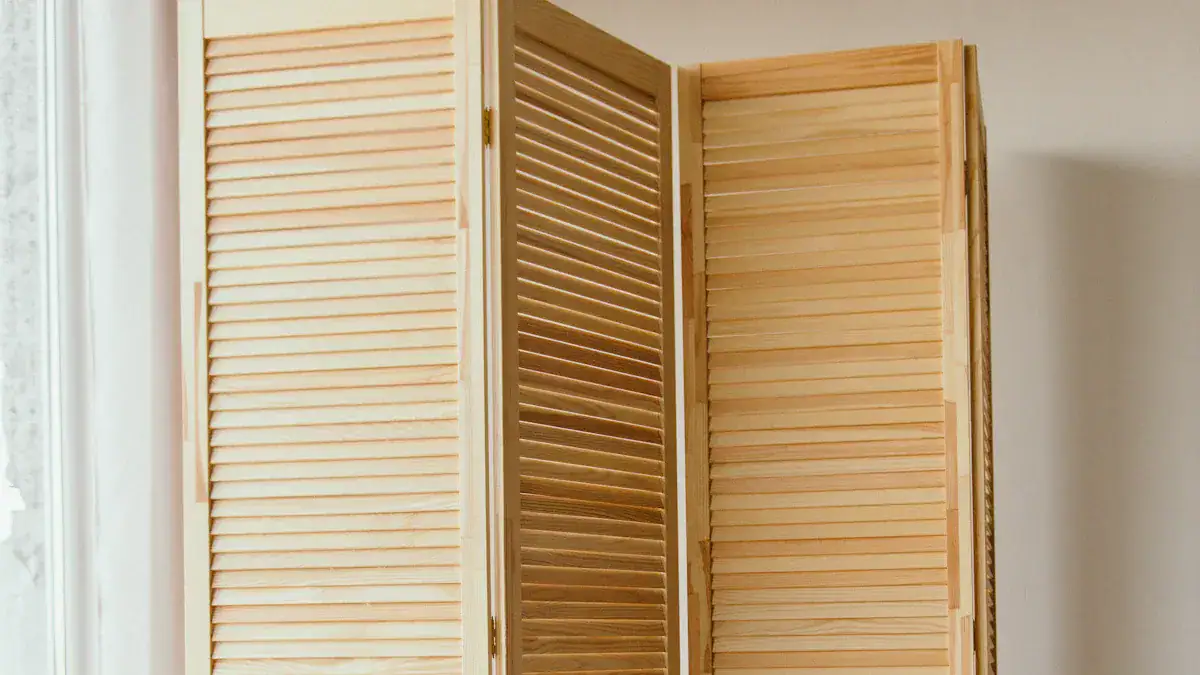
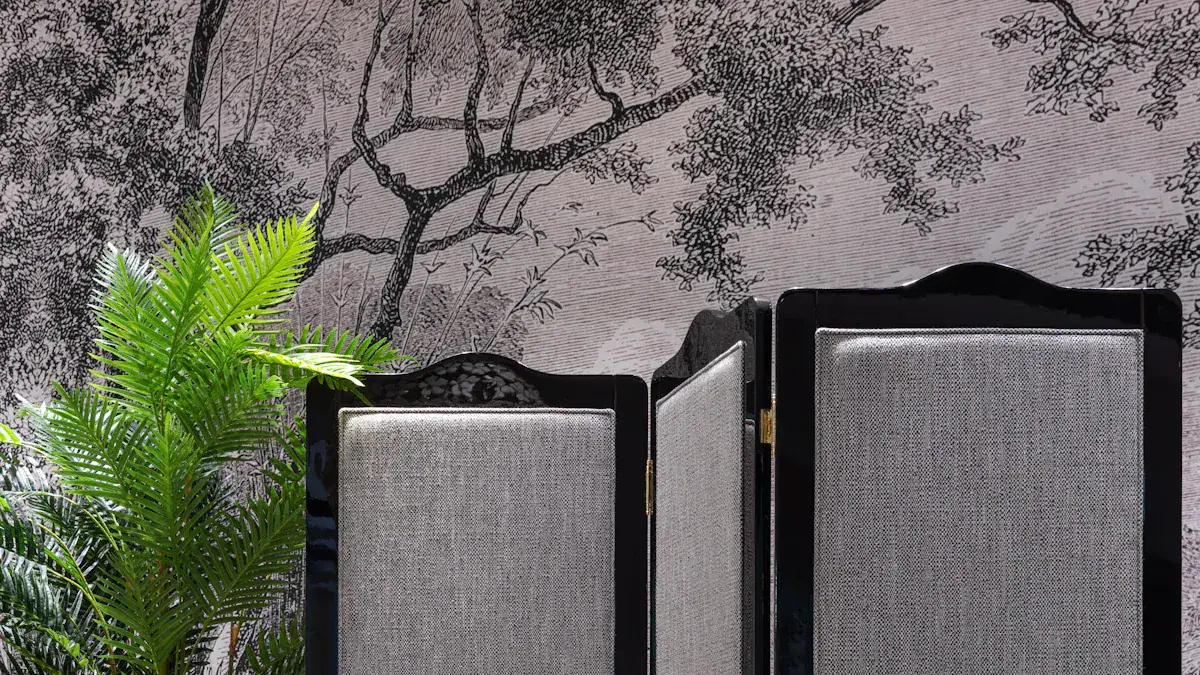
Freestanding screens are a classic choice for dividing a room. You can move them easily. They come in many styles and materials. You might find screens made from wood, paper, or cardboard. Some screens use textiles or aluminum textile for a modern look. Rattan is another popular material, giving a natural, earthy feel. These screens offer instant privacy. They also add a decorative touch to your room. You can fold them away when you do not need them.
Curtains and Drapes
Curtains and drapes are a low-cost way to divide your bedroom. You can hang them from a ceiling track or a tension rod. This makes them very easy to install. For better privacy and sound blocking, choose double-lined curtains. You can even pick different fabrics for each side. This lets you match the decor of both new spaces. Heavy fabrics like velvet, cotton, microfiber, or linen work well. Some curtains have special inner linings. These linings block a lot of sound, often 15-20 dB. Moondream’s reversible sound-insulating curtains, for example, have four layers. They absorb sound waves by up to 9 decibels. This helps create a quieter, more private area.
Bookshelves and Storage
Bookshelves and storage units are smart room divider ideas. They divide your space and give you extra storage. You can use units like Ikea Kallax. These units look good from both sides. You can even face them in different directions. This lets each new area have its own storage access.
💡 Tip: Modular shelving systems offer great flexibility. EverBlock Systems has portable walls and room dividers. You can build them with different colors and sizes. They even let you add openings for light or airflow. Other options include USM Haller units with their mid-century modern charm. Movisi offers lightweight modules you can reconfigure. Muuto’s Stacked shelving system uses cubes you can arrange many ways. Panton Wire shelves are easy to combine.
When you use a bookshelf as a storage room divider, safety is important. Always anchor your bookcase to the wall. This prevents it from tipping over. You can use furniture straps. These straps might show a little in the gap. Anti-tip wires are another option. These thin wires wrap around support posts. They keep your unit secure.
Strategic Furniture
You can use your existing furniture to create visual separation. This is a simple and effective method. A sofa can act as a natural boundary. Turn its back towards the area you want to separate. This creates a clear break. Console tables placed behind a sofa add more separation. They also give you a spot for lamps or decorations. Bookcases or open shelving units offer a balance. They divide the space but still let light through. Tall units create strong vertical lines. Lower units keep the space feeling open. Sideboards, buffets, or credenzas also work well. They have a strong visual presence. They also offer storage. Armchairs, benches, or daybeds can form a boundary. Place them perpendicular to your main seating. This creates a natural transition between zones. You can even use back-to-back seating in larger rooms. This creates two distinct conversation areas. It also maximizes seating.
DIY Folding Screen
Do you like to get creative? A DIY folding screen lets you customize your room divider. You can make a unique folding screen that matches your style. Many materials work for a DIY folding screen. You can use 1/2 inch MDF panels. Cover them with wallpaper and Mod Podge. This gives you a personalized look. Another idea is to use European Beech or Ash wood. Combine it with Shoji paper for a Japanese-inspired screen. You can also repurpose flat-front, hollow core bifold doors. Cover them with contact paper for a fresh design. These open-and-close room dividers are fun to make. They give you a custom solution for your space.
Semi-Permanent Dividers
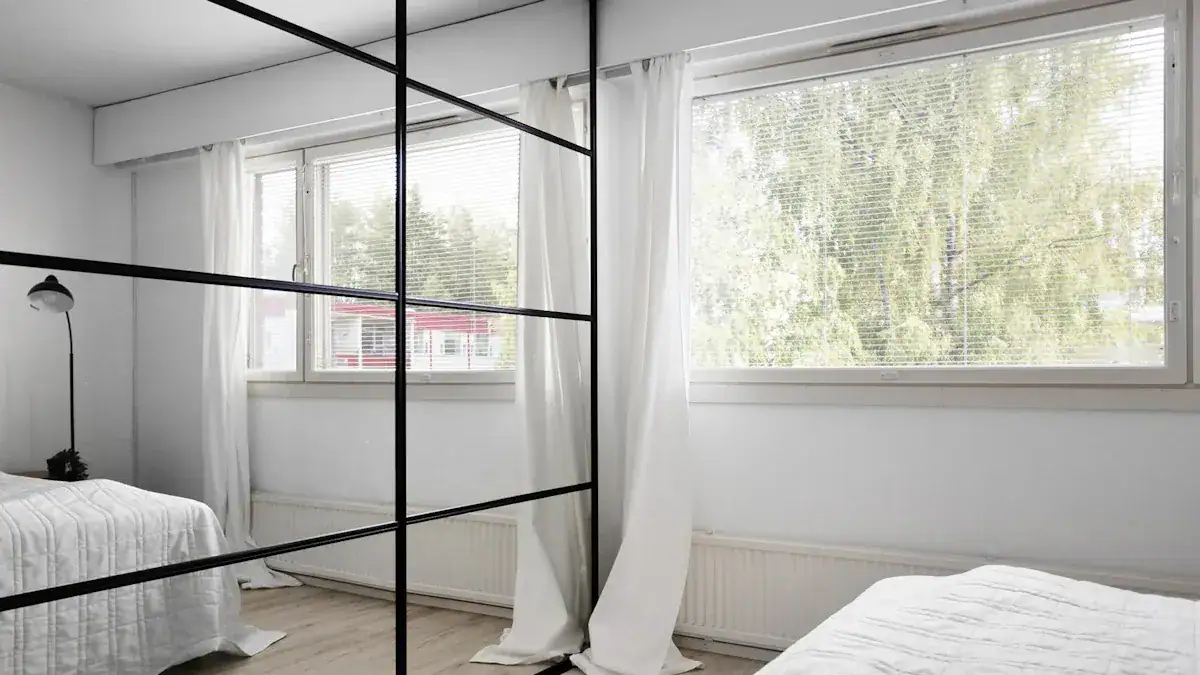
Sometimes you need more than just a temporary visual break. Semi-permanent room divider ideas offer greater structural separation. They still avoid the commitment of building a full wall. These options give you more privacy and sound control. They also define your spaces more clearly.
Sliding and Barn Doors
Sliding doors are excellent for dividing rooms. They give you privacy without taking up much space. Traditional hinged doors need room to swing open. This often uses up several square feet of usable space inside your home. Sliding patio doors move along a horizontal track. This makes them a great solution for dividing rooms. They provide privacy without using up valuable floor area. You get more open, usable space. You can place furniture closer to doorways. This helps you use every inch of available space. Sliding doors work well in compact bathrooms or kitchens. They separate areas without taking up precious room. You can even choose pocket sliding doors. These disappear into the wall when open. They completely free up the space a traditional door would occupy.
Barn doors are a popular type of sliding door. They add a rustic or modern touch. Installing them requires some planning. You need a minimum of 6 to 8 inches of header space above the door. Eight inches is best for most hanger designs. Before you start, know your door’s width. Also, measure the available horizontal and vertical wall space. The rail length should be your door width multiplied by two, plus four inches. This ensures a minimum four-inch overhang. You mount hangers on top of the barn door. Place one near each corner, typically 3 to 6 inches from the edge to the hanger’s center. A header board, usually a 1×4 or 1×6, is a good idea. This is especially true if your wall studs are not in ideal spots. The center of this board should be about two inches above your door’s height. The rail mounting height should be about 2.25 inches above the door height. This leaves a half-inch gap under the door. Finally, you need a floor guide. A T-Guide needs a groove cut into the door’s bottom edge. A wall-mount guide is easier for carpet, concrete, or tile floors.
Folding and Accordion Doors
Folding and accordion doors give you flexibility. You can open them wide to connect spaces. You can close them to create separate areas. They are a practical alternative to a solid wall. These doors come in many materials. You can find them in wood, vinyl, or aluminum. Clear acrylic is another option. Some even use hardwood, including FSC-certified choices. You can choose from various finishes. There are factory custom finishes, paint, or stain. You can also get unfinished doors ready for staining or priming. Special paint finishes are available, with color matching. Laminates like Formica, Wilsonart, Pionite, and Navamar offer more design choices. Panel finishes include clear, transparent, clear aluminum, bronze-colored aluminum, and gold-colored aluminum. These doors act like a flexible folding screen. They let you change your space as needed. Think of them as a large, movable folding screen that can span a wider opening.
Glass Partitions
Glass partitions offer a sleek, modern way to divide a room. They let light flow through your space. This keeps both areas feeling open and bright. Safety glass, including tempered glass, is common in these dividers. You can choose from many types of glass. Tempered glass and laminated glass are popular. Laminated glass comes in clear, white, or opaque. Other options include milky glass, deluxe white glass, and frosted glass. You can also find combo glass, waterfall glass, and various smoked options. Black glass and mirror finishes are also available. Tempered glass comes in 5mm and 10mm thicknesses. Laminated glass is available in 7mm and 11mm thicknesses.
Clear glass partitions allow maximum light to flow through. This creates a bright and airy environment. It can also reduce your need for artificial lighting. Frosted glass still lets in plenty of natural light. It diffuses the light, which eliminates harsh shadows and glare. This gives you a good balance of light and privacy. Frosted glass typically has a light transmittance rate from 70% to 95%. This depends on how much frosting it has. It scatters light, giving you privacy and diffused illumination. Clear glass can transmit 90% or more of the light. This makes it great for areas where natural light is very important.
Half-Walls and Pony Walls
Half-walls, also called pony walls, offer a partial division. They create a sense of separation without fully enclosing a space. This maintains an open feel while defining distinct zones. Building a half-wall involves several steps. First, decide on the dimensions. You can use a plywood mock-up to visualize the size. Next, cut two-by-fours for the internal frame. You need long side pieces and shorter lengths for the top and bottom. Securely join these pieces with screws. Do this on a flat surface. Then, add one-by-four strips to the frames. This gives you the desired thickness. It should match existing doorway openings. Attach the constructed frames to the existing doorway and floor with screws. Cover the frames with drywall panels. Cut them to size and attach them with screws. Install metal corner strips. These protect the edges and create sharp corners. Nail them in place. Finally, apply joint compound and paper joint tape over seams and metal corner beads. Let it dry, add more coats, and then sand it smooth.
Creative DIY Room Divider Ideas
Do you want to add a personal touch to your space? You can think outside the box when you divide a room. These creative room dividers let you show off your style. You can use materials that truly reflect who you are.
Macrame and Rope Dividers
Macrame and rope dividers bring a bohemian or natural feel to your room. They are beautiful and let light pass through. You can create intricate patterns with different knots. This makes a unique screen.
To start, you need a dowel or a sturdy branch. Then, you attach your rope. Here are some common knots you will use:
Lark’s Head Knot: You use this knot to attach rope strands to your dowel. Fold two strands in half. Place the center over the dowel. Wrap them around. Pull the loose ends through the loop.
Half Knot: This knot needs four strands of rope. The two center ropes stay still. You use the outer ropes to make a bend and weave them through each other. It is also the first step of a square knot.
Square Knot: This knot has two half knots. You repeat the half knot pattern. Pull the outer two rope strands until the second half knot sits tightly against the first.
Alternating Square Knot: You use two strands from one square knot and two from a nearby square knot. You make a new square knot with them. This joins them together in the next rows.
Half Square Spiral Knot: This is a type of Square Knot. You tie a vertical row of Square Knots. Always start from the same side. This makes the knot spiral.
You can choose different rope thicknesses and colors. This lets you match your room’s decor perfectly.
Pallet Walls
Pallet walls offer a rustic, industrial look. They are a great way to repurpose materials. You can create a solid or a slatted wall. This depends on how much privacy you need.
Before you start, safety is very important. You must choose your pallets carefully.
Avoid Methyl Bromide (MeBr) treated pallets: This fumigant is very toxic. It can cause nerve problems if you are exposed to it. Look for pallets marked with ‘HT’ instead.
Opt for Heat Treated (HT) pallets: This method heats the wood. The wood’s core reaches 56°C for at least 30 minutes. This sterilizes it and kills germs. It is a safer choice for your project.
Understand pallet stamps: All wooden pallets that meet IPPC standards have a mark. You need to read these codes. This helps you find safe, non-toxic options. You can avoid chemically treated ones.
Once you have safe pallets, you can clean them. Then, you can sand them. You can also paint or stain them to fit your style.
Plant Walls and Screens
Do you love nature? A plant wall or screen brings life and freshness into your room. It is a beautiful and natural way to divide your space. You can use tall, potted plants arranged in a line. Or, you can build a vertical garden structure.
Think about plants like:
Snake plants (Sansevieria)
ZZ plants (Zamioculcas zamiifolia)
Pothos (Epipremnum aureum)
Ferns
These plants are often easy to care for. They also help clean the air. You can use open shelving units. Place plants on each shelf. This creates a green, breathable divider. It adds a calming atmosphere to both sides of the room.
Fabric Panels on Tracks
Fabric panels on tracks give you a soft, flexible divider. They are easy to open and close. You can choose fabrics that match your room’s style. This lets you change the look whenever you want.
You will need a track system. You can mount it on your ceiling or wall. Then, you attach fabric panels to gliders on the track. Here are some ideal fabric types for these decorative room divider ideas:
Cotton
Polyester
Canvas
Silk
You can use sheer fabrics for a light, airy feel. Or, choose heavier fabrics for more privacy and sound dampening. You can even use different fabrics on each side. This lets you create unique looks for both new spaces.
Tips for Successful Division
Dividing your bedroom creates new opportunities. You can make sure these new spaces work well for you. Here are some practical tips to help you optimize your divided room.
Maximize Natural Light
When you divide a room, you want both new spaces to feel bright and welcoming. Think carefully about how natural light enters your room. Use light-colored materials for your dividers. Sheer curtains or frosted glass partitions let light pass through easily. This keeps both areas feeling open and airy. Try to avoid blocking windows with solid, tall dividers. If you must place a divider near a window, choose one that allows some light to filter through.
Ensure Privacy and Sound
Privacy and sound control are key when you divide a bedroom. You want each new area to feel separate and quiet. Consider using sound-dampening materials. Specialized soundproof room divider curtains, often called Curtitions, work very well. They have a strong steel frame and many layers of sound-blocking material. These curtains can have ten layers of sound-deadening material. Freestanding acoustic panels also help mute noise. They reduce how much sound travels between spaces.
Coordinate Decor
Even with a division, you want your entire bedroom to look good together. Try to keep a cohesive style throughout both new areas. Use a consistent color palette or a shared design theme. This makes the whole room feel intentional and well-planned, not just split into two. Your decor choices help blend the two spaces visually, creating a harmonious environment.
Address HVAC and Ventilation
Good airflow is very important in divided spaces. You do not want stuffy air. Your HVAC system moves air using supply and return ducts. Supply vents bring in fresh, conditioned air. Return vents take out old air. You need to balance these in each new area. This stops air from getting stagnant. You can also use natural ventilation. Position windows for cross-ventilation. This lets breezes cool your room. Open floor plans also help air move freely. This prevents stagnant zones.
Dividing your bedroom is a smart and beneficial way to create more functional space. We explored many room divider ideas, from simple non-permanent solutions like curtains and screens, to more involved semi-permanent options and creative DIY projects. Consider your specific needs, budget, and personal style when choosing the best fit. You can truly transform your living space to better suit your lifestyle and enjoy a more organized home.
FAQ
What is the easiest way to divide a bedroom temporarily?
Curtains or freestanding screens are super easy. You can hang curtains from a tension rod. Screens just stand up. Both give you instant privacy. You can move them anytime you need to.
What kind of materials can I use for a semi-permanent divider?
You have many choices. Sliding doors, barn doors, or folding doors work well. Glass partitions offer a modern look. Half-walls give you some separation. These options provide more structure than temporary ones.
What should I do about light and airflow after dividing my room?
You should maximize natural light. Use sheer or frosted dividers. Clean your air ducts. Make sure no furniture blocks vents. Consider cross-ventilation with windows. This keeps both new spaces fresh.
What are some creative DIY room divider ideas?
You can make macrame or rope dividers. Pallet walls offer a rustic feel. Plant walls bring nature inside. Fabric panels on tracks give you flexibility. These ideas let you personalize your space.