

Imagine your home always at the perfect temperature. That’s the power of effective indoor climate control. Many homeowners prioritize a comfortable living space. In fact, 18% consider this feeling stronger than resale value for home renovations. Your heating and cooling systems make this possible. Understanding your HVAC system helps you maintain this comfort. This post simplifies how your HVAC works. You will learn about heating and keeping your home cool without complex jargon.
HVAC System Basics
What HVAC Means
You often hear the term “HVAC.” This is a common terminology in home comfort. HVAC stands for Heating, Ventilation, and Air Conditioning. This acronym describes the technology that controls your indoor environment. It does more than just make your home warm or cool. An HVAC system manages the temperature, air quality, and humidity inside your house. This ensures your comfort year-round. Sometimes, you might even see the term HVAC-R. The “R” in HVAC-R stands for Refrigeration. This broader term, HVAC-R, encompasses all aspects of environmental control, including specialized refrigeration units. Understanding HVAC-R helps you grasp the full scope of these systems.
Why Your HVAC System is Essential
Your HVAC system is a critical part of your home. It provides more than just temperature control. It creates a healthy and comfortable living space for you. A well-functioning HVAC system maintains optimal indoor air quality. It filters out pollutants and allergens. This is especially important for people with allergies or respiratory issues.
Your heating and cooling systems work together to keep your home pleasant. A typical residential HVAC system includes several key components. You will find an indoor unit, which might be a furnace, an air handler, or an evaporator coil. There is also an outdoor unit, either an air conditioner or a heat pump. A thermostat acts as the system’s control center. Ductwork or refrigerant lines distribute the conditioned air throughout your home. These parts work in harmony to deliver consistent comfort.
Maintaining your HVAC system also protects your investment. These systems are built to last, but their lifespan varies.
HVAC System Type | Average Lifespan (Years) |
|---|---|
Central Air Conditioners | 12 to 15 |
Heat Pumps | 10 to 15 |
Furnaces | 15 to 25 |
Boilers | 15 to 30 |
Residential HVAC systems typically last between 15 to 25 years. Some sources indicate a narrower range of 15 to 20 years. Factors like regular maintenance, how much you use the system, and environmental conditions all influence this lifespan. Proper care extends the life of your HVAC-R equipment. It also ensures efficient heating and cooling. This saves you money on energy bills. Your HVAC-R system is a complex network. It requires attention to continue providing reliable ventilation and air conditioning. An efficient HVAC-R unit contributes to a healthier home. It also offers peace of mind. You rely on your HVAC-R system daily. It is essential to understand its role.
Core HVAC System Components
You rely on your heating and cooling systems daily. Understanding their main parts helps you manage your home’s comfort. Each component plays a vital role in your HVAC-R system.
Furnace: Your Home’s Heat Source
A furnace warms your home during colder months. It generates heat and distributes warm air throughout your house. This maintains a comfortable temperature. A furnace heats air and sends it through ducts. It often uses natural gas, propane, oil, or electricity.
Here are the parts of a furnace and their functions:
Furnace Part | Function |
|---|---|
Heat exchanger | Transfers heat from combustion gases to indoor air without mixing. |
Burner | Ignites fuel to generate heat for the system. |
Blower motor | Circulates warm air throughout your home. |
Thermostat | Signals when the furnace should turn on or off based on temperature. |
Gas valve | Controls the safe flow of gas to the burner. |
Flame sensor | Detects flame presence and shuts off gas if there’s a problem. |
Air filter | Keeps dust and debris out of your system and improves air quality. |
A furnace operates by drawing in cold air. It heats this air using a heat exchanger or electric coils. Then, a blower motor circulates the warm air through your home. The cycle follows these steps:
Signal: Your thermostat detects a temperature drop and signals the furnace.
Ignition/Heating: A burner or electric element heats a heat exchanger.
Circulation: The blower motor pushes air over the hot heat exchanger.
Distribution: The warmed air travels through ductwork to your vents.
Shutdown: The system cycles off when it reaches the desired temperature.
Air Conditioner: Cooling Your Home
Your air conditioner provides cooling. It removes heat from your indoor air. This creates a comfortable environment. Air conditioning systems use refrigerants to absorb and release heat.
Common refrigerants include:
R-22 (Freon): Older units use this. It depletes the ozone layer.
R-410A (Puron): This replaced R-22. It does not deplete ozone. It operates at higher pressures, making it more energy-efficient.
R-32: This newer refrigerant has a lower global warming potential. It offers greater energy efficiency.
Your air conditioner works with your HVAC-R system to keep you cool.
Thermostat: The System’s Control Center
The thermostat is your HVAC system’s brain. It maintains a user-defined temperature. It turns your heating or cooling system on or off as needed.
Cooling System Regulation: The thermostat monitors room temperature. It activates cooling when the temperature rises above your setting. It switches to standby when it reaches the desired temperature.
Heating System Regulation: The thermostat monitors room temperature. It activates heating when the temperature drops below your setting. It switches to standby when it reaches the desired temperature.
Ductwork and Vents: Air Distribution
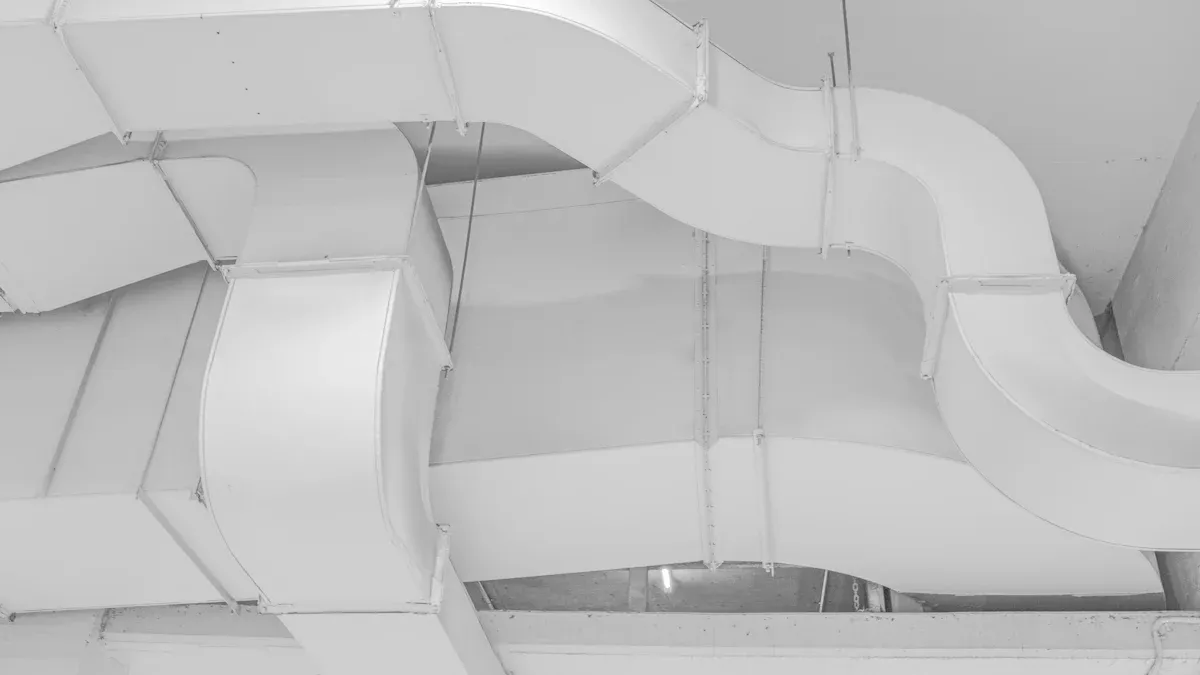
Ductwork forms the pathways for conditioned air. It carries heated or cooled air from your HVAC-R unit to various rooms. Vents are the openings in your walls or floors. They release the conditioned air into your living spaces. You also have return vents that pull air back into the system.
Common materials for ductwork include:
Sheet metal: A traditional and durable option.
Fiberglass duct board: This offers insulation and noise reduction.
Flexible ducts: These are useful for connecting to main ducts or in tight spaces. They are made from a coiled metal wire in a plastic sheet.
Properly sealed ducts and clear vents ensure efficient air distribution.
Air Filters: Improving Air Quality
Air filters are crucial for indoor air quality. They trap dust, pollen, and other particles. This keeps them out of your HVAC-R system and your home.
Filters have a MERV rating. MERV stands for Minimum Efficiency Reporting Value. This standard indicates a filter’s particle capture efficiency.
Higher MERV values mean better capture of smaller particles.
MERV ratings range from 1 to 16. Higher numbers mean greater filtration efficiency.
MERV 1-5 filters remove large particles.
MERV 6-9 filters capture pet dander, dust, and pollen.
MERV 10-12 filters offer good filtration for most homes.
MERV 13-16 filters provide superior fine particle efficiency. A MERV 13 filter captures 50% of particles sized 0.3 to 1.0 micron.
Regularly changing your filter improves your HVAC-R system’s performance and your indoor air quality.
Heat Pumps: Dual-Purpose Comfort
A heat pump offers both heating and cooling. It moves heat rather than generating it. In winter, it extracts heat from the outside air. It then transfers this heat indoors. Even cold air contains useful heat. Advanced heat pumps can operate efficiently down to -22°F. In summer, it reverses the process. It extracts heat from inside your home and releases it outdoors. This makes a heat pump a versatile part of your central heating and cooling systems.
Boilers: Hydronic Heating
Boilers provide heating through a hydronic system. This system uses hot water to warm your home. The boiler heats water, then pumps circulate it through pipes to radiators or radiant floor systems.
Key components of a boiler system include:
Boilers: These generate hot water.
Pumps: They circulate water throughout the heating loop.
Expansion Tank: This accommodates water expansion as it heats.
Aquastat: It maintains the water temperature.
Safety Relief Valve: This releases water if pressure or temperature gets too high.
Low-Water-Cutoff: This prevents operation if the water level is too low.
Boilers offer efficient heating for many homes.
How Heating and Cooling Systems Operate
You understand the parts of your heating and cooling systems. Now, let’s see how they work together. Each system has a specific way to control your home’s temperature.
The Heating Process
Your furnace is key for heating your home. It is a vital component of your hvac-r system. It generates heat through controlled combustion. This is a rapid process. Fuel burns and releases thermal energy. This process uses precise chemistry. It ensures complete combustion. It also maximizes heat transfer. It minimizes harmful byproducts.
A typical gas-fired furnace burns natural gas. This happens in its combustion chamber. The heat from this chamber moves through a sealed metal heat exchanger. It goes into the HVAC airflow. A system blower then sends this heated air. It travels through the hvac ductwork. It releases into rooms through supply air vents. Air then pulls from rooms. It goes through return vents. It circulates back to the furnace through return ducts for reheating. This cycle continues. It stops when you reach your desired thermostat setting.
Modern furnaces are very efficient. They have an Annual Fuel Utilization Efficiency (AFUE) rating. This rating shows how well a furnace converts fuel into heat. Modern gas furnaces typically have AFUE ratings from 80% to over 98%.
System Type | Technology | Typical Efficiency |
|---|---|---|
Standard gas furnace | Direct combustion | Around 80% AFUE |
Condensing furnace | Dual heat exchanger | 90 to 98% AFUE |
High-efficiency condensing models are even better. They cool exhaust gases. This condenses water vapor. They capture both sensible and latent heat. This makes them very efficient for heating your home.
The Cooling Process
Your air conditioner works differently. It cools your home using a refrigeration cycle. This is a core function of your hvac-r system. Refrigerants are vital for air conditioning systems. They circulate continuously through components. These include condenser coils. Refrigerants absorb hot air. They convert it into cooled air. Refrigerant constantly changes. It goes between an evaporated low-pressure gas and a liquified chemical compound. It stays contained within the system. Colder refrigerant absorbs heat more effectively. It cools the air better.
The Second Law of Thermodynamics explains this. Heat naturally moves from warmer to cooler bodies. In air conditioning, warm indoor air transfers its heat. It goes to the colder refrigerant. The refrigerant then gets pressurized. It becomes warmer. Its heat releases into the cooler outdoor air.
The air conditioning cycle has four main steps:
Evaporation: Liquid refrigerant absorbs heat from indoor air. This happens in the indoor evaporator coil. It turns into a low-pressure gas. This cools the air.
Compression: The gaseous refrigerant moves to the compressor. The compressor pressurizes it. This significantly raises its temperature.
Condensation: The hot, high-pressure gas travels to the outdoor condenser coil. It releases heat into the outdoor air. It transforms back into a high-pressure liquid.
Expansion: The liquid refrigerant passes through an expansion valve. This lowers its pressure and temperature. It prepares to return to the evaporator coil. This restarts the cycle.
The combined gas law explains this process. It describes the relationship between pressure and temperature. Heating a gas increases its pressure. Pressurizing a gas increases its heat. Decreasing pressure lowers temperature. Think of an aerosol can. It cools when you depressurize it. This is how your air conditioning system removes heat from your home. This entire process is essential for your hvac system.
Heat Pump Functionality
A heat pump offers both heating and cooling. It uses the same refrigeration cycle. However, it can reverse its operation. A special component makes this possible. It is called a reversing valve. This valve acts as a ‘traffic controller’ for refrigerant. It directs its flow. It either brings heat indoors for heating mode. Or it sends heat outdoors for cooling mode.
In heating mode, the outdoor coil functions as an evaporator. It absorbs heat from outside air. This happens even in cold weather. The refrigerant then goes to the compressor. It condenses within the indoor coil. It releases heat into your home.
In cooling mode, the reversing valve switches the refrigerant flow. The indoor coil acts as an evaporator. It absorbs heat from inside your home. The outdoor coil becomes the condenser. It releases that heat outside. The reversing valve uses a sliding mechanism. It diverts the refrigerant flow. It reroutes suction and discharge lines. An electromagnetic solenoid valve allows the slide to move. It switches operation modes. This is the initial trigger for the reversal process. This clever design makes a heat pump a versatile part of your hvac-r system. It provides comfort year-round. Your hvac-r system relies on this versatility.
Types of HVAC Systems
You have many choices for your home’s climate control. Understanding the different types of hvac systems helps you choose the best one. Each system offers unique benefits for your comfort and energy use.
Split Systems
Split systems are common. They separate noisy components into indoor and outdoor units. This design keeps the loud compressor outside. You get quieter indoor operation. Split systems offer great flexibility. You can create different zones in your home. This allows heating or temperature control only in occupied rooms. This reduces energy use. These systems provide greater energy efficiency. They often have a SEER rating of 25 or higher. You get precise humidity control. Split systems also improve air quality. They accommodate larger filters.
Packaged Units
Packaged units combine all components. They put the evaporator, condenser, and compressor in one outdoor cabinet. These units are often on rooftops or next to foundations. They deliver conditioned air through ductwork. They are a simpler installation for some homes. They provide both heating and air conditioning. This hvac setup is compact.
Ductless Mini-Splits
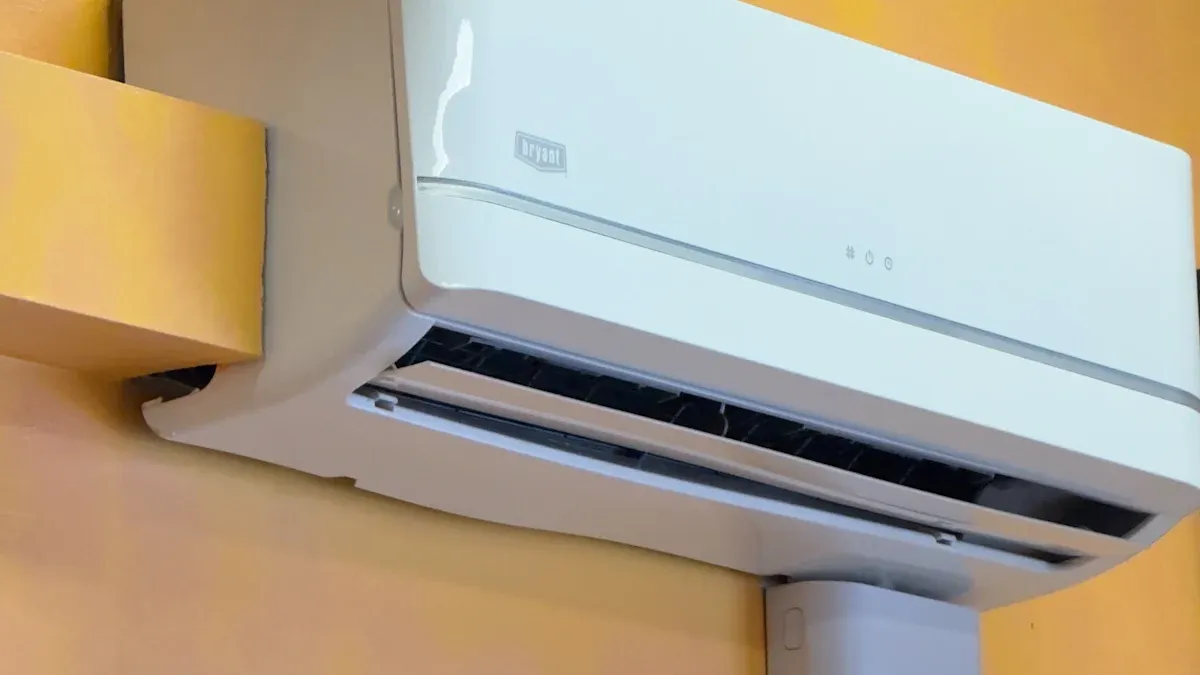
Ductless mini-splits offer flexible heating and comfort control. They do not need ductwork. This makes them perfect for older homes without existing ducts. They are also great for room additions. You can add them to sunrooms or finished basements. They provide independent climate control. You can use them for supplemental zoning in larger homes. These are excellent ducted and ductless systems options.
Geothermal Options
Geothermal systems use the earth’s stable temperature. They have a loop of pipes buried underground. This loop circulates a water and antifreeze solution. The earth’s temperature stays around 55°F year-round. In summer, the system absorbs heat from your home. It transfers this heat to the cooler underground loop. In winter, the system absorbs heat from the ground. It then distributes warm air throughout your home. This makes them very efficient for both heating and cooling. This hvac-r technology uses the earth as a heat source or sink.
Hybrid Systems
Hybrid systems combine technologies. They often use a heat pump with a furnace. This gives you the best of both worlds. They minimize energy wastage. This leads to reduced utility bills. They decrease your carbon footprint. These systems use the most efficient energy source. This depends on current conditions. Hybrid hvac-r systems significantly reduce energy bills. This is especially true during warmer weather. They use Variable-Refrigerant Flow (VRF) technology. This adjusts compressor speed. This allows effective air conditioning with minimal electricity. This hvac-r approach ensures more even cooling. This hvac-r system can also operate on renewable energy sources. This hvac-r solution offers long-term savings.
HVAC Maintenance for Energy Efficiency
You want your home to stay comfortable. Proper maintenance of your hvac system is key. It ensures energy efficiency and extends your system’s life. Regular care prevents costly repairs.
Importance of Filter Changes
Changing your air filter is a simple task. It makes a big difference. Most air filter manufacturers and hvac-r companies advise changing air filters every 90 days, or every three months. This keeps your system running smoothly. Factors like pets or dusty environments might mean you change them more often. The general recommendation for changing hvac air filters is every 30 to 90 days. This improves your indoor air quality. It also boosts your system’s efficiency.
Professional Tune-Ups
Regular professional tune-ups are vital. Industry data shows about 85% of commercial hvac-r repairs happen because of neglected maintenance. These issues are often preventable. A professional tune-up ensures your system operates efficiently. It extends its lifespan. Technicians lubricate moving parts. This reduces friction and wear. This is crucial for system longevity. Regular maintenance also helps you avoid voiding your warranty. Consider an energy-saving maintenance plan. This plan includes professional hvac inspections.
Simple DIY Checks
You can do some easy checks yourself. These hvac maintenance tips help with maintaining comfort. Clean your ventilation vents and registers. This prevents airflow problems. Inspect your outdoor unit. Clear debris and trim plants around it. This ensures optimal performance. Test your thermostat. Update its settings. This improves energy efficiency. Clear condensate drain lines. This prevents water damage. Listen for unusual noises or smells. These are warning signs.
Understanding Efficiency Ratings
You should know about efficiency ratings. They help you choose efficient systems.
Rating | Applies To | What It Measures | Impact on Efficiency |
|---|---|---|---|
SEER (Seasonal Energy Efficiency Ratio) | Air conditioners | Cooling efficiency over an entire cooling season. | Higher SEER means better energy efficiency. |
AFUE (Annual Fuel Utilization Efficiency) | Furnaces and heating systems | Percentage of fuel converted into usable heat. | Higher AFUE means more efficient heating. |
Upgrading to a high-efficiency hvac-r system saves money. The U.S. Department of Energy says you can reduce monthly utility bills by 20-40%. This is a significant energy efficiency gain. An energy-saving maintenance plan helps you keep this efficiency.
You now understand your home’s heating and cooling systems better. This knowledge helps you in maintaining comfort. Regular maintenance ensures your hvac system runs efficiently. It extends its lifespan. This is vital for consistent heating and cooling. You can confidently manage your home’s indoor climate. Enjoy reliable heating and air conditioning year-round. Proper heating makes a big difference. Your home will always feel comfortable.

