

In case you want a fast, secure Z-Wave hub for 2026, consider the Aeotec Smart Home Hub with Zigbee and Matter for seamless voice control. Home Assistant Connect’s ZWA-2 offers easy setup and strong range with the latest chipset. Aeotec’s Z-Stick 7 Plus plugs into your PC or Raspberry Pi with improved security, while their Range Extender 7 amplifies coverage dramatically. Hubitat Elevation C-8 Pro provides local processing and broad device support. Investigate each to find the perfect fit.
| Aeotec Smart Home Hub with Z-Wave and Zigbee |
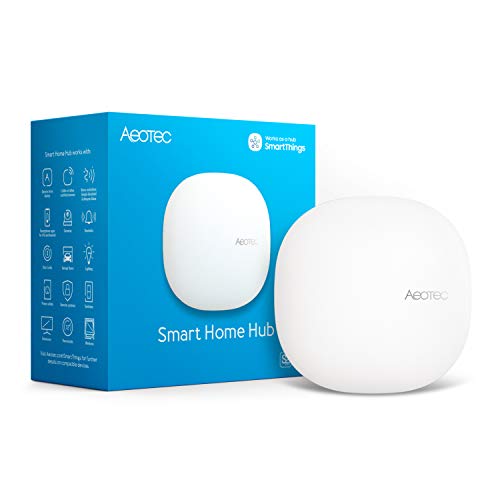
| Best for SmartThings Users | Z-Wave Compatibility: Z-Wave Plus (V3) | Zigbee Support: Yes, Zigbee supported | Local Automation Capability: Many automations run locally via SmartThings app | VIEW LATEST PRICE | Read Our Analysis |
| Home Assistant Connect ZWA-2 Z-Wave Hub |

| Best for Home Assistant Integration | Z-Wave Compatibility: Latest Z-Wave 800-series chipset, supports all Z-Wave devices | Zigbee Support: No Zigbee support mentioned | Local Automation Capability: Requires Home Assistant system for automation | VIEW LATEST PRICE | Read Our Analysis |
| Aeotec Z-Stick 7 Plus Z-Wave USB Controller |
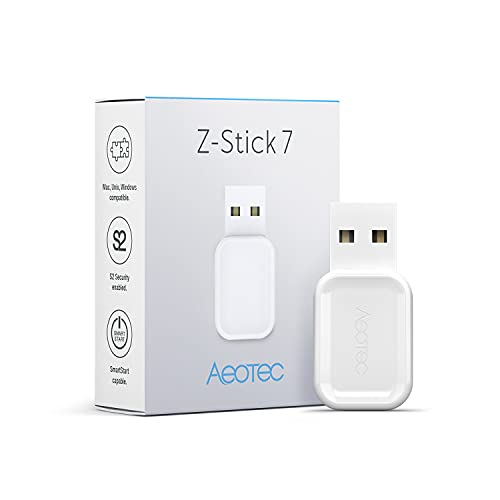
| Best USB Z-Wave Controller | Z-Wave Compatibility: Z-Wave Plus USB controller, compatible with Z-Wave and Z-Wave Plus devices | Zigbee Support: No Zigbee support (USB Z-Wave controller only) | Local Automation Capability: Acts as Z-Wave controller for local software (e.g., Home Assistant) | VIEW LATEST PRICE | Read Our Analysis |
| Aeotec Z-Wave Hub Range Extender 7 Gen7 |

| Best Signal Booster | Z-Wave Compatibility: Z-Wave Plus certified repeater (Gen7) | Zigbee Support: No Zigbee support (Z-Wave repeater only) | Local Automation Capability: No direct automation, extends hub signals locally | VIEW LATEST PRICE | Read Our Analysis |
| Hubitat Elevation Home Automation Hub C-8 Pro |

| Best for Local Automation | Z-Wave Compatibility: Built-in Z-Wave 800 chip | Zigbee Support: Yes, Zigbee 3.0 (ZHA) supported | Local Automation Capability: Full local processing and automation on hub | VIEW LATEST PRICE | Read Our Analysis |
More Details on Our Top Picks
Aeotec Smart Home Hub with Z-Wave and Zigbee
Should you’re looking to unify your smart home devices across multiple protocols, the Aeotec Smart Home Hub with Z-Wave and Zigbee is a top choice. This hub supports Z-Wave Plus V3, Zigbee, Wi‑Fi, and Matter, letting you connect a wide range of devices from lighting to energy management. You’ll control everything easily through the SmartThings app or voice assistants like Alexa and Google Home. Setup is straightforward via Wi‑Fi or Ethernet. Compact and reliable, it runs many automations locally for faster response. Designed for North America, it comes with a one-year warranty and has earned strong customer ratings.
- Z-Wave Compatibility:Z-Wave Plus (V3)
- Zigbee Support:Yes, Zigbee supported
- Local Automation Capability:Many automations run locally via SmartThings app
- Voice Assistant Compatibility:Works with Amazon Alexa, Google Assistant
- Setup & Installation:Easy Wi-Fi or Ethernet setup via SmartThings app
- Physical Form Factor & Dimensions:Hub device, 5 x 5 x 1 inches, 1.1 lbs
- Additional Feature:Ethernet connectivity option
- Additional Feature:Local automations for speed
- Additional Feature:Supports Matter protocol
Home Assistant Connect ZWA-2 Z-Wave Hub
Should you want seamless integration of your Z-Wave devices with Home Assistant, the Home Assistant Connect ZWA-2 Z-Wave Hub delivers reliable long-range connectivity using the latest 800-series chipset. Designed specifically for Home Assistant by Nabu Casa and the Z-Wave JS team, it supports all Z-Wave devices and offers superior range and signal penetration, even through thick walls. Setup is plug-and-play with an intuitive wizard, plus effortless migration from other adapters. Its sleek, candle-like design complements any space. With a 4.8-star rating and resilient firmware updates, this hub guarantees your smart home stays connected and responsive.
- Z-Wave Compatibility:Latest Z-Wave 800-series chipset, supports all Z-Wave devices
- Zigbee Support:No Zigbee support mentioned
- Local Automation Capability:Requires Home Assistant system for automation
- Voice Assistant Compatibility:No direct voice assistant support; depends on Home Assistant integration
- Setup & Installation:Plug-and-play with intuitive start-up wizard for Home Assistant
- Physical Form Factor & Dimensions:Hub device, 10 x 7 x 1 inches, 1.34 lbs
- Additional Feature:Z-Wave 800-series chipset
- Additional Feature:Long Range Z-Wave support
- Additional Feature:Plug-and-play firmware updates
Aeotec Z-Stick 7 Plus Z-Wave USB Controller
Should you want a powerful and versatile Z-Wave USB controller for your Raspberry Pi or computer, the Aeotec Z-Stick 7 Plus is an excellent choice. Engineered in Germany, it features Aeotec’s exclusive Gen7 and 700 series technologies, offering an 18% faster CPU and up to 250% extended wireless range. Compatible with Raspberry Pi 4 and major platforms like Home Assistant and Indigo 7, it supports Z-Wave and Z-Wave Plus devices seamlessly. Security is resilient with SmartStart provisioning and S2 encryption. While it doesn’t include software, its broad compatibility lets you build a reliable Z-Wave hub customized to your automation needs.
- Z-Wave Compatibility:Z-Wave Plus USB controller, compatible with Z-Wave and Z-Wave Plus devices
- Zigbee Support:No Zigbee support (USB Z-Wave controller only)
- Local Automation Capability:Acts as Z-Wave controller for local software (e.g., Home Assistant)
- Voice Assistant Compatibility:No voice assistant support (USB controller only)
- Setup & Installation:Plug-and-play USB controller, no software included
- Physical Form Factor & Dimensions:USB stick, compact USB form factor (no exact dims), 1.34 lbs
- Additional Feature:Gen7 and 700 series tech
- Additional Feature:Wireless range up to 250%
- Additional Feature:Compatible with Raspberry Pi
Aeotec Z-Wave Hub Range Extender 7 Gen7
Should you want to improve your Z-Wave network’s range and reliability, the Aeotec Z-Wave Hub Range Extender 7 Gen7 is a smart choice. It increases your Z-Wave range by 250% and speeds up communication by 50%, ensuring stronger signals throughout your home. Compatible with popular hubs like SmartThings, Hubitat, and Ring, it supports Security 2 devices, amplifying signals from locks and sensors. Installation is hassle-free with SmartStart QR code setup. Compact and lightweight, this repeater improves your network’s performance without taking up space. With solid customer ratings, it’s a reliable addition to your smart home setup.
- Z-Wave Compatibility:Z-Wave Plus certified repeater (Gen7)
- Zigbee Support:No Zigbee support (Z-Wave repeater only)
- Local Automation Capability:No direct automation, extends hub signals locally
- Voice Assistant Compatibility:No voice assistant support (signal repeater only)
- Setup & Installation:Plug-and-play SmartStart QR code installation
- Physical Form Factor & Dimensions:Small repeater, 1.2 x 1.4 x 1.6 inches, 1.28 oz
- Additional Feature:Extends Z-Wave range 250%
- Additional Feature:50% faster communication
- Additional Feature:Security 2 system compatible
Hubitat Elevation Home Automation Hub C-8 Pro
Should you want a home automation hub that keeps your data local and offers powerful customization, the Hubitat Elevation C-8 Pro is a top contender. It supports over 1,000 devices from 100+ brands via Z-Wave 800, Zigbee 3.0, and Matter protocols, integrating easily with Apple HomeKit, Alexa, and Google Home. You can control everything from locks to thermostats with rapid local processing, enhancing privacy and reliability. Its strong antennas extend range for larger homes. Though setup might challenge newcomers, Hubitat’s extensive documentation helps you master detailed automation without cloud dependency. Check compatibility before buying to guarantee smooth integration.
- Z-Wave Compatibility:Built-in Z-Wave 800 chip
- Zigbee Support:Yes, Zigbee 3.0 (ZHA) supported
- Local Automation Capability:Full local processing and automation on hub
- Voice Assistant Compatibility:Supports Apple HomeKit, Amazon Alexa, Google Home
- Setup & Installation:Requires setup with documentation; may be challenging for new users
- Physical Form Factor & Dimensions:Hub device with external antennas (dimensions not specified), heavier due to antennas
- Additional Feature:Built-in powerful external antennas
- Additional Feature:Supports Matter bridges integration
- Additional Feature:Processes data locally
Factors to Consider When Choosing Z-Wave Home Automation Hubs
While choosing a Z-Wave home automation hub, you’ll want to check whether it’s compatible with your devices and supports other wireless protocols you use. Consider whether it processes commands locally for faster response and better reliability. Also, look at its automation options and network range to make certain it fits your home’s size and complexity.
Compatibility With Devices
To get your Z-Wave home automation hub working seamlessly with your devices, you need to check several key compatibility factors. Initially, verify the hub supports the same Z-Wave frequency region as your devices—North America and Europe use different, non-interoperable bands. Next, confirm the hub handles the Z-Wave chipset generation your devices use, like the newer 700 or 800 series, which offer better range and security. Also, guarantee the hub supports needed security classes such as S0, S2, and SmartStart for secure device inclusion. Check that the hub’s firmware supports the specific device types and command classes your devices require. Finally, provided you are mixing battery and mains-powered devices, make sure the hub supports routing through mains-powered repeaters to maintain reliable network communication.
Supported Wireless Protocols
After making certain your Z-Wave hub matches your devices in frequency and security, look at the wireless protocols it supports. You’ll want a hub that supports not just Z-Wave—preferably the latest 700 or 800 series for better range, battery life, and security—but also other protocols like Zigbee, Wi-Fi, Bluetooth, Matter, and Thread. This versatility lets you connect a wider range of devices without juggling multiple bridges. In case voice control or cloud integrations matter, confirm the hub supports relevant ecosystems or protocols like Matter for seamless cross-platform control. Prioritize hubs that run multiple radios simultaneously to mix device types easily. Checking these details guarantees your setup stays flexible, reliable, and future-proof, giving you smoother automation and fewer compatibility headaches down the line.
Local Processing Capabilities
Choosing a Z-Wave hub with strong local processing capabilities guarantees your automations run quickly and reliably without depending on the cloud. Local execution cuts latency, often triggering device responses in under a second, unlike cloud-based delays. It also makes certain your system keeps running during internet outages, so essential functions like door locks and alarms stay active. Whenever selecting a hub, consider its CPU, RAM, and design, as these determine how many and how complex your local automations can be. Look for native rule engines and support for edge-computed routines, plus clear specs on concurrent automations and device limits. Local processing also improves privacy by keeping your data on-premises, reducing exposure to third-party servers and increasing security.
Automation Flexibility Options
Whenever you pick a Z-Wave hub, you’ll want to zero in on its automation flexibility to make certain it fits your needs. Check whether it supports local execution, as this reduces latency and keeps automations running during internet outages. Look for a sturdy automation engine that handles conditionals, schedules, event triggers, scenes, and multi-device routines so you can create anything from simple triggers to complex workflows. In case you want highly customized setups, confirm the availability of scripting or visual rule editors. Also, make certain the hub supports mixed-protocol devices like Zigbee, Matter, or Wi-Fi within single routines for seamless coordination. Finally, consider scalability limits—maximum automations and device groups—to avoid performance issues as your smart home expands.
Network Range And Strength
Whenever evaluating Z-Wave home automation hubs, you should pay close attention to network range and signal strength to guarantee reliable device communication throughout your space. Start by checking the supported Z-Wave radio generation; newer 700 or 800 series chipsets offer 100–250% greater open-air range than older 500 series. Determine whether the hub supports Z-Wave Long Range (LR), which enables single-hop connections over longer distances, unlike standard mesh networks that rely upon mains-powered devices as repeaters. Plan to place these always-on devices strategically every few rooms or floors to strengthen mesh reliability. Also, consider your building materials—concrete and metal can weaken signals markedly, so expect shorter real-world range. Finally, position your hub centrally and raised, away from large metal objects and Wi-Fi interference, to optimize antenna performance and minimize dead zones.
Setup And Installation Ease
After guaranteeing your Z-Wave hub offers strong network range and reliable signal strength, the next step is to focus on setup and installation ease. Look for hubs that provide plug-and-play or guided app setups with clear, step-by-step onboarding and one-click firmware updates to reduce manual work. Check supported connection options—Ethernet, Wi-Fi, or USB—and whether the hub can be set up headlessly or needs a host system; wired setups often offer more stability during provisioning. Confirm whether device inclusion/exclusion, network repairs, and SmartStart provisioning are available to speed pairing. Also, see whether migration tools exist to transfer your existing network without re-pairing. Finally, make sure your hub supports local automation rules and offers diagnostics like signal health and route visualization for easier troubleshooting after installation.
Security And Encryption Features
Because your Z-Wave hub manages sensitive data and controls critical devices, strong security and encryption features are essential to protect your network from unauthorized access and attacks. Choose hubs supporting Z-Wave S2 security for mandatory authentication and stronger key exchange, shielding device pairing from eavesdropping and replay attacks. Guarantee AES-128 encryption secures all network traffic, especially for door locks and garage openers, with secure inclusion methods like QR-code SmartStart or authenticated token exchange to prevent unauthorized device joins. Verify your hub allows signed firmware updates for its radio and security stack, assuring quick vulnerability patches. Finally, pick hubs that isolate controller and secondary roles, limit remote/cloud access by default, and enable local processing with configurable remote controls to minimize your system’s exposure and keep your home safe.
Integration With Voice Assistants
Strong security measures keep your Z-Wave network safe, but convenient control is just as vital. To start, confirm your hub supports the voice platforms you use, like Alexa and Google Assistant, so you can manage devices hands-free and integrate routines across ecosystems. Check whether voice commands are processed locally or via the cloud; local processing offers faster response and better privacy. Verify which device types and commands the voice assistant can access, as some limit control over locks or sensors for security reasons. Look for two-way status reporting, allowing your assistant to confirm device states rather than just issuing commands. Finally, make sure the hub can map automations and scenes to voice assistant routines or support voice-triggered webhooks for complex workflows.
