

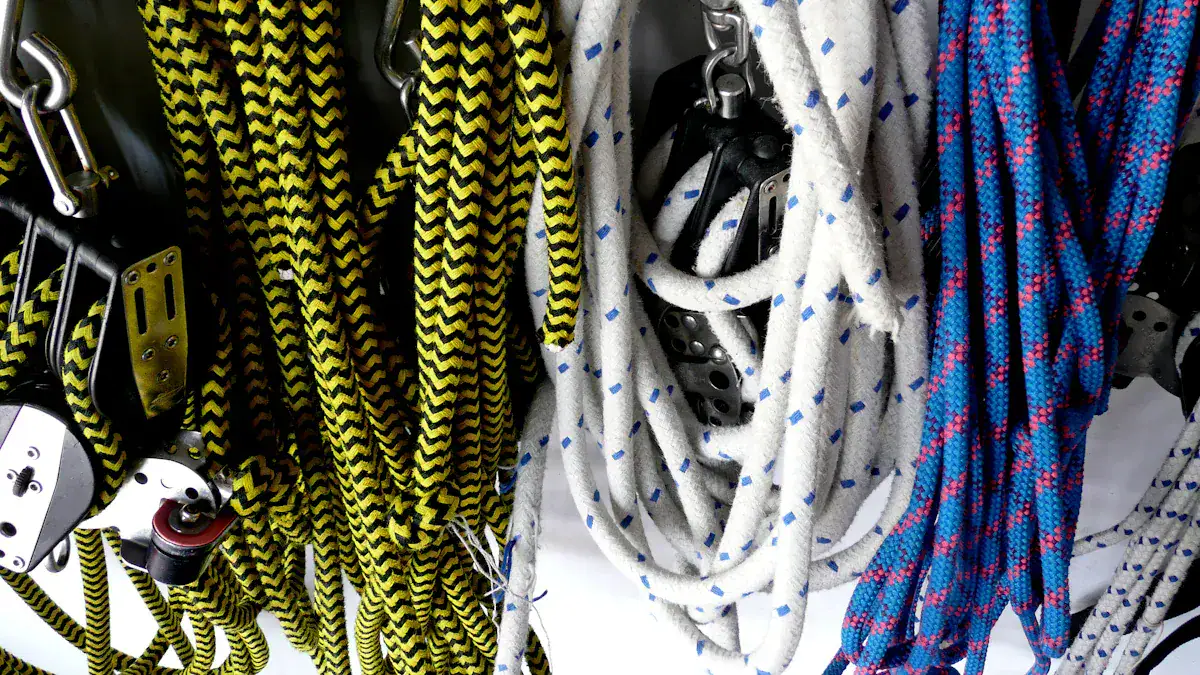
Do you often confuse yarn, string, and rope? Many crafters and DIY enthusiasts face this common challenge. This material and use guide clarifies their different terminology and fibres. You will learn the specific distinctions in material, construction, and application for each. Understanding these differences helps you select the appropriate item. This choice ensures your project’s success and safety.
Key Takeaways
Yarn is soft and flexible. You use it for knitting, crocheting, and weaving. It makes clothes and blankets.
String is often soft and thin. You use it for tying things or for crafts. It makes small knots.
Rope is strong and thick. You use it for heavy tasks like lifting or climbing. It is very durable.
Each material has different uses. Choose the right one for your project. This helps your project succeed.
Yarn Overview
Yarn Materials
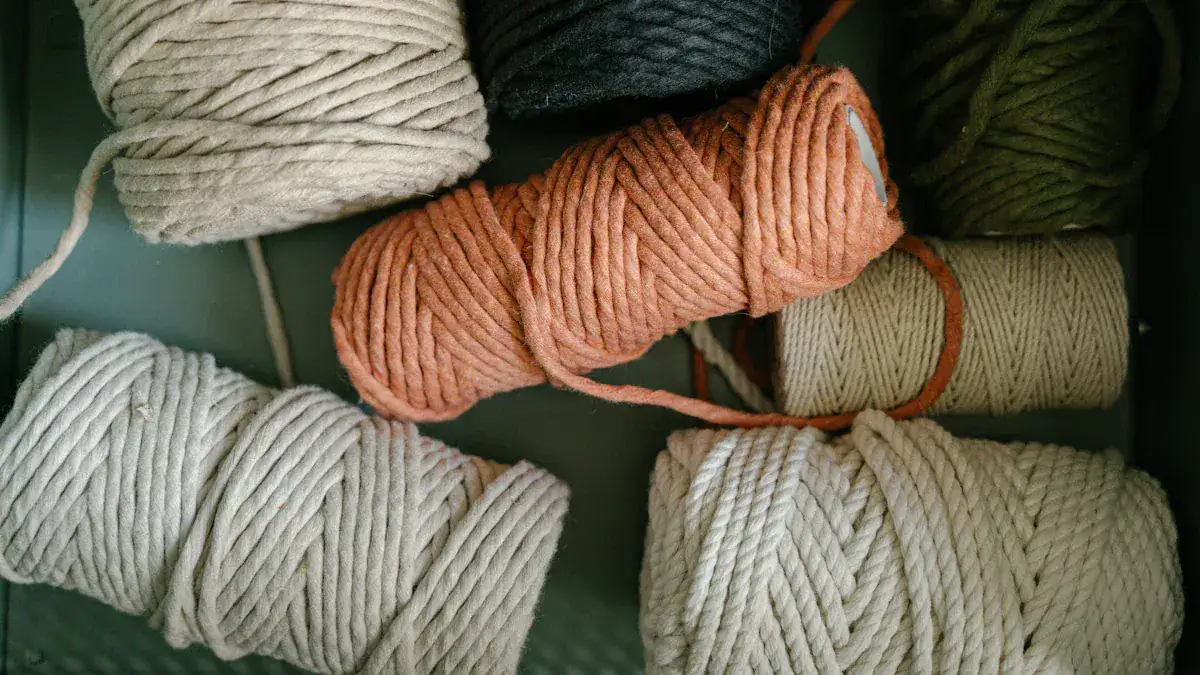
This material and use guide helps you understand yarn. Yarn is a versatile strand of fibers. You use it for many textile arts. Common yarn materials include natural animal fibers like wool, alpaca, and silk. These give you warmth and elasticity. Natural plant fibers are another option. These include cotton, linen, bamboo, and hemp. They are cool, absorbent, and breathable. You also find synthetic fibres such as acrylic, polyester, and nylon. These are affordable, durable, and easy to care for. Blended yarns combine two or more fiber types. This gives you the best qualities of each. For example, you might find wool-acrylic or cotton-polyester blends. Wool is a very common material for yarn. Understanding these types of natural fibres helps you choose the right material for your project.
Yarn Structure and Properties
The structure of yarn greatly affects its properties. Single-ply yarn has a single twist. It can appear thinner and flatten easily, especially when you knit with it. Plied yarns are different. They have two twists: one for the single strand and another to combine these strands. This process creates a balanced yarn. Balanced plied yarns are more durable. They resist pilling better. They also give you clearer stitch definition. The number of plies changes how your knitted fabric looks. Plying twists several strands together. This makes a balanced yarn that does not coil or kink. This balance makes the yarn easier to handle. It also reduces distortion in your finished fabric. Plied yarns are more even. They weave more easily. Fabric from plied yarns is stronger and less prone to pilling. This structure also helps avoid loose surface fibers. You might see some similarities between very fine yarn and thin cords, but yarn’s specific structure is designed for textile arts.
Yarn Applications
You use yarn primarily in textile arts. These include knitting, crocheting, and weaving. Yarn crafts offer great flexibility. You can choose different materials like wool, cotton, silk, or synthetics. You can make items from small socks to large blankets. These crafts are also portable. You need minimal space and equipment. This lets you work while traveling. Yarn crafts also build communities. You can join groups at stores or online. This fosters friendships and idea exchange. Many people find yarn crafts therapeutic. They help with stress relief. They also improve hand-eye coordination. You can also use yarn for charitable purposes. People knit hats for cancer patients. They crochet blankets for the homeless. They weave rugs for animal shelters. Beyond crafts, yarn appears in home textiles. Think of bedding, towels, and curtains. It is absorbent and durable. You also find it in apparel. This includes sweaters, jeans, and dresses. Even some industrial textiles use yarn. This includes automotive fabrics and geotextiles. These applications show the wide use of yarn used in crafts and industry.
String Essentials
String Materials
String is a versatile material, often simpler in construction than yarn or rope. This material and use guide helps you understand its components. You find string made from various materials, each offering different properties. For instance, you might encounter steel string, known for its strength and rigidity, often used in musical instruments or industrial applications. Nylon is another common material. It provides excellent durability and abrasion resistance. You also find string with core materials like natural rubber, which gives you superb elasticity and stretch. Synthetic rubber, such as Spandex or Lycra, offers similar elasticity, durability, and resistance to environmental factors. For covering materials, you often see nylon for its strength, polyester for its resistance to UV rays and moisture, and cotton for its soft texture and comfort. These natural fibres and synthetic fibres give string its diverse characteristics.
String Construction and Characteristics
String typically features an unplied construction. This means individual fibers are not twisted together into multiple strands before being twisted into the final string. This construction contributes to its softness compared to rope and other cords. You will also notice string often forms a low-profile knot. This makes it less bulky and easier to work with in many applications. When you compare woven structures to knotted ones, you see a key difference. Woven string shows fiber alignment up to about 40% strain. Knotted string, however, deforms much more. It allows for knot tightening and fiber stretching, leading to failure at a much higher strain. This means knotted string can stretch significantly further before breaking. Twine is a common type of string. It is often rough, durable, and can be plied, meaning its strands are twisted together. This gives twine extra strength for tasks like bundling or gardening.
String Uses
You use string in countless household and craft applications. Its versatility makes it a staple in many projects. For example, you can create intricate designs with string art. You wrap string around nails or pins on a board to make wall art or coasters. Macrame wall hangings are another popular use. You knot string or cord to form decorative patterns for bohemian decor. You can also make friendship bracelets by knotting multiple strands of string or embroidery floss. Pom pom garlands are simple to create; you make pom poms and thread them onto a string for festive decorations. Braided bracelets involve weaving three or more strands of string or cotton cord. You can even decorate letters by tightly wrapping yarn, thread, or string around them for wall art. String weaving allows you to create decorative patterns for wall hangings or coasters. You might also make string flowers or DIY dream catchers, weaving a web of string or yarn inside a hoop. Tassel keychains are another fun project, made from string or cotton.
Rope Fundamentals
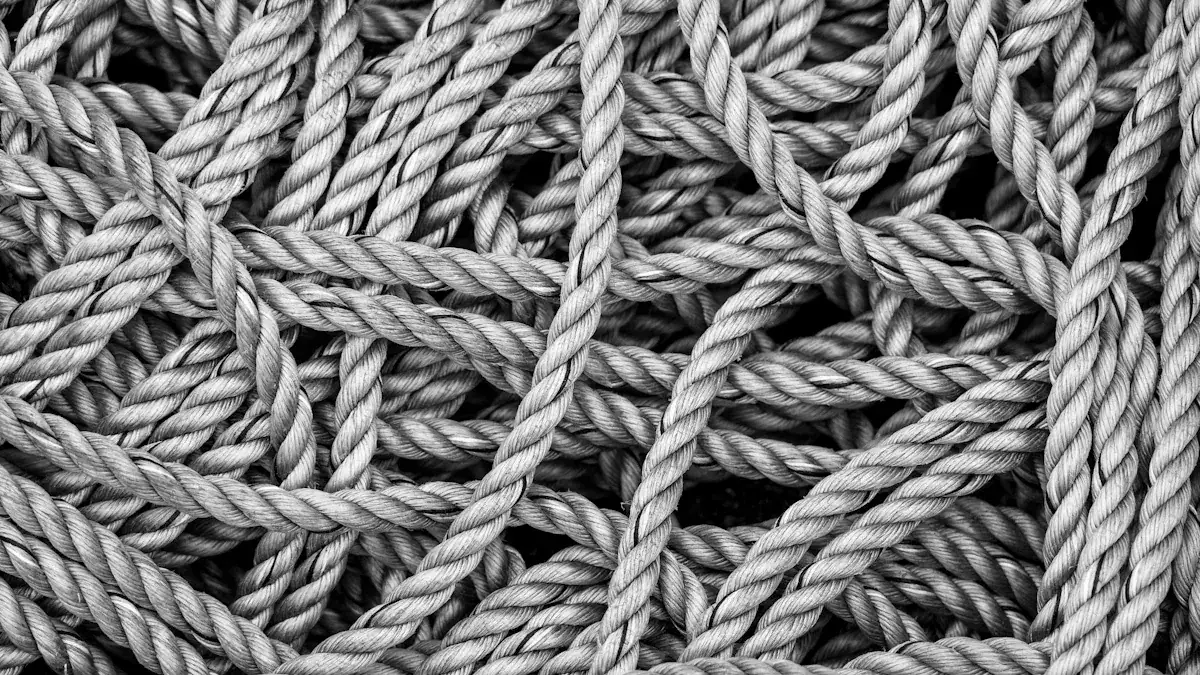
You will find rope generally thicker than yarn. Rope is a strong, durable cordage. You can brush out its ends, but they may appear wavy. This material and use guide helps you understand rope better.
Rope Materials
Rope manufacturing uses many materials. Modern rope often uses synthetic fibres like nylon and polypropylene. These materials offer great strength. They resist wear and tear well. You also find natural fibres in rope. These are often for decorative uses. Manila comes from abaca plant fibers. It is strong but shrinks when wet. Hemp is also strong. It feels smooth like linen. Historically, people used it for ships. Cotton rope is soft. It works well for knot tying practice. However, cotton lacks strength. It rots quickly when exposed to weather. Sisal is coarse and strong. Jute is inexpensive but rots easily when wet. You also see high-performance synthetic fibres. These include UHMWPE for exceptional strength. Aramids like Kevlar offer heat resistance.
Rope Construction and Strength
Rope construction affects its strength. Traditional three-strand construction is common. It twists fibers together. Wire-rope construction uses twisted strands around a core. This method gives you high strength. Braided ropes are also common. They often result in torque-free ropes. You see 12-strand braided ropes in marine uses. Eight-strand ropes are also called plaited ropes. Parallel-yarn ropes have yarns inside a plastic jacket. These offer high strength. Parallel strand ropes have a core of low-twist sub-ropes. A braided jacket covers them. Multi-strand ropes have layers of strands. These layers balance torque. They offer good flexibility. The angle of fibers affects rope strength. If the helix angle stays below 10 degrees, you lose less than 5% strength. This means the rope remains very strong.
Rope Applications
You use rope in many ways. Rope is essential in industrial settings. Wire ropes are vital for cranes and elevators. Synthetic ropes are also standard for industrial lifting. In marine environments, rope is crucial. You use it for offshore docking. You hold boats against wind and current. Rope helps you lift heavy equipment. It absorbs shock from sudden loads. You use it for rigging or mooring. Dock lines and anchor lines are common. Recreational uses for rope are also many. You use it for climbing and rescue. Backyard tie-downs and hammocks use rope. Swings and zip lines also need rope. You can find double braided nylon rope for dock lines. Three-strand nylon rope works for tow and recovery. Three-strand twisted polypropylene rope floats. Manila rope is good for shipping and decorative purposes. These ropes serve many purposes.
Related Cordage and Specialized Uses
Twine and Its Characteristics
You often encounter twine in many settings. Twine is a type of cordage. It is stronger than thread but lighter than rope. You make twine from two or more thinner strands. These strands twist together. Then, you twist these combined strands in the opposite direction. This reverse plying process adds strength. It also stops the twine from unraveling. This technique gives twine its torsional strength. Twine sits between thread and rope in terms of thickness and strength. You use these cords for many tasks.
Types of Macrame Cords
You will find many types of macrame cords for your macrame projects. These cords are special. They offer unique qualities for crafting. For example, single strand cords made from cotton have a soft texture. This texture is perfect for creating detailed knots. It also makes fluffy fringes. Multi-ply cotton macrame cords are strong and sturdy. You use them for projects that need to hold weight. Think of plant hangers or bags. These cords come in various sizes. You can find them from 1.5mm to 5mm. This variety lets you choose the right cord for your macrame pattern.
Cotton macrame cords are natural fibres. They are biodegradable. This makes them an eco-friendly option for your crafts. You will also find braided macrame cords. These cords offer a different look and feel. They are smooth and do not pull strings easily. This gives your macrame products a clean finish. These different types of cords are gentle on your hands. They provide a smooth appearance in your macrame projects. This is a key difference from general rope. You can also find macrame cords made from synthetic fibres, but cotton remains a popular choice for its feel and look.
Comparing the Three
You now understand the individual characteristics of yarn, string, and rope. This section helps you compare them directly. You will see how their differences in strength, flexibility, texture, and suitability guide your project choices.
Strength and Flexibility
The way manufacturers construct yarn, string, and rope directly impacts their strength and flexibility. Twisted ropes are simple to produce and cost-effective. You often use them where extreme strength is not critical. Their flexibility is generally lower because of how individual filaments twist into fibers and then into strands.
Braided ropes, however, offer superior strength, durability, and reliability. The braiding process aligns fibers in a single direction. This enhances both flexibility and performance. Different braiding techniques further influence flexibility:
Solid Braids: These maintain a firm, round shape. They remain flexible, making them suitable for use with blocks and pulleys.
12-Strand Ropes: You find these ropes torque-free and non-hockling. They are easy to splice, which shows their good flexibility.
Material properties also play a big role. Polyester is strong with minimal stretch. It maintains flexibility across various temperatures. Nylon is highly stretchable. It absorbs energy effectively. Its flexibility remains largely unaffected by temperature, though it loses some strength when wet. Polypropylene absorbs minimal water and stretches little. Its flexibility is not significantly impacted by temperature, but it has lower abrasion resistance and a low melting point. Aramid, like Kevlar®, is extremely strong with very little stretch. It offers lightweight, flexible, and dimensionally stable properties for demanding applications. You can see how these material choices affect the final product’s performance.
Texture and Feel
The texture and feel of these materials vary significantly. This affects how you work with them and their final appearance.
Material | Typical Texture/Feel |
|---|---|
Cord | Extremely strong, sturdy, a bit rough on the hands |
String | Usually the softest and easiest to work with, unplied, low profile knot |
Rope | Stronger than string, still soft on the hands, easy to untwist for wavy fringe |
Yarn | Length of fibers, can be soft and fuzzy, can be trickier for small knots |
The surface properties also influence handling and aesthetic appeal. Manila rope, for instance, has an absorbing quality. This provides you with a better grip for physical activities like tug-of-war or climbing. It also absorbs perspiration. You find it visually appealing as a natural rope. Nylon has a smooth, abrasion-resistant surface. This makes it ideal for pulley systems or winches. It also benefits fall protection and rescue line assemblies due to its strength and elasticity. Braided ropes have a rounded form and are generally smooth. They suit high-friction situations like winches and pulleys because they will not twist. You can see how these differences guide your choices.
Project Suitability Guide
Choosing the right material for your project is crucial. For projects needing high durability and load-bearing capacity, you typically look at materials like steel, concrete, and wood in construction. These materials are strong and durable. Reinforced concrete, with steel rebar, enhances tensile strength. You use it for bridges and skyscrapers. Steel offers exceptional strength and flexibility. It is ideal for high-rise buildings and large-scale infrastructure. High-quality hardwoods and engineered wood products also offer comparable durability. Composite materials, like Fiber-Reinforced Polymers (FRPs), combine benefits. They offer strength, lightweight properties, and resistance to environmental stressors. You use them for high strength-to-weight ratios in specialized applications.
When you compare delicate textile arts with heavy-duty outdoor applications, your material choices change dramatically. For delicate textile arts, you choose soft, pliable yarn. This allows you to create intricate patterns and comfortable garments. For demanding outdoor projects, you need materials that withstand harsh conditions. Renegade Plastics’ outdoor fabrics offer superior performance due to:
UV Stability: They resist degradation from sun exposure.
Tensile and Tear Strength: Their reinforced construction withstands wind, movement, and sharp edges.
Limited Color Fading: Pigments and coatings resist fading for long-lasting aesthetics.
Waterproofness: They act as a strong barrier to keep items dry and prevent mildew.
Cleanability: You can disinfect or clean surfaces with bleach or acetone without damage.
Marlen Textiles also offers a range of fabrics for heavy-duty outdoor applications. These include TOP NOTCH™, TOP GUN™, and ODYSSEY™. These materials are designed for lasting durability. They contrast sharply with the soft string and yarn you use for crafts. This material and use guide helps you make informed decisions.
You now understand the distinct properties of yarn, string, and rope. Yarn is soft and flexible for textile arts. String offers low-profile knots for general tasks. Rope provides strength for heavy-duty applications.
Choose your material wisely. Consider strength for safety, flexibility for ease of use, and aesthetic for your project’s look. You select yarn for knitting, string for tying, and rope for lifting.
You can confidently choose the right material for your next endeavor.
FAQ
What is the main difference between yarn and string?
Yarn is a strand of fibers. You use it for textile arts like knitting or crocheting. String is typically unplied. You use it for tying or general crafts. It forms a low-profile knot.
What makes rope stronger than string?
Rope is generally thicker. Manufacturers construct it with twisted or braided strands. This construction gives it high tensile strength. You use rope for heavy-duty tasks. String is usually thinner and less complex.
What is twine, and how does it relate to string?
Twine is a type of string. It is often rough and durable. You make it by twisting multiple strands together. This process makes it stronger than single-strand string. You use twine for bundling or gardening.
What kind of projects use macrame cords?
You use macrame cords for decorative knotting. They are soft and gentle on your hands. You create wall hangings, plant hangers, and jewelry. Cotton macrame cords give a smooth finish to your projects.