What is a motor court driveway? It is a large, often circular or semi-circular paved area. This area sits at the end of a main driveway. Its primary purpose is to allow vehicles to turn around easily. It also provides ample guest parking and convenient drop-off or pickup points. Property owners typically install this type of auto court on larger estates. This special motor court enhances both the functionality and aesthetic appeal of a property. This is what is a motor court driveway, offering more than a standard driveway.
Key Takeaways
A motor court driveway is a large paved area. It helps cars turn around easily. It also offers extra parking for guests.
Motor courts make properties look better. They add a grand feel. They also increase a home’s value.
Motor courts are different from regular driveways. They are bigger and cost more. They also have special designs and materials.
Planning a motor court needs careful thought. You must consider the property size and your budget. You also need to get the right permits.
Key Characteristics of a Motor Court
Purpose and Function
An auto court serves several key purposes. It allows drivers to turn vehicles around easily. They do not need to back out onto a street. This area provides ample parking for guests. It also makes guest drop-off and pickup simple. The motor court functions as a thoughtfully designed parking area.
Design and Layout
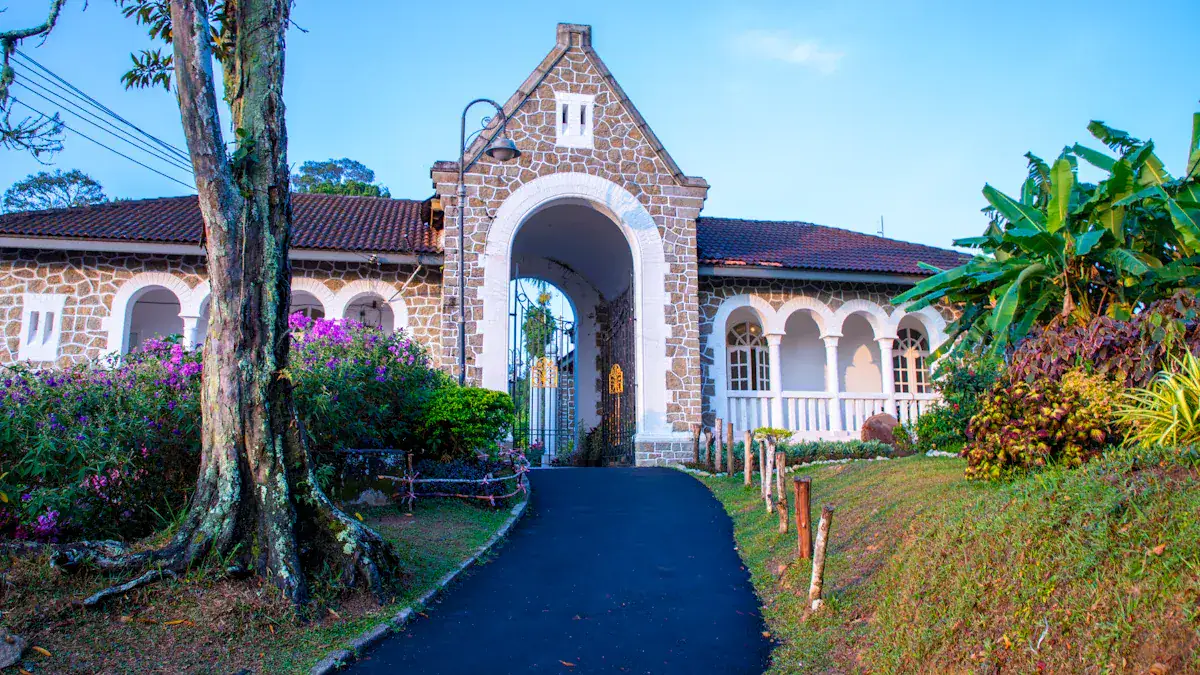
Motor courts come in various shapes. Common designs include circular, oval, or semi-circular layouts. The size of a motor court is important. A large motor court might measure 56×32 feet. For a circular design, a minimum diameter of 70 feet is typically needed. This size allows vehicles to turn properly. The center of this circle can hold plants, water features, or grass. The paved width around the central area should be at least 10 feet. It is better to double this width near the front door. This allows for parking or passing. An entire width of 20 feet lets two cars fit side-by-side. A passenger vehicle needs a minimum inner radius of 14 feet 5 inches for a 180-degree turn. The outer radius should be between 24 feet and 25 feet 6 inches. This accounts for the car’s front overhang. More space is always better. The motor court integrates with the main driveway. It connects to the property entrance. Scale is a key design factor. It ensures safe vehicle movement.
Common Materials
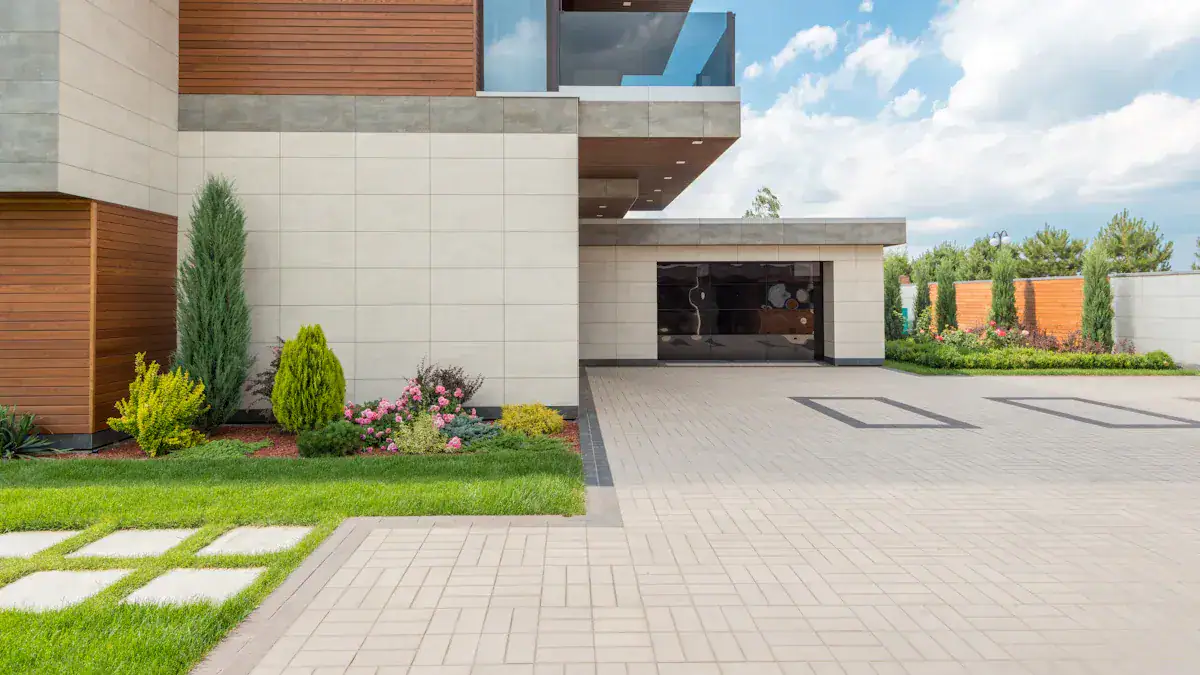
Builders use various materials for an auto court. Common choices include asphalt, concrete, pavers, and gravel. Each material offers different looks and functions. Asphalt provides a smooth, dark surface. Concrete is durable and versatile. Pavers offer many design options and colors. Gravel gives a rustic feel and drains well. The choice of material affects both the appearance and maintenance of what is a motor court driveway.
Typical Placement
A motor court usually sits near the main entrance of a house. It is often at the front of the property. This placement makes it easy for guests to arrive. It is typically separate from direct garage access. This separation helps manage traffic flow. It keeps the main garage area clear.
Benefits of a Motor Court Driveway
Understanding what is a motor court driveway reveals many advantages for property owners. These specialized areas offer significant improvements in daily living and property value.
Convenience and Safety
A motor court greatly enhances convenience and safety. Drivers can turn their vehicles around easily. This eliminates the need to back out onto busy streets. It provides ample space for maneuvering, reducing the risk of accidents. This safe turning area is especially valuable on properties with limited street visibility.
Increased Parking
Motor courts provide substantial additional parking. They accommodate multiple guest vehicles. This offers dedicated off-street parking. Homeowners can host gatherings without worrying about street parking congestion. Guests have a clear, designated area to park their cars.
Curb Appeal and Aesthetics
A motor court significantly boosts a property’s curb appeal. It adds a sense of grandeur and architectural interest. This feature can become a dominant landscape element, drawing the eye to the home. A well-executed private motor court adds substantial value to a home. An asphalt driveway, for example, can increase a property’s value by as much as 10%. This upgrade makes a home more appealing to buyers seeking fewer upkeep issues. Key design elements contribute to this visual appeal:
Texture, Color, and Contrast: Subtle changes in surface texture and tone, like exposed aggregate, enhance visual appeal. Careful contrast, such as a charcoal border against warm gray, coordinates with the home’s architecture.
Patterns, Borders, and Inlays: Incorporating patterns like herringbone or soldier-course borders adds rhythm and defines edges. Thoughtful inlays provide unique touches.
Lighting: Strategic illumination with low, warm recessed pavers and path lights guides visitors. Uplighting on trees adds focal glows after dark.
Landscaping and Edges: Integrating hardscape and softscape through gentle curves and raised planters softens edges. This ensures a cohesive front yard design.
Mixed Materials and Transitional Zones: Combining materials like concrete with stone borders adds richness. It creates subtle transitions between spaces.
Guest Flow
An auto court plays a crucial role in smooth traffic flow. During gatherings and events, it manages vehicle movement efficiently. Guests can arrive, park, and depart without creating bottlenecks. This organized system ensures a pleasant experience for everyone.
Motor Court vs. Standard Driveway
Distinguishing Features
A motor court and a standard driveway serve different purposes. They also have distinct designs. A standard driveway is simply an entrance to a property. Its size often depends on the need to hold vehicles for home events. A motor court is much more. It is a sophisticated hardscape. It functions as a special area for vehicle parking. It also acts as a stylish transition space. Builders often use higher quality materials for a motor court than for a common driveway. They also include many decorative elements. These can be seat walls, custom fountains, or built-in planters. They might also add trellises, hedges, wrought iron furniture, and small trees. The goal is to create an entrance that looks like a grand estate or a five-star venue.
Space Needs
Motor courts require significantly more land than a standard driveway. Their design needs ample room for vehicle turning and parking. This means a property must have enough available space to accommodate the larger footprint. A standard driveway only needs enough length and width for basic access.
Cost Considerations
Installing a motor court involves higher costs. This is true for both initial construction and ongoing maintenance. The larger size and complex design contribute to these expenses. The use of premium materials and decorative features also increases the budget. A standard driveway is typically less expensive to build and maintain.
Planning Your Motor Court
Planning a motor court requires careful thought. Property owners must consider several factors. These factors ensure the project’s success.
Property Size and Layout
A motor court demands significant land. Property owners must have enough space. The property’s configuration also matters. A suitable layout allows for proper vehicle movement. It ensures safe turning and parking. The design must integrate well with the existing landscape. It should not feel cramped or out of place.
Budget and Upkeep
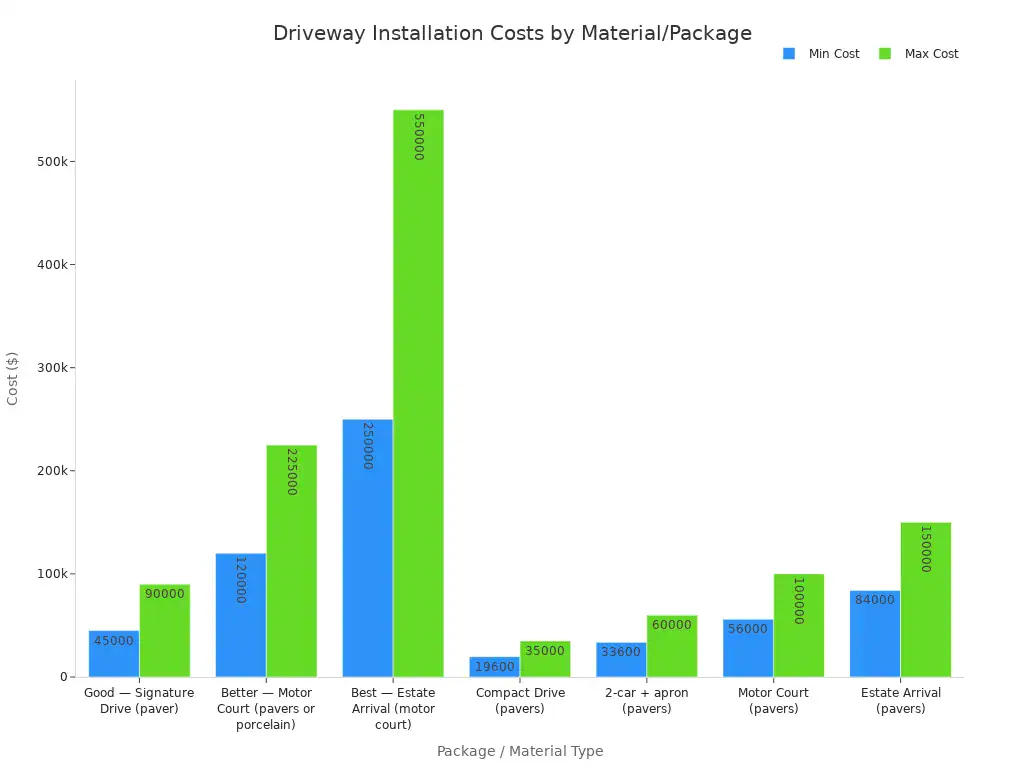
Installing a motor court involves a notable financial commitment. Costs vary based on size and materials. Property owners should plan for both initial installation and ongoing maintenance. The table below shows typical installation costs for different motor court packages and sizes.
Package / Material Type | Size / Area | Installed Cost Range |
|---|---|---|
Estate Entry Packages | ||
Good - Signature Drive (paver driveway) | 800–1,100 sq ft | $45,000–$90,000 |
Better - Motor Court (pavers or drive-rated porcelain) | 1,400–2,200 sq ft | $120,000–$225,000 |
Best - Estate Arrival (motor court) | 2,400–4,000 sq ft | $250,000–$550,000+ |
Driveway & Motor Court Cost by Size | ||
Compact Drive (pavers) | 700 sq ft | $19,600 (at $28/sf) – $35,000 (at $50/sf) |
2-car + apron (pavers) | 1,200 sq ft | $33,600 (at $28/sf) – $60,000 (at $50/sf) |
Motor Court (pavers) | 2,000 sq ft | $56,000 (at $28/sf) – $100,000 (at $50/sf) |
Estate Arrival (pavers) | 3,000 sq ft | $84,000 (at $28/sf) – $150,000 (at $50/sf) |
Maintenance costs include cleaning, sealing, and repairs. These costs add to the overall investment.
Regulations and Permits
Property owners often need permits for motor court installation. Local regulations dictate these requirements.
Driveway Requiring Curb Cut: A permit is mandatory for all driveways. New curb cuts or apron replacements in public areas need approval. The township Highway commissioner provides this approval or a waiver.
Flatwork (Driveways without Curb Cut): Driveways without a curb cut also require a permit. This includes surfaces like gravel, asphalt, concrete, or paver brick.
Engineering Permits: These permits are necessary for projects within city public right-of-way. They also apply to city-owned and maintained infrastructure. Examples include sidewalk, curb, gutter repairs, driveway approaches, and street cut projects.
The application process involves submitting location details and work descriptions. Property owners must also provide their information. Regional offices review applications for policy conformance. Commercial driveways often require more review time. They may also need a bond to ensure project completion. This bond guarantees adherence to permit requirements. An auto court project requires careful attention to these rules.
A motor court driveway is a large, paved area. It enhances larger properties both functionally and aesthetically. This feature offers several key advantages. It provides convenience and safety for vehicle turning. It also increases parking capacity for guests. Furthermore, it significantly improves a property’s curb appeal. Planning for what is a motor court driveway requires considering property size and budget. While it needs specific conditions, a motor court driveway greatly elevates a property’s utility and grandeur.
FAQ
What is the main purpose of a motor court driveway?
A motor court allows drivers to turn vehicles around easily. It provides ample parking for guests. It also makes guest drop-off and pickup convenient. This area enhances a property’s functionality and aesthetic appeal.
What shapes do motor courts typically have?
Motor courts often feature circular, oval, or semi-circular designs. These shapes provide efficient vehicle movement. The center can hold landscaping or decorative elements. The design integrates with the main driveway and property entrance.
How does a motor court differ from a standard driveway?
A motor court is a larger, more complex paved area. It focuses on vehicle turning and guest parking. A standard driveway primarily offers basic access to a property. Motor courts often use higher-quality materials and decorative features.
What are the key benefits of having a motor court?
Motor courts offer increased safety by eliminating backing onto streets. They provide abundant guest parking. They also significantly boost a property’s curb appeal. Motor courts manage guest traffic flow efficiently during gatherings.
What materials are commonly used for motor courts?
Common materials include asphalt, concrete, pavers, and gravel. Each choice offers different aesthetic and functional qualities. The material selection impacts the motor court’s appearance and maintenance needs.