

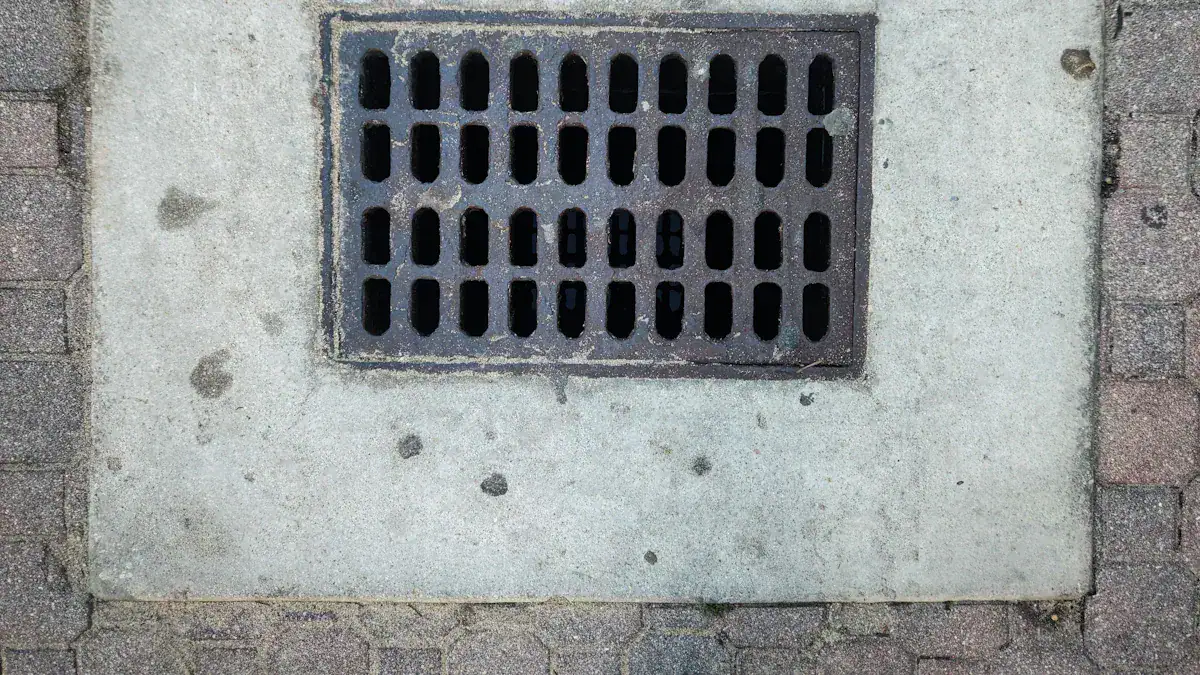
You might overlook the importance of effective garage floor drainage. It protects your garage structure, prevents slips, and manages spills. Proper garage floor drains are crucial for any garage floor drain system. You will encounter two main types of drains: trench drains and pit (or square/round) drains. Understanding these types helps you choose the best garage floor drain for your space. This knowledge ensures you select the right drainage system for your garage.
Key Takeaways
Garage floor drains protect your garage. They prevent water damage and make the area safe.
Trench drains collect water over a wide area. They are good for large amounts of water.
Pit drains collect water at one spot. They work well for smaller areas or specific spills.
Proper installation and regular cleaning are important. They keep your drain working well.
Choose the right drain for your garage’s needs. This protects your space for a long time.
Understanding Garage Floor Drains
Why A Garage Floor Drain Matters
A garage floor drain is a vital part of your garage’s infrastructure. It is a channel or opening in the floor. This opening collects and removes water from your garage space. You need a reliable garage floor drain system to protect your property. Without a proper garage floor drain, water can accumulate. This standing water causes many problems. It can damage your garage floor and walls. It also creates a slippery surface, which is a safety hazard. A good drainage system prevents these issues. It keeps your garage dry and safe. This system helps maintain the value and integrity of your home.
Common Sources Of Garage Water
Water often finds its way into your garage from many places. You might not always notice these sources. Understanding them helps you see why a garage floor drain is so important.
Here are common ways water enters your garage:
Damaged Door Seals: Worn or broken seals at the bottom of your garage door let water seep in.
Poor Terrain Sloping: Your yard might slope towards the garage. This directs rainwater right to your door.
Roof and Gutter Issues: Clogged gutters or a leaking roof can send water cascading into your garage.
Cracked Concrete: Cracks in your garage floor slab allow water to seep up from the ground.
Plumbing Leaks: Appliances like water heaters or washing machines in your garage can leak. Pipes within walls can also have hidden leaks.
Sill Plate Deterioration: The wood at the base of your garage walls can rot, creating entry points for water.
All these sources mean you need an effective drain. This drain directs water away from your garage. It prevents water from reaching your main sewer line through unintended paths.
Trench Drain Design
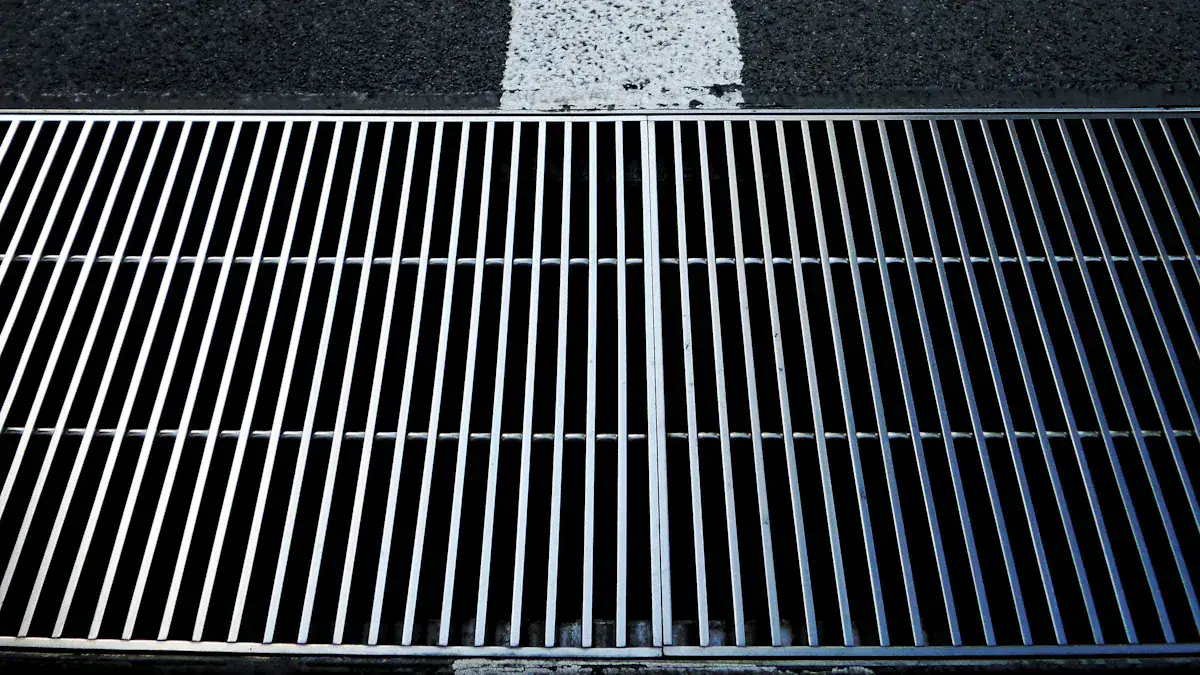
A trench drain is a long, narrow channel. It collects water over a wide area. You often see these drains in garages because they handle large amounts of water efficiently. They have an elongated shape. You can connect them in sections to create longer drainage systems. This design makes them very versatile for different garage sizes.
Trench Drain Features
Trench drains come in various materials. You will find them made from concrete, high-density polyethylene (HDPE), or polymer. These materials offer durability and resistance to chemicals. The most recognizable feature is their grated top. This grate covers the channel and allows water to flow in while keeping debris out. Grated trench drains are well-known for their effectiveness.
You can find trench drains in many sizes. This table shows some common dimensions and materials:
Trench Drain System | Standard Widths | Standard Lengths | Material Options (Channel/Grate) |
|---|---|---|---|
Dura Trench | 2 in., 4 in., 6 in., 8 in., 10 in., 12 in., 18 in., 24 in., 36 in., 48 in. | 8 ft. or longer sections | Proprietary durable fiber reinforced polymer concrete (channel), various frame materials and finishes |
NDS Micro Channel™ | 1¼ in. | 10 ft. | Integral channel and grate |
NDS Mini Channel™ | 3 in. | N/A | Decorative brass grate available |
NDS Spee-D® Channel | 4 in. | 4 ft., 10 ft. | N/A |
NDS Pro Series™ | 3 in., 5 in., 8 in., 12 in. | N/A | PVC, reinforced nylon, cast iron grates |
NDS Dura Slope® | 6 in. | N/A | HDPE (channel), ductile iron (frame and grate) |
BG-FILCOTEN® Trench Drains | 4 in., 8 in., 12 in. | N/A | High-performance concrete (channel), various grate styles and materials |
Trench Drain Advantages
Trench drains offer many benefits for your garage. They are excellent at managing water.
They divert water away from your garage door and driveway. This prevents issues like frozen doors and icy driveways.
They handle melted snow that contains salt, dirt, and chemicals. This protects your garage floor from erosion.
You get a permanent solution for water pooling and ice buildup. This saves you time and makes your garage safer in winter.
They reduce the risk of slips and falls.
They keep your garage floor dry and clean. This preserves its condition and prevents water damage.
You can easily sweep water into the drain, stopping it from reaching your driveway.
Trench Drain Disadvantages
While trench drains are effective, they do have some potential drawbacks. You need to consider these before choosing a system.
Improper System Selection: You might choose a trench drain system that does not fit your needs. For example, a shallow drain in a high rainfall area will not work well. An oversized system for light traffic is overkill.
Incorrect Grates: Using grates with the wrong Load Class can cause problems. Pedestrian-rated grates will fail in a garage with vehicle traffic. Grates made from materials not resistant to chemicals can also get damaged.
Inaccurate Installation: If you do not follow best practices during installation, the system will not work correctly. Not anchoring the trough or using incorrect materials can lead to movement. This causes issues like standing water.
Poor Maintenance: Neglecting annual cleaning allows debris to build up. Trash, leaves, and silt can clog the drain. This makes the system ineffective. Water then sits in unwanted areas, possibly damaging your foundation.
Trench Drain Applications
You will find trench drains in many garage settings. They are ideal for residential garages, especially those with sloped driveways or where you wash your car. Commercial garages, car washes, and workshops also use them. They effectively manage spills and wash-down water. Their linear design makes them perfect for placement along garage doors or across large floor areas.
Pit Drain Design
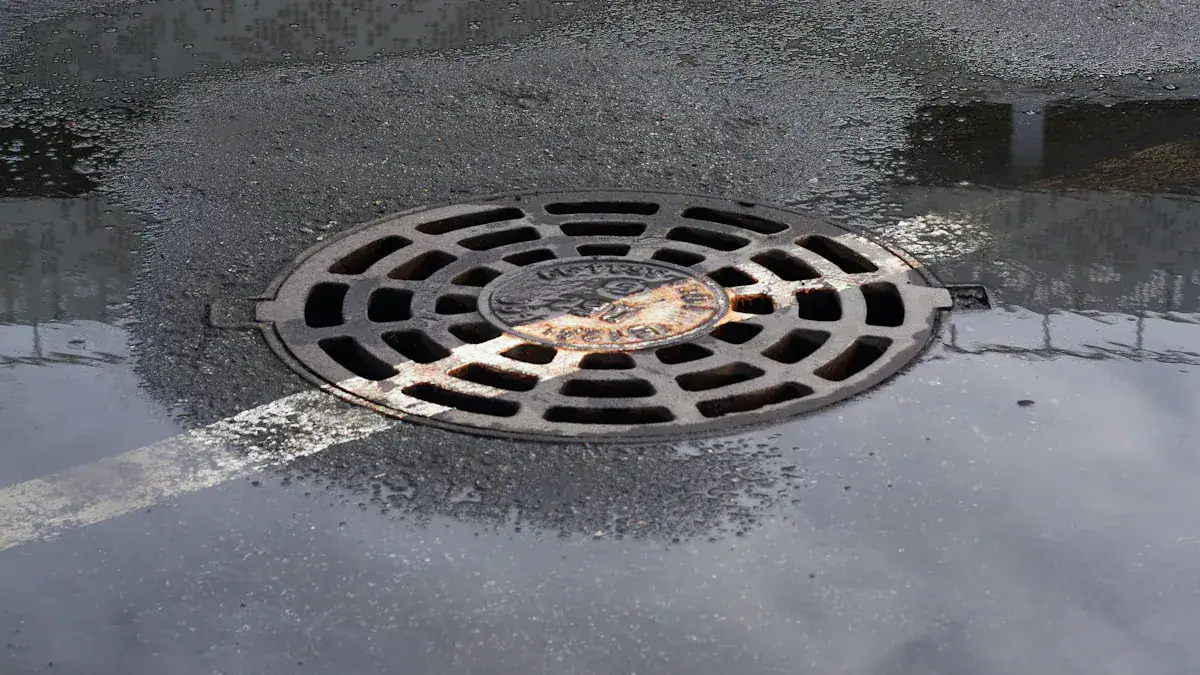
You can also choose a pit drain for your garage. People often call these square or round drains. They differ from trench drains because they collect water at a single point. Trench drains collect water along a line. Pit drains are effective for smaller areas or specific spots where water collects.
Pit Drain Features
Pit drains are essentially basins or sumps installed in your garage floor. They have a grate on top. This grate can be square or round. It allows water to enter the pit while blocking larger debris. You can find pit drains in various sizes. Their size depends on how much water you expect them to handle.
Here are some typical dimensions and materials for pit drain systems:
Type | Dimensions | Material |
|---|---|---|
Commercial | 18″ x 18″ x 24″ | Galvanized |
Residential | 12″ x 12″ x 12″ | Galvanized |
These drains often connect to a pipe that carries water away. Sometimes, a sump pump sits inside the pit. This pump activates when water reaches a certain level. It then pumps the water out of your garage.
Pit Drain Advantages
Pit drains offer several benefits for managing water in your garage. They help keep your space dry and safe.
They prevent water from accumulating on your garage floor. This means you do not need to sweep water manually.
You can conveniently wash your car indoors. The drain handles the runoff.
They mitigate the formation of ice during colder months. This makes your garage safer.
A well-placed pit drain can effectively manage spills and melted snow. It helps protect your garage floor and foundation from water damage.
Pit Drain Disadvantages
Pit drains also have some limitations you should consider. You need to understand these before you choose this type of drain.
High Installation Cost: The initial setup of these interior drainage systems can be expensive. This is especially true if the installation requires extensive work.
Regular Maintenance: You must perform ongoing maintenance for the drain to work effectively. This includes cleaning pipes, checking the sump pump, and inspecting for new cracks.
Potential for Mechanical Failure: Sump pumps and other mechanical parts within the system can fail. This means you will need repairs or replacements.
Reactive Solution: Sump pumps and floor drains do not prevent water from entering your garage. They only remove it after it has already gotten in.
Requires Electricity: Sump pumps need power to operate. This makes them vulnerable during power outages caused by severe storms.
Takes Up Floor Space: Both sump pumps and floor drains can occupy valuable floor space. Floor drains, in particular, require excavation of the foundation slab.
Loud During Use: Sump pumps can be noisy when they are active.
Can Be Overwhelmed: Floor drains can be overwhelmed by large amounts of water. This makes them less effective in flood situations.
Expensive and Invasive Installation: Floor drains are costly to install retroactively. This is because you need to excavate the concrete slab and install pipes.
Vulnerability to Power Outages: Sump pumps rely on electricity. This leaves your garage unprotected during power failures, especially during storms.
Mechanical Failure: Components like mechanical parts, float switches, and the pump itself can break or wear out.
Discharge Pipe Issues: Discharge pipes can freeze in winter. This prevents water removal.
Inability to Handle Debris: Sump pumps may struggle with debris or thick mud. This can lead to malfunctions.
Ongoing Costs: You will have continuous expenses for electricity usage and eventual part replacements. These systems typically last 10-15 years.
Pit Drain Applications
You will find pit drains in many residential garages. They are useful for managing water from car washing or small spills. They work well in garages where you have a specific low point for water collection. You might also see them in utility rooms or basements connected to a garage. They are a good choice when you need a simple, localized drainage solution.
Key Components Of Garage Floor Drains
You need to understand the parts of your garage floor drain system. Both trench and pit drains share essential components. Knowing these parts helps you maintain your system. It also helps you understand how your drain works.
Drain Grate Options
The grate is the visible part of your drain. It covers the opening. Grates let water in but keep large debris out. You will find different types of grates.
Trench Drains: These grates are long with slots or patterns. They capture water along a narrow channel. Their shape helps them handle a lot of water.
Rounded Drains: These grates are circular. You often see them in home garages. They work well for smaller amounts of water. They also stop debris from entering the drain system.
Grates also have different load capacities. This means how much weight they can hold.
Load Class | Load Capacity (lbs) |
|---|---|
Light Duty | Up to 2,000 |
Medium Duty | 2,000 to 4,999 |
Heavy-Duty | 5,000 to 7,499 |
Extra Heavy-Duty | 7,500 to 10,000 |
Special Duty | Over 10,000 |
For trench drains, load capacity is often measured per foot:
Strainer Baskets And Traps
Below the grate, you often find a strainer basket. This basket catches debris.
Strainer baskets are removable. You can easily lift them out for cleaning.
They catch leaves, dirt, and other items. This prevents clogs in your drain.
They ensure water flows smoothly. This keeps your garage floor dry.
You also have traps in your drain system. A P-trap is a common type.
Traps seal off gases from the sewer. This stops bad smells from entering your garage.
They also prevent dangerous gases like methane from coming into your home.
Proper maintenance keeps the trap sealed.
Drain Body And Outlet
The drain body is the main structure of the drain. It holds the water before it exits. For trench drains, polymer concrete is a common material for the body. It is very strong. The outlet is where water leaves the drain body. It connects to your plumbing or sewer line. Some garage floor drain systems, like the SD Series Separator-Drain, use heavy steel for the body. This ensures strength. They also have special coatings to prevent rust.
Cleanout Access
Cleanout access points are important. They allow you to reach inside the drain. You can clear blockages or inspect the system. This access helps you maintain your drain effectively. It ensures your system works well for a long time.
Garage Drain Installation
Installing a garage floor drain system requires careful planning. You need to consider several factors for a successful project.
DIY Versus Professional
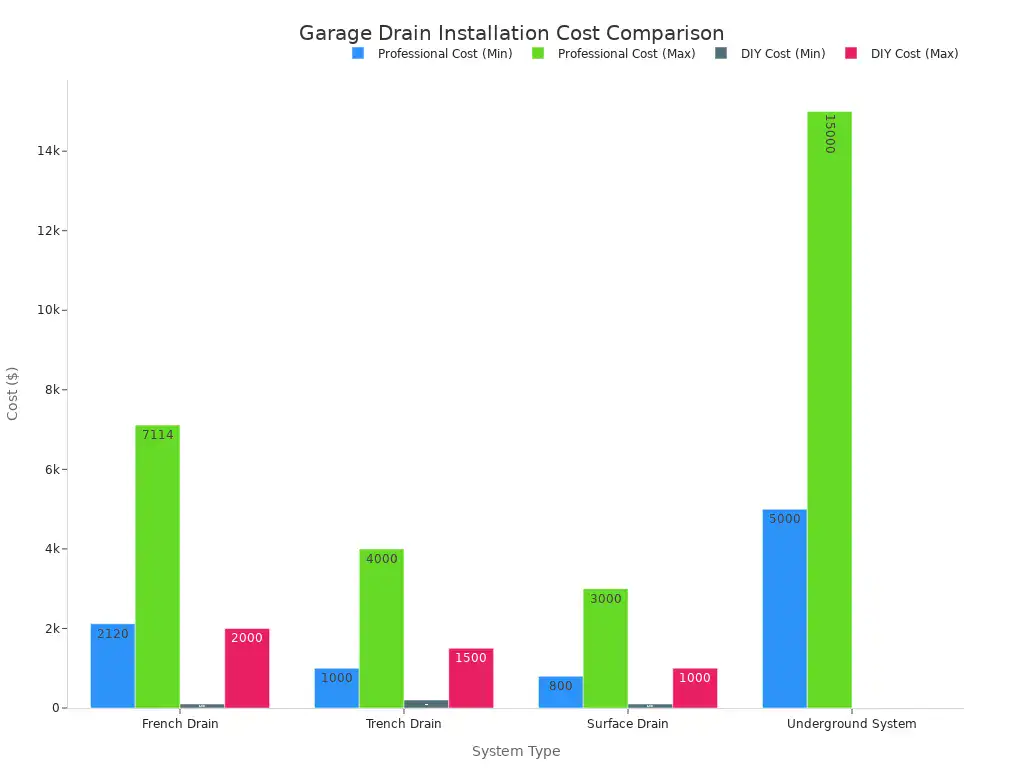
You might wonder if you can install a garage floor drain yourself. DIY installation can save money, but it often involves complex tasks like breaking concrete. Mistakes can worsen water problems. Professional installation costs more upfront. However, professionals offer expertise and proper equipment. They ensure correct slope and waterproofing. This gives you long-term peace of mind and protects your home’s value.
System Type | Average Professional Cost | DIY Cost |
|---|---|---|
French Drain | $2,120 – $7,114 | $100 – $2,000 |
Trench Drain | $1,000 – $4,000 | $200 – $1,500 |
Surface Drain | $800 – $3,000 | $100 – $1,000 |
Underground System | $5,000 – $15,000 | Not recommended |
Additional costs can include permits and landscaping cleanup.
Floor Pitch Requirements
Your garage floor needs a slope for water to drain properly. Most cities require a purposeful slope. This helps water and gases flow out. Concrete floors usually have a minimal pitch. This prevents water pooling. The overall slope should not be easily noticeable.
ACI 362 recommends a minimum of 1.5% slope. A 2% slope is even better for garages.
A 0.5% slope is the bare minimum for pavements. A 1/8″ per foot (about 1%) slope ensures positive drainage.
Civil engineers often suggest a minimum of 0.5% slope, preferring 1%.
Trench drains can simplify creating this slope. You only need to slope the floor towards the linear drain.
Building Codes And Regulations
You must follow local plumbing codes when adding a drain to your garage. These codes specify pipe types, venting, and drainage systems. Plumbing systems need proper venting. This stops sewer gases from entering your garage. All connections must be watertight. You may also need a permit. Check with your local building department.
R309.1 Floor surface. Garage floor surfaces shall be of approved noncombustible material. The area of floor used for parking of automobiles or other vehicles shall be sloped to facilitate the movement of liquids to a drain or toward the main vehicle entry doorway.
Residential garage floor drains often drain to the yard, not the sanitary sewer. This is because rainwater can cling to vehicles. Connecting to the sanitary sewer would require a trap primer. This could waste water.
Material Durability
The materials you choose affect your drain’s lifespan. A well-designed drainage system can last 25-50 years or more. Poor choices can lead to failures in 2-5 years.
Material | Expected Lifespan | Key Characteristics |
|---|---|---|
Ductile Iron Pipe | 50-100+ years | Strong, durable, corrosion-resistant with proper lining. |
PVC Pipe | 50-100+ years | Lightweight, corrosion-resistant, flexible, easy to install. |
HDPE Pipe | 50-100+ years | Flexible, corrosion-resistant, good for trenchless installation. |
Copper Pipe | 50-70 years | Corrosion-resistant, durable, good for hot and cold water. |
Galvanized Steel Pipe | 20-50 years | Prone to corrosion and mineral buildup over time. |
Cast Iron Pipe | 50-100 years (older systems) | Durable but can corrode and crack; modern cast iron is lined. |
Concrete Pipe | 50-100+ years | Strong, durable, often used for large diameter storm and sewer lines. |
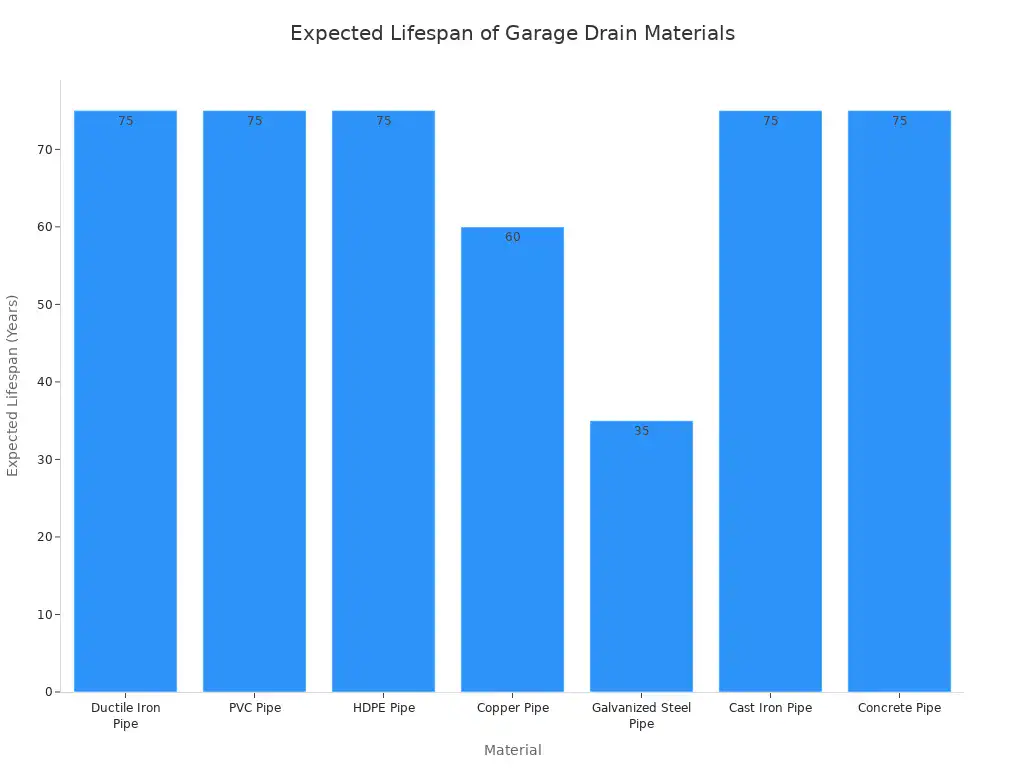
Choose materials like PVC or HDPE for long-lasting performance in your garage floor drain.
Garage Drain Maintenance
You need to keep your garage drain system working well. Regular maintenance prevents big problems. It ensures your garage stays dry and safe.
Regular Cleaning Practices
You should clean your garage floor drain often. This prevents clogs. Flush the drain with hot water regularly. This helps clear minor buildup. You can also use a mild detergent. Remove any visible debris from the grate. This includes leaves, dirt, and small stones. A clean drain allows water to flow freely. This protects your entire drainage system.
Inspection For Issues
You must regularly check your drain for problems. Look for signs of issues or blockages. These signs tell you something is wrong.
Water pooling near your home often means a clogged or broken drain.
Clogged gutters can cause water to overflow near your foundation.
Foul odors from the drain suggest organic material is trapped.
Soggy spots in your lawn can signal a failing underground system.
Cracks in your home’s walls or floors show stress from improper drainage.
Low spots in your floor might mean uneven settling due to water damage.
Erosion and uneven ground can point to a broken drain pipe. Catching these signs early helps you fix them before they get worse.
Odor And Pest Control
You can stop bad smells and pests from your drain. Regularly clean your drain. Install drain screens to block debris and insects. You can also seal entry points around windows and doors in your garage. Keep your garage clean and organized. Store items in plastic containers. Sweep and vacuum often. Seal trash bags if you keep garbage in the garage. Some products, like a Pest Flap or a Drain Lock with Odor & Bug Blocker, use one-way valves. These let water out but keep bugs and odors from the sewer out. An innovative drain cover also seals the drain when not in use. This prevents odors and pests like cockroaches from escaping.
Repair Versus Replacement
Sometimes, you face a choice: repair or replacement. If your drain has minor cracks or small leaks, you might only need a repair. However, if the damage is extensive, or if the drain constantly clogs, a full replacement might be better. Consider the age of your garage floor drains and the cost of repeated repairs. A new system can offer better performance and peace of mind. This is especially true if your current drain connects to the main sewer and has frequent issues.
You now understand trench drains offer linear collection, while pit drains provide point drainage. Each garage floor drain has unique benefits for your space. Your best choice depends on specific garage needs, water volume, and aesthetic preferences. Proper installation and consistent maintenance are crucial for any garage floor drain system. This ensures your drainage system works effectively. Regular care keeps your drain clear. Invest in the right drainage system for your garage. A good system protects your space. Choose the best drain for your needs. This ensures a long-lasting garage floor drain system. A well-maintained drain is crucial. Your drainage system will serve you well. The right system prevents problems. Assess your garage’s needs for the ideal garage floor drain.
FAQ
Can I install a garage drain myself?
You can attempt DIY installation. However, professional installation is often better. A professional ensures your drainage system works correctly. They handle complex tasks like concrete breaking and proper sloping. This prevents future water problems.
How often should I clean my garage drain?
You should clean your garage drain regularly. Flush it with hot water often. Remove any visible debris from the grate. This prevents clogs. Regular cleaning keeps your drainage system free from blockages.
What happens if my garage drain clogs?
A clogged drain causes water to pool in your garage. This can damage your floor and walls. It also creates slippery, unsafe conditions. A clogged drain compromises your entire drainage system. You must clear blockages quickly.
Do I need a permit for a garage drain?
You might need a permit. Local building codes often require permits for a new drainage system. Check with your local building department. This ensures your installation meets all regulations.