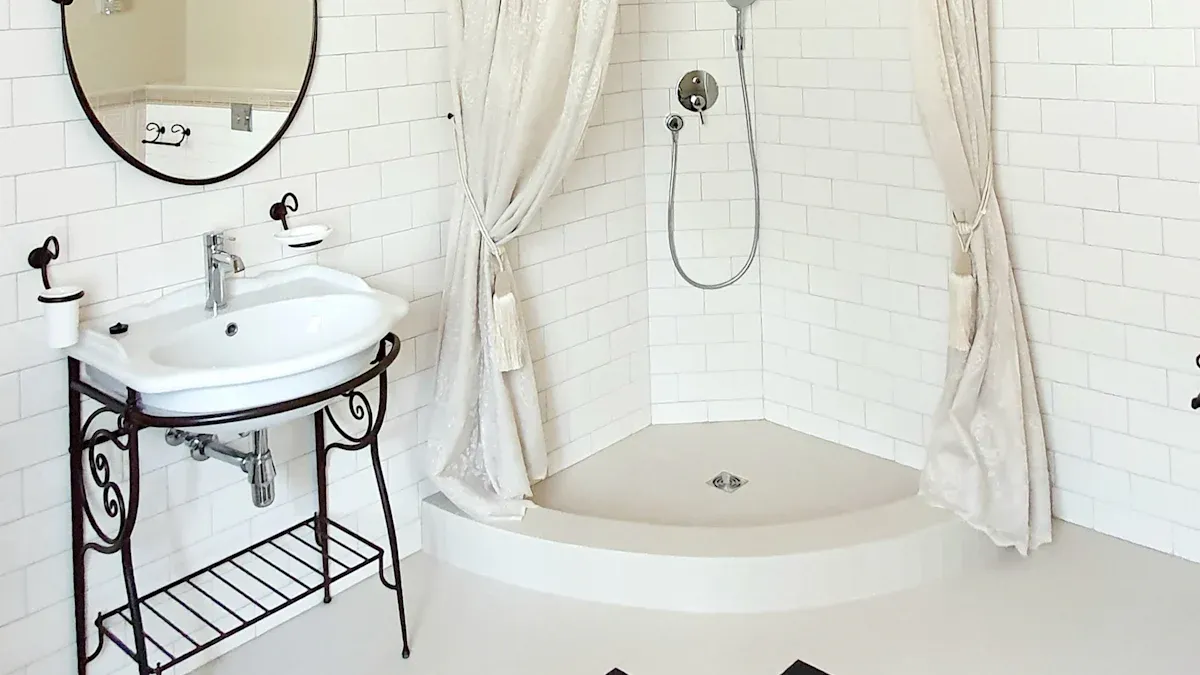
The standard shower curtain height is typically 70 to 72 inches. This measurement is standard because it perfectly fits most bathtubs and shower stalls, stopping water from splashing out. In fact, standard shower curtain dimensions are designed to accommodate 70-72 inch by 70-72 inch bathtubs. Getting the correct height for your shower curtain improves both your bathroom’s look and its function. You ensure a dry floor and a polished appearance.
Understanding Standard Shower Curtain Height

Typical Standard Length
You will often find shower curtains in a standard length. This length is typically 70 to 72 inches (178 to 183 cm). This measurement works for most bathrooms. For example, a standard shower curtain size is 72 inches. This fits many common setups. If you have a standard shower, this length is usually perfect. You might also see longer options. For instance, 84 inches is a standard length for longer tubs and showers. Some extra-wide showers also use a 72-inch length. If you have a very tall or wide shower, you might even find 84-inch options for both dimensions.
Why 70-72 Inches is Standard
This 70 to 72-inch length is standard for a good reason. It perfectly covers most standard bathtubs or shower stalls. This design effectively stops water from splashing out. You want to keep your bathroom floor dry. This length helps you do that. It creates a barrier. This barrier contains the water inside your shower area. This prevents slips and water damage.
Ideal Clearance from Floor or Tub
You need to hang your shower curtain at the right level. The ideal distance for the curtain to hang is about 1 inch from the floor or the tub rim. This small gap is important. It ensures proper water containment. The curtain should just skim the surface. This prevents water from escaping underneath. It also gives your bathroom a clean, finished look. A curtain that drags on the floor can collect mildew. A curtain that is too short lets water splash out. Getting this shower curtain height right makes a big difference.
Measuring for Your Perfect Shower Curtain Size Guide
Step-by-Step Measurement Process
You need to measure carefully to get the right shower curtain. First, decide where you want to place your shower rod. Then, measure from the rod down to where you want the bottom of the curtain to hang. This is usually about 1 inch above the floor or the tub rim. Remember to account for the length of your curtain rings or hooks. These add extra length to the curtain’s overall hang. You want the curtain to just skim the surface. This prevents water from escaping and keeps your bathroom looking neat.
Factors Affecting Shower Curtain Height
Several things influence the best shower curtain height for your bathroom. Your bathroom’s layout is important. The shower’s location and wall space affect the curtain size. This prevents awkward overlaps or gaps. The type of shower you have also matters. A standalone shower, a walk-in shower, or a tub-shower combination all need different considerations. For example, walk-in showers with benches might need higher rods for full coverage. Your ceiling height plays a role too. Taller ceilings allow for higher rod placement. This creates a more spacious feel. Lower ceilings might need a lower rod to prevent crowding. Finally, your personal preference is key. Taller people might like higher rods to avoid touching the curtain. Shorter people might prefer lower rods for easier access.
Avoiding Common Measurement Mistakes
You can easily make mistakes when measuring for your shower curtain. A common error is having a curtain that is too short. People call this “flood length.” It means the curtain does not reach low enough. This lets water splash out. It also makes your ceiling look lower. Not planning proper placement is another mistake. This can lead to water splashing and moisture damage. You should aim for the average shower curtain to hang about 75 to 77 inches off the ground. A curtain that drags on the floor is also a problem. It can collect mold and mildew because of extra moisture. Always ensure your curtain hangs about 1 inch from the floor or tub.
Types of Shower Curtain Sizes and Variations
You will find many different types of shower curtains beyond the standard length. These variations help you fit unique bathroom layouts or achieve specific looks. Knowing these different types of shower curtains helps you choose the best one for your space.
Extra-Long Shower Curtain Sizes
Sometimes, a standard curtain just is not long enough. You might have high ceilings or a custom rod placement. For these situations, you can find extra-long shower curtain sizes. These often come in lengths like 78, 84, or even 96 inches. They provide full coverage and a more luxurious feel. For example, if you need an extra tall shower curtain, consider these dimensions:
Category | Dimensions |
|---|---|
Extra Tall Shower | 72″ x 84″ |
These longer curtains ensure water stays inside your shower, even with a higher rod.
Extra-Short Shower Curtain Sizes
On the other end of the spectrum, you might need shorter types of shower curtains. These are perfect for clawfoot tubs or specific aesthetic preferences. You can find options around 60 inches in length. A shorter curtain works well when you want to show off a decorative tub or if your shower area is naturally lower. These types of shower curtains offer a unique style.
Custom Shower Curtain Heights
Sometimes, standard shower curtain sizes simply do not work. You might have a very unique bathroom layout. In these cases, you need to consider tailored solutions.
Custom shower curtain heights are needed for unique or irregular bathroom spaces to ensure a perfect fit and aesthetic harmony.
Walk-in showers often require larger or custom curtains, typically ranging from 84 to 96 inches in length, necessitating precise measurements based on the shower’s dimensions.
You measure your space precisely and then order a curtain made to your exact specifications. This ensures a perfect fit and a polished look for any unusual shower setup.
Optimal Shower Curtain Height Installation
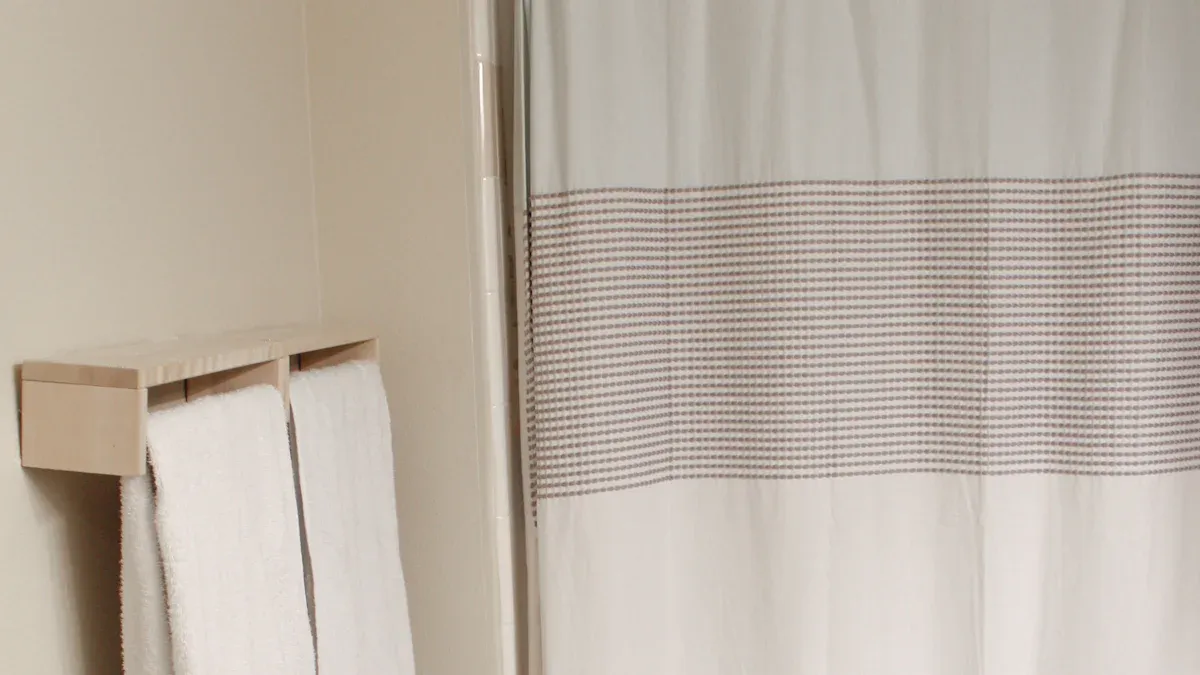
You want your shower curtain to look good and work well. Proper installation is key. This means you need to place your shower rod correctly. You also need to consider how curtain rings affect the overall length.
Choosing the Right Shower Rod Height
You must choose the right spot for your shower rod. For a standard 72-inch curtain, you typically install the rod around 75 to 77 inches from the floor. This ensures your curtain hangs about 1 inch from the floor. This small gap prevents water from escaping. It also keeps your curtain from dragging.
Consider this example: if you install a shower curtain rod 78 inches above the floor, a 72-inch shower curtain will hang approximately 6 inches above the floor. This shows how important rod placement is. You can adjust the rod up or down to get the perfect clearance.
You should also think about airflow. Install your shower curtain rod 6 to 10 inches below the ceiling. This allows good air circulation. Good airflow helps prevent moisture and mold issues in your bathroom.
Impact of Curtain Rings and Hooks
Curtain rings and hooks add to the overall hanging length. You must factor this into your rod placement. Imagine your curtain is 72 inches long. If your rings or hooks add 3 inches, your total hanging length becomes 75 inches.
💡 Tip: Always measure your curtain rings or hooks before installing the rod. This helps you get the exact rod placement for your desired curtain clearance.
You want the bottom of the curtain to be about 1 inch from the floor or tub rim. So, if your curtain is 72 inches and your rings add 3 inches, you would install your rod 76 inches from the floor. This leaves the 1-inch gap you need.
Troubleshooting Height Issues
Sometimes, you might face problems with your shower curtain’s height. Your curtain might be too long. It could drag on the floor. This can lead to mold and mildew. If this happens, you have options. You can raise the shower rod. You can also use shorter curtain rings. If your curtain is fabric, you might even trim it.
Your curtain might be too short. It could let water splash out. This makes your bathroom floor wet. If your curtain is too short, you can lower the shower rod. You can also use longer curtain rings or hooks. You might need to buy a longer curtain. The correct shower curtain height is important for both function and appearance. You want a dry floor and a neat look.
Beyond Height: Other Shower Curtain Sizes
You consider more than just height when choosing a shower curtain. Other dimensions and features are also important. These factors ensure your bathroom looks great and functions well.
Standard and Extra-Wide Options
You will find many different shower curtain sizes. A standard shower curtain measures 72 inches in width. This width works for most standard tubs and shower stalls. However, you might need something larger. For example, an extra wide shower area needs a bigger curtain. Extra-wide shower curtains typically measure between 78 to 84 inches in width. These dimensions are ideal for shower areas with curved rods or larger tub setups.
Curtain Size (inches) | Best For |
|---|---|
78 x 72 | Curved rods |
84 x 72 | Wide walk-in showers |
For walk-in showers, a standard size for shower curtains is still 72 x 72 inches. This provides ample coverage without dragging.
Material and Weight Considerations
The material of your shower curtain affects its look and feel. Fabric shower curtain liners offer a soft look. This enhances your bathroom’s interior design. Cloth options, like cotton, hemp, or polyester, appear more “high-end.” They make a bathroom feel more inviting. PEVA/EVA liners do not emit noxious fumes. This is unlike PVC, which can have a strong chemical odor.
The weight of your shower curtain also matters. Heavier shower curtains exhibit greater stability. They are less prone to billowing inward. This is due to their increased mass. Lighter materials move more easily with airflow. To enhance stability, use magnetic or fabric-lined curtains. These often incorporate weights. You can also sew weights into the bottom of the curtain. This helps anchor the shower stall shower curtain.
Liner vs. Curtain for Water Containment
You often use a separate liner with your decorative shower curtain. This liner creates a barrier. It keeps moisture within the shower area. This prevents water from escaping onto bathroom surfaces. It also helps keep your outer decorative curtain dry and clean. Using a liner reduces the likelihood of mold and mildew growth. It protects bathroom walls and floors from water damage. Liners simplify the cleaning process. Many liners are machine-washable. They are also generally more affordable than decorative curtains. This makes them a practical choice for any standard shower.
You now understand that the standard shower curtain height is typically 70-72 inches. Precise measurement and careful installation are crucial for your bathroom. Getting the height right offers clear benefits: it prevents leaks, enhances your bathroom’s aesthetics, and ensures your curtain lasts longer. A well-chosen and properly installed shower curtain truly improves your daily bathroom experience and its overall functionality.
FAQ
What happens if my shower curtain is too long?
A long curtain drags on the floor. It collects mold and mildew. This makes your bathroom look messy. It also creates a hygiene issue. You should adjust the rod or trim the curtain.
Can I use a standard curtain for a clawfoot tub?
A standard curtain might be too long. Clawfoot tubs often need shorter curtains. You can find extra-short options. These are usually around 60 inches. Measure your tub first.
How do I clean my shower curtain?
You can often machine wash fabric curtains. Use a gentle cycle. Hang them to dry. Wipe vinyl or PEVA liners with a damp cloth. This prevents mildew buildup.
Do I always need a shower curtain liner?
Yes, you usually need a liner. The liner keeps water inside the shower. It protects your decorative curtain. This prevents water damage. It also helps keep your bathroom dry.