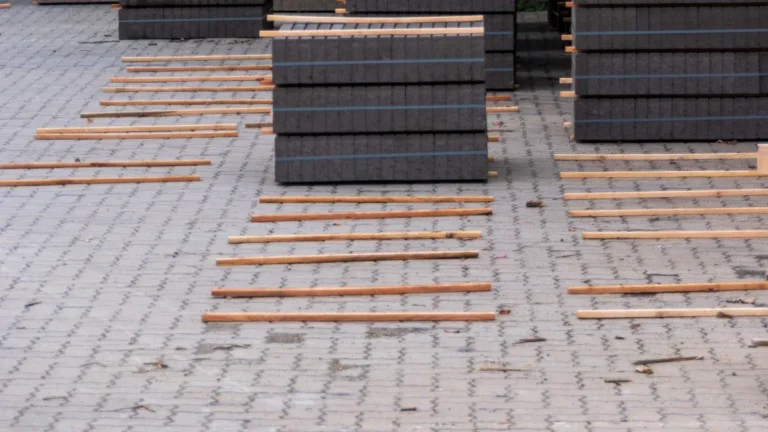
A railroad ties retaining wall starts with evaluating the slope so the wall height, length, and drainage all make sense together. The builder gathers treated ties, gravel, rebar, basic digging tools, and safety gear. Then they clear and level the ground, dig a trench, and add compacted gravel. They set the initial tie level, stack and stagger more, pin with rebar, add deadmen, and finish with drainage and careful backfill so the next steps feel simple and doable.
Assess Your Slope and Design the Wall
Most successful retaining wall projects start with a calm, careful look at the slope before a single tie is moved. In this initial step, slope assessment helps a homeowner feel in control instead of feeling inundated. They use a builder’s level to measure from the lowest point up, so the wall height feels planned, not guessed. This measurement then guides safe, confident wall design.
Next, the person studies how water moves through the area. They plan a gentle tilt away from the house so rain does not pool or sneak toward the foundation.
As the design grows, they envision 6 x 8 feet x 8 inch railroad ties stacking in solid rows, with extra ties for deadmen and about 10 percent more for waste, giving the project welcome backup.
Gather Materials, Tools, and Safety Gear
After the slope and wall layout feel clear and measured, the project naturally shifts into gathering everything needed to work safely and steadily.
At this stage, careful material sourcing helps the whole job feel smoother and more connected. They choose treated railroad ties, usually 6 x 8 feet x 8 inches, so the wall stays strong for years and looks consistent from end to end.
Next comes thoughtful tool selection. A shovel, pick, and wheelbarrow help move soil and concrete. A level and 3/8 rebar support straight, solid rows of ties.
Scrap 2x4s and wood stakes become temporary braces that keep posts steady while everyone works.
Throughout the process, gloves and safety glasses protect hands and eyes from rough edges and flying debris.
Prepare and Level the Ground
Before a single railroad tie goes into place, the ground beneath it needs careful attention so the wall will stay steady and safe.
In this step, the builder clears and marks the layout, then levels the soil, sets a gentle slope for drainage, and cuts the area square to match the size of the ties.
After that, they compact the base firmly, realizing this extra effort now will greatly reduce shifting and settling later.
Clear and Mark Area
A solid retaining wall starts with a clear, well-marked work area, so this step deserves real care and patience. In this part of the project, debris removal comes initially. The builder clears roots, weeds, loose branches, and large rocks so workspace preparation feels safe, open, and easy to move through.
This clean space helps everyone see the wall line clearly and work together with confidence.
Next, the builder marks the layout with stakes and string, following the planned curve or straight line. They keep the layout sloping slightly away from any building so water drains safely.
With the line visible, the group can walk it, talk through changes, and make sure the space feels right before any digging or leveling begins.
Level, Slope, and Compact
Good layout lines on the ground only become useful when the soil under them is shaped, firm, and ready to hold weight. In this stage of ground preparation, the group focuses on leveling the area where the railroad tie wall will sit.
They cut the base area square, at least 9 inches deep and 12 inches wider than the wall line, so each tie fits snug and tight.
Next, they create a gentle slope away from nearby buildings to guide water out and protect soil stability.
Then, with a hand tamper, they compact the soil in slow, steady passes. Everyone pauses often to drink water and rest. That simple habit keeps energy up and decisions careful, which leads to a stronger wall.
Excavate and Add a Gravel Foundation
Digging into the site for a railroad tie wall starts with carving out a solid, trustworthy foundation. With simple excavation techniques, the builder carefully digs the trench about 5 to 6 inches deeper than the height of the ties. The bottom is leveled, then shaped with a slight slope away from any nearby building so water naturally moves out and away.
Next comes the gravel foundation, which helps everyone feel confident the wall will last. Using suitable gravel types, about 4 inches of gravel are spread across the bottom, then firmly tamped down. The builder checks the level often, adjusting low spots.
As the wall rises, gravel is also placed behind the ties for drainage, protecting the wall from pressure and erosion over time.
Set and Level the First Railroad Tie
Setting the initial railroad tie into place turns the gravel bed into something solid and real, and this step often feels a little nerve‑wracking. That is normal. This primary tie placement is where foundation stability truly begins, so slow and steady really pays off.
First, they rake and level the trench so the tie will sit on gravel that is about 9 inches deep and extends 12 inches to each side.
Then they set the tie onto the gravel and gently shift it until it feels snug. A four foot level checks it front to back and side to side, while extra gravel is added or removed as needed.
Finally, they tamp the gravel with a sledgehammer so the tie rests on a firm, even base.
Drill and Install Rebar Pins for Stability
Now that the initial railroad tie is set and level, the next step is to lock it in place with rebar pins so it will not shift over time.
In this part, the reader learns how to pick the right rebar size and how to drill clean holes that match the pins.
From there, the process moves into driving the rebar deep into the ground so the wall feels solid, safe, and ready for the next row of ties.
Choosing Rebar Size
Choosing the right rebar size for a railroad tie retaining wall gives the whole structure a solid backbone, so the ties do not slide, tilt, or slowly creep forward over time.
People often choose 3/8 or 1/2 inch rebar because it balances strength, rebar durability, and ease of handling. This choice helps everyone feel confident that the wall will stay put season after season, with less risk of rebar corrosion weakening the support.
For most backyard walls, 2 to 2.5 foot rebar pins work well. Shorter walls usually do fine with 3/8 inch rebar, while heavier or taller walls feel more secure with 1/2 inch rebar.
For walls over two layers, many builders like 24 inch rebar to lock in the bottom ties.
Drilling and Driving Pins
With the rebar size decided, attention turns to the careful work of drilling and driving the pins so the wall actually locks together and holds. Here, steady drilling techniques and patient pin installation help the ties feel like one solid community instead of loose pieces.
First, they drill straight through each tie with a long wood auger bit, matching the hole to the rebar diameter for a snug fit. Many builders gently pre-drill with a 3/8 inch bit before using 1/2 inch rebar to protect the wood.
| Step | Helpful detail |
|---|---|
| Bit choice | Long wood auger for deep, straight holes |
| Rebar length | About 2 to 2.5 feet |
| Depth in soil | Around 18 to 24 inches |
| Spacing | Evenly along each tie |
| Top tie | Pins driven through into the ground for extra hold |
Stack and Stagger Additional Tie Courses
Stacking and staggering the next rows of railroad ties turns a simple base into a solid, long-lasting wall. With each new course, the builder uses staggered placement and careful tie layering so the wall feels connected and strong.
The ends of the ties are offset by at least 2 feet, so no tall vertical seams line up and create weak spots. As the wall grows, joints in each layer sit over solid wood below, which spreads pressure across the face of the wall.
A mix of 8 foot and 6 foot ties helps create this pattern and keeps the layout flexible. For taller walls, the initial two layers are pinned with 24 inch rebar stakes, and each top tie is secured with driven rebar.
Install Deadman Anchors and Bracing
After the tie courses are stacked and staggered, the next step is to lock that wall into the hillside with deadman anchors and solid bracing.
In this part, the focus shifts to how often to place those anchors, how long they should be, and which T anchors and hardware give the wall real strength against soil pressure.
Through walking through spacing, bracing methods, and fasteners together, the wall starts to change from a simple stack of timbers into a secure, long lasting structure.
Deadman Anchor Spacing
Two simple choices can make a huge difference in how strong a railroad tie retaining wall feels: how often deadman anchors are used and how far apart they are spaced. Whenever someone plans deadman installation with care, wall stability improves and the whole project feels more dependable for everyone who helped build it.
For most walls, deadmen go every 8 feet in every other course, starting with the second course. Each deadman should reach at least 1.5 times the wall height into the soil. Taller walls over 3 feet benefit from T anchors, which grip more soil and share the load.
| Detail | Recommendation |
|---|---|
| Horizontal spacing | Every 8 feet |
| Vertical spacing | Every other course |
| Deadman length | 1.5 × wall height minimum |
Bracing Methods and Hardware
Installing solid bracing and hardware turns a simple line of railroad ties into a wall that actually feels safe, steady, and built to last.
With good bracing techniques and careful anchor installation, the wall stops feeling temporary and starts feeling like part of the home.
- Homeowners install deadman anchors every 8 feet in every other course, each anchor reaching about 1.5 times the wall height, so the soil holds the wall instead of pushing it over.
- For walls over 3 feet tall, they add sturdy T anchors that lock the structure in place against heavy soil pressure.
- They drive angled T posts into the ground, then connect them to the wall with wire rope, clamps, and a comealong to set firm tension.
- At each end, shorter tie pieces are stacked and pinned with rebar, gently cradling the wall and keeping it from spreading.
Add Drainage, Backfill, and Compact Soil
Good drainage and careful backfilling sit at the heart of a strong railroad tie retaining wall, and this is often the step that decides whether the wall lasts for years or starts to lean and crack.
With simple drainage techniques and steady soil compaction, the wall works with water instead of fighting it.
First, a French drain goes at the base of the wall. A perforated pipe rests in a trench filled with gravel, so water moves away and hydrostatic pressure stays low.
Landscaping fabric is stapled to the back of the ties, letting water through while stopping silt. Behind the fabric, gravel backfill is added.
Then soil is placed in two foot layers, and each layer is compacted firmly to limit settling and keep the wall stable.
Clean Up, Inspect, and Maintain Your Wall
Keeping a railroad tie retaining wall in good shape does not end upon the last tie being set in place; it actually begins there.
With a simple maintenance checklist, a homeowner can protect both the wall and the shared space around it. Regular care also builds satisfaction, because everyone sees the wall still standing strong year after year.
A clear inspection frequency helps. Many people walk their wall at the start of each season and after heavy storms.
- They scan the front of the wall for bulging, shifting, or sagging lines.
- They clear weeds, leaves, and clutter that trap moisture at the base.
- They look behind the wall to confirm gravel and drainage stay open.
- They replace rotting or cracked ties and keep the top row level for clean water runoff.