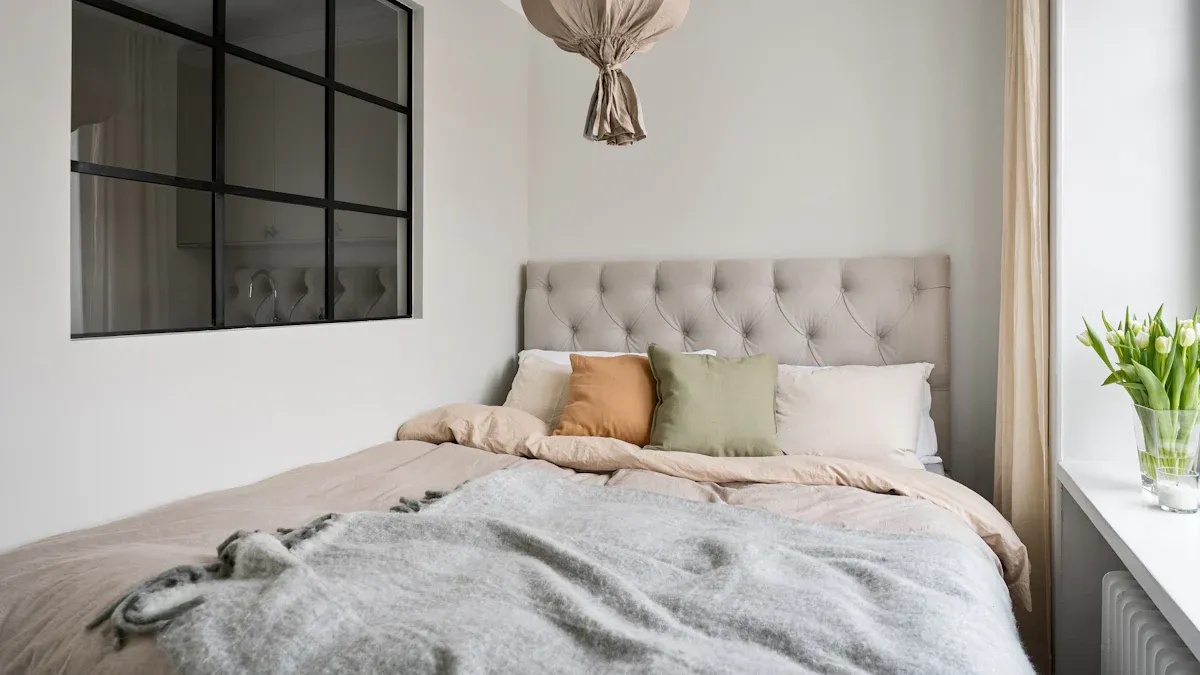
A queen size bed is a popular choice for many homes. You find it versatile and comfortable. In fact, nearly 47% of consumers sleep on a queen mattress, according to a 2016 study. Another study shows 21% of people own a queen, making it a very common option. You might wonder how much room you truly need for this bed. This guide helps you understand queen bed dimensions and how they fit your bedroom. We provide clear advice on bedroom size, layout, and specific dimensions to integrate a queen into any room.
Queen Bed Dimensions and Minimum Room Size
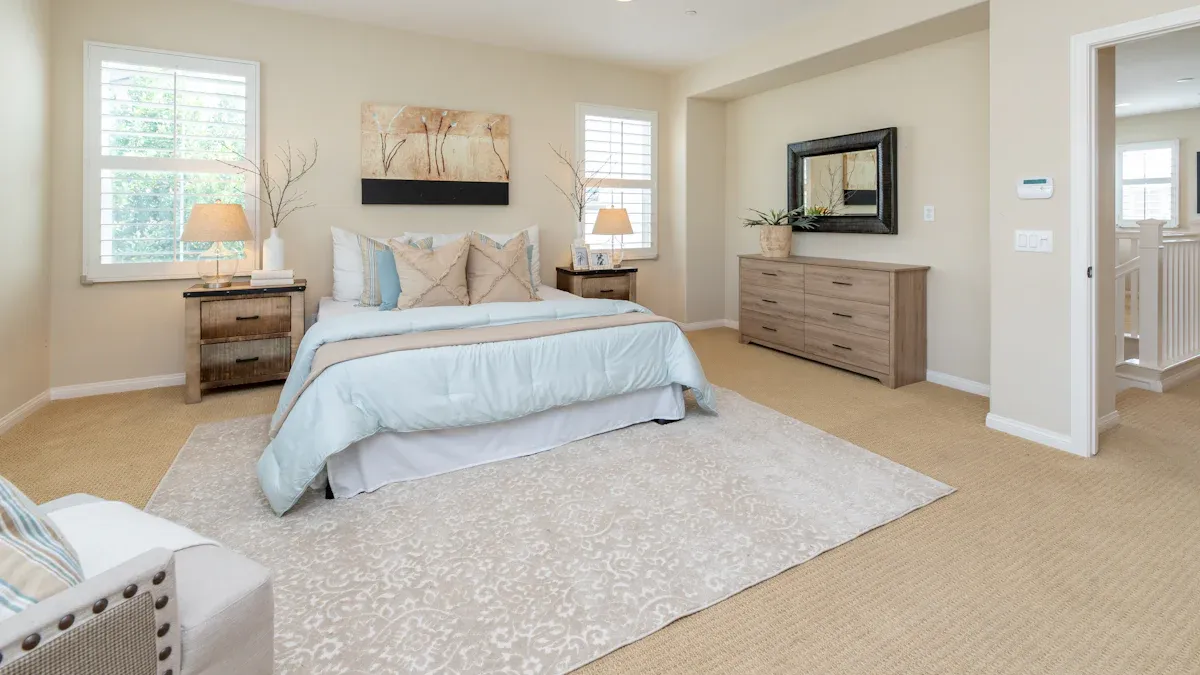
Understanding the exact size of your bed is the first step. This guide helps you determine if a queen will fit your space. You need to know the standard measurements and how much extra room you need around it.
Standard Queen Bed Size
A standard queen mattress offers a comfortable sleeping area for one or two people. You will find this mattress measures 60 inches wide and 80 inches long. In metric terms, these dimensions are 152 centimeters by 203.5 centimeters.
Mattress Size | Dimensions (Inches) | Dimensions (CM) |
|---|---|---|
Queen | 60 × 80 | 152 × 203.5 |
The mattress itself covers about 33 square feet. However, a queen bed frame adds to this. A typical queen bed frame, including the mattress, will likely measure between 62-65 inches wide and 82-85 inches long. This means the total footprint of your queen bed can range from approximately 35.3 to 38.3 square feet. You must consider these full queen bed dimensions when planning your bedroom layout.
Minimum Room Clearance for a Queen
You need more than just the bed’s footprint. You also need space to move around it. This is called clearance. Good clearance ensures you can walk, make the bed, and access other furniture easily.
You should aim for 2 feet 4 inches to 2 feet 6 inches (71-76 cm) of clear space on either side of the mattress.
At the foot of the bed, you need at least 3 feet (91 cm) of clearance. This allows for comfortable walking.
If your room is very tight, you can reduce the side clearance to 2 feet (24 inches). However, this makes movement less comfortable.
For general circulation, your bedroom paths should be at least 29.5 inches (75 cm) wide.
Considering these clearances, the absolute minimum room size for a queen bed with basic movement space is roughly 106 square feet. Many experts suggest a 10-foot by 10-foot room (100 square feet) as a good starting point. This room size recommendations provide enough space for the queen mattress and some basic clearance. For a more functional bedroom, you might need a larger room. This allows for a closet and other essential furniture.
Olympic and California Queen Variations
While the standard queen is most common, you have other options. These variations offer slightly different dimensions to suit specific needs.
An Olympic queen mattress provides extra width. This mattress measures 66 inches wide and 80 inches long. This gives you 6 more inches of width than a standard queen mattress. This extra space can make a big difference for couples who want more room to spread out. You will find this mattress size guide useful if you need more sleeping area.
Another variation is the California queen. This mattress is longer than a standard queen. It offers more length for taller individuals. You should always check the specific dimensions of any non-standard mattress before buying. This ensures it fits your room and your bed frame. Knowing these different mattress dimensions helps you choose the best queen for your home.
Designing for Your Queen Size Bed
You want to design your bedroom around your queen mattress. A 10 x 10 feet room (100 square feet) offers a comfortable space for a queen size bed and other furniture. You can use a simple formula for minimum bedroom size: bed size plus 2’4″-2’6″ clearance on the sides and end. This guide helps you create a functional and beautiful space, no matter your room size.
Small Bedrooms: Maximizing Space
You can make a small bedroom work with a queen. Prioritize bed placement to maintain room flow. Choose a slim, low-profile bed frame or headboard. A 10×10 room size can be comfortable with a queen mattress if you choose a slim bed frame. You need to ensure easy accessibility and minimize clutter.
Place your queen bed in a corner. This maximizes space, especially in attic bedrooms with slanted ceilings.
Consider a lofted bed if you have high ceilings. This uses overhead space.
Opt for a bed without a headboard to save space.
Build storage around the bed. You can use cabinetry up to the ceiling. This creates a niche for the bed and addresses a lack of closet space.
Install wall-mounted nightstands. These save floor space where a traditional nightstand might not fit. Use wall sconces for reading instead of table lamps.
Medium Bedrooms: Balancing Layout
You have more flexibility in a medium-sized bedroom. You can balance your queen with other furnishings. Prioritize functionality in these standard-sized rooms. Ensure pathways remain clear.
Position dressers on easily accessible walls.
Confirm that doors and drawers can open without obstruction.
Aim for a balanced arrangement. You need enough furniture to complete the room without making it feel overcrowded. You can add a small desk or a comfortable chair. This creates a versatile room.
Large Bedrooms: Creating Zones
You can create distinct zones in a large bedroom featuring a queen. Think about the primary activities you do in your room. The bed’s placement dictates flow and balance. You typically place it against a solid wall for security and grounding.
Create clear, unobstructed pathways. Aim for at least 30-36 inches of clearance for major walkways.
Use area rugs to give each zone its own subtle parameter.
Separate different zones with furniture. Bookcases can divide areas naturally and add privacy.
Consider core zones like sleeping, dressing, relaxation, and work/study.
Incorporate plenty of storage solutions for each zone. This keeps your bedroom organized and tidy. You can use tall bookcases or wall-mounted shelving. This utilizes vertical space.
Queen Bed Layout Considerations
You need careful planning to make your queen bed fit perfectly. This involves understanding your space, planning for other items, and ensuring easy movement.
Accurate Bedroom Measurement Tips
You need precise measurements for your bedroom. This ensures your queen mattress and other furniture fit perfectly. First, create a clear, simple sketch of your room. Label the length and width dimensions accurately. This diagram helps you visualize the room’s potential and its overall room size. It also communicates your space’s layout to designers.
To measure the space correctly, clear the room first. Move furniture and decorations to access all walls. Measure the room’s length from one wall to the opposite wall at floor level. Do the same for the width. You must also measure ceiling height. This measurement, from floor to ceiling, helps you choose taller items like bookcases. It ensures they have enough vertical space.
Measure doors and windows. Record their width and height. Note the door swing directions. For windows, measure from the sill to the floor. This tells you the maximum height for furniture placed underneath. Identify fixed features like radiators or outlets. Mark their exact location from the nearest corner. Avoid common mistakes. Do not forget recesses or alcoves. Measure every nook. Stick to one unit system. Always measure from wall to wall at floor level. Record exact measurements. Double-check everything.
Planning for Additional Furniture
After measuring, plan for other furniture. You need to consider how nightstands, dressers, or desks will fit around your queen mattress. A typical nightstand is 19.7-23.6 inches wide and 15.7-19.7 inches deep. Its height is usually 23.6-27.6 inches. Standard desks can range from 23.6-47.2 inches wide. Larger desks are 31.5-63.0 inches wide.
You must ensure these items do not overcrowd the room. Think about the function of each piece. Place dressers on accessible walls. Make sure drawers can open fully. Your queen bed is the focal point. Arrange other items to complement it without blocking movement. Considering the room size helps you decide what additional furniture you can comfortably fit.
Ensuring Optimal Traffic Flow
You need clear pathways in your room. This ensures easy movement around your queen bed. A minimum width of 36 inches is best for all pathways. This allows for comfortable movement. Arrange furniture to create direct routes to frequently used areas. Remove unnecessary items to prevent obstructions.
Position your queen bed to allow at least 36 inches of clearance on one side. Allow 30 inches on the opposite side. Ensure enough space at the foot of the bed. This helps with mobility. Pre-plan traffic patterns before placing furniture. Consider doors and windows. Ensure enough space for door swings. Aim for a comfortable 24 inches of space to maneuver around furniture. Avoid bottlenecks. Do not place too much furniture in the wrong areas. This keeps your room functional and open.
13 Perfect Queen Bed Layouts
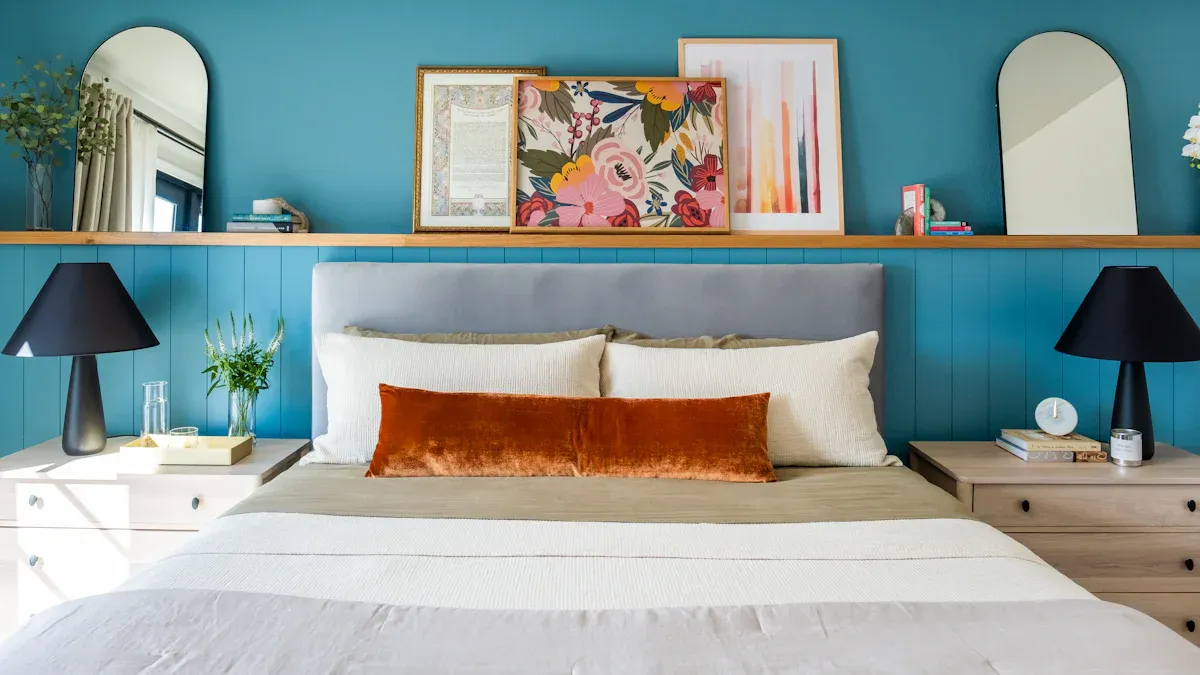
You can create a functional and beautiful space for your queen bed. This section shows you various layouts. You will find solutions for compact, medium, and large rooms. These ideas help you make the most of your space.
Compact Room Solutions for a Queen
You can fit a queen bed into a smaller room. You need to be smart about furniture placement. Prioritize bed placement to keep the room flowing. Choose slim furniture. A low-profile bed frame works well.
Consider these room sizes and bed options:
Room size (m² / sq ft) | Typical bed option | Wardrobe/storage | Desk option | Recommended clearances (min) |
|---|---|---|---|---|
12–13 m² / ≈130–140 sq ft | Full or Queen | Standard wardrobe | Compact desk (50–60 cm depth) | 60–76 cm beside bed; 76–90 cm foot clearance |
14–15 m² / ≈150–160 sq ft | Queen | Standard wardrobe + dresser | Compact desk + chair | 76–90 cm main walkway |
You need good clearance around your queen mattress.
Side access on both sides makes your queen comfortable.
Aim for 60–76 cm (≈24–30 in) beside the bed. This is comfortable.
You can use 45–50 cm (≈18–20 in) in very tight rooms. This works on the wall side.
You need 76–90 cm (≈30–36 in) at the foot of the bed. This allows easy movement and drawer access.
Your main walkway to the door or wardrobe needs 90 cm (≈36 in).
In a standard guest room (12–15 m² / ≈130–160 sq ft), you can place a queen bed comfortably. Add two bedside tables. Include a standard wardrobe. You can also fit a compact desk or luggage stand.
You can use multi-functional furniture. A storage bed offers extra space. An ottoman with storage works well. A wall-mounted fold-down desk saves floor space. Place your headboard against a solid wall. Ensure at least one clear side pathway. Anchor storage on the same wall line as the bed. This keeps a single, generous walkway. When choosing between a larger bed and better clearances, choose better clearances. This improves comfort and keeps your layout tidy. These queen bed dimensions help you plan.
Balanced Designs for a Queen Size Bed
You have more options in a medium-sized bedroom. You can balance your queen with other furniture. Focus on functionality. Keep pathways clear.
In a 12′ x 14′ bedroom, you can center a queen bed between two windows. This layout allows for 24-26 inch nightstands on each side. You can also add a 48-inch bench at the foot. This ensures plenty of walking space.
In a 10′ x 12′ room, place a 60-inch dresser opposite your queen mattress. This keeps a clear path to the closet. It also makes traffic flow efficient.
Aim for 24-30 inches of clear walkway in frequently used paths. This ensures comfortable movement in the room.
Nightstands should fit your bed. An average 20″x20″ nightstand works for most beds. A queen mattress can accommodate larger nightstands. Ideally, maintain at least 36 inches of clear space around the bed. Keep this space in all walkways. This allows for comfortable movement. If you use a bench at the foot of a queen, it should be about 45 inches wide. This is 6-8 inches narrower than the bed itself. This ensures good proportion and flow. These dimensions help you create a balanced bedroom.
Spacious Configurations for a Queen
You can create distinct zones in a large room with a queen. Think about what you do in your room. The bed’s placement guides the flow and balance. You usually place your queen against a solid wall. This gives a sense of security and grounding.
Create clear pathways. Aim for at least 30-36 inches of clearance for major walkways.
Use area rugs. They give each zone its own subtle boundary.
Separate different zones with furniture. Bookcases can divide areas naturally. They also add privacy.
Consider core zones. These include sleeping, dressing, relaxation, and work/study.
Add plenty of storage solutions for each zone. This keeps your room organized. You can use tall bookcases or wall-mounted shelving. This uses vertical space. Your queen mattress will be the centerpiece of a well-designed room.
You now understand how to fit a queen bed into your space. Consider bed dimensions, your room size, and personal needs. Measure your room accurately. Plan your layout thoughtfully. This guide helps you create your ideal bedroom. You will have a comfortable and functional queen space. Remember, the right room size makes all the difference.
FAQ
What is the ideal room size for a queen bed?
You need at least a 10 x 10 foot room. This gives you enough space for your queen mattress. It also allows for basic movement. A larger room provides more comfort. You can add other furniture easily.
What is the difference between a standard queen and an Olympic queen mattress?
A standard queen mattress is 60 inches wide. An Olympic queen mattress is 66 inches wide. Both are 80 inches long. The Olympic queen gives you more width. This mattress size guide helps you choose. This is good if you want extra sleeping space on your mattress.
How much clearance do I need around my queen bed?
You should aim for 24-30 inches on the sides. You need 30-36 inches at the foot of the bed. This ensures comfortable movement. It also allows you to access other furniture. This clearance is important for your mattress setup.
Can I fit a queen bed in a small bedroom?
Yes, you can. You need to plan carefully. Choose a low-profile bed frame. Use wall-mounted nightstands. Consider a storage bed. This maximizes your space. Your mattress will fit, but you must be smart with other items.