Neighbor noise can be a major source of frustration. Defining what makes noise “too loud” often feels subjective. However, local laws typically set the standard, often defining how many decibels too loud is permissible. During the day, these limits usually range from 60-70 dB. Many residential areas set daytime noise limits starting at 55 or 60 dB. The EU’s Environmental Noise Directive also uses 55 dB Lden for average urban noise. Nighttime limits are always lower. This blog clarifies decibel levels. You will learn how to measure them. We also provide actionable steps for resolution.
Key Takeaways
Local laws set noise limits, usually 55-65 dB during the day and lower at night.
A decibel (dB) measures sound loudness; a small dB increase means a much louder sound.
You can use smartphone apps to measure noise, but professional meters are more accurate for official complaints.
First, talk to your noisy neighbor politely and explain the problem.
If talking does not work, document noise incidents and contact property management or authorities.
Defining How Many Decibels Is Too Loud
Understanding noise limits starts with knowing what a decibel is. You need to grasp this unit of measurement to know when sound becomes a problem. Local rules often define how many decibels is too loud. This section helps you understand these limits.
Understanding Decibel Levels
A decibel (dB) measures sound intensity. It is a relative unit. Think of it as one-tenth of a bel. Decibels use a logarithmic scale. This means a small increase in decibels can mean a big jump in how loud you hear something. For example, a 10-decibel increase means the noise exposure doubles. This scale helps us understand how humans perceive changes in loudness. Engineers and acousticians use decibels often.
To give you a better idea, here are some common sounds and their typical decibel levels:
Very Quiet (0 to 20 dB)
Person breathing: 10 dB
Quiet whisper: 10-20 dB
Moderate (40 to 60 dB)
Quiet room: 40 dB
Refrigerator: 50 dB
Normal conversation: 60 dB
Loud (60 to 80 dB)
Hairdryer: 70 dB
Dishwasher: 70 dB
Vacuum cleaner: 80 dB
Alarm clock: 65-80 dB
Very Loud (80 dB and above)
Garbage disposal: 70-95 dB
Lawnmower: 65-95 dB
Leaf blower: up to 110 dB
Sounds above 70 dB can become irritating. They can disturb your peace.
Residential Noise Limits
Local laws set specific limits for noise. These limits tell you how many decibels too loud is legally. These rules often change based on where you live and the time of day. For residential areas, daytime noise limits usually fall between 55 and 65 dB. Some cities, like San Francisco or Seattle, have stricter caps, often at 55 dB. Other cities, such as New York City, allow slightly higher daytime decibel levels.
Nighttime hours typically have lower limits. These usually start around 10:00 p.m. and end at 7:00 a.m. During these hours, limits often drop by 5–10 dB. This brings them down to 45–55 dB.
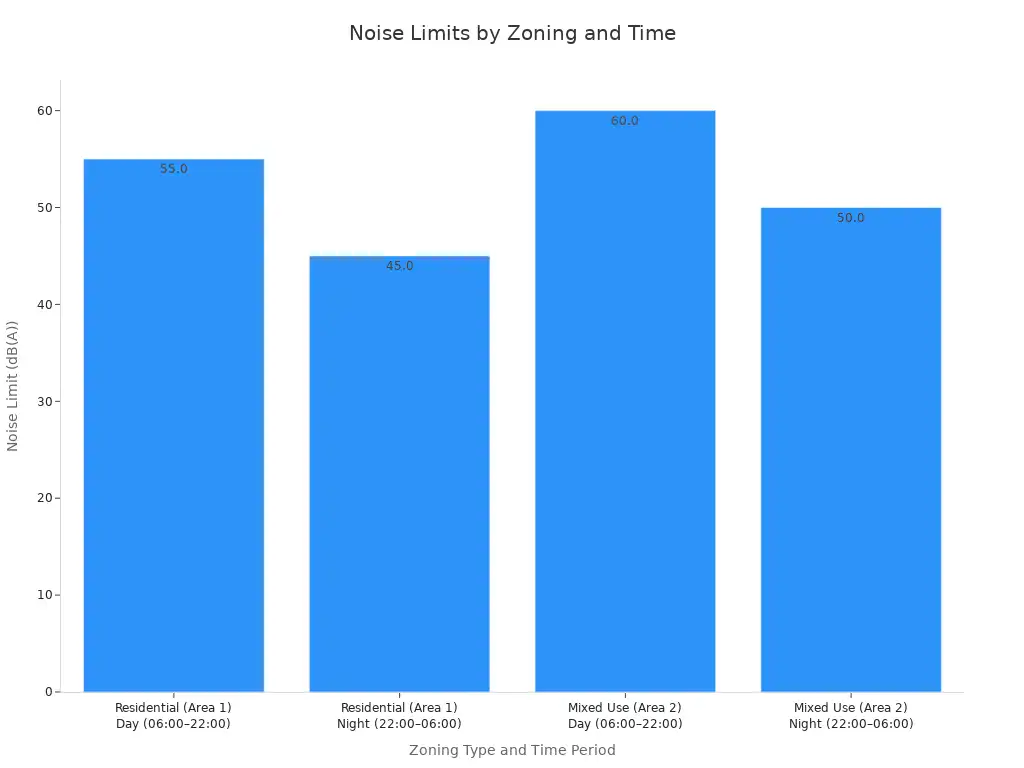
Different types of neighborhoods also have different rules. A mixed-use area, for example, might have higher limits than a purely residential one. You can see how these limits vary in the table below:
Zoning Type | Time Period | Noise Exposure Limit (dB(A)) |
|---|---|---|
Residential (Area 1) | Day (06:00–22:00) | 55.0 |
Residential (Area 1) | Night (22:00–06:00) | 45.0 |
Mixed Use (Area 2) | Day (06:00–22:00) | 60.0 |
Mixed Use (Area 2) | Night (22:00–06:00) | 50.0 |
This chart further illustrates the differences in noise exposure limits:
If you live in an apartment or multi-unit building, specific guidelines often apply. These are usually stricter. For example, the maximum decibel level during the day might be 45 dB. In the evening, this limit can drop to 35 dB.
Time Period | Maximum Noise Level (dB) |
|---|---|
Daytime | 45 |
Evening | 35 |
These lower limits help ensure peace in shared living spaces.
Factors Affecting Noise Thresholds
Noise limits are not just about a single decibel level. Several factors influence whether a sound is considered too loud. The time of day plays a big role. You will find higher noise levels are more acceptable during active hours. Lower levels are expected when people are resting.
Noise exposure generally peaks between 9 a.m. and 9 p.m. The highest levels often occur from noon to 6 p.m. Nighttime hours, especially between 3 and 6 a.m., show much lower noise levels. This reflects quieter environments for sleep.
Here is a look at how median noise levels change throughout the day:
Time Period | Median Noise Level (dB) |
|---|---|
3-6 a.m. | 44.1 – 48 |
9 a.m. – 9 p.m. | 70 – 71 |
Noon – 6 p.m. | 71.5 (peak at 6 p.m.) |
The duration and frequency of noise also matter. A single loud bang might not cause a problem. However, repeated loud noises will draw attention from authorities.
The frequency and how long it goes on matter more than you might think. If you make one loud noise, you probably won’t get cited. But if you make noise over and over, the authorities will start to pay attention.
This means even if a sound is below the official decibel level, its constant presence can make it a nuisance. Many communities have specific quiet hours. During these times, noise rules become even stricter. You should always check your local ordinances for these details.
Measuring Noise And Neighbor Perception
You need to understand how sound travels and how to measure it. This helps you address noise issues effectively. You can then determine if a noise is truly excessive.
Tools For Decibel Measurement
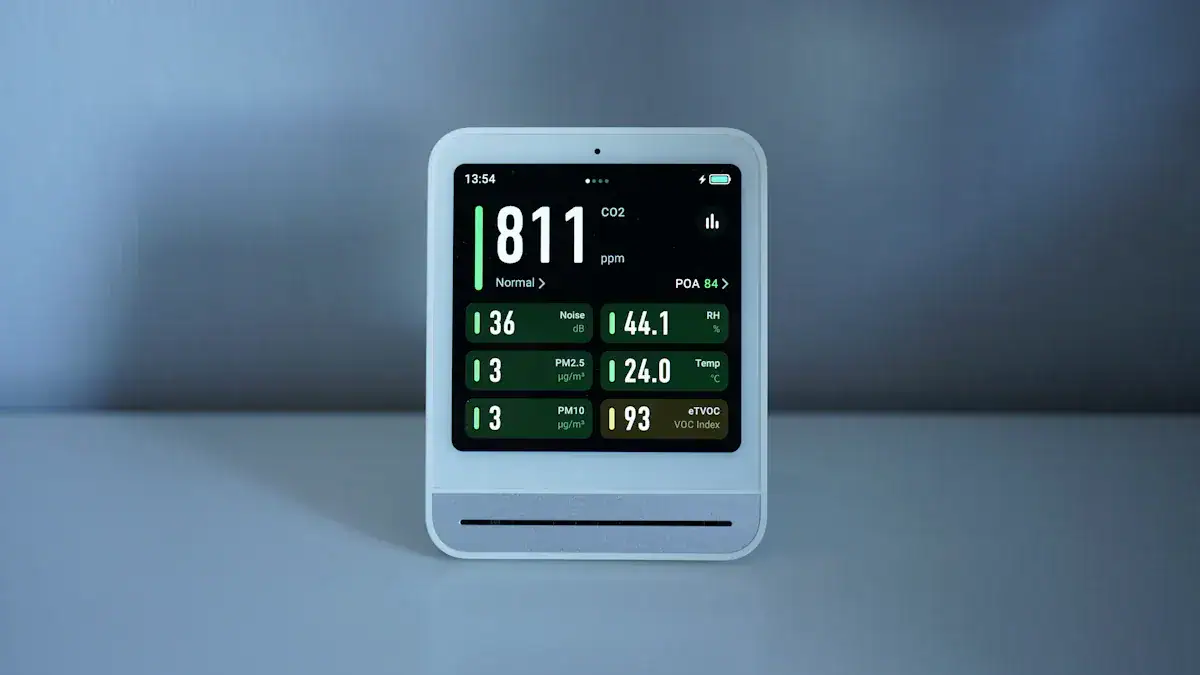
You can measure noise levels with various tools. Smartphone apps offer a convenient starting point. Apps like Decibel X, Decibel Pro (iOS), and NIOSH Sound Level Meter (iOS) turn your phone into a sound level meter. Decibel X, for example, has a 4.6-star rating and converts your device into a professional sound level meter. It detects harmful environmental noises. Other apps like SPL Meter and Sound Meter and Noise Detector (Android) also provide readings. These apps help you get a general idea of the noise level. They are useful for a quick check on how many decibels too loud a sound might be.
However, remember that smartphone apps and cheaper decibel meters (under $500) have limitations. They often lack the precision needed for legal or professional use. A study found Android apps can vary by 10 dB or more at higher sound levels. They also often lack A-weighting, which adjusts measurements for human hearing. This means their readings are estimates. They are not reliable for formal reporting or legal evidence. If you need to know how to measure decibel level of neighbor for official complaints, you might need a professional-grade meter.
How Many Decibels Can Your Neighbors Start To Hear
Your neighbors can often hear noise between 40 to 50 decibels. This depends on how close they are and the building’s construction. A quiet conversation is around 60 dB. A refrigerator hums at 50 dB. So, even moderate sounds can travel. Prolonged exposure to noise levels above 85 dB can harm your health. This can lead to hearing loss, high blood pressure, and sleep disturbances. For example, 85 dB is safe for up to 8 hours. But 95 dB limits safe exposure to just 4 hours. Noise at 105 dB can cause permanent damage in an hour. This shows why understanding how many decibels can your neighbors start to hear is important.
Sound Perception And Distance
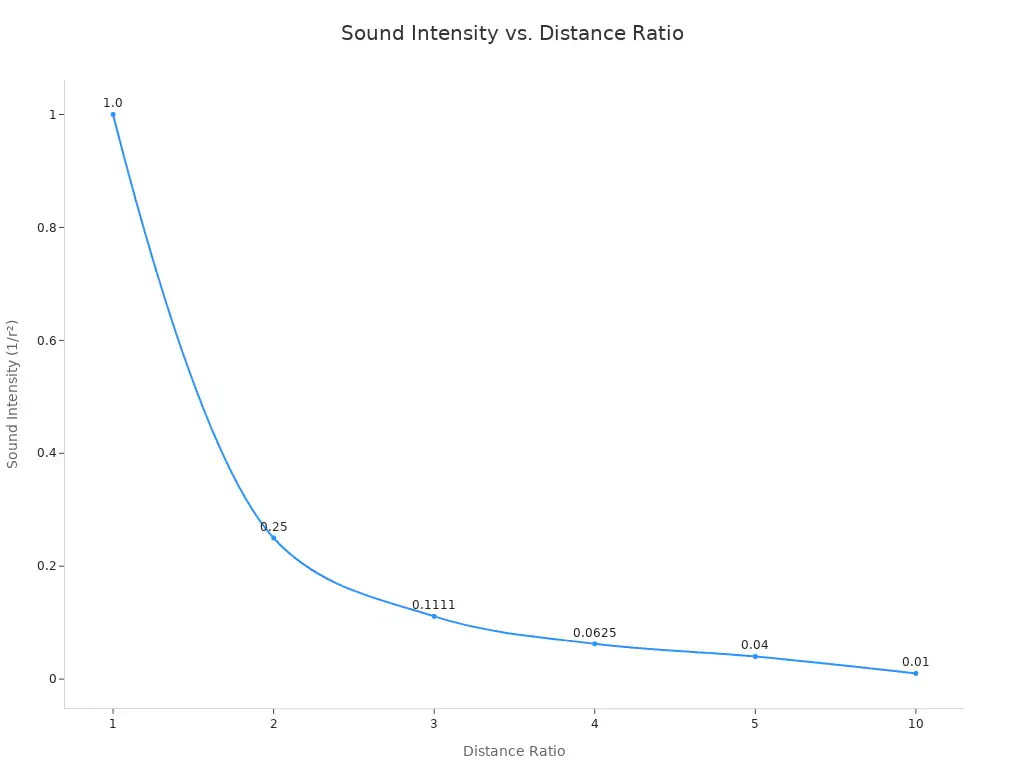
Sound intensity decreases as you move away from its source. This follows the inverse square law. If you double your distance from a sound, its intensity drops to one-fourth. This means the sound level reduces by 6 dB. If you increase the distance by ten times, the sound level drops by 20 dB.
Distance Ratio | Sound Intensity (I) 1/r² |
|---|---|
1 | 1.0000 |
2 | 0.2500 |
3 | 0.1111 |
4 | 0.0625 |
5 | 0.0400 |
10 | 0.0100 |
Building materials also affect sound transmission. Dense materials like poured concrete block sound well. Adding insulation like fiberglass or mineral wool to walls and ceilings significantly increases sound isolation. Sealing gaps and cracks also blocks airborne sound. Environmental factors like wind and humidity also play a role. Wind can refract sound waves, either pushing them towards the ground or away from it. This changes how far and how loud sound travels. Humidity can also affect the speed of sound and how much the atmosphere absorbs it. This all impacts the actual decibel level you perceive.
How To Handle Excessive Noise

Dealing with noisy neighbors can be frustrating. You need a clear plan to address the issue. This section provides a step-by-step guide on how to handle excessive noise. You can resolve problems effectively.
Initial Communication Strategies
Start by talking to your neighbor directly. This is often the quickest way to solve the problem. Approach them when you feel calm. Discuss the issue politely. You should clearly explain how the noise affects you. For example, you can say, “The music after midnight makes it hard for me to sleep before work.” This makes your concern specific.
You can also suggest solutions. Offer alternatives like lowering the volume after a certain time. You could also suggest moving speakers away from shared walls. If you feel uncomfortable talking face-to-face, a friendly written note or text can work.
When you talk to your neighbor, make it a cordial chat. Introduce yourself and share your name. Keep your tone neutral. Stick to the facts. Avoid showing strong emotions. Offer a solution to the problem. This shows you want to cooperate. It also provides a clear path to resolution. You can reference neighborhood guidelines. This helps neutralize the situation. Everyone must follow the rules. Keep your conversation private. Talk alone with your neighbor. This helps solve the problem peacefully. It avoids a public scene.
Avoid some common pitfalls. Do not approach your neighbor with a group of people. This can make the situation hostile. Go alone for the conversation. Avoid communicating only through a written note at first. Notes can be misunderstood easily. Speak to them in person. This makes the conversation feel less harsh. Keep the conversation brief and to the point. Do not bring up every annoyance. Stick to the factual reality of the situation.
Documenting Noise Incidents
If direct communication does not work, you need to document the noise. This creates a record of the problem. You should record specific details for each incident.
Keep a log of:
The dates of the complaints.
The times of the incidents.
Specific details of what happened.
The type of violation (e.g., loud music, barking dog).
Any supporting evidence. This could be data from a monitoring device.
Several digital tools can help you log noise complaints. The Noise App is a mobile application. You can use it to record and log noise. It helps you gather evidence over time. This is useful for ongoing or intermittent disturbances. The app lets you make an audio recording of the noise. You can also enter details about the disturbance. You can email your diary and share audio files with local health departments or landlords. It is free and easy to use.
LoudLog is another digital tool. It simplifies noise complaint management. You can log the time, date, and duration of disturbances. Describe the disturbance, such as a loud party or dog barking. You can also upload audio samples. The app generates organized reports. These reports are suitable for sharing with landlords or city officials. It offers quick logging and email summaries. You can export professional, landlord-ready reports. It also supports optional audio attachments.
Involving Property Management
If the noise continues, you may need to involve property management. They have a process for handling these issues. First, they will investigate the validity of your noise complaint. They determine if the complaint is about real disruptions. Examples include a band practicing late. They will not usually act on everyday sounds like footsteps from above.
Property management will respond promptly. They may visit the property to see the situation firsthand. They consider several factors. These include the number of complaints and their own observations. They also look at the frequency of the noise and official documentation. They check if the noise is part of normal activities.
If your complaint is valid, they will talk to the noisy tenant. They will describe the issue and suggest solutions. They document every step they take. For upstairs noise, they might even consider floor renovations. If your complaint lacks merit, they will reassure you. They will explain their findings. They will reinforce good neighborly conduct. They will clearly communicate their decision. This is especially true if there is not enough evidence.
Property managers have legal obligations. They are responsible for nuisance tenants. This applies if they know about disruptive behavior but do not act. They can be liable if they overlook signs that lead to nuisance behavior. Failure to enforce lease terms can also lead to legal responsibility. They must maintain a safe environment for residents.
Escalating Noise Complaints And Legal Steps
## Escalating Noise Complaints And Legal Steps

Sometimes, direct communication and property management do not resolve persistent noise problems. When this happens, you need to explore more formal avenues. This section details how to escalate your noise complaint and what legal steps you can take.

### When To Contact Authorities

If noise continues despite your efforts, you might need to contact the authorities. Police officers will investigate your noise complaint. They determine if a violation exists. Laws, like California Penal Code § 415, guide their actions. Officers decide if the noise is 'loud and unreasonable.' They distinguish between protected communication and disruptive noise. When they arrive, officers typically knock and announce their presence. They tell residents about the complaint. They seek cooperation to reduce or stop the noise. Officers have the power to immediately stop the noise. They can end a party, issue citations (like Los Angeles Municipal Code § 41.57 (a)(1)), or even make arrests for serious violations. Be aware that police response times for noise complaints can be long. One area reported an average of over two hours. Other options exist. These include trained mediators, community service officers, or code enforcement.

### How To Provide Legal Evidence Of Noise

If you pursue legal action, you must know how to provide legal evidence of noise. This evidence strengthens your case. You might need expert testimony or professional sound measurements. Expert witnesses usually have advanced degrees and professional credentials. They also have substantial industry experience. They must be objective and impartial. Legal precedents like Daubert v. Merrell Dow Pharmaceuticals (1993) set standards for expert testimony. This case requires scientific testimony to be based on reliable methods. However, expert testimony is not always necessary. If the issues are clear to an ordinary person, you might not need an expert. Federal Rule of Evidence 702 outlines expert testimony requirements. The expert's knowledge must help the court understand the evidence. The testimony must come from reliable principles. Knowing how to provide legal evidence of noise is crucial for a strong case.

### Mediation And Legal Options

Mediation offers a way to resolve disputes without going to court. It can save you money. For example, one noise dispute cost £140,134 in legal fees. Mediation could have avoided this. It also offers faster resolution. Mediators help you create unique solutions that courts cannot impose. This can include compromises like adding carpeting to reduce noise. Mediation also helps preserve neighborly relationships. This is important when you live near each other.

However, mediation has drawbacks. Parties might be unwilling to mediate. Sometimes, you need a court ruling. Litigation can deepen resentment. It can also make it hard to restore community. Judges make decisions based on law, not always what works best for you. Legal action can be expensive. Attorney fees, court costs, and consultation fees add up. Despite the costs, legal precedents exist for successful noise nuisance lawsuits. Incessant barking can be a private nuisance. The U.S. Supreme Court case *Airports Auth. v. Citizens for Noise Abatement* shows citizens can challenge noise-generating activities.
You now understand what makes noise decibels too loud. Remember to check local decibel level limits. Documentation is crucial. Follow a step-by-step approach to resolve issues. Addressing a noise complaint needs patience and clear communication. Sometimes, official intervention is necessary. You have options and rights. Take constructive action.
FAQ
What is a decibel?
A decibel (dB) measures sound intensity. It uses a logarithmic scale. A small increase in decibels means a much louder sound. You use it to understand how loud sounds are. 🔊
What is the typical daytime noise limit for residential areas?
Daytime noise limits usually range from 55 to 65 dB. These limits vary by your location. Nighttime limits are always lower. You should check your local city ordinances for exact numbers.
How can I measure noise levels?
You can use smartphone apps like Decibel X for a general idea. For more accurate readings, consider a professional sound level meter. Remember, apps are not always precise enough for legal evidence. 📱
What is the first step to address a noisy neighbor?
First, talk to your neighbor directly and politely. Explain how the noise affects you. Suggest a solution. If this does not work, document the incidents. Then, contact property management if you have one.
When should I contact the police about noise?
You should contact the police if direct communication and property management fail. Police investigate if noise violates local laws. They can issue citations or stop the noise. This is a last resort. 🚨