High utility bills frustrate you, but the real problem is often invisible: your homes lose energy constantly. Most residential energy goes to heating and cooling, yet a significant portion escapes through air leaks and poor insulation. This blog will reveal where your home loses energy. We also provide practical steps to stop this loss. You can achieve significant annual energy savings, reducing drafts can save you between 5% and 30% on your energy bill. This improves your home’s energy efficiency and comfort.
Understanding How Homes Lose Energy
The Basics of Heat Transfer
You need to understand how heat moves to stop your homes lose energy. Heat always moves from warmer areas to cooler areas. This process happens in three main ways: conduction, convection, and radiation.
Conduction happens when heat transfers through solid materials. Energy passes from vibrating atoms to adjacent ones. Your walls, floors, and roofs conduct heat.
Convection involves heat transfer within fluids like air or water. Warmer, lighter air rises. Cooler, denser air sinks. This creates a cycle. You see this when warm air escapes through openings or cold air enters your home.
Radiation transfers heat through electromagnetic waves. This does not need a medium. The sun warms you through radiation. Your home also loses heat this way through windows.
Why Reducing Energy Loss Matters
Reducing energy loss in your home offers many benefits. You save money on utility bills. You also make your home more comfortable.
Consider the financial benefits. Many programs offer incentives. You can get rebates for energy-efficient home improvements. For example, the Home Renovation Savings Program in Ontario offers significant rebates for insulation and window replacements. These upgrades can lead to lower energy costs. They also increase your home’s value. An EnerGuide rating can show a 51% energy savings after retrofits. This includes a 55% reduction in air leakage.
Reducing energy loss also helps the environment. You reduce carbon emissions when you upgrade insulation. Sealing windows and doors conserves energy. This helps combat climate change. Switching to energy-efficient electric HVAC systems can reduce emissions by 38% to 53% over 15 years. It also decreases global warming potential by up to 67%. The U.S. Department of Energy states that energy-efficient windows can cut energy usage by up to 25%. Preventing heat loss improves your home’s overall efficiency. This makes a big difference for your wallet and the planet.
Identifying Where Homes Lose Energy
You can find many places where your homes lose energy. Knowing where to look helps you fix problems. You can start with simple checks yourself.
DIY Energy Audit: Key Areas to Check
You can perform a basic energy audit. This helps you find obvious air leaks. These leaks let conditioned air escape. They also let outside air in.
The Incense Stick Test: This is a simple way to find drafts.
Light an incense stick.
Slowly move it along the frames of your windows and doors.
Watch for the smoke to be drawn in or blown out. This indicates airflow. If the smoke moves sideways or swirls, you have an air leak.
Visual Inspection: Look for cracks or gaps around window frames, doors, and where walls meet the ceiling or floor. Check for gaps around pipes and wires entering your home. You can often see light coming through these gaps.
Feel for Drafts: On a windy day, hold your hand near outlets, switches, and baseboards. You might feel cold air coming in.
When to Call a Professional Energy Auditor
Some energy problems are harder to find. You might need a professional energy auditor. They use special tools to pinpoint hidden issues.
Consider calling an auditor if you notice these signs:
High Energy Bills: Your monthly energy expenses seem unusually high compared to similar homes.
Uneven Temperatures: Some rooms are much hotter or colder than others. This suggests issues like poor insulation or air leaks.
Drafts or Cold Spots: You feel noticeable drafts, especially near windows, doors, or baseboards.
Frequent HVAC Issues: Your heating and cooling system runs constantly or needs frequent repairs.
Professional auditors use advanced tools. They use thermal imaging cameras. These cameras show heat as different colors. This helps them see where heat escapes. They also use blower door tests. A powerful fan is installed in a doorway. This fan depressurizes your house. It makes air leaks more obvious. These tools help them find all the places your home loses energy. They give you a clear picture of your home’s overall energy efficiency.
Walls: Major Energy Loss Points
How Walls Lose Energy
Your walls are a major source where homes lose energy. Heat moves through them in two main ways.
Conduction: Heat passes directly through solid materials. This happens when heat moves through under-insulated wall cavities.
Convection: Heat transfers through air movement. Air gaps, poorly sealed outlets, or framing allow air currents to carry heat. This means warm air escapes in winter. Cold air enters in summer. These
air leaksmake your HVAC system work harder.Poorly insulated wallscannot stop this heat transfer effectively.
Fixing Wall Energy Loss: Insulation & Air Sealing
You can significantly reduce energy loss through your walls. The best ways are adding insulation and sealing air leaks.
Insulation creates a barrier. This barrier slows heat transfer. Building codes recommend specific R-values for wall insulation. Colder climates need higher R-values. For example, homes in Zone 4 and above must have R-30 insulation in the wall cavity. If you cannot achieve R-30 in the cavity, you must use continuous insulation. This continuous insulation needs a minimum thickness of 1 inch.
You can also add insulative wall sheathing. This improves your wall’s overall R-value.
Wall Type & Condition | Climate Zone | Recommended R-value (Insulative Wall Sheathing) |
|---|---|---|
Uninsulated wood-frame wall | 3 | Add R5 |
Uninsulated wood-frame wall | 4–8 | Add R5 to R10 |
Insulated 2×4 wood-frame wall | 4–8 | Add R10 |
Basement or Crawlspace Wall | 3 | Add R5 or R13 batt |
Basement or Crawlspace Wall | 4A and 4B | Add R10 or R13 batt |
Basement or Crawlspace Wall | 4C and 5–8 | Add R15 or R19 batt |
Sealing air leaks is also crucial. You can use caulk or foam to seal gaps around windows, doors, and electrical outlets. This stops unwanted air movement. Proper insulation and air sealing make your home more comfortable. They also lower your utility bills.
Windows and Doors: Common Energy Leaks
How Windows and Doors Lose Energy
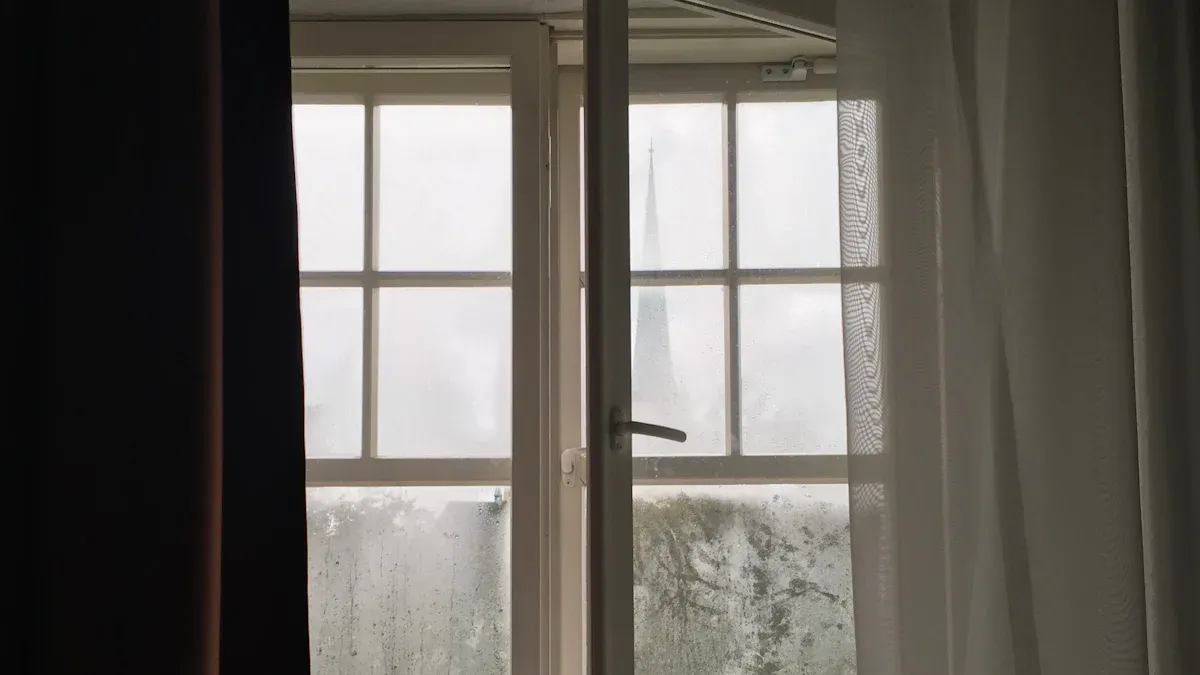
You often find significant energy loss around your windows and doors. These openings are common culprits for unwanted heat transfer. Heat escapes through your windows and doors in several ways. Conduction occurs directly through the glass in your windows and the material of your doors. Convection happens when air moves through gaps. Radiation allows heat to pass through glass.
Many common issues cause these air leaks. You might see cracks and gaps around your door and window frames. Rattling windows and doors indicate movement and potential leaks. Sometimes, you can see daylight around a door or window frame. Improperly applied or damaged caulking and weatherstripping also create air leaks. Storm windows that do not fit or are broken allow energy to escape. Cracked seals on your windows and warped frames on your doors also contribute to energy loss. You might notice visible gaps or cracks. Light peeking through the edges of your windows and doors is a clear sign. Feeling a draft on windy days or noticing curtains moving due to drafts confirms these air leaks. These issues make your heating and cooling systems work harder, wasting energy. Single glazed windows are particularly prone to heat loss.
Sealing Leaks: Weatherstripping, Caulking & Upgrades
You can stop these energy losses. Sealing leaks around your windows and doors is a cost-effective solution. You should use weatherstripping and caulking to seal gaps. Apply caulk to stationary joints around your window and door frames. Choose a high-quality caulk that matches your home’s exterior. For moving parts, like the sashes of your windows or the edges of your doors, use weatherstripping.
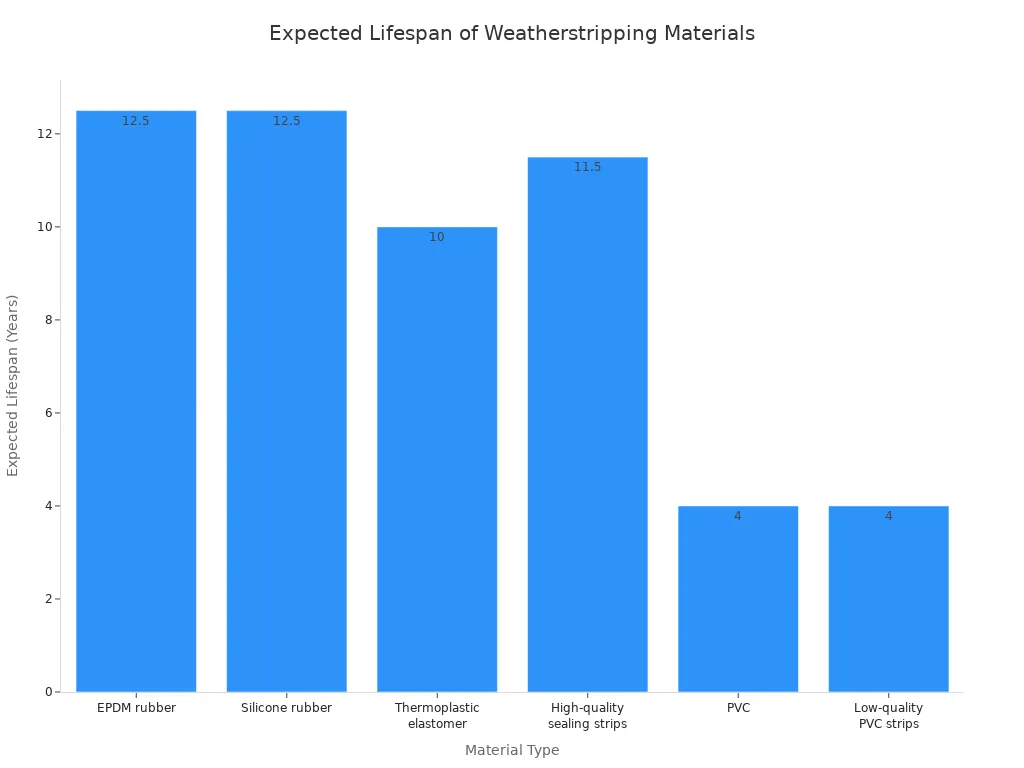
Different types of weatherstripping offer varying lifespans.
Material Type | Expected Lifespan |
|---|---|
EPDM (Ethylene Propylene Diene Monomer) rubber | 10-15 years or more |
Silicone rubber | Long lifespan (similar to EPDM) |
PVC (Polyvinyl Chloride) | 3-5 years |
Thermoplastic elastomer (TPE/TPV) | 8-12 years |
High-quality sealing strips (e.g., EPDM) | 8-15 years (average) |
Low-quality PVC strips | 3-5 years (average) |
Spring bronze and interlocking metal weatherstripping can last a century or more. Felt weatherstripping, however, typically lasts only a year or two. You should regularly inspect your weatherstripping and caulk. Replace them when they show wear. For older homes with single glazed windows, consider upgrading to double or triple-paned windows. These new windows significantly reduce energy loss. You will find your home more comfortable and your energy bills lower.
Attic: Significant Heat Loss Area
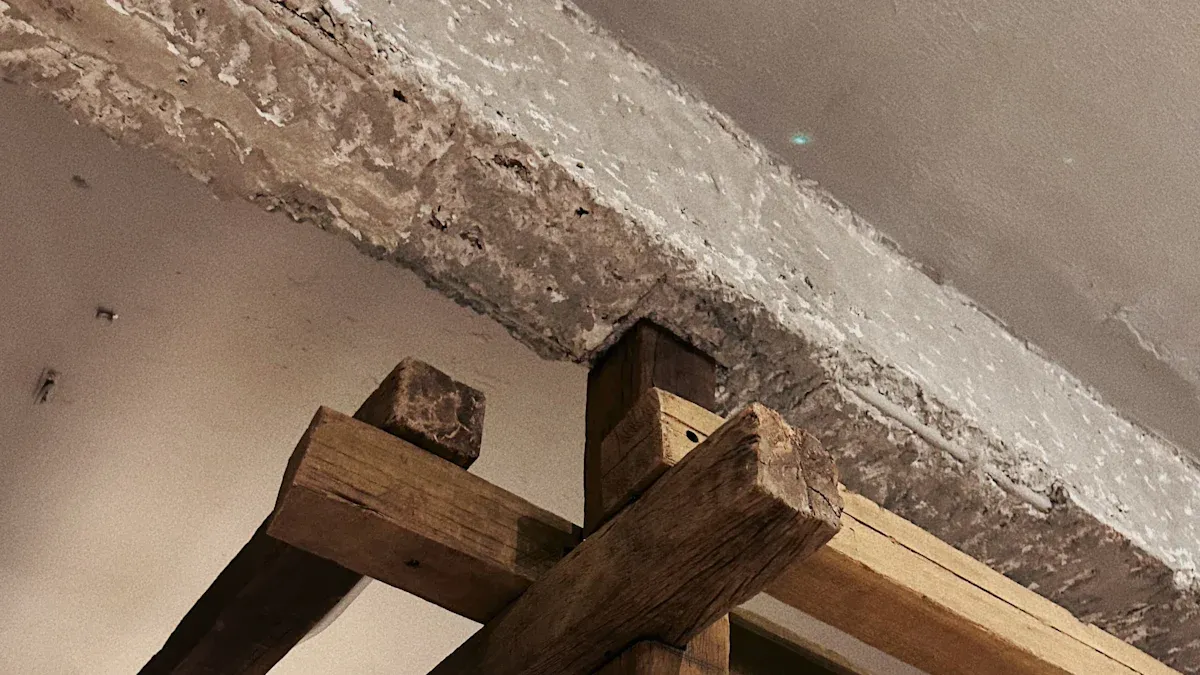
How Attics Lose Energy
Your attic is a major area where your home loses energy. Warm air naturally rises. It escapes through your attic if you do not have proper sealing and insulation. This process is often called the “stack effect.” Warm air moves up and out, pulling colder air in through lower parts of your home. More than 25% of a home’s heat loss occurs through the attic. This makes it a significant point of energy inefficiency. A poorly insulated attic can lead to 25% heat loss during colder months. This directly impacts your heating costs. Air leaks in your attic, along with inadequate insulation, worsen this problem.
Improving Attic Efficiency: Insulation & Ventilation
You can greatly improve your attic’s energy efficiency. Proper insulation and good ventilation are key. Insulation creates a barrier. This barrier slows heat transfer between your living space and the attic. The recommended amount of insulation varies based on where you live. Colder regions need higher R-values. The U.S. Department of Energy (DOE) and the International Energy Conservation Code (IECC) provide guidelines for insulation levels.
Here are the recommended attic R-values by climate zone:
Climate Zone | Description | Recommended Attic R-value |
|---|---|---|
1-3 | Warm Climates (e.g., Florida, Texas) | R-30 to R-38 |
4-5 | Mixed Climates (e.g., Mid-Atlantic, Midwest) | R-38 to R-49 |
6-8 | Cold Climates (e.g., Minnesota, Michigan) | R-49 to R-60 |
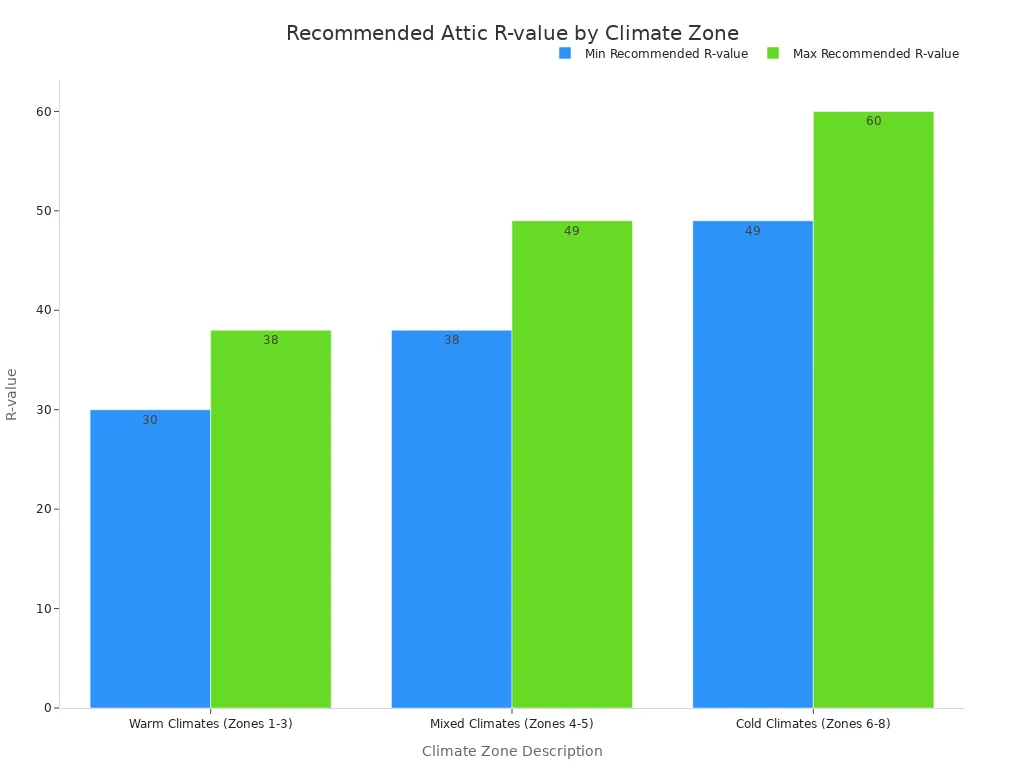
For Climate Zone 4, for example, the U.S. Department of Energy recommends an attic R-value of R-60. You must also ensure proper airflow. Good ventilation prevents moisture issues. It also helps your insulation perform better. Seal any air leaks before adding insulation. This combination of sealing and insulation will significantly reduce heat loss. It will also boost your home’s overall energy efficiency.
Basements & Crawl Spaces: Hidden Energy Leaks
How Basements Lose Energy
Your basement and crawl space can be major sources of hidden energy loss. Heat moves through uninsulated basement walls into the ground. This heat follows nearly circular paths. These paths center where the wall meets the earth. The exposed top part of a basement wall can also act like a thermal bridge. It conducts heat upwards. This heat then dissipates into the outside air. This vertical heat flow can be significant. Heat loss through the basement floor is usually much smaller. This happens because the heat travels a much longer path to the ground surface compared to walls. Air leaks around the rim joist, sill plate, and foundation cracks also allow conditioned air to escape. This wastes energy.
Sealing & Insulating Foundations
You can significantly reduce energy loss from your basement or crawl space. Start by sealing all air leaks. Use caulk or foam to seal cracks in the foundation. Also, seal gaps around pipes and wires entering the home. After sealing, focus on insulation. Insulation creates a barrier against heat transfer.
Several insulation products exist for basement walls:
Traditional Insulation Products: Sprayed foam, foam board, and fiberglass are common. You can install these on the exterior of basement walls. However, these materials may absorb or leak moisture. This reduces their insulating effectiveness.
Insulated Concrete Forms (ICFs): ICFs offer a superior solution for basement wall insulation. They provide thermal mass and resist moisture. This creates a comfortable, healthy, and durable home. Fox Blocks ICFs, for example, have an R-value of 23. This surpasses minimum R-value requirements for continuous insulation across all climate zones.
The International Energy Conservation Code (IECC) sets R-values for basement insulation. These values depend on your climate zone. For climate zones 5-8 and Marine 4, the 2021 IECC allows an option of R-13 interior insulation combined with R-4 exterior insulation. Proper sealing and insulation make your home more efficient.
Outlets & Switches: Small Energy Leaks
How Outlets Lose Energy
You might not think about your electrical outlets and light switches as sources of drafts. However, these small openings create significant air leaks in your home’s thermal envelope. The thermal envelope is the protective layer separating indoor and outdoor temperatures. While you easily spot leaks around your windows and doors, thermal imaging reveals substantial air leaks around switches and outlets. These leaks often appear normal to the naked eye. The combined effect of all light switches and electrical outlets throughout your house can amount to a significant breach. This leads to higher energy bills and reduced comfort.
Electrical outlets and switches create direct pathways through finished walls. These pathways lead into wall cavities, plenums, or unconditioned spaces. These penetrations allow air to move freely. This happens especially when pressure differences exist between indoors and outdoors. Mechanical systems, the stack effect, or wind cause these pressure differences. Heated air rising in winter or cooled air sinking in summer makes these imbalances worse. This forces conditioned air into wall cavities. You effectively lose this air from your conditioned space. Conversely, outside air can enter, causing drafts and temperature inconsistencies. Energy efficiency studies indicate that gaps around electrical outlets and switches can be responsible for up to 10% of a home’s total air infiltration. This infiltration allows conditioned air to escape and unconditioned air to enter. It reduces the effectiveness of insulation and HVAC systems. Standard cover plates often fail to create an airtight seal. These gaps can worsen over time due to settling or improper installation. Just as you seal your windows to prevent drafts, you must address these smaller penetrations. Ignoring them is like leaving a small crack in your windows open all winter.
Simple Fixes: Gaskets & Sealants
You can easily fix these small air leaks around outlets and switches. Specialized cover plates with foam gaskets or other sealing technologies create a tighter fit. They block drafts and help maintain desired indoor temperatures. Foam gaskets, also known as outlet seals or socket sealers, are a simple solution. They are made from closed-cell foam. These gaskets compress tightly behind electrical outlet and switch cover plates. They create a continuous seal around the electrical box without interfering with wiring. They resist moisture absorption and breakdown over time. You can find them in various configurations like duplex, toggle, rocker, or oversized to match your device types.
You can also use expanding foam for larger gaps. Products like ‘Gaps & Cracks’ insulating foam fill gaps up to one inch wide. They expand to fit irregular spaces. This foam blocks air, moisture, and pests. It is durable and long-lasting. You can safely use it around wiring, plumbing, and HVAC systems when applied correctly. It is non-conductive and rated for electrical use. For sealing around wires, especially with receptacles where high usage appliances can cause wires to run warm, fire-block spray foam is recommended. This prevents fire hazards. These simple fixes complement other efforts, like sealing around your windows, to improve your home’s overall energy efficiency.
Penetrations: Gaps in Home Envelope
How Penetrations Lose Energy
You might overlook small openings in your home’s structure. These are called penetrations. They are common types of unsealed openings, gaps, and holes throughout your home’s building envelope. You find them most frequently around outside access points like window seals and door jambs. Poor air sealing in these areas can contribute to up to 30% of heat loss in a building. Less obvious areas like electrical outlets, ceiling light fixtures, and pipe entries also represent hidden cracks and crevices. These allow conditioned air and heat to escape.
You find these gaps around recessed ceiling lights, HVAC registers, and other openings to occupied space. Walls have leaks at the rim joist between the foundation and first floor. You also find them at the roof transition. Basements, unvented crawl spaces, and slab foundations have penetrations through concrete foundation walls and slabs. All holes created by wiring, plumbing, or other obstructions in the air barrier assembly allow air leaks. These small openings cause significant energy loss.
Sealing Around Pipes & Wires
You can effectively seal these penetrations. This stops unwanted air movement. You can use tape, spray foam (including fire-rated spray foam), and caulk (including fire-retardant caulk and silicone caulk) to seal these gaps. Silicone sealant is highly recommended for long-term protection around outdoor pipes and hose connections. It offers flexibility and waterproof properties. Unlike acrylic caulk, silicone does not degrade quickly.
For example, ‘GE Pro Seal Max Window & Door’ is a professional-grade, silicone-based formula. It creates strong, weatherproof barriers against rain, UV rays, and temperature changes. It is also water-ready in 30 minutes. You should seal all holes created by wiring, plumbing, or other obstructions in the air barrier assembly. This includes electrical and phone boxes on exterior walls. The air barrier needs to be installed behind these boxes. You can also use air-sealed boxes. Sealing these small gaps makes a big difference in your home’s overall efficiency.
Ductwork: HVAC Energy Loss
How Leaky Ducts Lose Energy
Your home’s ductwork system moves conditioned air from your heating and cooling unit throughout your house. This system is crucial for comfort. However, leaky ducts can waste a lot of energy. When ducts have holes, leaks, or poor connections, conditioned air escapes. This means your heated or cooled air never reaches its intended rooms. Energy Star states that most homes lose anywhere from 20 to 30 percent of conditioned air to leaky air ducts. This happens due to holes, leaks, and poorly connected ducts. This loss forces your HVAC system to work harder. It tries to maintain your desired temperature. This increases your utility bills and reduces your home’s overall energy efficiency. These air leaks are a significant problem.
Sealing & Insulating Ducts for Efficiency
You can significantly improve your home’s energy efficiency by sealing and insulating your ductwork. This is one of the most effective ways to boost home energy efficiency. First, you must locate any leaks. Then, clean the ductwork surface. This ensures proper adhesion for sealants.
You have several effective options for sealing ducts:
Mastic sealant: This is a thick paste. You apply it to duct seams and joints. It dries to form a flexible, airtight seal. Mastic works well for small to medium leaks. It lasts for many years.
Aerosol-based duct sealants: These advanced solutions inject sealant particles into the ductwork. They find and fill leaks from within. They are useful for hard-to-reach areas.
Foil or Metallic Tape: This tape is strong and heat-resistant. It is easy to apply, especially in tight spots. You apply it firmly to seams and joints on clean, dry surfaces. Ensure the tape is UL-approved for HVAC systems.
After sealing, reinforce ducts in unconditioned areas with insulation. This further reduces energy loss. Finally, test your duct system again to confirm all leaks are sealed.
Garage Doors: Overlooked Energy Loss
How Garage Doors Lose Energy
You might not consider your garage door a major source of heat loss. However, it often is. Heat naturally moves through doors made from thin steel or aluminum. This happens through conduction. Air also moves through gaps around the door. This is called air infiltration. It allows conditioned air to escape and outside air to enter. Convection also plays a role. Air currents can form within the door’s structure or around its edges, carrying heat away. Radiation also transfers heat through the door material. All these mechanisms mean your garage can significantly impact your home’s overall energy consumption.
Enhancing Garage Door Efficiency: Seals & Insulation
You can greatly improve your garage door’s efficiency. Start by adding insulation. Insulation acts as a thermal barrier. It reduces heat transfer. For northern regions, a minimum R-value of 10–13 is suggested. In more extreme cold climates, R-values of 15 or higher offer maximum protection. If your garage is attached to your home, an R-value of at least R-10 is recommended. For a garage converted into a workshop or home gym, an R-value of at least R-16 is best.
Next, seal all gaps. You should install weather seals around the top, sides, and bottom of your garage door. This provides maximum protection.
Bottom Seals: You can use U-shaped rubber gaskets (T-style or astragal seals). These slide into tracks and seal gaps, even on uneven floors. A garage door threshold seal attaches to the floor. It blocks surface water and fills large gaps.
Side and Top Seals: Garage doorstop weatherstripping, made of rubber or vinyl, installs on the wood doorstop molding. It prevents wind and rain. Brush seals are another option for sealing the sides and top. These seals are crucial for improving your garage’s energy efficiency.
You now understand how your homes lose energy. Addressing this requires a whole-house approach. Combine air sealing, proper insulation, and potential HVAC upgrades. You will see significant cost savings, often 10-20% annually. You also gain enhanced home comfort. This reduces your environmental footprint. Preventing heat loss is key to this. Start with accessible DIY fixes. Consider professional help for larger projects. Taking control of your home’s energy efficiency creates a more comfortable and sustainable living space. This leads to a truly energy-efficient home and improved overall efficiency.