

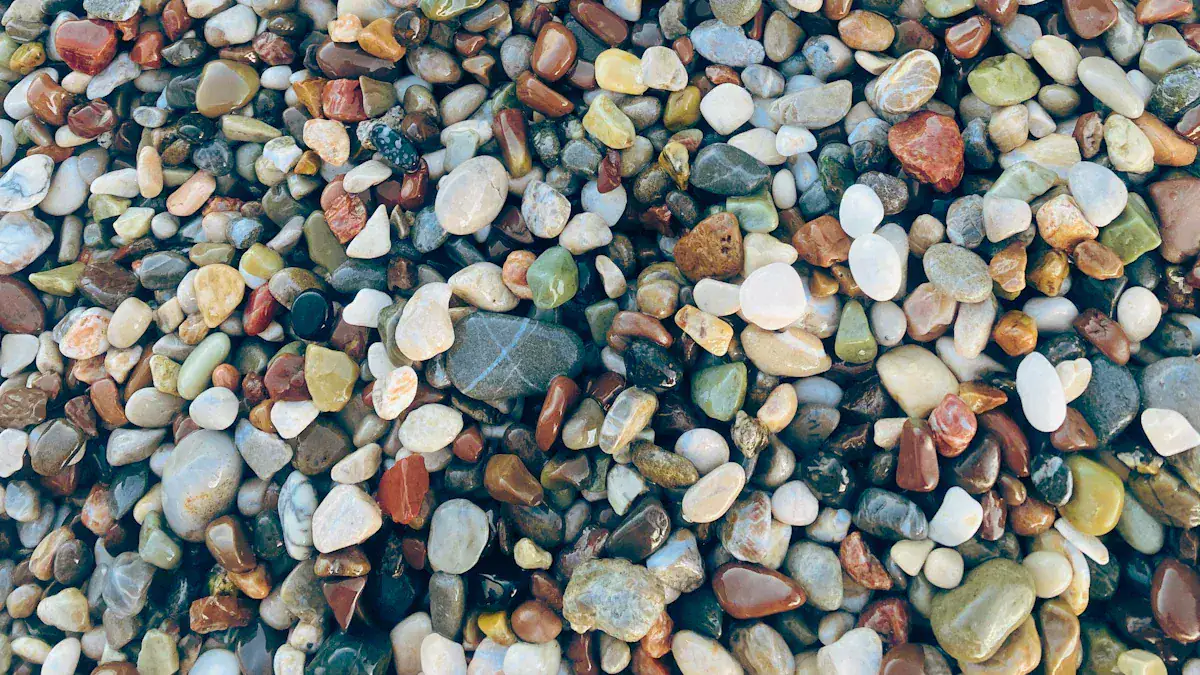
Gravel for driveway remains a popular choice for homeowners, offering numerous practical benefits. You get cost-effectiveness, aesthetic appeal, and excellent drainage. A gravel driveway often costs less than other options. For example, a gravel driveway costs about $1-$3 per square foot.
Asphalt costs $3-$7, and concrete costs $5-$10. So, what are the best types of gravel for your driveway? Why is the base layer so crucial? Choosing the right materials for both the surface and the base is key to ensuring a durable, low-maintenance, and attractive gravel for driveway. This guide will help you understand these essential components and best options.
Key Takeaways
A strong base layer is very important for a long-lasting gravel driveway. It helps the driveway stay stable and drain water well.
Crushed stone, like #411 or crushed limestone, is a good choice for the top layer. Its angular pieces lock together to make a stable surface.
Pea gravel looks nice, but its round stones move easily. You need borders or special pavers to keep it in place.
Decomposed granite makes a firm surface and looks natural. It also lets water drain through easily.
Always consider your local weather, how much traffic your driveway will get, and your budget when choosing gravel.
The Essential Driveway Base
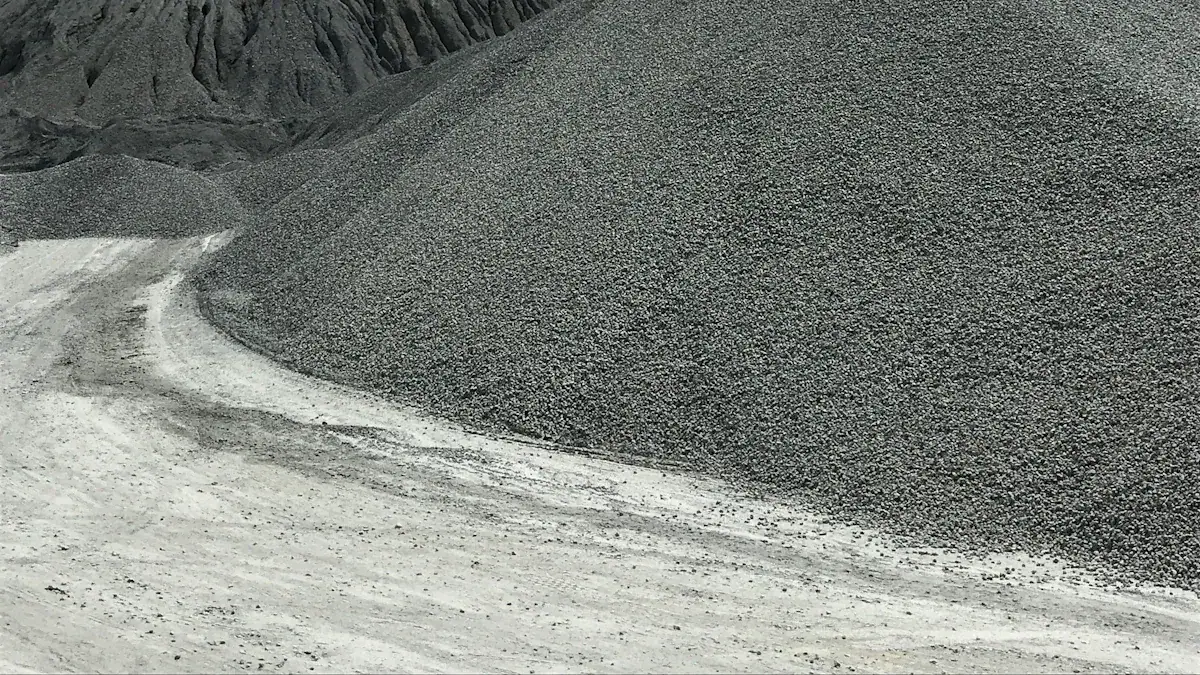
Base Layer Importance
You might think the surface gravel is the most important part of your driveway, but the base layer beneath it is truly fundamental. A strong base provides stability and durability for your entire driveway. It acts as a solid, stable platform for the upper layers.
This crucial layer distributes vehicle weight evenly, preventing your driveway from sinking or crumbling. A well-built base also ensures proper drainage, stopping water from pooling and causing erosion. This reduces the risk of cracks, potholes, and other damage, which are common issues for driveways. Ultimately, a good base is crucial for the overall performance and lifespan of your driveway.
An inadequate base layer significantly compromises your driveway’s longevity and increases its maintenance needs. When contractors skimp on excavation depth or use insufficient base materials, your driveway might look good at first.
However, it lacks structural integrity. Heavy vehicles create pressure points. These points cause the thin base to punch through into the soft ground below. This results in permanent depressions. You will see recurring potholes and ruts. These issues frequently reappear even after repairs. This shows the underlying base cannot support the load. It distributes weight unevenly, leading to compression or erosion.
Poor drainage and standing water are also clear signs of a failed base. An improperly installed base prevents efficient water shedding. Water pools, weakening the base. This causes erosion, frost heave, and further damage. You might also notice uneven settling or sinking. This happens when the base is too shallow, poorly compacted, or built on unstable soil. It creates low spots, sloped sections, and soft areas. These issues create hazards and need extensive repairs. You might even see gravel mixing with soil. This indicates a lack of proper separation between the base and subsoil. This often happens when builders skip steps like using geotextile fabric or incorrect base materials. This leads to a muddy, unstable driveway that worsens over time.
Base Layer Materials
You have several excellent options for your driveway base layer. Each material offers unique properties for compaction and drainage.
Crusher Run (Road Base): This material is a mix of crushed stone and fine particles, like stone dust. This composition helps it compact tightly. The fines fill the voids between larger particles, creating a dense and stable foundation for your driveway. This characteristic helps prevent issues like potholes, cracking, or shifting under vehicle traffic and environmental elements.
Crusher Run compacts tightly, reducing its volume by about 15-25% after compaction. However, because it compacts so tightly, Crusher Run does not drain well on its own. If you need better drainage, you might consider other options or combine it with different materials. Its drainage capability also depends on its composition. If it has large stone chunks, water flow can be impeded. If it has fine materials like stone dust, it can create a loose base that allows water to permeate easily. But if your underlying soil is already compacted or has high clay content, Crusher Run might not allow proper water drainage.
Graded Road Base: Similar to crusher run, graded road base consists of various sizes of crushed stone, from larger pieces down to fine particles. It is specifically engineered to compact well and provide a stable foundation. You often find it used in municipal road construction because of its reliability.
Recycled Asphalt (RAP): Using recycled asphalt for your driveway base offers several advantages. It significantly cuts costs compared to traditional asphalt. This makes it a more budget-friendly option. You save money from cheaper recycled materials and reduced long-term maintenance needs.
Recycled asphalt also reduces environmental harm. It reuses materials, minimizing landfill waste. It decreases demand for new raw materials and lowers energy consumption and carbon emissions during production. This supports conservation and reduces your ecological footprint. RAP offers excellent bonding qualities, comparable to original asphalt, and performs well in rain and snow. However, you might notice slight color variations due to sun and element exposure. Its quality can also fluctuate depending on recycling methods and sources.
Base Layer Construction
Building a long-lasting gravel driveway requires careful construction of the base layer. You need to plan for sufficient base material. For driveways, many site conditions need 10-12 inches or more of base material. In regions with harsh climates or extreme weather, you should use thicker gravel layers.
This protects your driveway from frost damage, water infiltration, and temperature fluctuations. Weather conditions like freeze-thaw cycles, heavy rainfall, and temperature extremes impact your driveway’s performance. Thicker gravel layers help it withstand these environmental stresses. For example, in wet climates with clay-heavy soils, you need at least 10 inches of gravel for commercial driveways. This mitigates risks from heavy rains, prevents soil shifting, and ensures proper drainage.
You should also select suitable base material. The material should have various particle sizes but minimal fine particles (less than 3% passing the 200 sieve). This prevents compaction issues and base failure. You can ask your supplier for a sieve analysis.
Consider using a geotextile fabric. You can install this fabric between the subgrade soil and the base layer for added protection. It prevents soil and gravel from mixing, especially in clay-rich areas, and improves load distribution.
Layering and compaction are critical steps. A “lift” is the thickness of a layer you install at one time. The appropriate lift thickness depends on your compactor’s force. A small plate compactor might handle 2-inch lifts, while a large reversible compactor could manage 6 inches or more. You must ensure optimal moisture content. Sufficient moisture lubricates particles, allowing them to slide into place for maximum compaction when you use a vibratory plate. Industry standards recommend achieving 98% Proctor Density. You can hire an engineer for testing to verify optimal compaction.
Be careful not to over-compact. Once you achieve maximum density with optimal moisture content and appropriate equipment on properly sized lifts, further compaction is detrimental. Over-compaction, especially with a powerful machine, can shatter the previously compacted material. This effectively un-compacts it. The only remedy is to rip up the material, re-wet it, scarify it, allow it to dry to optimal moisture, and then recompact it. This process is significantly more expensive.
Best Gravel for Driveway Surfaces
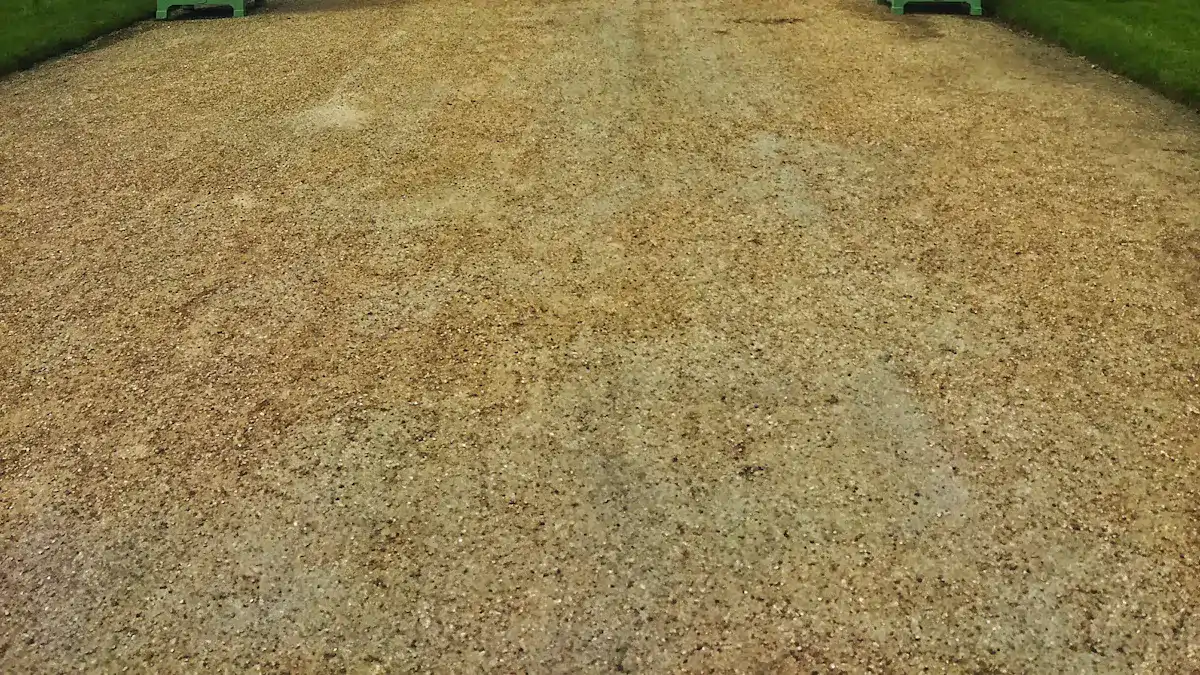
You need to choose the right top layer for your gravel driveway. This layer affects both how your driveway looks and how well it performs. Different types of gravel offer unique characteristics. They have their own pros and cons. You will find many options for your gravel for driveway surface.
Crushed Stone Options
Crushed stone is a popular choice for many types of gravel driveways. Its angular pieces lock together. This creates a very stable surface. This interlocking property helps prevent shifting. It also makes the driveway more durable.
Consider Crushed Stone #411. This material is a mix of fine stone dust and larger stones, up to ¾ inches. It packs down effectively. This creates a strong, stable surface. It can support heavy loads. It also helps prevent erosion. Crushed Stone #411 offers superior drainage. This makes it a smart choice for areas with heavy rainfall or freeze-thaw cycles. You can use it as an infill or surface material at a depth of 3 to 6 inches.
Crushed Limestone is another excellent option. Its angular fragments interlock. This provides shear strength and stability to your driveway. It resists washouts. This interlocking property allows you to rake it back into place if a section shifts. Different grades exist. For example, #57 and #4 are known for their interlocking capabilities. They withstand harsh weather conditions.
Limestone manages water well. It prevents pooling and encourages runoff. This adds to its durability. This is especially true in areas prone to flooding or erosion. For driveways, #57 limestone is often recommended. It has excellent interlocking properties. It limits dust in flat areas. It stays put on hilly terrains.
This contributes to its durability. This type of limestone is also very porous. It drains well. It withstands vehicle weight and harsh weather without moving. Dense grade limestone, also called 411 limestone or ¾ crusher run, is another option. It has smaller stones mixed with stone dust. It forms a tight, sturdy surface when compacted. This makes it a long-lasting choice for driveways. However, it may not drain as well as pure limestone in wet climates. It can also be dusty.
Quarry Process and Crusher Run
Quarry process and crusher run are versatile materials. You can use them for both the base and the surface of your driveway. They have excellent binding qualities.
Crusher run, when used as a surface material, offers great compaction and stability. The varied particle sizes allow fine particles to fill voids. This creates a solid, almost asphalt-like hardness when compacted. Its angular edges interlock.
This resists rutting and shifting. You will see fewer potholes. This interlocking nature means it scatters less. It stays in place better than other types of gravel. It also provides better traction. The rough surface gives good grip for tires. This is helpful in wet or icy conditions. It is a good choice for sloped driveways. Crusher run supports heavy loads. The interlocked stones spread weight over a wider area. This prevents ruts. It settles into a dense layer. This helps a properly crowned driveway shed water. It dries faster. This prevents mud.
However, crusher run as a surface has some drawbacks. The fine particles can create dust in dry conditions. This can coat nearby foliage and furniture. You can mitigate this with watering or suppressants. The angular edges are uncomfortable for walking barefoot. Some people find its uniform gray color less visually appealing.
Material Type | Binding Qualities |
|---|---|
Crushed Stone | Excellent interlocking capabilities due to angular shapes; compacts well to form a stable surface. |
Pea Gravel | Smooth, rounded stones that do not interlock well; prone to shifting and scattering, requiring borders for containment. |
Decomposed Granite | Fine, angular particles that bind together tightly when compacted, creating a firm, stable surface similar to crushed stone but with a finer texture. |
Washed Gravel | Similar to pea gravel in its rounded nature, offering poor binding unless mixed with other materials or contained. |
Recycled Concrete/Asphalt | Angular and varied in size, these materials can compact well and offer good binding properties, especially when fines are present. |
Limestone | Crushes into angular pieces that interlock effectively, providing good compaction and stability. It can also ‘bind’ over time due to its calcium carbonate content, creating a semi-solid surface. |
River Rock | Generally rounded and larger than pea gravel, offering poor binding and stability on its own; best used as a decorative top layer or in conjunction with a binding base. |
Gravel with Binders (e.g., Resin, Stabilizer) | When mixed with specialized binders, even rounded gravel can achieve excellent stability and reduced migration, forming a semi-permeable or permeable bound surface. |
Base Gravel (e.g., Type 2, Crushed Run) | Designed for compaction and stability, these materials typically contain a mix of stone sizes and fines that bind together very well to form a strong foundation layer. |
Top Dressing Gravel (e.g., Decorative Gravel) | Often chosen for aesthetic appeal, these may have varying binding qualities. Angular varieties will bind better than rounded ones, but their primary function is visual, often requiring a stable base beneath. |
Pea Gravel
Pea gravel consists of small, rounded stones. They typically range from 1/8 inch to 3/8 inch in diameter. Its smooth texture and rounded edges make it visually appealing. It is comfortable to walk on. It comes in many natural hues.
You can find whites, grays, browns, reds, and even blues. Smaller pea gravel is good for pathways. Larger sizes are often better for driveways. They provide a more stable surface. They withstand heavy traffic. Processed pea gravel is sorted and sometimes washed. This makes it especially suitable for driveways.
Pea gravel’s smooth, rounded stones do not interlock well. This makes it prone to shifting and scattering. You will need borders for containment. To prevent excessive shifting, you can use permeable pavers. These pavers hold pea gravel in place. They do not need binding agents. They use empty cells filled with gravel. This eliminates the need for binders. It prevents spreading. It also allows stormwater to drain directly through to the soil. This provides a permanent solution. It prevents washboarding, ruts, or potholes.
Decomposed Granite
Decomposed granite (DG) has a fine texture. It offers a natural look. It compacts well for driveways. It provides stylistic versatility. You can find it in many colors. These include yellow, brown, white, grey, and dark blue. It gives a natural, rustic look. It blends seamlessly with various landscape designs. Its earthy tones complement different outdoor styles.
DG is finer and more compact than regular gravel. This provides a firm surface. Stabilized DG includes a binder. This creates a firmer surface. It is ideal for driveways and high-traffic areas. It increases durability and erosion resistance.
Resin-coated DG offers the highest strength. It binds particles for a tough, permeable surface. This is suitable for driveways and heavy foot traffic. It maintains a natural appearance. It also offers excellent drainage.
Decomposed granite is permeable. It allows water to pass through easily. This prevents accumulation and drainage issues. Its porous nature promotes efficient water drainage. This prevents pooling and damage. When installed correctly, it helps prevent soil erosion. It creates a stable surface for water flow. Stabilized decomposed granite enhances durability and permeability. This ensures efficient drainage. DG fines have smaller particles. This allows for better water infiltration and drainage. It is very strong. It is harder than marble. It compacts firmly for driveways. It maintains drainage characteristics. This is true even in high-traffic applications like roads.
River Rock
River rock has a smooth, rounded appearance. It comes in larger sizes. It offers decorative qualities. Sizes range from small pebbles to large cobbles. Small pebbles (0.5 – 1 inch) create textured walkways. Medium gravel (1 – 2 inches) is good for drainage. Large cobbles (2 – 4 inches) build borders. River rocks can be smooth and rounded. They are comfortable to walk on. They offer good drainage. You can also choose irregularly shaped rocks for a unique look. Color variations include shades of gray, brown, tan, red, or blue. You can select colors that complement your property’s style.
However, using river rock for a functional driveway surface presents challenges. River rock driveways are prone to rutting and displacement. This is especially true with frequent vehicle traffic. You will need regular maintenance to redistribute the stones. Snow removal can be problematic. Plows or snowblowers scatter the rocks. This can damage equipment and the driveway. The loose nature of river rock makes walking and driving difficult. Tires and shoes can sink. This leads to instability. Weed growth is also common. Seeds easily settle between the rocks. This requires ongoing weeding or herbicide application.
Specialty Gravel Types
You can choose from several specialty types of gravel. These offer unique aesthetic properties.
Jersey Shore Gravel has a beachy yellow hue. It resembles sand. This makes it a popular choice for driveways. It consists of rounded, irregularly shaped pebbles. They are similar in size to pea gravel. This means they do not compact well. They require edging to prevent displacement. Jersey Shore Gravel has yellow, tan, white, gold, and brown stones. This gives it a sand-like appearance. For driveway applications, it needs borders or stabilizing pavers. This prevents it from spreading.
Marble Chips offer a bright, elegant look. They are typically white or light-colored. They reflect light well. This can brighten your driveway. They are angular. This helps them interlock better than rounded stones.
Blackstar Gravel provides a striking, dark contrast. It is often used for a modern or dramatic aesthetic. It is also angular. This helps with compaction and stability.
These types of gravel allow you to customize your driveway. You can match your home’s style. You can also create a specific visual effect.
Choosing Driveway Gravel
You need to select the right gravel for driveway projects. This decision involves several important factors. Consider your local conditions, how you will use the driveway, and your personal preferences.
Climate and Drainage
Your local climate greatly influences your gravel choice. Adequate drainage is crucial. It prevents water buildup and potential damage. Materials like river rock help with efficient water flow. Crushed stone, with its angular pieces, interlocks tightly. This creates a stable base. It resists movement from freeze-thaw cycles. It provides both strength and drainage. Dense Grade Aggregate (crusher run) also compacts firmly. It allows water to drain. This makes it reliable for resisting winter erosion.
Areas with heavy rainfall need good drainage systems. Simple solutions are not enough for frequent storms. For regions receiving over 40 inches of rain annually, plan for comprehensive drainage. Soil type also matters. Clay soil drains poorly. Water sits on it. Sandy soils drain quickly. However, they may lack stable support.
Traffic and Load
Consider how much traffic your driveway will handle. Heavy vehicles need stronger materials. For driveways with heavy vehicle traffic or loads, a graded mix of materials works best.
Gravel Size | Best For (Heavy Traffic/Loads) | Benefits (Heavy Traffic/Loads) |
|---|---|---|
1″- 1½″ Driveway Gravel | Long or rural driveways, base layer for larger gravel mixes | Strong load-bearing capacity, excellent water drainage |
1½″ Driveway Gravel | Commercial or multi-vehicle driveways, farm and utility access roads, base layer in multi-depth installations | Exceptional stability under weight, excellent for uneven or soft ground, reduces long-term maintenance needs |
2″- 3″ Driveway Gravel | New construction or major driveway rebuilds, high-traffic driveways and access roads, areas with poor or clay-based soil | Provides unmatched base stability, promotes rapid drainage, prevents sinking and rutting in soft soils |
Graded Mix (Base Layer) | Strong foundational support for long-lasting results | Ensures proper compaction, optimal drainage, minimal surface movement |
You should use a layered approach for the best gravel for driveways under heavy loads:
Base layer (4-6 inches): Use 2″-3″ or 1½″ gravel for strong foundational support.
Middle layer (3-4 inches): Apply 1″-1½″ or 3/4″ gravel to lock in stability.
Top layer (2-3 inches): Finish with 3/8″ or 3/4″ gravel for a polished, easy-to-maintain surface.
Aesthetics and Style
Your driveway should complement your home’s appearance. Consider the color and texture of the gravel. Do you want a rustic look or a modern feel? Different gravel types offer various aesthetic options.
Budget and Cost
Cost is always a factor. Gravel prices vary by type and region.
Crushed Stone: $15 – $75 per ton
Pea Gravel: $35 – $55 per ton
River Rock: $100 – $300 per ton Remember to factor in delivery and installation costs.
Maintenance Needs
All gravel driveways need some maintenance. You should regularly level your driveway. Distribute gravel evenly every six to twelve months. This prevents potholes. Promptly repair potholes by adding more gravel. Larger ones may need base material first. Prevent erosion with good drainage. Control vegetation. Stabilize edges. For winter, prioritize snow removal. Use environmentally friendly de-icing products. Apply sand for traction. Periodically add new gravel. This maintains depth and appearance.
Gravel Driveway Installation
Building a long-lasting gravel driveway requires careful planning and execution. You need to follow specific steps to ensure durability and performance.
Site Preparation
First, you must prepare your site. This is a crucial step for any gravel driveway. You need to clear the area of all obstructions. Remove large boulders, root systems, and debris. Leaving these items can prevent proper leveling. It can also cause future shifting. Next, you must grade the driveway base. Create a slight slope away from your home or garage. This prevents water from pooling. It also stops flooding. Before any digging, call 811. This helps mark underground utility lines. You must remove all grass, brush, and organic material. These materials compact poorly and decompose.
Edging and Borders
Edging and borders are essential for containing your gravel. They prevent the gravel from spreading. Steel edging is an excellent choice. It offers modern elegance and durability. It provides a sturdy boundary. This prevents gravel spillage. Raised edging sits above the driveway surface. It acts as a true barrier. This is more effective than flat edging. Permeable pavers, like TRUEGRID, also work well. They lock gravel into cells. This prevents spreading and migration. They offer superior stabilization.
Geotextile Fabric Use
You should use geotextile fabric. Lay this fabric between the subgrade soil and the base layer. This fabric prevents gravel from mixing with the soil. It maintains a stable, level surface. This reduces the need for frequent regrading. The fabric also reduces weed growth effectively. It creates a physical barrier. This limits sunlight and space for weeds. It significantly minimizes their growth. Geotextile fabric improves drainage. It allows water to pass through. It prevents soil erosion. This helps control runoff. It minimizes puddling. This fabric also enhances load bearing. It distributes weight evenly. This prevents rutting and sinking of the driveway. It is a key component for the best gravel for driveways.
Layering and Compaction
Proper layering and compaction are vital. First, spread and compact a base layer. Use larger gravel, about three to six inches in diameter. Lay it to a depth of four to six inches. Compact it firmly. Next, add a middle layer.
Use medium-sized gravel, two to three inches in diameter. Apply it to a depth of four to six inches. Compact it firmly. Finally, apply the top layer. Use crushed stone or pea gravel. This layer should be 1/2 inch to two inches in diameter. Apply it to a depth of four to six inches. Smooth and compact it one final time. A plate compactor is very effective for this. It eliminates air pockets. It prevents future settling. It improves drainage. It increases surface strength and stability for your gravel for driveway.
The best gravel for your driveway truly depends on your unique needs, budget, and local conditions. You now understand the critical role of a solid base and the right surface material. Both are essential for a durable and attractive driveway. Consider all factors discussed before you make your final decision. For personalized advice, consult local experts or suppliers. They offer specific regional insights.
FAQ
What is the best type of gravel for a driveway?
The best gravel depends on your specific needs.
Crushed stone (like #411 or dense grade aggregate) offers excellent stability and compaction.
Pea gravel looks nice but shifts easily.
Decomposed granite provides a natural look and compacts well. Consider your climate, traffic, and desired appearance.
How thick should my gravel driveway be?
You need a base layer of 4-6 inches. Then add a middle layer of 3-4 inches. Finally, apply a top layer of 2-3 inches. This layered approach ensures durability. Thicker layers are better for heavy traffic or poor soil conditions.
Can I use pea gravel for my driveway?
You can use pea gravel, but it shifts easily. Its rounded stones do not interlock. You will need strong borders or permeable pavers to keep it in place. Pea gravel is comfortable to walk on and looks good.
💡 Tip: Pea gravel works best with a strong containment system to prevent scattering.
How do I stop weeds from growing in my gravel driveway?
You can stop weeds in several ways:
Install geotextile fabric under your gravel. This blocks weeds.
Apply herbicides.
Pull weeds by hand. Regular maintenance helps keep your driveway weed-free.