


Imagine the joy of watching vibrant finch birds flit around your backyard. Building your own finch bird house plan brings immense satisfaction. This free, easy-to-follow plan helps you create a perfect nesting environment. You will love providing a home for these birds. Understanding finch nesting habits is crucial for success. For example, House Finches build cup-shaped nests using various materials. They use fine stems and leaves. American Goldfinch females build strong nests, sometimes lining them with plant down. Knowing these details ensures your birdhouse attracts these delightful finch birds. A well-designed birdhouse makes a difference.
Key Takeaways
Build a finch birdhouse using soft wood like cedar or pine. These woods are safe for birds. They also provide good grip for chicks.
Choose between an enclosed birdhouse or an open shelf-style platform. Many finches like the open shelf design. It is simpler to build.
Place your birdhouse 5 to 6 feet high. Put it near bushes or trees. This makes finches feel safe. Use predator guards to protect the birds.
Clean your birdhouse often. Remove old food and droppings daily. Disinfect the whole house once a month. This keeps birds healthy.
Attract finches with Nyjer seeds and black oil sunflower seeds. Provide fresh, clean water. A bird bath with moving water works well.
Materials and Tools for Your Finch Birdhouse
Wood and Hardware Essentials
You need the right materials to build a finch birdhouse. Wood is an excellent choice for bird houses. It is durable and porous. This porosity allows moisture and heat to escape. This prevents young birds from overheating. Metal and plastic can become too hot for birds. You should choose soft woods like cedar or pine. Any soft wood works well. These woods provide better grip for birds and chicks when rough-cut.
Wood Type | Property |
|---|---|
Cedar | Soft wood, rough-cut provides better grip for birds and chicks |
Pine | Soft wood, rough-cut provides better grip for birds and chicks |
Any soft wood | Rough-cut provides better grip for birds and chicks |
Gather your hardware. You will need exterior-grade screws or nails. These hold the pieces together securely. Consider a hanging mechanism. A sturdy hook or wire works well. You might also need wood glue for extra strength.
Tools for Construction
Having the right tools makes your project easier. You will need a saw to cut your wood pieces. A hand saw or a miter saw works. A drill is essential for pilot holes and driving screws. Use various drill bit sizes. A measuring tape ensures accurate cuts. A pencil helps you mark your measurements. You will also need safety glasses to protect your eyes. A sanding block or sandpaper can smooth rough edges. This makes the birdhouse safe for finches. With these tools, you can build a finch birdhouse that lasts. These birdhouse plans are simple to follow.
Your Finch Birdhouse Plan: Build Options
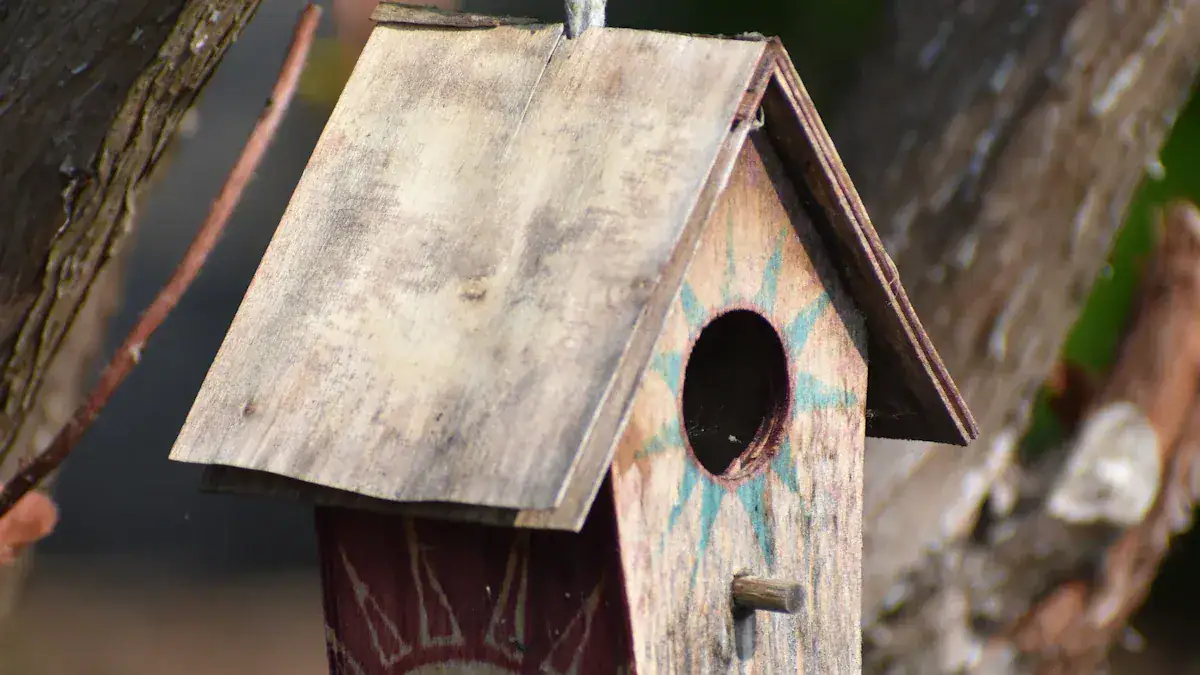
You have choices when you build a birdhouse for finches. You can create a traditional enclosed birdhouse or an open shelf-style nesting platform. House Finches often prefer the open platform for nesting. This section helps you decide which design works best for your finch bird house plan. You will learn about dimensions, safety features, and how to build a birdhouse step-by-step.
Traditional Enclosed Birdhouse Design
A traditional enclosed birdhouse offers a cozy, protected space. This design has walls, a floor, a roof, and an entrance hole. If you choose this style, consider these standard dimensions for a house finch birdhouse:
Bird Species | Entrance Hole Diameter (inches) | Floor Dimensions (inches) | Interior Height (inches) |
|---|---|---|---|
House Finch | 2 | 6 x 6 | 8–12 |
You might wonder about the entrance hole size. Some bird enthusiasts express concern that a 2-inch hole seems quite large. They worry about house sparrows or cowbirds taking over the nest. Larger birds could also prey on chicks. Remember, some people find that house finches do not typically use nest boxes. They prefer spruce or pine trees for nesting. However, a well-placed birdhouse can still attract them. This design provides a secure space for birds.
Shelf-Style Nesting Platform
Many finch species, especially House Finches, prefer an open shelf-style nesting platform. This design is simpler. It offers a flat surface with a roof and sometimes a back or side wall. It mimics natural nesting spots like ledges or sheltered branches. You can build a finch nest box that is about 6 inches high. This height gives finches enough space to build their cup-shaped nest. This type of birdhouse plan is often easier to build. It provides an inviting space for nesting finches.
How to Build a Birdhouse: Step-by-Step
Building your finch birdhouse is a rewarding project. Follow these steps to build a finch birdhouse:
Gather Your Supplies: Collect wood (like 1in x 8in x 6ft common wood), fasteners (brad nails, 2 screws), wood glue, water guard stain, a staining pad, and sandpaper. You will also need tools: a measuring tape, miter saw, hand sander, screwdriver, drill press, a 1 3/4in hole dozer or hole saw, a 7/8in spade drill bit, a pencil, an eraser, and clamps.
Measure and Cut Your Wood: Cut the back piece to 8 in. x 14 in. Cut the top piece to 10 in. x 9 1/8 in. Make two side pieces, each 8 in. x 12 in. One side needs a diagonal cut from 10 to 12 inches tall. Cut the front piece to 8 in. x 10 in.
Drill Holes: Create a 1 3/4in entrance hole on the front piece. Use a drill press and hole dozer. Center it by marking an ‘X’. Also, make a 7/8in notch on the bottom middle of the ‘door’ piece for opening.
Glue Pieces: Glue the bottom piece to the back piece. Then, glue one side to the bottom. Clamp them to dry. You will leave one side unglued for now. This side will be your clean-out door.
Attach the Roof: Position the roof. Leave a small gap, about a 10-degree angle, between the roof and the sides. This gap provides ventilation.
Create the Clean-out Door: Attach the remaining side piece. This piece works as your clean-out door. Leave about 1/2 cm space between this side and the front/back. Secure it with two 1 1/2 inch screws. Do not overtighten the screws. This allows the door to pivot.
Nail Components: Use brad nails and a brad nailer to strengthen all connections. Place 3-4 nails where pieces join. Be careful not to nail the clean-out door.
Sand and Stain: Smooth the entire birdhouse with a hand sander. Apply 2-3 coats of water guard stain to the exterior. You can add more coats for a darker color. Make sure you cover all crevices. Test for dryness by checking if water beads up. This completes your birdhouse.
Features for Finch Safety
Your finch birdhouse plan should include safety features. These features protect the birds and their nest.
Ventilation: Good airflow prevents overheating. Ensure your birdhouse has ventilation holes. Drill holes high on the sides for air to move through. A sloped roof with an overhang also helps keep the nest dry. For finch aviaries, ventilation panels at the top prevent debris from escaping.
Drainage: Water inside the birdhouse can harm young birds. Add at least four drainage holes to the floor. Drill ¼ inch drain holes in each corner. You can also design a recessed floor, at least 1/4 inch deep, to keep the nest dry. Deep cuts under the box can act as gutters, directing rain away. An extensive overhang on the cover also helps with drainage.
Predator Protection: Protect your finch nest from predators.
An 8-inch baffle extends the safe zone. This deters climbing predators like squirrels, snakes, and raccoons.
A copper predator guard or a 1-inch thick wooden guard provides immediate protection at the nest hole.
Metal guards around the entry work with wooden guards. They broaden the protected area.
Weatherproof designs reduce exposure and restrict access.
Nests in birdhouses with predator guards show higher success rates. Cone-type baffles, stovepipe baffles, and entrance hole extenders are very effective.
Placement and Care for Your Finch Home
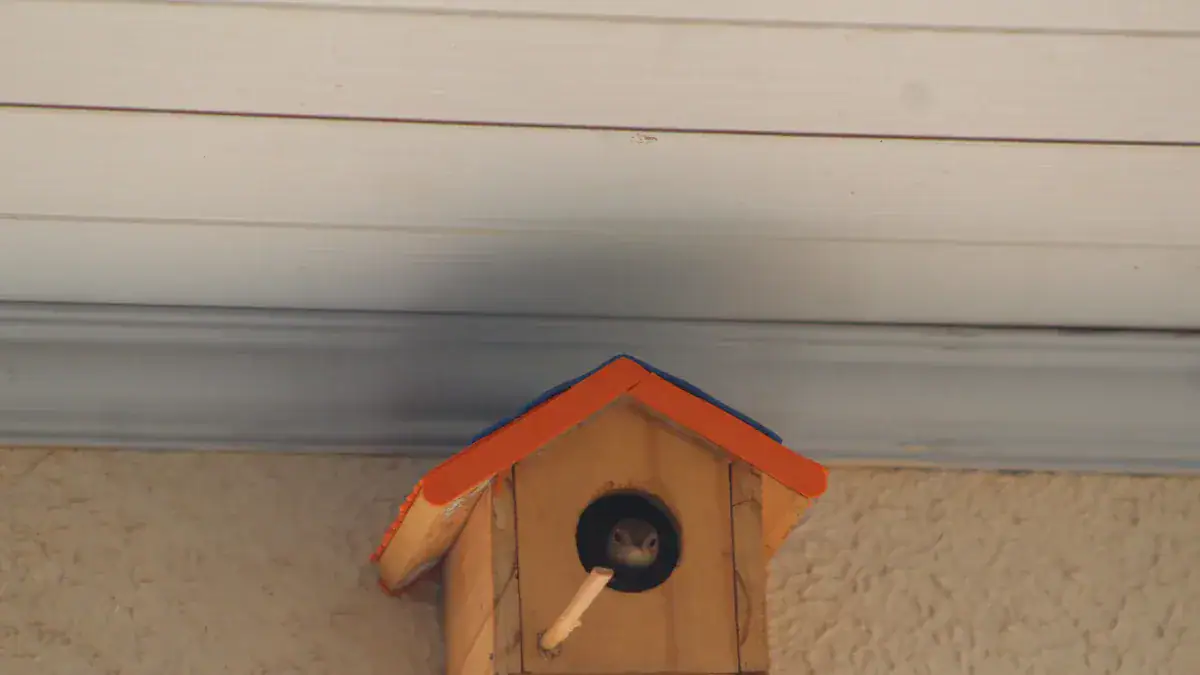
You have built a birdhouse. Now, you need to place it correctly. Proper placement and care ensure finches use your new home. This section guides you on where to put your finch birdhouse and how to maintain it.
Optimal Location and Height
Choosing the right location for your finch birdhouse is very important. Finches feel safer when they have cover nearby. Place your birdhouse near bushes or trees. This helps attract finches quickly. Birds feel more secure when they feed or nest close to vegetation. Even a small tree makes finches feel comfortable.
You should place bird houses at an elevated height. Finches naturally look for higher ground for safety. Choose a location sheltered from strong winds and direct sunlight. This creates a calm spot for them. Quiet garden spots or backyard corners work best. Ensure the birdhouse is away from predators. Mimic a finch’s natural habitat. Put the birdhouse among dense leaves or in a sheltered nook. This protects them from bad weather. Quiet, high areas make finches feel even safer. Position your house finch birdhouse near food and water sources. This offers convenience and security. Hang shelters in a quiet, secure location. This height protects from ground threats. For a house finch birdhouse, the entrance should be 6 to 8 inches high. Mount the birdhouse about 5 to 6 feet high.
Installation and Security
Install your birdhouse securely. You can mount it on a metal pole. A metal pole helps deter predators. Predators like raccoons and snakes cannot climb smooth metal easily.
You must protect your finch nest from predators. Predator guards are effective.
Stovepipe Baffles: These work well against raccoons, snakes, cats, chipmunks, and squirrels.
Cone-type Baffles: These are very effective. They lead to more successful nesting.
Entrance Hole Extenders: These are tube-shaped guards. They make it harder for predators to reach inside. They also improve nesting success.
Metal Hole Guards: These thin rings stop animals from making the entrance hole bigger. They protect smaller birds from larger competitors.
Here is a look at how different guards work:
Predator Guard Type | Effectiveness | Notes |
|---|---|---|
Cone-type baffles | Most effective | Improves nesting success |
Stovepipe baffles | Most effective | Improves nesting success |
Entrance hole extenders | Most effective | Improves nesting success |
Noel guard | Less effective | Better than nothing |
Predator guards are an inexpensive way to help nests survive. They significantly improve nesting success for birds. No birdhouse is completely predator-proof. However, these guards make a big difference.
Maintenance and Cleaning
Keeping your finch home clean is vital for bird health. You need a regular cleaning schedule.
Daily: Spot-clean the habitat. Remove soiled material and old food. Wash and rinse water and food bowls thoroughly. This stops bacteria from growing.
Weekly: Replace the substrate, bedding, and habitat liners. Do this more often if needed.
Monthly: Disinfect the entire habitat.
Follow these steps for a thorough cleaning:
Move the finch to a safe place. This could be another habitat or a travel cage. Remove old bedding and accessories.
Use a bird habitat cleaner or a 3% bleach solution. Wash the habitat and all accessories.
Rinse everything well with water. Make sure no cleaning agent or bleach smell remains.
Let the habitat and its contents dry completely. Then, put new bedding and clean accessories back.
Return the finch to its clean home.
The bottom of the habitat should have a removable metal grate. This lets droppings fall below the bird’s feet. Line the tray with habitat paper. This keeps the environment clean and reduces dust. Do not place perches above the water or food bowl. This prevents waste from contaminating them.
Attracting Finches to Your Yard
You can attract finches to your yard with food and water. Finches love certain seeds.
Nyjer (Thistle) Seeds: These are finches’ absolute favorite. They must be fresh. Store them in the freezer to keep them fresh. Finches will not eat old or moldy seeds.
Black Oil Sunflower Seeds: These seeds are full of nutrients. Finches also love them. They have high fat content.
Provide fresh, clean water. Finches are very attracted to moving water.
Fountain-style Bird Baths: These are very appealing to finches. They love the sight and sound of running water. This works well in warmer months.
Traditional Bird Baths: These also attract birds. Make sure you provide a steady supply of clean water daily.
Water Wiggler: You can add this to a bird bath. It creates movement in the water.
Place your feeders and water sources near your house finch birdhouse. This makes it convenient and safe for the birds.
You provide a safe nest for finch birds. This is a rewarding experience. Your finch bird house plan offers a secure nesting spot. Remember key considerations for your finch bird house plan. This includes building and maintaining your birdhouse. Share your DIY projects. Observe the finches you attract. You contribute to local wildlife. This fosters a connection with nature. Your careful plan helps finch families build a nest.
FAQ
What kind of birdhouse do finches prefer?
Finches, especially House Finches, often prefer open shelf-style nesting platforms. These platforms mimic natural ledges. They provide a flat surface with a roof. Some designs include a back or side wall. You can also use a traditional enclosed birdhouse.
How do you protect finch nests from predators?
You can use several methods to protect finch nests. Install predator guards like stovepipe or cone-type baffles on poles. These stop climbing animals. Entrance hole extenders make it harder for predators to reach inside. Metal hole guards prevent animals from enlarging the entry.
How often should you clean a finch birdhouse?
You should clean your finch birdhouse regularly. Spot-clean daily by removing soiled material. Replace bedding weekly. Disinfect the entire habitat monthly. This prevents bacteria growth. Always move the finch to a safe place before cleaning.
What food attracts finches to your yard?
Finches love Nyjer (thistle) seeds. They also enjoy black oil sunflower seeds. Keep these seeds fresh. Store them in the freezer. Provide fresh, clean water. A fountain-style bird bath or a water wiggler attracts them.
Tip: Place feeders and water sources near your birdhouse. This offers convenience and security for the birds.