


You want your wooden kitchen cabinets to look their best. Grease, sticky stains, and dull spots can make them look old. Safe cleaning keeps your cabinets strong and bright. Expert Ways help you tackle tough messes and protect your cabinet’s finish. Trust these tips and enjoy spotless cabinets.
Key Takeaways
Use gentle soap solutions to clean wooden cabinets. This method protects the wood’s finish and keeps cabinets looking fresh.
Regularly apply lemon oil polish to restore shine and protect cabinets from moisture. This simple step enhances the wood’s natural beauty.
Establish a cleaning routine. Wipe down cabinets weekly and deep clean every few months to prevent build-up and maintain their appearance.
Gentle Soap Cleaning
Soap Solution for Cabinets
When you want to keep your wooden kitchen cabinets looking great, gentle soap cleaning is a smart choice. You do not need harsh chemicals to get results. Instead, you can mix up a simple solution that is safe for your cabinets and easy to use. Experts recommend using pH-neutral cleaners, like mild dish soap, because they protect the wood’s finish and help your cabinets last longer.
Here is a quick look at the best ratios for your cleaning solution:
Cleaning Solution | Ratio |
|---|---|
Warm water and vinegar | 50/50 mix |
Dish soap and warm water | A few drops of soap |
You can add a splash of vinegar to help cut through grease, but do not use too much. Vinegar helps with sticky spots, but too much can dull the finish.
Tip: Avoid bleach, ammonia, or strong chemicals. These can damage your kitchen cabinets and ruin the protective coating.
Cleaning Steps
You want to start with a soft, damp cloth. Dip it into your soap solution and wring it out well. Focus on the dirtiest spots first, like around handles or near the stove. Wipe gently in the direction of the wood grain. This helps you avoid scratches and keeps your cabinets looking smooth.
After cleaning, use a clean, damp cloth to wipe away any soap left behind. Dry the cabinets with a soft towel. This step keeps water from soaking into the wood. Regular cleaning with this gentle method keeps your kitchen cabinets fresh and bright without any risk to the finish.
Using gentle cleaning methods:
Maintains the cabinets’ appearance
Avoids damage to the wood
Keeps your kitchen looking its best
Vinegar Mix for Kitchen Cabinets
Grease Removal
When you want to tackle grease and food stains on your kitchen cabinets, a vinegar mix can help. What makes this solution so effective? Vinegar breaks down sticky spots and lifts away grime. You only need a 50/50 mix of vinegar and warm water. Pour this into a spray bottle and mist it onto the cabinet surfaces. Let it sit for a minute or two. This step loosens grease and food stains without much effort.
What works best for cleaning kitchen cabinets:
Mix equal parts vinegar and water in a spray bottle.
Spray the solution on the cabinets.
Wait a minute or two before wiping.
Use a soft cloth to clean the surface.
You can use this method for regular cleaning or when you notice stubborn spots. Many people find that cleaning with vinegar is a simple way to keep cabinets looking fresh.
Safe Application
You want to protect your kitchen cabinets while cleaning. Vinegar is strong, so always dilute it. Never use straight vinegar on wood. Too much acid can damage the finish over time.
“The key is to use vinegar correctly,” says Marla Mock, the president of Molly Maids. “Always dilute it and avoid excessive moisture to protect the wood’s finish.”
Before you start, test the vinegar mix on a hidden spot. This step checks for any bad reactions. After cleaning, rinse the cabinets with a damp cloth to remove any leftover vinegar. Dry the cabinets right away with a soft towel. This keeps water from soaking in and helps protect the finish.
“Always test any new cleaning solution in an inconspicuous spot to check for compatibility. This precaution ensures effective cleaning without damaging your cabinets.”
Remember, vinegar can wear down the finish if you use it too often. Use this method for tough grease and food stains, but switch to gentle soap for regular cleaning. This way, your kitchen cabinets stay clean and beautiful for years.
Baking Soda Solution
Tough Stain Cleaning
Baking soda is a great choice when you want to tackle tough stains and grime on your wooden kitchen cabinets. What makes it special? Baking soda has a gentle abrasive quality that helps you clean without scratching the wood. You can mix baking soda with water to make a thick paste. For extra cleaning power, add a few drops of jojoba oil. This mix works well on sticky grime, dried food, and even old stains that just will not budge.
What you need for the paste:
2 tablespoons baking soda
1 tablespoon water
A few drops of jojoba oil
Spread the paste over the stains on your cabinets. Let it sit for about 20 minutes. This gives the baking soda time to break down the grime and lift stains from the wood. You will notice that even the toughest kitchen messes start to loosen up.
Application Tips
You want to keep your cabinets looking their best, so always use gentle cleaning tools. Grab a soft cloth or a sponge to apply the baking soda paste. Avoid anything rough or abrasive. Gently scrub the stained area in small circles. This helps you remove stains from wood cabinets without harming the finish.
Tip: Always wipe away the paste with a damp cloth and dry the area right after cleaning. This keeps water from soaking into the wood and stops new grime from sticking.
If you need to clean water stains, you can also try non-gel toothpaste or even a little mayonnaise. These simple kitchen tricks help you fight stains and grime while keeping your cabinets clean and bright.
Microfiber Cloth Expert Ways
Clean Wood Cabinets
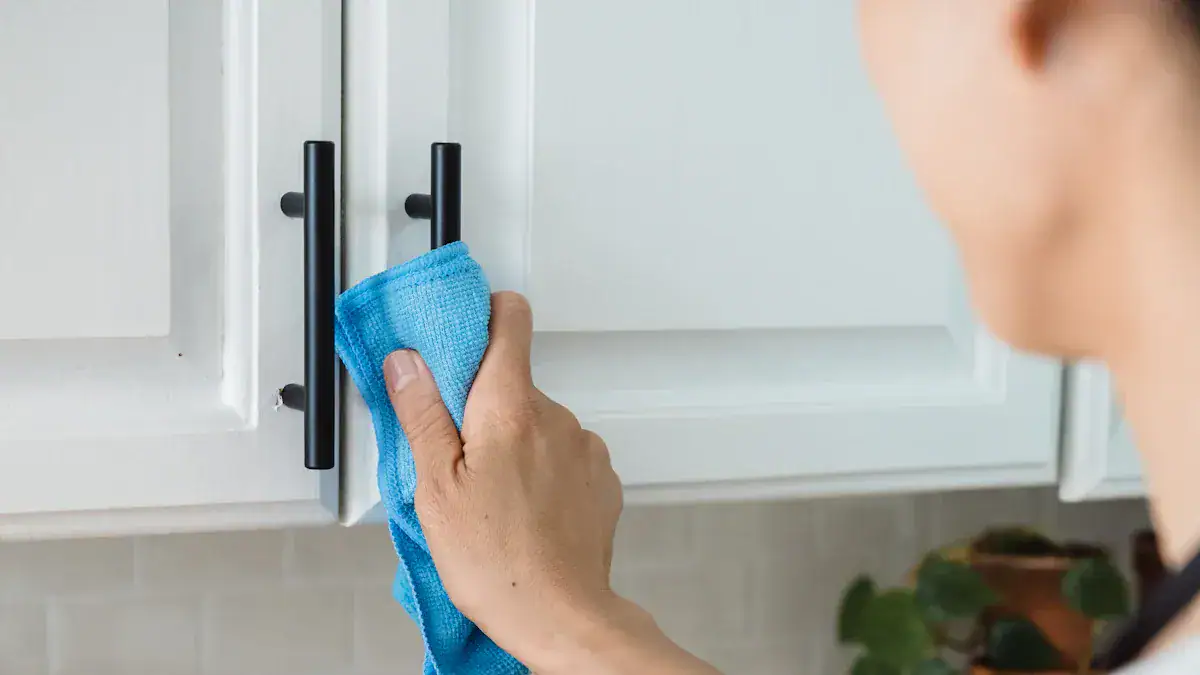
What makes microfiber cloths a top choice for cleaning kitchen cabinets? Microfiber cloths offer many benefits that help you clean wood cabinets quickly and safely. You get superior cleaning power with just water, so you do not need harsh chemicals. Microfiber can remove up to 99% of bacteria, which keeps your kitchen healthier. These cloths absorb spills fast and dry surfaces well. You can use them again and again, making them a smart choice for eco-friendly cleaning in your kitchen.
Here is a quick look at what microfiber cloths bring to your cleaning routine:
Benefit | Description |
|---|---|
Superior cleaning power | Removes up to 99% of bacteria with water |
High absorbency | Soaks up spills and dries cabinets fast |
Durability | Lasts through many washes |
Eco-friendliness | Cuts down on paper towel waste |
Bacteria resistance | Keeps cabinets cleaner and safer |
Thorough cleaning | Cleans kitchen cabinets with fewer passes |
Prevent Scratches
What should you do to avoid scratches and streaks when cleaning your kitchen cabinets? Experts suggest using lint-free microfiber cloths. Wipe in straight lines, not circles, to keep the finish smooth. Always keep your cloth damp, not wet, since too much water can harm wood cabinets. Rinse your cloth often during cleaning to stop dirt from spreading. Finish by drying the cabinets with a clean, dry microfiber cloth. This step helps prevent water spots and streaks, leaving your kitchen cabinets looking their best.
Use lint-free microfiber cloths for streak-free cleaning.
Wipe in straight lines to protect the wood finish.
Keep the cloth damp, not soaked.
Rinse and wring out the cloth often.
Dry cabinets with a fresh microfiber cloth after cleaning.
Tip: Microfiber cloths work better than paper towels or rags because they do not leave residue behind. You get a cleaner, shinier kitchen every time.
Commercial Cleaner for Cabinets
Product Choice
When you want to pick a commercial cleaner for your kitchen cabinets, you need to know what works best and what to avoid. Not every product is safe for wood. Some cleaners can strip the finish or leave a sticky film. Here’s what you should look for when choosing a cleaner for your cabinets:
All-purpose cleaners that say “safe for wood surfaces”
Non-toxic and surface-safe formulas
Specialty cabinet cleaners made for wood
Products like Murphy’s Oil Soap, Bona Cabinet Cleaner, or Weiman Cabinet and Wood Cleaner
Tip: Stay away from harsh chemicals like bleach or ammonia. Avoid abrasive pads and waxes. These can damage your cabinets and make cleaning harder in the future.
Eco-friendly cleaning products are a smart choice for your kitchen. They use sustainable ingredients and break down quickly, so they do not harm the environment. Some commercial cleaners now offer biodegradable options, which help protect water and aquatic life.
Usage Tips
You want your cabinets to look their best after every cleaning. Always read the label before you start. Test the cleaner on a small, hidden spot first. This step helps you avoid damage to your kitchen cabinets. Spray the cleaner onto a soft microfiber cloth, not directly onto the wood. Wipe the cabinets gently, following the grain. Rinse your cloth often to keep dirt from spreading.
Wipe down cabinet doors and handles with your chosen cleaner.
Rinse with a damp cloth to remove any leftover product.
Dry the cabinets right away with a clean towel.
Note: Regular cleaning with the right product keeps your kitchen cabinets looking fresh and helps the wood last longer.
Oil Soap Cleaning
Deep Clean Cabinets
Oil soap cleaning is a smart way to deep clean your wooden kitchen cabinets. When you notice heavy grease or stubborn dirt, oil soap works better than regular dish soap. You can use it when your kitchen cabinets look dull or feel sticky. Oil soap, like Murphy Oil Soap, breaks up dirt and grime without harming the wood. It is safe for all wooden surfaces, so you do not have to worry about damage.
Here is what makes oil soap a great choice for cleaning kitchen cabinets:
Oil soap penetrates grime and breaks up dirt particles.
It is safe for wood, so your cabinets stay protected.
Oil soap cleaners remove grease and grime more effectively than dish soap.
To clean your cabinets, mix 1/4 to 1/2 cup of oil soap in a gallon of warm water. Dip a microfiber cloth into the solution and wring it out well. Wipe your kitchen cabinets, focusing on greasy spots and handles. You will see the dirt lift away. Always rinse your cloth often to avoid spreading grime.
Shine Maintenance
Oil soap does more than just clean. It helps your kitchen cabinets keep their natural shine. After cleaning, you will notice the wood looks brighter and feels smooth. Oil soap restores the wood’s finish and keeps it looking fresh.
Murphy® Original Formula Oil Soap is the one Mom and Grandma used to clean wood floors and other surfaces, to restore a bright, natural shine.
For best results, use oil soap cleaning every few months. This routine keeps your cabinets looking new and protects the wood. Dry the cabinets with a soft towel after cleaning to lock in the shine. Your kitchen will feel cleaner, and your cabinets will stay beautiful.
Lemon Oil Polish

Restore Cabinet Luster
What makes lemon oil polish a favorite for wooden kitchen cabinets? Lemon oil brings out the natural shine in your cabinets and leaves your kitchen smelling fresh. When you use lemon oil, you give your cabinets a beautiful, natural glow. This polish works on both finished and unfinished wood, so you can use it for all your kitchen cleaning needs. Lemon oil does more than just shine the surface. It conditions the wood, keeps it from drying out, and helps restore the depth of the grain.
Here’s what lemon oil polish does for your kitchen cabinets:
What Lemon Oil Polish Does for Cabinets |
|---|
Polishes all wood furniture to a nice shine with a pleasant fresh scent |
Conditions finished and unfinished wood surfaces for a natural glow |
Helps prevent drying and fading on all your wood furniture |
Removes surface dirt and dust without drying out or harming the wood |
Penetrates dry wood finishes to replenish lost oils and preserve beauty |
Keeps your wood from drying out while restoring its depth and natural beauty |
You can use lemon oil polish as part of your regular cleaning routine. Just apply a small amount to a soft cloth and wipe your cabinets. You will see the shine return right away.
Protection Tips
What can you do to protect your kitchen cabinets from moisture and damage? Lemon oil polish creates a barrier that keeps moisture out and helps your cabinets last longer. It also cleans away dirt and grease, which can trap moisture and cause problems.
Here’s how lemon oil polish protects your kitchen cabinets:
Lemon oil acts as a moisture barrier by soaking into the wood and adding a protective layer.
The citric acid in lemon oil helps with cleaning, removing dirt and grease from your cabinets.
It keeps the wood balanced, so your cabinets do not dry out or crack.
Tip: Use lemon oil polish every few weeks as part of your kitchen cleaning routine. This habit keeps your cabinets looking their best and helps prevent damage.
Regular cleaning with lemon oil polish keeps your kitchen cabinets clean, shiny, and protected. You get a kitchen that feels fresh and cabinets that stay beautiful year after year.
Quick Cleaning Tips
Do’s for Cabinets
You want your kitchen cabinets to look great every day. What are the most important do’s and don’ts of cleaning kitchen cabinets? Here are some top tips you can use for your kitchen cleaning routine:
Wipe down cabinets often, especially in busy kitchen areas.
Use a soft, damp cloth and a mild cleaner for regular cleaning.
Clean up spills right away to stop stains and damage.
Always clean gently. Scrubbing too hard can scratch the wood.
Dry cabinets right after cleaning to keep moisture away.
Test new cleaning products on a small spot first.
Stick to a weekly cleaning schedule to keep cabinets fresh.
Tip: Drying cabinets after cleaning is a must. If you leave them damp, you risk mold, mildew, and even damage to the wood. Always grab a dry towel and wipe down every surface.
Don’ts for Wood
Knowing what not to do is just as important as knowing what works. Here are the key don’ts in the do’s and don’ts of cleaning kitchen cabinets:
Don’t use wax polishes, petroleum solvents, or silicone-based products. These can ruin the finish.
Don’t hang wet towels or cloths on cabinet doors.
Don’t use harsh chemicals or abrasive pads for kitchen cleaning.
Don’t let water sit on cabinets after cleaning.
Don’t soak cabinets with too much cleaning solution.
If you follow these do’s and don’ts of cleaning kitchen cabinets, you protect your kitchen and keep your cabinets looking new. Good kitchen cleaning habits make a big difference!
Cabinet Maintenance Advice
Prevent Build-Up
You want your kitchen cabinets to stay fresh and free from grime. What works best for preventing build-up? Setting up a regular cleaning schedule is key. You can wipe down wood cabinets every week with gentle cleaning solutions. Deep cleaning kitchen cabinets every three to four months helps you tackle grease and dirt that stick over time. If you cook often, you might need to clean more frequently. Regular cleaning kitchen cabinets stops stains before they set and keeps your wood looking new.
Wipe cabinets weekly with mild cleaning solutions.
Deep clean kitchen cabinets every three to four months.
Adjust your cleaning schedule based on how much you cook.
Use cleaning solutions that match your wood cabinets’ finish.
Looking for additional tips to keep wood cabinets clean longer? Always clean up spills right away. Don’t let grease sit on the wood. You can use cleaning solutions that target kitchen messes for best results.
Protect Finish
What helps protect the finish on your kitchen cabinets? You need to watch out for moisture and wear. Everyday habits like slamming cabinet doors or leaving liquids on wood surfaces can damage the finish. Steam from cooking and sunlight also cause problems. You can keep wood cabinets safe by laminating them or refinishing with a topcoat and sealant. Make sure your wood has the right moisture content before installation. Avoid harsh cleaning solutions and too much water when cleaning kitchen cabinets.
Don’t use harsh cleaning solutions or abrasive pads.
Dry cabinets after cleaning to stop moisture damage.
Check hardware and hinges to prevent structural issues.
Use cleaning solutions designed for wood cabinets.
Regular cleaning kitchen cabinets and smart maintenance solutions help you clean and shine the cabinets. You get wood cabinets that look great and last longer.
You now know what expert ways work best for cleaning wood cabinets.
What expert ways help you keep cabinets spotless? Gentle soap, vinegar, baking soda, microfiber, commercial cleaners, oil soap, and lemon oil.
What expert ways protect your cabinets? Regular care, eco-friendly habits, and drying after cleaning.
What expert ways extend cabinet life? Control humidity, clean handles, and adapt routines.
What expert ways should you try? Pick what fits your kitchen and wood type.
What expert ways keep cabinets looking new? Clean often and seek help for tough damage.
Regular maintenance with these expert ways keeps your kitchen bright and your cabinets strong.
FAQ
What should you avoid when cleaning wood cabinets?
Skip bleach, ammonia, and abrasive pads. These can scratch or dull your cabinets. Stick with gentle cleaners and soft cloths for best results.
What is the best way to remove sticky grease?
Mix warm water with a little dish soap. Wipe the area with a soft cloth. For tough spots, try a vinegar and water solution.
What helps keep cabinets looking shiny?
Use lemon oil polish every few weeks. It restores shine and protects the wood. Always dry cabinets after cleaning to prevent water spots.