

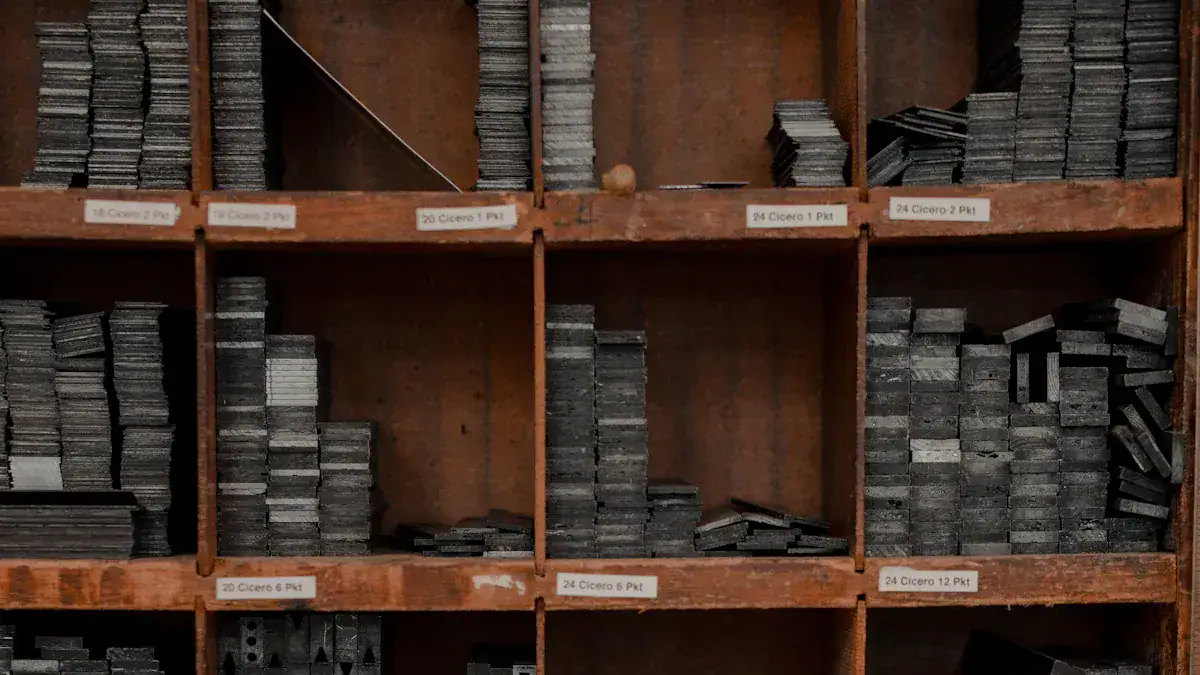
Do you struggle with disorganized lumber in your workshop or garage? A dedicated lumber rack solves this common problem. It improves organization, reducing clutter and saving you time finding materials. This also enhances safety, minimizing tripping hazards and preventing stacks from toppling. Keeping your wood off the floor prevents moisture damage and warping, preserving your valuable lumber.
This guide helps you build a sturdy, customized diy lumber rack. You get clear diy lumber rack plans, material lists, and step-by-step instructions. Building your own lumber storage is a satisfying project. It saves money, and many designs offer an easiest diy lumber rack solution for excellent lumber rack storage.
Key Takeaways
A DIY lumber rack helps organize your wood. It makes your workshop safer and cleaner. This saves you time and protects your materials.
Plan your rack carefully. Think about the wood you store and where the rack will go. Measure your space to choose the right size and type.
You can build a lumber rack with basic tools. Use strong wood like 2x4s or plywood. Secure it well with screws and bolts.
Wall-mounted racks save floor space. Freestanding racks offer flexibility. Choose the best type for your workshop needs.
Always check your rack for damage. Load it correctly to prevent accidents. This keeps your wood storage safe and lasting.
Why Build a DIY Lumber Rack?
Benefits of Organized Storage
You need a diy lumber rack for many reasons. Organized lumber storage makes your workshop better. Consider these benefits:
Easy material access
Maximized space usage
Cleaner workspace
Improved focus
Faster project completion
Organized storage protects your wood. It keeps lumber safe from moisture. This prevents warping or rotting. You will not need costly replacements. Your materials stay in good condition. This helps your overall efficiency.
A custom system improves your workflow. You find materials quickly. This reduces time spent searching. You stay focused on tasks. This makes your workday more productive. You can organize wood pieces by size or type. Materials are always within reach.
Organized storage prevents clutter. It separates materials. You do not sift through piles. This keeps your workspace tidy. A tidy space is crucial for efficiency. It also enhances safety. You navigate the area easily. This prevents accidents.
Cost Savings and Customization
Building your own rack saves money. You use affordable materials. This diy approach also gives you a custom fit. You design it for your specific needs. This means you get exactly what you want. You can build a rack that perfectly fits your space and material sizes.
Safety and Efficiency
A well-organized space is safer. You avoid tripping hazards. Stacks of lumber will not fall. This protects you and your materials. Efficiency also increases. You spend less time searching. You spend more time building. This makes your work more productive. You maintain focus on your projects.
Planning Your DIY Lumber Rack
Planning is the first step for any successful diy lumber rack project. You need to think about your specific needs. This ensures your rack works well for you.
Assessing Storage Needs
First, consider the types of lumber you store. Do you have softwood or hardwood? Softwood comes from trees like pine. It is lighter and often used for framing. Hardwood comes from trees like oak. It is denser and used for furniture. Think about the lengths and widths of your wood pieces. You might have boards up to 14 inches wide.
Nominal Size | Actual Dimensions (Inches) |
|---|---|
1×2 | 0.75 x 1.5 |
1×4 | 0.75 x 3.5 |
1×6 | 0.75 x 5.5 |
1×8 | 0.75 x 7.25 |
2×4 | 1.5 x 3.5 |
2×6 | 1.5 x 5.5 |
2×8 | 1.5 x 7.25 |
2×10 | 1.5 x 9.25 |
2×12 | 1.5 x 11.25 |
4×4 | 3.5 x 3.5 |
Location and Rack Type
Next, decide where your rack will go. This helps you choose the right type.
Wall-Mounted Racks: These save floor space. They are great for small workshops. You attach them to wall studs. They keep your materials accessible. They also help prevent tripping hazards.
Freestanding Racks: These are good if you have more floor space. You can move them if needed. A free-standing lumber rack is also a good choice if you cannot attach anything to your walls.
You can choose vertical or horizontal storage. Vertical storage uses less floor space. Horizontal storage is good for longer pieces.
Dimensions and Capacity
Measure your available space. This helps you determine the rack’s size. Consider how much lumber you need to store. A cantilever rack often uses 4-foot arms. These support standard lumber sizes. They prevent sagging. You can make a rack 10 feet wide and 8 feet tall. It can have 30-inch deep shelves. Some racks can hold 2500 pounds.
Materials and Fasteners
Choose strong materials for your rack. Common options include 2x4s and plywood. For the arms, 3/4-inch EMT conduit is a great choice. It is strong and affordable. It costs less than $5 for a 10-foot piece. These materials are key for durable diy lumber rack plans.
Tools and Materials
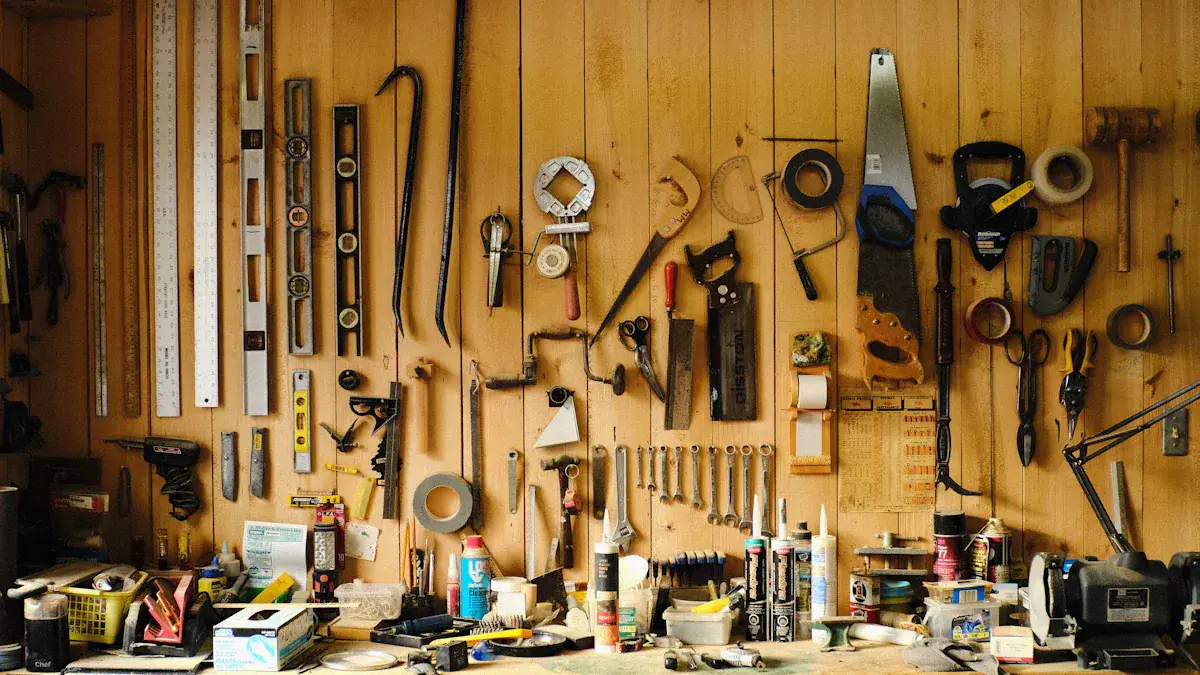
You can build many diy lumber rack plans with basic tools. You do not need specialized equipment. This makes the project accessible for most DIYers. You will find these tools common in many workshops.
Tools List
Gather these essential tools before you begin:
Measuring Tape: You need this for accurate measurements.
Pencil: Mark your cuts and drilling spots clearly.
Speed Square or Combination Square: Ensure your cuts are straight and square.
Circular Saw or Miter Saw: Cut your
lumberto the correct lengths. A miter saw offers more precision.Drill/Driver: Pre-drill holes and drive screws.
Stud Finder: Locate wall studs if you build a wall-mounted rack. This is crucial for safety.
Level: Make sure your rack is perfectly horizontal and vertical.
Safety Glasses: Protect your eyes from sawdust and debris.
Hearing Protection: Reduce noise exposure when using power tools.
Lumber and Plywood
You will use readily available materials for your rack. These materials are strong and affordable. They form the backbone of your storage system.
Item | Quantity | Description |
|---|---|---|
1×6 lumber boards (8-foot length) | 8 pieces | Primary wood boards for the rack structure |
Cedar timbers for uprights | 4 pieces | Provide strong vertical support |
Half-inch plywood | 1 sheet (4×8 ft) | Use this for wall support or shelves |
Waterproofing sealant | 1 container | Protects your wood from moisture |
You can also use 2x4s for the main frame. These are common and strong. Some designs, like folding racks, use a single sheet of plywood. This makes an easiest diy lumber rack option. You can cut all parts from one sheet. This saves time and material.
Fasteners and Safety
Choose the right fasteners for a secure rack. They hold everything together.
Wood Screws: Use a box of 100 wood screws. These are good for joining most wood pieces.
Lag Bolts (2½-inch): You need at least 6 lag bolts. These secure the rack to wall studs. They provide strong support.
Washers: Use washers with lag bolts. They prevent the bolt head from sinking into the
wood.
Always prioritize safety. Wear safety glasses and hearing protection. Make sure your work area is clear. Follow all tool instructions. A safe build ensures a safe storage solution for your lumber.
Building a Wall-Mounted DIY Lumber Rack

Building a wall-mounted diy lumber rack transforms your workspace. You gain organized storage and a safer environment. Follow these steps to construct a sturdy rack.
Marking and Wall Prep
First, you must find the wall studs. These provide the necessary support for your rack.
Using a Stud Finder: This is the most reliable method. The tool signals when it is over a stud. This ensures proper mounting for support.
Visual Cues: Look for subtle shadows, depressions, or nailheads on the wall. These often show where drywall tape or fasteners are directly over studs.
Thin Nail Method: Gently push a thin nail into the wall where you suspect a stud. Resistance after about 1/2 inch indicates a stud. If it goes in easily, move a few inches and try again.
Baseboard Trick: Examine baseboards for dimples or filled nail holes. These are typically where baseboards attach to studs. Draw a vertical line up from these points to estimate the stud’s position.
Measuring from Corners: Studs often sit at regular intervals (16 or 24 inches) from room corners. Measure out from a corner and verify with another method.
Windows and Doors as Reference Points: Windows and doors have additional studs framing them. Look for studs just beyond the trim of these openings and measure from there.
Understanding Stud Spacing: Be aware of common spacing patterns. Most modern homes use 16-inch on-center spacing. Some newer constructions use 24-inch on-center. Older homes might have irregular spacing.
Once you locate the studs, mark them carefully.
Mark Stud Locations: Use a pencil to make light marks on the wall where the stud edges are.
Verify Stud Width: Confirm the stud’s width. It is typically 1.5 inches for modern
lumber. Find both edges.Mark the Center: Mark the center of the stud. This is the most secure attachment point for mounting.
Verify Findings: Double-check stud locations. Look for vertical alignment and patterns in placement. Use multiple methods to confirm each stud’s position. Use the thin nail method to verify before hanging heavy items if you are uncertain.
After locating the studs, pre-drill holes for lag screws. Ensure you place a washer on each lag screw before screwing it in. Use four lag screws per cleat for secure attachment.
Cutting Vertical Supports
You need strong vertical supports for your rack. Choose high-quality wood for these pieces. Inspect the lumber for defects like large knots or warps. Precise measurements and cuts are crucial for stability.
Consider the height of your rack and the length of the lumber you plan to store. For example, if you want an 8-foot tall rack, cut your vertical supports to that length. When making cuts, use a circular saw or miter saw for accuracy. Ensure your cuts are square. This helps the rack stand straight and strong. Avoid making deep notches or large holes in critical areas of the supports. This can weaken the structural integrity. Focus on maintaining the full strength of the wood.
Attaching Supports
Now, attach your cut vertical supports to the wall. Align each support with the marked center of a wall stud. Use a level to ensure each support is perfectly plumb (vertical). This prevents your rack from leaning.
Drive lag screws through the pre-drilled holes in your supports and into the wall studs. The washers you placed on the lag screws help distribute the pressure. This prevents the screw head from sinking too deep into the wood. Tighten the screws firmly. Do not overtighten them, as this can strip the wood. A secure attachment is vital for the rack’s load capacity.
Making Horizontal Arms
The horizontal arms hold your lumber. You can use sturdy wood pieces or 3/4-inch EMT conduit for these. Conduit is a great choice because it is strong and affordable. Cut your chosen material to the desired length. Consider the depth of the lumber you want to store. A 30-inch deep shelf might require arms that extend about 28-29 inches from the vertical support.
If you use conduit, you might need to flatten one end. This allows for easier attachment to the vertical supports. You can do this with a hammer or a vise. Drill a hole through the flattened end for a bolt or screw.
Installing Horizontal Arms
Carefully install the horizontal arms. This ensures they are level and can bear significant weight.
Planning and Marking: Locate and mark the positions for your arms on the vertical supports. Use a level to draw horizontal reference lines. Mark all mounting hole locations. Double-check your measurements.
Surface Preparation: For wood supports, drill pilot holes. Make these about 70% of the fastener diameter. This prevents the wood from splitting.
Mounting: Start by hand-tightening fasteners in the upper mounting holes. Ensure everything is level before final tightening. Tighten fasteners in a sequential pattern. This ensures even pressure and prevents warping.
Testing: Apply downward pressure to verify security. Check that the arms remain level. Ensure all fasteners are tight. Start with a partial load before applying the full weight. This helps identify potential issues.
Spacing: Space your arms appropriately for your lumber. For shelving, space brackets 16-24 inches apart. Mount one arm per stud.
Avoid common mistakes. Never mount arms to drywall alone. Drywall cannot hold significant weight. Always hit structural support. Use correct fasteners. Plastic anchors are often insufficient for heavy-duty applications. Uneven loading creates leverage and can cause arms to fail. Ensure the installation is perfectly level to prevent stress points. Skipping pilot holes in wood can cause splitting. Over-tightening fasteners can strip threads or damage the mounting surface.
Reinforcements and Finish
Reinforce your rack for increased stability and load capacity. Bracket gussets are excellent for this. These are straight, curved, or decorative cross members. They connect the top and down flanges, forming a triangular silhouette. This shape is known for its rigidity. Gussets distribute loads evenly. They reduce the risk of structural failure. They also enhance overall structural integrity by preventing joints from shifting or weakening. Gussets are crucial reinforcement points. They provide an extra layer of support for durability and safety.
You can also add struts or braces. These are diagonal or horizontal members. They are bolted or welded between frame columns in specific patterns. Braces are essential for maintaining the stability and safety of racking systems. They provide rigidity and prevent lateral movement. While uprights provide vertical strength, braces keep the frame posts perfectly plumb. This inhibits deviation from their ideal position.
Finally, consider applying a finish to your diy lumber rack. Paint or a clear sealant protects the wood from moisture and wear. This extends the life of your rack. A finish also gives your new storage solution a professional look. These diy lumber rack plans will serve you well for years.
Rack Variations and Maintenance
You can choose different rack designs for your workshop. Each type offers unique benefits. You also need to maintain your rack for safety and long life.
Freestanding and Mobile Racks
You have options beyond wall-mounted racks. A free-standing lumber rack sits on your floor. It does not need wall attachment. This is good if you cannot drill into walls. Some freestanding racks include casters. You can move these mobile racks around your shop. This gives you flexibility.
Here is how freestanding racks compare to wall-mounted ones:
Feature/Consideration | Freestanding Lumber Racks (Floor Standing) | Wall-Mounted Lumber Racks |
|---|---|---|
Design Purpose | Placed on the floor. | Attached to the wall. |
Ideal Applications | Where floor space is not limited; needs higher capacity. | Lighter items with limited space; saves floor space. |
Weight Capacity | Generally higher (e.g., up to 3000 lbs). | Generally for lighter items (e.g., less than 286 lbs). |
Mobility | Often includes casters for movement. | Fixed once installed; no inherent mobility. |
Space Utilization | Requires floor space. | Saves floor space. |
Adjustable and Sheet Storage
You can find innovative storage solutions. Cantilever racking is a great option for storing lumber and sheet goods. This system uses horizontal arms that extend from vertical towers. It creates an open front. You can easily access items with forklifts. This design works well for long, heavy, or odd-shaped items. It stores dimensional lumber and plywood sheets. This prevents bending or warping. Adjustable arms let you change the rack for different wood sizes. This keeps your materials safe and organized. You can also build vertical storage systems. These save space by storing long boards upright. Folding lumber racks also save shop space. You can fold them away when not in use.
Inspection and Safety
You must regularly check your lumber rack. This keeps your workspace safe. Look for damage often.
Uprights (Columns): Check if columns are straight. Look for impacts or twists. Check for rust. Ensure welds are intact.
Braces: See if any horizontal or diagonal braces are missing. Look for dents. Make sure braces are attached well.
Safety Pins: Verify safety pins are in place. They connect beams to columns.
Wire Mesh Decks: Confirm wire mesh decking is installed. This stops items from slipping.
Load Capacity: Make sure the maximum load capacity is visible.
Flooring: Inspect the floor condition. Look for cracks near base plates.
If you find damage, remove the load. Then, repair the damaged part. Industry experts suggest inspections from monthly to annually. More use means more frequent checks.
Loading Techniques
Proper loading prevents injuries and rack damage. Train your employees on safe practices.
Load Limits: Clearly label each rack with load limits.
Weight Distribution: Center the load weight. Place heaviest items on lower levels. Store heavy items for long periods near uprights.
Stability: Ensure loads are stable and secure. This stops items from falling.
Aisle Widths: Make sure aisles are wide enough for equipment. Do not climb into racks.
No Overloading: Never overload any part of the rack. Do not double stack unless the rack is designed for it.
A diy lumber rack offers great value for any woodworker or DIY enthusiast. You achieve better organization, enhanced safety, and superior protection for your wood. These key benefits make your workspace more efficient. With the provided diy lumber rack plans, this project is achievable. You can significantly improve your workshop. Start planning and building your own customized wood storage solution today. Many diy options are easy and affordable.
FAQ
What kind of wood should I use for my lumber rack?
You can use common lumber like 2x4s or 2x6s. Plywood also works well for some designs. Choose straight, strong pieces. These materials provide good support. They are also affordable for your project.
What tools do I need to build a DIY lumber rack?
You need basic tools. Get a measuring tape, pencil, and a saw. A drill/driver is also essential. Use a stud finder for wall-mounted racks. These tools help you build your rack accurately.
What is the best way to organize my lumber on the rack?
Sort your lumber by size or type. Place heavier, longer pieces on lower shelves. Store shorter, lighter pieces higher up. This makes finding materials easy. It also keeps your rack stable.
What are the benefits of a wall-mounted rack versus a freestanding one?
A wall-mounted rack saves floor space. It is great for smaller shops. A freestanding rack offers flexibility. You can move it if needed. Choose based on your available space.
Tip: Always consider your shop’s layout before deciding on a rack type.