You dream of a fantastic basement, right? A full diy basement makeover doesn’t require a huge budget. You can absolutely transform your basement on a budget. This guide offers smart, easy renovation ideas. You will discover practical steps to give your basement a fresh look without spending a fortune. A basement makeover is a smart move for your home; a remodel can even offer a 70% return on investment. We focus on maximizing impact with minimal spend for your basement makeover, making your basement a true extension of your living space.
Planning Your DIY Basement Makeover

A successful diy basement makeover starts with good planning. You need a clear vision. This helps you make smart choices for your space.
Define Your Basement’s Purpose
First, think about what you want your basement to be. What will you use this extra space for? This is the most important step for your basement makeover. Many people turn their basement into:
A cozy family room
An extra bedroom or guest suite
A home office or study area
A fun playroom for kids
A home theater for movie nights
A personal gym or fitness studio
A hobby room or workshop
Deciding its main use guides all your other choices.
Set a Realistic Budget
Next, figure out how much money you can spend. A basement makeover on a budget is totally possible. You just need to know your limits. Research the total cost of finishing a basement. This helps you avoid surprises. Set a clear budget before you buy anything. This keeps your project on track.
Prioritize Renovation Projects
You might have many ideas for your basement. But you cannot do everything at once. Decide what is most important. What projects will give you the biggest impact? Many homeowners prioritize:
Adding a new bathroom
Creating a useful storage space
Building a home office
Setting up a game room or home theater
Making an extra bedroom suite
Focus on these key areas first. Other things can wait. This helps you finish a basement without feeling overwhelmed.
Assess Current Basement Conditions
Before you start any diy basement renovation, check your basement carefully. Look for any moisture problems. Do you see cracks in the walls or floor? Is the lighting good enough? You might need to fix these issues first. Some things you can DIY. Other problems, like major water leaks, might need a professional. This assessment helps you plan your makeover correctly.
Budget-Friendly Foundational Improvements
You want your basement to feel comfortable and look great. Before you add furniture or decorations, you need to tackle some basic improvements. These foundational steps make your space safe and ready for your dream basement makeover. They are crucial for any diy basement makeover you plan on a budget.
Affordable Moisture Control
Moisture is a big enemy in any basement. You must address it first. Ignoring moisture can lead to bigger problems later. You can handle many common moisture issues yourself.
Here are some common problems and their diy solutions:
Inadequate grading: Make sure the ground around your house slopes away from the foundation. You want at least one inch per foot for six feet. This directs water away.
Defective or missing gutters and downspouts: Install enough downspouts. You need at least one for every 50 feet of roof edge. Extensions should send water at least four feet away from the wall. Sloped concrete sidewalks also work well.
Improperly designed window wells: Fill window wells with coarse aggregate. This goes from the footing to the window sill. Add a drain tile extension from the footing to the window well’s base.
Structural cracks: Ensure your foundation is built correctly. Check the connection between the wall and the structure above.
You can also control moisture inside. Manage sources like humidifiers or cooking steam. Ventilate your bathroom and clothes dryer. If you have summer condensation, do not open your basement windows. Use an air conditioning system instead.
Sealing cracks is a smart cost effective option. You can use different methods:
Polyurethane Foam Injection: This works well for damp or leaking cracks. The foam expands up to 35 times its size. It fills all gaps and stays flexible. This helps with foundation movement.
Low-Viscosity Polyurethane: This is perfect for tiny hairline cracks. It flows into very tight spaces to seal them. You can find diy kits for this.
Remember, dehumidifiers can help reduce symptoms. But they are not a permanent fix. They might even draw more moisture into your basement. Always make sure walls are dry before insulating. Slabs must be warm and dry before you add any flooring.
Brightening Basement Lighting
Basements often lack natural light. Good lighting makes a huge difference. It transforms a dark, gloomy space into a bright, inviting one. You have many affordable lighting solutions.
LED lights are a fantastic choice for your basement. They are very energy-efficient. They last longer and use less power than old bulbs. An LED bulb uses only 8 to 12 watts. It gives the same light as a 60-watt incandescent bulb. This means lower electricity bills for you. LEDs also last a long time, often 25,000 hours or more. They are durable, which is great for a basement environment.
When choosing lighting, think about:
Brightness: This is measured in lumens. Aim for 100 to 150 lumens per square foot. This depends on how you use the space.
Color Temperature: This affects the mood. Warm white light (2700K to 3000K) creates a cozy feel. Cool white light (4000K to 5000K) is more energetic. It works well for workspaces.
Fixture Types: Recessed lighting is good for low ceilings. Pendant lights can create focal points. Wall sconces add ambient lighting and highlight features.
Cost-Effective Flooring Solutions
Your flooring choice impacts the look and feel of your basement. You have many budget-friendly flooring options.
Consider these flooring materials:
Rubber Flooring: This is very durable and resists moisture. It feels comfortable underfoot. It is easy to install and a great long-term value. You can find it in many styles.
Vinyl Plank Flooring: This is a budget-friendly flooring choice. It can look like hardwood or ceramic. It is easy to install and maintain. It also resists water, which is good for damp basements. Avoid luxury vinyl options to keep costs down.
Laminate Flooring: This is another affordable flooring option. It can mimic hardwood or stone. You can use it in basements if you manage moisture properly. It is easy to install as a floating flooring system. It comes in many designs.
Carpet Tiles: These are a cost effective option for a cozy basement. They are easy to install and replace. You can find moisture-resistant options. Or, you can seal your concrete floor first.
Painted Concrete: You can simply paint your concrete floor. This is a very affordable flooring solution.
Be careful with peel-and-stick tiles. They might not hold up well to heavy foot traffic. They can show wear like fading or scuffing over time. Changes in temperature or moisture can weaken their adhesive. This can make the tiles lift or shift. This is especially true in a basement.
Wall and Ceiling Transformations
You can dramatically change your basement walls and ceilings without spending a lot. These makeover ideas can give your basement a fresh, finished look.
For walls, you can:
Paint: A fresh coat of paint works wonders. Choose light colors to make the basement feel bigger and brighter.
Stenciling: Add patterns to a wall with stencils. This creates an accent wall without wallpaper costs.
Fabric Panels: Staple fabric to panels or use stretch fabric with frames. This adds warmth and texture.
Accent Wall: Pick one wall and give it a special treatment. This could be a bold color or a unique texture.
DIY Wood Plank Wall Treatments: Create a rustic or modern look with wood planks.
For ceilings, you have several options:
Paint Exposed Ceilings: Many people love the modern, industrial look of painted exposed ceilings. You can paint the entire ceiling, including joists, pipes, and wiring. Use one color like black, white, or gray. This unifies the look. It makes the style seem intentional, not messy. Using a sprayer gives the best results for painting basement ceilings.
Fabric Coverings: Staple bedsheets or use stretch fabric with frames. This hides pipes and wires.
Glue-on Ceiling Tiles: Polystyrene or fiberboard tiles are easy to install.
Beadboard Installation: Use planks with tongue-and-groove edges for a classic look.
Wooden Plank Ceilings: These give a rustic or farmhouse feel.
Drop Ceiling Systems: These are also called suspended ceilings. They allow easy access to utilities above. They also help with soundproofing.
You can also add a new wall for zoning. This helps create separate areas in your basement. This is a great way to maximize your basement makeover space.
Smart Design & Decorating on a Budget
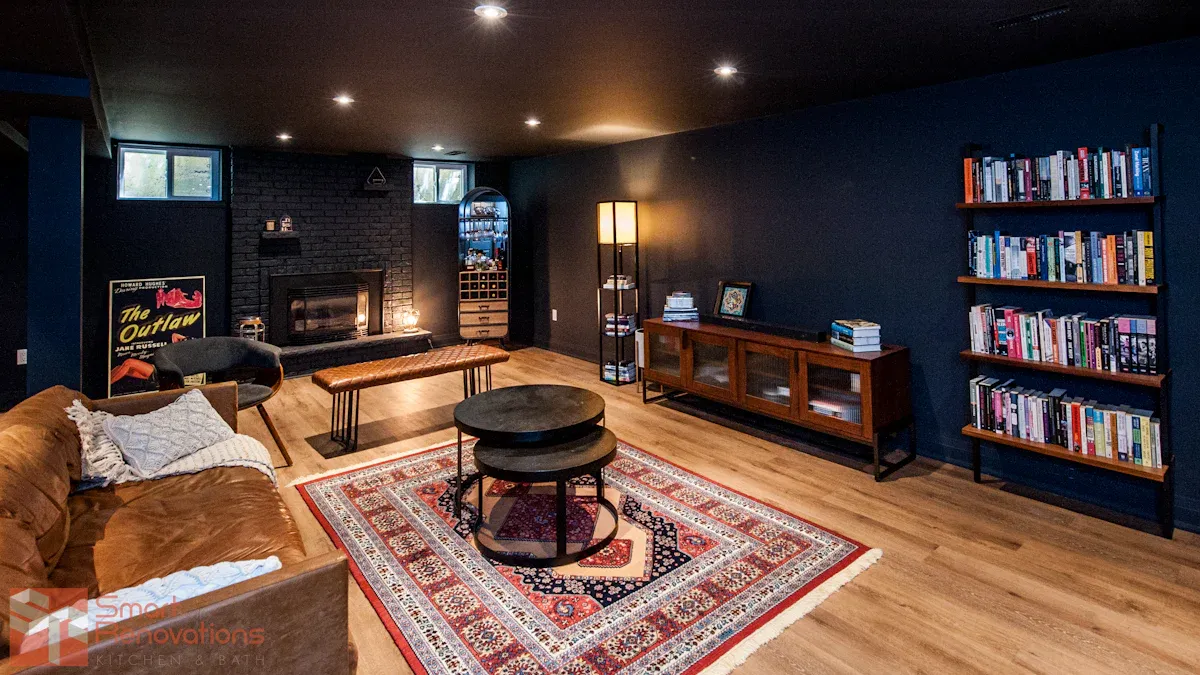
You can make your basement look amazing without spending a lot of money. Smart design and decorating choices help you create a stylish and functional space. This section gives you creative tips for basement makeovers that are easy on your wallet.
Upcycled Furniture Finds
Finding furniture for your basement makeover does not mean buying everything new. You can discover amazing pieces at thrift stores or by upcycling old items. This is a fantastic way to furnish your space on a budget.
Here are some tips for finding great furniture:
Know your budget: Decide how much you want to spend before you start shopping. This helps you avoid falling in love with something too expensive.
Be ready to buy today: Good items sell fast at thrift stores. If you see something you like, be prepared to buy it right away.
Prepare for your visit: Bring measurements of your basement space. Also, bring a tape measure. Old blankets are useful for protecting furniture during transport.
Examine thrift shop furniture carefully: Open drawers, sit on chairs, and check cushions. Look for any damage or bad smells.
Be honest about your DIY skills: Some pieces might need repairs or a new coat of paint. Think about if you are willing to do that work before you buy.
Shop regularly: Thrift stores get new items all the time. Visiting often increases your chances of finding exactly what you need.
You can also build simple furniture yourself. Think about a basic bookshelf or a coffee table. These diy projects save money and give you custom pieces.
Creative Storage Solutions
A tidy basement feels much better. Smart storage helps you keep things organized and reduces clutter. You have many diy options for storage.
Consider these innovative storage solutions:
Use vertical space: Install shelves, cabinets, or wall-mounted units. This frees up floor space in your basement.
Invest in good containers: Choose clear bins or labeled boxes. Make sure they are strong and can handle basement conditions.
Create functional zones: Divide your basement into different areas. You can have a workout zone, a craft zone, or a storage zone. This helps keep things organized.
Think about built-in storage: Custom cabinets, benches with storage, or window seats can optimize your layout. They also look great.
Keep seasonal items accessible: Use under-stair storage or overhead shelving. Designated closets also work well. This prevents clutter and makes it easy to find things.
Repurposed furniture also works well for storage. An old dresser can hold craft supplies. A vintage trunk can store blankets.
Adding Warmth and Texture
Basements can sometimes feel cold or unwelcoming. You can add warmth and texture to make your basement cozy and inviting.
Think about these materials for your flooring:
Carpet: Light beige carpet adds comfort. It also brightens the room. This makes your basement feel bigger and more welcoming.
Hardwood Flooring: Rich, dark wood or high-quality laminate adds warmth and a sophisticated look. It also enhances natural texture.
Wide Plank Vinyl Flooring: This offers charm and modern design. It has varied tones. It is durable and looks like hardwood.
Light Wood Flooring: This creates a Scandinavian feel. It brightens the space and goes well with natural textures.
Polished Concrete Flooring with Wood Accents: This gives you a durable, industrial base. It has a smooth finish. Wood accents add warmth and an inviting feel.
You can also add soft textile layers:
Heavy curtains: These add warmth and improve acoustics.
Throw blankets: Chunky knits, soft fleece, or faux fur blankets make the space cozy.
Cushions and pillows: These add comfort and color.
Fabric wall hangings or tapestries: These add texture and can help with sound.
Plush area rugs: These define spaces and add instant warmth. They also feel soft under your feet. You can layer different textures like shaggy or flat-weave rugs.
Wood accent walls: Reclaimed barn wood or modern wood panels add texture and warmth. They also provide natural insulation against cold concrete walls.
Fireplace installation: An electric or gas fireplace offers real warmth. It also creates a focal point in your basement.
Personal Touches and Decor
Your basement should feel like your space. Personal touches and decor make it unique. You can do many diy projects to personalize your basement makeover.
Here are some popular diy decor ideas:
Paint concrete surfaces: Use colorful, waterproof epoxy. This brightens the space. It also provides waterproofing and stain resistance. This makes the area feel lighter.
Install motion sensor stair lighting: This makes your stairs safer. It also adds a modern touch. These fixtures are easy to install and often dimmable.
Create a storage wall: Use shelving and hooks on a blank wall. This organizes tools, off-season clothes, or sports gear. It makes your basement more functional.
Use pegboards: These are great for organizing small items. Think craft supplies or tools. They increase storage and make things easy to reach.
Upgrade window well scenes: Transform dull window wells into scenic views. This makes natural light feel better.
Build a DIY faux window frame: Create the illusion of a window with a mural and a simple wooden frame. This adds depth and a rustic element.
Design a window well garden: Add rocks, seasonal flowers, or faux vines to window wells. This brings the outdoors inside.
Build a DIY home gym: Lay rubber flooring. Add mirrors, resistance bands, and dumbbells. This creates a workout zone.
Install a DIY herringbone ceiling: Use MDF boards and adhesive. This creates a custom, architectural touch for unfinished ceilings.
Design a creative outlet space: Make a section or entire room for your hobbies. This could be for podcasting, crafting, photography, or learning an instrument.
You can also add artwork. Use command hooks for lightweight art. Adhesive putty works for posters on concrete walls. For basement ceilings, paint them for a fresh look. Or, drape fabric between floor joists to cover pipes and wiring. For lighting, add string lights to the ceiling. Use battery-operated fixtures for dark areas. Or, install LED pendant lights for specific zones.
Maximizing Basement Functionality
You want your basement to work hard for you. Maximizing its functionality means making it a truly useful and enjoyable space. These ideas help you get the most out of your basement makeover.
Creating Defined Zones
An open basement can feel overwhelming. You can create distinct areas for different activities. This makes your finished basement feel more organized and purposeful.
Consider these smart ways to define zones:
Strategic Furniture Placement: Use area rugs to mark specific zones. Arrange furniture in groupings. This creates natural divisions for different activities.
Bookshelves and Room Dividers: Open-backed bookshelves can separate areas. They still let light and air flow through. Screen dividers offer decorative and functional separation.
Statement Lighting: Pendant lights or chandeliers can define specific zones. They create intimacy and purpose.
Different Flooring Materials: Use varied flooring like hardwood, tile, or carpet. This creates seamless transitions and visual distinctions between spaces.
Wallpaper Accent Wall: A wallpapered accent wall can provide visual contrast and separation. Choose bold patterns or textured wallpapers.
Coordinated Themes: Use cohesive colors and themes for furniture in distinct areas. This promotes seamless segmentation and visual cohesion.
Glass Partitions: Glass partitions elegantly divide spaces. They maintain an airy ambiance. They offer subtle segmentation and let natural light spread.
You can also use partitions and sliding doors for flexibility. Lightweight room dividers and versatile sliding doors can separate sections for privacy. They can also open wide for connectivity. Think about transparent or semi-transparent materials like glass or fabric.
Soundproofing Hacks
Basements can be noisy. You can improve acoustics and reduce sound transfer. This makes your basement a quieter, more private space.
For superior soundproofing, consider Rockwool (Mineral Wool) insulation. It absorbs airborne and impact noise. It is denser and more moisture-resistant than standard fiberglass. Rockwool is mold-proof and naturally fire-resistant. It also does not sag over time. You can also use resilient channels or isolation clips. These break vibration paths. They prevent sound from traveling through framing. Combining these with insulation boosts sound reduction significantly.
Smart Tech Integration
You can make your basement smarter and more convenient. Smart tech integration enhances your basement renovation.
Think about intelligent lighting systems. Motion sensors offer hands-free operation on stairs. Automated dimming works for movie watching. Smart bulbs offer energy efficiency and color-changing capabilities. Smart climate control systems can adjust temperature automatically. Smart dehumidifiers regulate moisture levels. Comprehensive security solutions include window sensors and door contacts. Smart cameras provide visual verification. Entertainment integration allows voice-controlled automation. Automated window coverings offer privacy control. Smart outlets monitor power usage. They can shut off forgotten devices. These ideas make your basement more efficient.
Essential Wiring and Drywall
For a truly finished basement, you need proper wiring and drywall. This gives your space a polished look.
All outlets must have GFCI or AFCI protection. You need minimum 20-amp circuits for outlets. Wiring must be in conduit or run through studs with protective nail plates. Use moisture-resistant materials near concrete walls. Avoid too many outlets on one circuit. Do not use indoor-rated wiring in damp spaces. Always ensure proper grounding. Basements are prone to humidity. This can damage electrical connections. Professional electricians use moisture-resistant materials. They ensure all fixtures are rated for basement conditions. Always work with a licensed electrician for basement wiring projects. This prevents safety hazards.
Budget Basement Finishing: Safety First
When you finish a basement, safety must come first. You want your new space to be beautiful and safe. These steps protect you and your family.
Smoke and Carbon Monoxide Alarms
You need working smoke and carbon monoxide (CO) alarms in your basement. These alarms save lives. Install them on every level of your home, including your new finished basement. Place them near sleeping areas. Test them monthly. Replace batteries twice a year. These simple steps give you peace of mind.
Egress Window Considerations
If you plan to use your basement as a living space, especially a bedroom, you need an egress window. This window provides an emergency exit. It must be large enough for someone to escape. Here are key things to know:
The window opening must be at least 5.7 square feet.
It cannot be higher than 44 inches from the floor.
The opening needs to be at least 24 inches high and 20 inches wide.
You must open it from the inside without keys or special tools.
If the window is below ground, you need a window well. This well must be at least 36 inches long and wide, with a minimum of 9 square feet.
If your window well is deeper than 44 inches, you need a permanently attached ladder or steps.
Remember, building codes can change by location. Always check your local rules. This ensures your finished basement meets all safety standards.
Electrical Safety Checks
Before you start your budget basement finishing, check your electrical system. Old or damaged wiring can be very dangerous. Look for these common issues:
Cracks and Splits: Inspect any visible wiring for damage.
Rodent Activity: Look for chew marks on wires. Rodents love to gnaw on insulation.
Outdated Wiring Systems: Older wiring might not handle modern appliances. This can cause overheating.
Overloaded Circuits: Too many devices on one circuit can trip breakers often. This is a fire risk.
Faulty or Damaged Wiring: Frayed wires or loose connections are serious hazards.
If you find any of these problems, call a licensed electrician. They can fix issues safely. Never try to fix major electrical problems yourself. Your safety is worth it.
You can create a beautiful, functional basement on a budget. Your dream diy basement makeover is possible with smart planning and your own DIY effort. Remember, even small changes make a big difference in your basement. This guide gave you many ideas for your basement makeover. Start your own transformation of your basement today! You will find great satisfaction in a DIY project for your finished basement. Share your amazing finished basement makeover results or tips with us!
FAQ
What is the most important first step for a budget basement makeover?
The most important first step is to define your basement’s purpose. Decide what you want the space to be. This guides all your choices. You also need to set a realistic budget. This helps you stay on track.
What are some affordable flooring options for my basement?
You have many budget-friendly flooring choices. Consider rubber flooring for durability. Vinyl plank flooring looks great and resists water. Laminate flooring is another good option. You can also use carpet tiles for coziness. Painting your concrete floor is very affordable.
What can I do to make my dark basement brighter?
You can brighten your basement with good lighting. Use energy-efficient LED lights. Aim for 100 to 150 lumens per square foot. Choose light paint colors for walls and ceilings. This makes the space feel bigger. You can also add mirrors to reflect light. ✨
What safety items should I prioritize in my finished basement?
Prioritize smoke and carbon monoxide alarms. Install them on every level. Test them monthly. If you plan a bedroom, you need an egress window. This provides an emergency exit. Always check your electrical system. Call a licensed electrician for any issues. 🚨