


You often focus on your walls and floors. But consider your ceiling! This often-overlooked surface is truly the fifth wall. It’s a statement-making surface with untapped potential in interior design. Innovative overhead treatments can redefine your room’s aesthetic and atmosphere.
We’ll guide you through ten unique ceiling design ideas. These great ceiling ideas offer significant transformation for any room. Discover how these decorative ceiling ideas can elevate your home’s style. This blog offers many fresh ceiling ideas and other creative design ideas.
1. Coffered Ceilings: Classic Depth
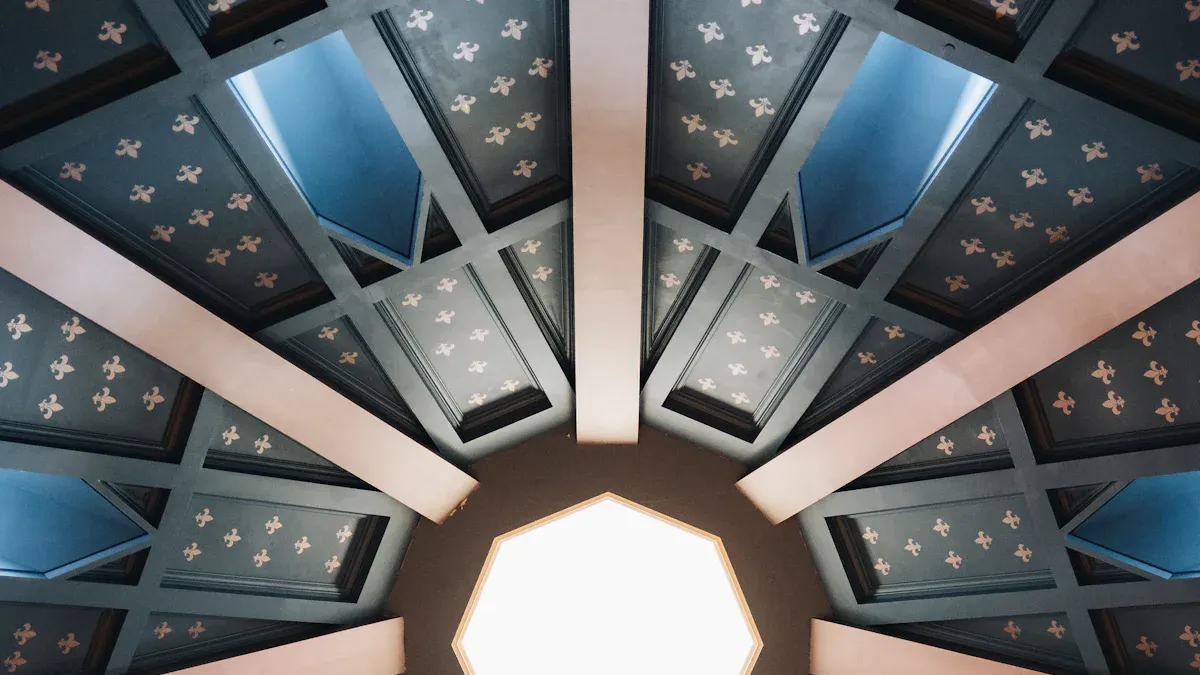
Visual Impact
A coffered ceiling brings classic depth to your space. This unique ceiling design creates a striking grid pattern. It adds significant architectural interest. You immediately get a sense of grandeur and sophistication. This style elevates your room’s look, making a strong, elegant statement. These ceiling ideas truly transform your home, giving it a custom, high-end feel. It turns an ordinary ceiling into a captivating feature.
Best Room Placement
You can place a coffered ceiling in many areas. It looks great in dining rooms. It also suits living rooms. A study or home office is another perfect spot. These rooms often benefit from a more formal feel. The coffered ceiling becomes a beautiful focal point. It adds elegance to your room.
Installation Tips
Consider your ceiling height before installing a coffered ceiling. Taller ceilings work best. They allow the design to shine without making the room feel cramped. You have many material choices for your coffered ceiling. Wood and plaster are classic options. You can also choose modern materials.
Material | Durability |
|---|---|
Polyurethane | Resists peeling, rot, moisture, and insects. It offers advantages over MDF and wood when painted. |
PVC | Resists peeling, rot, moisture, and insects. |
MDF | Polyurethane offers advantages over MDF when painted. |
For a basic coffered ceiling, expect to pay around $25 per square foot. This cost typically includes materials and labor. If you want intricate patterns and premium materials, the price can go up to $50 per square foot. The average cost for a coffered ceiling installation is $20 to $30 per square foot. This price covers both labor and materials. Choose materials that fit your budget and style. This design choice adds lasting value and beauty to your home. It makes your ceiling a true work of art.
2. Tray Ceilings: Subtle Height
Visual Appeal
A tray ceiling adds a subtle architectural detail. It creates an inverted recess in your ceiling. This design draws your eye upward. It makes your room feel taller and more spacious. You get a sense of elegance without overwhelming the space. The shape often mirrors your room’s contour. It commonly appears as a square or rectangle. This simple yet effective design elevates your aesthetic. It gives your ceiling a sophisticated, layered look.
Lighting Integration
Tray ceilings are perfect for hidden lighting. You can install LED strips or rope lighting inside the recessed area. This creates a soft, ambient glow. It washes the ceiling with light. This indirect lighting adds warmth and depth to your room. It sets a relaxing mood. You can also place recessed lights within the flat part of the tray. This gives you focused illumination. It’s a great way to enhance the mood of your space. Think about how different light colors could change the vibe!
Design Variations
You have many options for your tray ceiling’s depth. For rooms with eight-foot ceilings, shallower trays work best. These are typically three to five inches deep. This keeps an open feel. If you have higher ceilings, you can go deeper. You can even add multiple steps or layered effects. The depth of the inside tray recession can vary a lot. It ranges from one inch to over a foot deep. Your ceiling height and desired look influence this depth. These unique ceiling design ideas offer flexibility. You can customize your ceiling to fit your style. These ceiling ideas truly transform your space. You can paint the inner recess a different color. This creates even more visual interest.
3. Vaulted Ceilings: Grandeur
Visual Impact
A vaulted ceiling creates an immediate sense of grandeur. It lifts your gaze upward, making any room feel expansive and airy. This design follows the roofline, often rising to a dramatic peak. You get an open, majestic atmosphere. It transforms an ordinary space into something truly spectacular. This type of ceiling adds significant architectural interest. It becomes a striking focal point in your home.
Small Space Benefits
You might think vaulted ceilings are only for large homes. However, they can make a small room feel much larger. By extending the vertical space, your room gains an illusion of spaciousness. This makes even compact areas feel open and less confined.
However, you should know that vaulted ceilings can be less energy-efficient. Heating or cooling a room with a vaulted ceiling puts more strain on your HVAC system. Heat naturally rises, collecting in the higher spaces. Even though this might seem good in summer, your AC still needs to cool every cubic foot of air. Homes with high ceilings have a greater volume of air. This means you need to heat or cool more air compared to a home with flat ceilings. Insulating these ceilings is also more challenging. They often cut into attic space, limiting insulation thickness. This can lead to higher energy consumption and increased utility bills. For example, a furnace for a 2,000-square-foot home with 8-foot ceilings will likely be too small for the same size home with 10-foot vaulted ceilings.
Material Choices
When considering a vaulted ceiling, you need to think about structural changes. For example, in some renovations, you must remove purlins and all ceiling joists. Purlins are wood pieces that support rafters. Removing them means you need to transfer all the loads they carried from the roof down to the ground in another way. This complex structural change makes hiring a structural engineer absolutely necessary. They ensure the safety and integrity of your home.
Before you vault your ceiling, you should assess your home’s suitability.
Check your attic space. Does your roof have trusses or traditional rafters? Trusses are complicated frameworks. They often require roof removal. Traditional rafters are big lumber. The roof can stay.
Look at rafter depth. Rafters less than 5.5 inches deep are not enough for traditional insulation. You would need spray-in foam.
Consider mechanical complications. You might need to relocate ducts, plumbing vents, HVAC equipment, and wiring.
Vaulting has big implications for structural integrity. A structural engineer can verify safety. They ensure collar ties are correctly placed. This prevents walls from spreading after you remove ceiling joists.
You must follow all local building codes and regulations. These cover fire safety, insulation, and structural support. You also need to get necessary permits from your local building department. This involves submitting detailed plans and potential inspections. These unique ceiling design ideas require careful planning.
4. Modern Drop Ceilings: Contemporary Flair
Visual Impact
Modern drop ceilings offer a sleek, contemporary look. They give your space a clean, finished appearance. You can hide unsightly wires, pipes, or ductwork above the panels. This creates a smooth, uncluttered overhead ceiling. These ceilings provide a modern aesthetic. They are perfect for a minimalist or industrial design. You can choose from various panel styles and finishes. This allows you to customize the look of your space.
Acoustic Advantages
Beyond looks, modern drop ceilings offer great acoustic benefits. They help reduce noise. This makes your room quieter and more comfortable. Different panel types have different noise reduction capabilities. Look at this table for some examples:
Panel Type | Noise Reduction Coefficient (NRC) |
|---|---|
Fiberglass | 0.90 |
PVC | 0.25 |
Mineral Board | 0.55 |
You can see how much sound each material absorbs. Fiberglass panels, for instance, have a high NRC of 0.90. This means they absorb 90% of the sound that hits them. This chart shows the differences clearly: This makes them excellent for spaces where you need quiet. Think about offices or home theaters.
Design Versatility
You have many material choices for modern drop ceilings. These materials also come with different fire ratings. This is important for safety.
Mineral fibers offer fire safety. They can give extra resistance to meet time ratings.
Plastic can be used for fire-rated panels.
Tin is another material option for ceiling tiles.
Composite materials are used in ceiling tile construction.
Fire-rated wood panels meet safety standards.
Vinyl and expanded polystyrene are used for ‘drop out’ ceiling tiles. These are heat-sensitive. They fall during a fire. This allows sprinklers to activate.
Fire ratings depend on the specific materials. They also depend on the manufacturing process. Safety testing and third-party evaluations determine these ratings. These factors show where and how you can safely install panels. They help meet fire codes and city rules. Organizations like FM Global, UL, ICC-ES, and NFPA 13 set these standards. They ensure your ceiling is safe. These modern ceiling ideas give you both style and peace of mind for your room.
5. Exposed Beams: Rustic Charm

Visual Impact
Exposed beams bring rustic charm to your home. They add character and warmth. You get a cozy, inviting feel. These beams create a strong focal point. They draw your eye up. This makes your ceiling a true design element. You can transform any room with this look. This ceiling treatment adds so much character to your overall ceiling.
Beam Types
You have two main types of exposed wood beams: authentic structural beams and decorative faux beams. Authentic beams actually support your home. Faux beams are just for looks. They are lighter and easier to install. When choosing wood, consider the type. Hardwoods are usually heavier. They have tighter grain patterns. Softwoods are lighter. They have wider growth rings. Oak is a very popular reclaimed hardwood. You often find it in heavy timbers. Hand-hewn oak timbers look great and last a long time. People love their rich brown tones and unique markings. This type of ceiling feature really stands out.
Glulam Beams (Glued Laminated Timber): These are strong and look good. People prefer them for exposed beams.
Solid-sawn beams: Workers cut these from logs. They often use Douglas Fir, Southern Pine, or Oak. They look natural and are strong. They work well for short to medium spans.
Timber Frame Beams: These are big beams. They are often hand-hewn or milled. They look striking. Builders use them in traditional timber framing.
Style Integration
Exposed beams fit many design styles. They are perfect for a farmhouse style. They add to that rustic, country feel. For an industrial style, you can pair them with metal accents. This creates a cool, edgy look. In a modern rustic style, they bring natural warmth. They balance sleek, contemporary elements. These unique ceiling ideas truly define your room’s style.
6. Stretch Ceilings: Seamless Customization
Visual Impact
Stretch ceilings give your space a smooth, flawless look. You get a perfectly flat surface. This modern ceiling design can transform any room. It hides imperfections and creates a sleek finish. You can choose from many colors and textures. This allows for incredible customization. Imagine a high-gloss finish that reflects light. Or perhaps a matte finish for a softer feel. This type of ceiling offers a clean, contemporary aesthetic.
Backlit Effects
You can create stunning visual effects with stretch ceilings. Install LED lighting behind the membrane. This makes your entire ceiling glow. You get a soft, diffused light. This indirect lighting adds depth and ambiance to your room. You can even print custom images on the membrane. Then, backlighting makes them come alive. This creates a unique focal point. It turns your ceiling into a work of art.
Durability & Care
Stretch ceilings are very durable. They typically consist of membranes and aluminum tracks. Both materials are recyclable. This helps reduce environmental impact. The custom fabrication process also minimizes on-site waste. High-gloss finishes reflect light. This can lower your energy use for lighting.
You might wonder about their environmental footprint. Here is a comparison:
Environmental Criteria | Vinyl (Stretch Ceilings) | Linoleum | Rubber |
|---|---|---|---|
Solid Waste | Better (lasts longer) | Worse | N/A |
Indoor Air Quality | Better (lower emissions) | Worse | Worse |
Nutrifaction/Eutrophication | Less impact | More impact | N/A |
Acidification | Less impact | More impact | N/A |
Global Warming | Less impact | More impact | N/A |
Resource Depletion | On par | On par | N/A |
Overall Environmental Performance | Outperforms | Outperformed | N/A |
Primary Energy | Better | Worse | N/A |
With proper care, a stretch ceiling can last over 20 years. Regular professional check-ups every 3-5 years help extend its lifespan. You should clean your ceiling monthly with a mild soap or diluted glass cleaner. Avoid strong chemicals. While water-resistant, PVC ceilings need professional help if they leak. Remember, you cannot repaint a stretch ceiling. Proper cleaning keeps it looking new.
7. Painted Ceilings: Bold Statements
Visual Impact
You often think about painting your walls. But what about your ceiling? A painted ceiling makes a bold statement. It draws your eye up. This transforms your room in a big way. You can create a dramatic effect. Or you can add a subtle touch of color. Painting your ceiling gives your room a unique personality. It makes the ceiling a true design feature. You can use paint to define zones in an open-plan space. This simple change makes a huge difference.
Color Impact
The color you choose to paint your ceiling really matters. A dark paint color can make a large room feel cozier. It brings the ceiling down visually. A light paint color, like white or a pale hue, makes a room feel more open. It reflects light. You can even paint the ceiling the same color as your walls. This creates a seamless, enveloping feel. Think about the mood you want. A bright color can add energy. A soft color can bring calm. You can use paint to change how your room feels.
Patterns & Murals
You don’t just have to paint your ceiling one solid color. You can get creative! Consider painting patterns on your ceiling. Stripes can make a room seem longer or wider. Geometric shapes add a modern touch. You can even paint a mural. Imagine a sky scene or a floral design above you. This turns your ceiling into a work of art. You can use stencils to make patterns easier. Or you can hire an artist for a custom mural. These unique ceiling design ideas let you express your style. You can paint the ceiling to match your decor. This makes your room truly special.
8. Wallpapered Ceilings: Texture & Pattern
Visual Impact
You can add incredible texture and pattern to your overhead space. Wallpapered ceilings transform your room. They turn a plain surface into a captivating design element. Imagine a subtle linen texture or a bold geometric print above you. This creates an unexpected visual treat. It adds depth and personality to your room. Your ceiling becomes a true focal point.
Pattern Selection
Choosing the right pattern for your ceiling is fun. A small, intricate pattern can make a large ceiling feel more intimate. A bold, graphic design can add a modern edge. You can use stripes to make a narrow room seem wider. Or you can pick a floral motif for a touch of elegance. Consider the overall style of your space. The pattern should complement your existing decor. This ensures a cohesive look for your ceiling.
Application Guidance
Applying wallpaper to a ceiling requires careful planning. Different wallpaper types suit ceilings better than others.
Material Type | Ceiling Suitability | Adhesive Requirement/Characteristic |
|---|---|---|
Non-woven Non-pasted | Best choice for ceilings | Requires adhesive application, offers full control over glue strength and working time. |
Non-woven Pre-pasted | Great option for smaller ceilings | Adhesive pre-applied, activated with water. Less control over bond strength and working time compared to non-pasted. |
Peel & Stick PVC-free (polyester) | Best for small ceilings or accent areas | Repositionable, adhesive performance can vary with heat/humidity. |
Peel & Stick Vinyl | Suitable for smaller panels only | Strong adhesive, but heavier vinyl can sag under gravity over time. |
For large ceiling installations, non-woven non-pasted materials are often best. They give you control over the adhesive. This prevents sagging and ensures a strong bond. Pre-pasted non-wovens work well for medium-sized rooms. Peel & stick options are less ideal for large ceilings. If you use them, choose lightweight PVC-free polyester with short panels.
Adhesive drying times also vary.
Pre-pasted wallpaper generally dries in 24 hours.
Vinyl-coated wallpaper can take up to 72 hours to dry completely.
Self-adhesive wallpaper drying time varies. It can be a few minutes to a few hours. Water-based adhesives are quicker. Solvent-based ones may take longer.
Sometimes, you might face challenges during application.
Stubborn Air Bubbles: Gently lift them with a razor. Inject adhesive using a medical syringe (without a needle). Then, roll the area flat.
Lifting Seams: Secure them with clear silicone. Apply it precisely with a toothpick.
Wrinkles: Apply steam from 12 inches away. Gently stretch the wallpaper with a dry microfiber cloth.
9. Tin Tile Ceilings: Vintage Ornate
Visual Impact
You can give your space a touch of old-world charm with tin tile ceilings. These decorative tiles add incredible texture and intricate patterns. They create a vintage, ornate look. This ceiling style instantly becomes a focal point. It draws your eye upward. You get a sense of history and elegance. Tin tiles transform a plain overhead space into a work of art. They bring a unique character to any room.
Historical Roots
Tin tiles first became popular in the late 19th century. People used them as an affordable way to mimic expensive plasterwork. They offered a beautiful, decorative ceiling option for many homes and businesses. These tiles were a common sight in Victorian-era buildings. Today, they bring that same historical charm to modern interiors. You can find them in restored buildings or new constructions. They offer a nod to the past.
Installation Methods
You have a few ways to install tin ceiling tiles. “Nail-up” tiles attach directly to a wood substrate. This method gives you a seamless look. “Drop-in” tiles fit into a grid system. This is similar to a modern drop ceiling. It makes installation easier. You can also find “snap-in” tiles for a simpler DIY approach.
When you choose tin tiles, consider fire safety. Tin ceiling tiles generally have a 1-hour fire rating. This means they can resist fire for an hour. If you need a 2-hour rating, you will need to add more materials. Tin tiles made from T1 grade tin-plated steel (0.010” thick) carry an ASTM E 84-03b fire rating. It can be hard to find general fire ratings for tin ceilings. You might need specific numbers from the manufacturer. An engineer’s sign-off might also be necessary. The fire rating also depends on the structure underneath, like plaster. This ensures your beautiful ceiling is also safe.
10. LED Strip Lighting Ceilings: Modern Ambiance
Visual Impact
You can give your space a truly modern feel with LED strip lighting ceilings. These lights create a sleek, futuristic look. They define the edges of your ceiling or highlight architectural features. This design adds a contemporary touch to any room. You get a clean, minimalist aesthetic. The subtle glow transforms your overhead space into a dynamic design element. It makes your ceiling a captivating feature.
Indirect Lighting
LED strip lights are perfect for indirect lighting. You can hide them in coves or behind panels. This creates a soft, diffused glow. It washes your ceiling with light. This type of lighting adds depth and ambiance. It avoids harsh glares. You can set a relaxing mood or highlight specific areas. Consider the power consumption when planning your setup. Different light strips use varying amounts of power:
Light Strip Type | Power (W/m) |
|---|---|
3528 Mono Light Strip | 4.8W/m |
5050 RGB Light Strip | 14.4W/m |
2835 High-Brightness LED Strip | 19.2W/m |
COB LED Strip | 11W/m |
RGBW 4-in-1 LED Strip | 18–20W/m |
You calculate total power by multiplying the watts per meter by the total length. For example, a 10-meter installation of a 14W/m COB light strip uses 140W. A 30-meter RGB LED strip at 14.4W/m consumes 432W. A 50-meter high-brightness 2835 strip at 18W/m uses 900W. This helps you plan your electrical needs for your ceiling.
Smart Home Features
You can easily integrate LED strip lighting into your smart home system. This gives you convenient control over your lighting. You can adjust brightness, change colors, or set schedules with a simple voice command or tap on your phone. Many systems offer compatibility with popular platforms. This makes managing your lights effortless.
Alexa
Google Home
Matter (for Apple Home and other Matter devices)
IFTTT
Samsung SmartThings
Siri Shortcuts
These integrations allow you to create custom lighting scenes. You can sync your lights with music or movies. This enhances the ambiance of your room. Your ceiling becomes a smart, interactive part of your home.
You have explored many unique ceiling design ideas. These great ceiling ideas offer immense potential for room transformation. We covered everything from classic coffered looks to modern LED strip lighting. These diverse ceiling ideas bring both style and function to your home. Think of your ceiling as a key element in your interior design. It is a canvas for your personal expression. These decorative ceiling ideas make a significant impact on your home’s overall aesthetic and feel. Your ceiling can truly define your room’s style.
FAQ
What is the “fifth wall” in interior design?
The “fifth wall” is your ceiling. People often overlook it. You can transform your room’s look by giving it special attention. It offers untapped potential for unique design. Think of it as another canvas for your creativity.
What are coffered ceilings?
Coffered ceilings feature a grid pattern of sunken panels. They add architectural depth and a sense of grandeur to your room. You often see them in formal spaces like dining rooms. They create a sophisticated, classic look.
What are the benefits of a stretch ceiling?
Stretch ceilings give you a smooth, flawless finish. They hide imperfections and offer many customization options. You can add backlighting for a glowing effect. They are also durable and easy to maintain.
What should you consider before installing a vaulted ceiling?
You should consider structural changes and energy efficiency. Vaulted ceilings can make a room feel larger. However, they might require significant structural work. They can also impact your heating and cooling costs.
