

A dark garage corner, unfinished room, or attic crawlspace changes the job quickly. You need enough light to see edges, fasteners, wiring paths, and surface condition without constantly shifting a flashlight. These worklights cover very different setups, from hang-anywhere temporary lamps to tripod floodlights and long string runs for larger work areas.
A Closer Look At The Lineup

JC-LGL LED Temporary Work Light 150W 18000LM

JC-LGL LED Construction String Light 50FT 65W 8000Lm

JC-LGL LED Temporary Work Light 100W 13000LM

JC-LGL LED Temporary Work Light 60W 7800LM

JC-LGL LED Construction String Light 100FT 130W 16000Lm
Zetunlo 21000Lumen LED Work Light with Stand
Wetartatty 32000LM LED Work Light with Tripod

JC-LGL LED Temporary Work Light 100W 12000LM
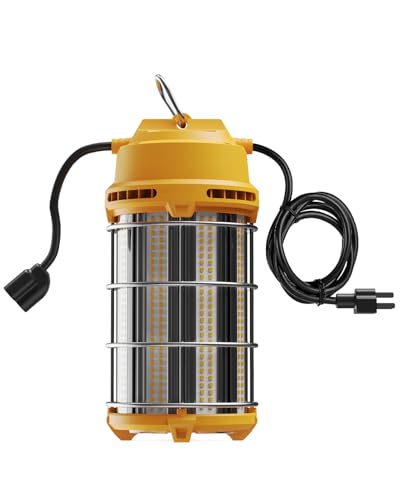
JC-LGL LED Temporary Work Light 150W 19500LM
More Details On Our Top Picks
Large unfinished rooms benefit from a single bright source that can hang overhead or sit close to the floor. This JC-LGL lamp produces 18,000 lumens, a measure of total visible light, at a daylight-style 5000K color temperature.
Its stainless-steel cage and top hook suit active jobsite setups where the lamp may be moved between rooms. The honest read is that its focused single-lamp layout suits broad illumination more than lighting a long hallway evenly.
Noteworthy Benefits
- 18,000-lumen output supports large room visibility.
- 5000K light helps you distinguish work surfaces clearly.
- Top hook gives you an overhead placement option.
- Steel protective cage suits active renovation spaces.
Things To Consider
- A nearby outlet remains necessary for corded operation.
- Long spaces benefit more from a distributed string layout.
Unlike the first JC-LGL lamp, this 50-foot string spreads its light across five separate hanging points. Each lamp is spaced 10 feet apart, which makes more sense for attics, crawlspaces, and framing runs than a single bright hotspot.
Its 8,000-lumen total and 5000K output fit close-range repair work where you need coverage along a path. You may find the 50-foot length easier to manage than the 100-foot version inside compact interiors.
What Pays Off
- Five lamps distribute light along the work area.
- Carabiner-style hangers simplify overhead placement.
- Linkable construction supports larger temporary layouts.
Worth Noting
- Plan the hanging route before uncoiling the full cord.
This 13,000-lumen JC-LGL sits between the 7,800-lumen compact lamp and the brighter 18,000-lumen model. That middle output suits a garage refresh, basement project, or room-by-room remodel where one movable lamp is enough.
A steel cage, hanging hook, and floor placement give you practical setup choices without a tripod. For most home renovation rooms, that straightforward format is easier to live with than routing a long string cord.
Why It Works Well
- 13,000 lumens suit medium-sized work areas.
- 5000K output gives surfaces a daylight-style appearance.
- Top hook supports overhead temporary placement.
- Floor setup keeps the lamp useful between tasks.
- Steel cage adds coverage for busy work zones.
Trade Offs
- A corded light needs outlet access near the job.
- It does not spread lamps down a long passage.
- Tripod aiming is better handled by Zetunlo.
Who It Suits Best
You benefit most from this model during room-by-room DIY work that needs a bright, movable central lamp.
Where Another Pick Suits Better
Zetunlo 21000Lumen LED Work Light with Stand suits you better for adjustable elevated aiming across several surfaces.
The 7,800-lumen JC-LGL is the more measured choice for a smaller garage bay, utility room, or close-range repair station. Its 5000K output still gives you clear daylight-style illumination, but without the scale of the larger temporary lamps.
Like the 13,000-lumen version, it has a stainless-steel cage and a portable hook for hanging or floor use. One thing worth considering is that large open areas need the greater reach of the 18,000- or 19,500-lumen models.
A Strong Showing
- 7,800 lumens suit close-range repair tasks.
- Hanging and floor placement support flexible setup.
Minor Gripes
- Large rooms may need a brighter central light.
Made For
You get the most from this lamp in a small workspace where a high-output temporary fixture would feel excessive.
Consider Something Else When
JC-LGL LED Construction String Light 50FT 65W 8000Lm suits you better for lighting a continuous attic or crawlspace route.
Long renovation runs need coverage at several points, and this 100-foot string uses ten lamps rather than relying on one central fixture. Its 16,000-lumen total and 10-foot lamp spacing fit hallways, open framing, workshops, and larger temporary installations.
Compared with the 50-foot JC-LGL string, you get twice the lamp count and twice the overall reach. The trade-off shows up during setup, since a longer cord calls for more deliberate hanging and routing.
Notable Gains
- Ten lamps spread light along a 100-foot run.
- Hooks let you position each lamp around obstructions.
- 16,000 lumens support broad temporary coverage.
- 5000K output suits visual detail during renovation work.
- Linkable format can extend a larger layout.
- Even lamp spacing helps reduce dark gaps.
Room For Improvement
- Its 100-foot length needs more storage space.
- Small rooms may not need ten separate lamps.
A tripod changes the setup from general room lighting to aimed task lighting. Zetunlo combines three detachable heads with a telescoping stand that reaches 78.7 inches, making it useful for directing light at walls, benches, and ceiling work.
Each head rotates horizontally through 360 degrees and tilts upward through 180 degrees, so you can shape coverage more deliberately than with a hanging lamp. At 11.02 pounds, it may feel less convenient for quick carry-and-go tasks than JC-LGL’s compact temporary lights.
Strengths Worth Knowing
- Three heads let you light separate work surfaces.
- Detachable heads can hang or rest on the floor.
- Telescoping stand raises light above benches and equipment.
Points To Note
- The 11.02-pound setup needs more room for transport.
- Tripod legs need a stable clear patch of floor.
- A 16-foot cord still limits placement to outlet range.
- Three heads add setup steps before work begins.
The Wetartatty tripod brings the strongest listed output here, with 32,000 lumens from three 100W floodlight heads. More importantly, it adds three color-temperature settings: 3000K warm, 5000K daylight-style, and 6500K cool white.
That color choice gives you more control for painting, inspection, assembly, or general construction work. Compared with Zetunlo, its height range of 43.7 to 65.4 inches is lower, though its 360-degree adjustable heads remain useful for targeted coverage.
Useful Touches
- 32,000 lumens support wide-area task lighting.
- Three color settings suit different visual tasks.
- Adjustable heads can direct light toward walls or benches.
- Telescoping stand folds for transport and storage.
- 16.4-foot cord provides useful outlet reach.
Softer Spots
- The plug-in design needs continuous outlet access.
This 12,000-lumen temporary light is close in purpose to the 13,000-lumen JC-LGL, with a small step down in output. The 5000K light, protective stainless-steel cage, hook, and floor placement make it a direct choice for ordinary jobsite and maintenance lighting.
You may prefer this straightforward form for recurring garage tasks where a tripod would take up too much floor space. It remains a single-source lamp, so larger open areas may need a higher-output model or several fixtures.
Benefits That Matter
- 12,000 lumens suit routine workshop lighting.
- Hook and floor placement fit changing tasks.
Small Caveats
- Its output sits below the 13,000-lumen version.
- Wide work zones may require additional fixtures.
- Outlet placement determines where you can use it.
Right Fit For
You benefit most from this lamp during regular garage, maintenance, and room-refresh work needing direct 5000K light.
Not Your Match When
Wetartatty 32000LM LED Work Light with Tripod suits you better for color-adjustable inspection and wide-area coverage.
For a single hanging or floor lamp with the highest listed JC-LGL output, this 19,500-lumen unit has a clear role. Its 5000K light is aimed at broad temporary illumination in large garages, unfinished interiors, and active construction areas.
Compared with the 18,000-lumen JC-LGL, the difference is modest, so your placement needs matter more than the number alone. For open areas with one practical mounting point, this is likely the more suitable high-output format.
Features That Help
- 19,500 lumens support large open work areas.
- 5000K output suits detailed construction tasks.
- Stainless-steel cage adds physical lamp coverage.
- Hook and floor placement offer two setup approaches.
Areas To Watch
- Long narrow spaces benefit more from string lights.
Best Suited To
You get the greatest benefit in large unfinished spaces where one central temporary lamp needs substantial output.
A Better Fit Elsewhere
JC-LGL LED Construction String Light 100FT 130W 16000Lm suits you better for long work routes needing spaced light points.
What Matters Before You Choose Worklights
Output and Coverage Shape
Lumens describe the amount of visible light produced, but output alone does not decide placement. A 19,500-lumen hanging lamp works well in an open room, while a lower-output string layout can make more sense along a long crawlspace or hallway. Match the light pattern to the shape of your work area before focusing on the biggest number.
Placement and Adjustment
A hook-equipped temporary lamp works for overhead framing, floor-level repairs, and quick room changes. Tripod models bring aiming control, stand height, and adjustable heads, which helps with wall work, bench work, and surface inspection. Make room for tripod legs before selecting that format.
Color Temperature
Color temperature is measured in Kelvin, or K, and describes how warm or cool the light appears. The 5000K lamps here provide a daylight-style look suited to general construction and repair work. Wetartatty adds 3000K and 6500K settings, giving you more flexibility for different visual preferences.
Cord and Storage Needs
Corded worklights need a practical path to an outlet without crossing active walkways. String lights need time to coil and hang carefully, while tripod lights need room in a vehicle or storage area. A compact temporary lamp remains the easier format for quick jobs in tight spaces.
Details That Change the Fit
Common Shopping Slip Ups
Do not select output without considering where the light must land. A single high-output fixture can leave shadows along a long route, while a string system can feel unnecessary in one small room.
Where the Extra Money Goes
Higher-tier worklights often add adjustable heads, telescoping stands, selectable color temperatures, longer cords, or more distributed lamps. Those additions matter most for repeated workshop use, detailed inspection, and large jobsite layouts.
Frequently Asked Questions
How many lumens do you need for a worklight?
Smaller repair areas can work well with lower-output temporary lamps. Large garages, unfinished rooms, and wide jobsite areas benefit from higher output or multiple light points.
Is 5000K suitable for workshop tasks?
Yes, 5000K provides a daylight-style appearance that suits general workshop and construction tasks. It can help you see surface detail more clearly than warmer light.
Are string worklights useful in crawlspaces?
Yes, string worklights spread illumination along a route instead of concentrating it in one place. Hanging lamps at intervals can help reduce dark sections in long tight spaces.
Why choose a tripod worklight?
A tripod raises the light and lets you direct it toward walls, ceilings, or workbenches. Multi-head designs also let you cover separate task areas from one setup point.
Can temporary worklights sit on the floor?
Many temporary lamps in this list support floor placement as well as hanging. Floor setup is useful where no overhead mounting point is available.
