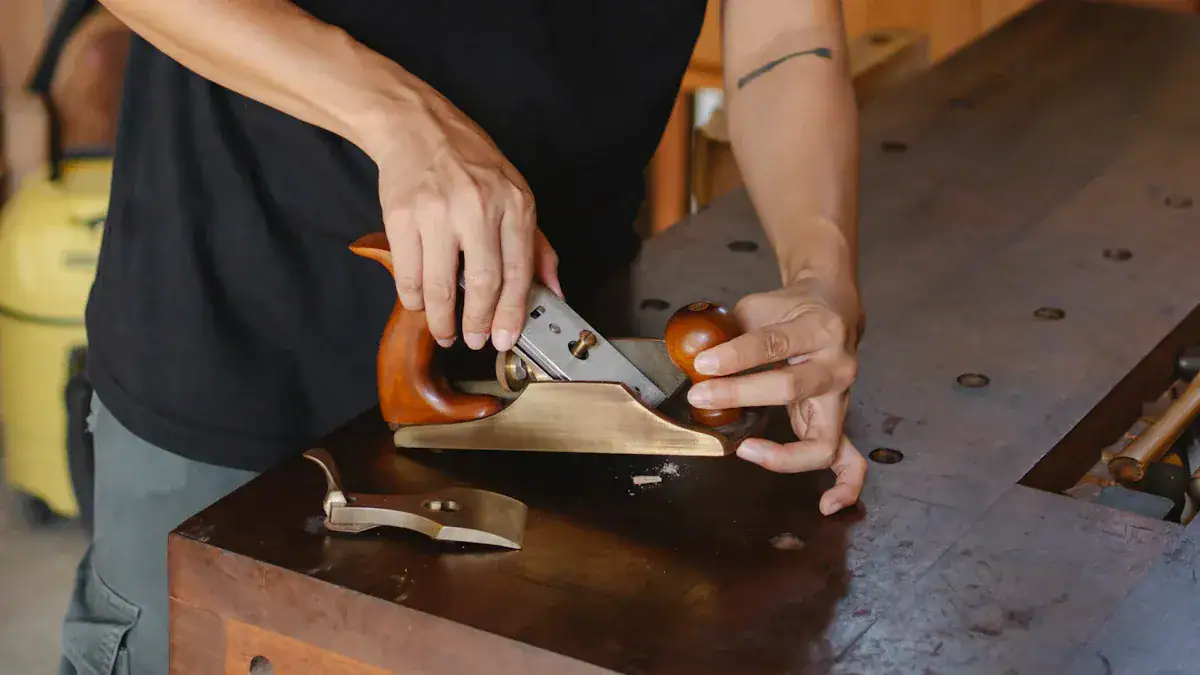
A wood planer is a fundamental woodworking tool. This planer levels wood pieces, transforming uneven boards into smooth, uniformly thick lumber. Your planer ensures consistent thickness by removing thin layers. It smooths rough wood, making surfaces safe. This woodworking tool also makes both sides flat and parallel. A jointer works with your planer, flattening one face and squaring edges. Both tools are vital for quality woodworking. This best wood planer guide helps you understand and choose a quality woodworking planer.
Key Takeaways
A wood planer makes wood pieces the same thickness. It smooths rough wood and makes both sides flat.
A jointer flattens one side of a board and makes its edge straight. You use a jointer before a planer.
You need both a jointer and a planer for good woodworking. The jointer makes the first flat side, and the planer makes the other side flat and parallel.
When choosing a planer, think about its size, the type of blades it uses, how much power it has, and your budget.
Always follow safety rules when using a planer. Wear safety glasses and never put your hands near the blades.
Understanding Your Wood Planer
What is a Planer
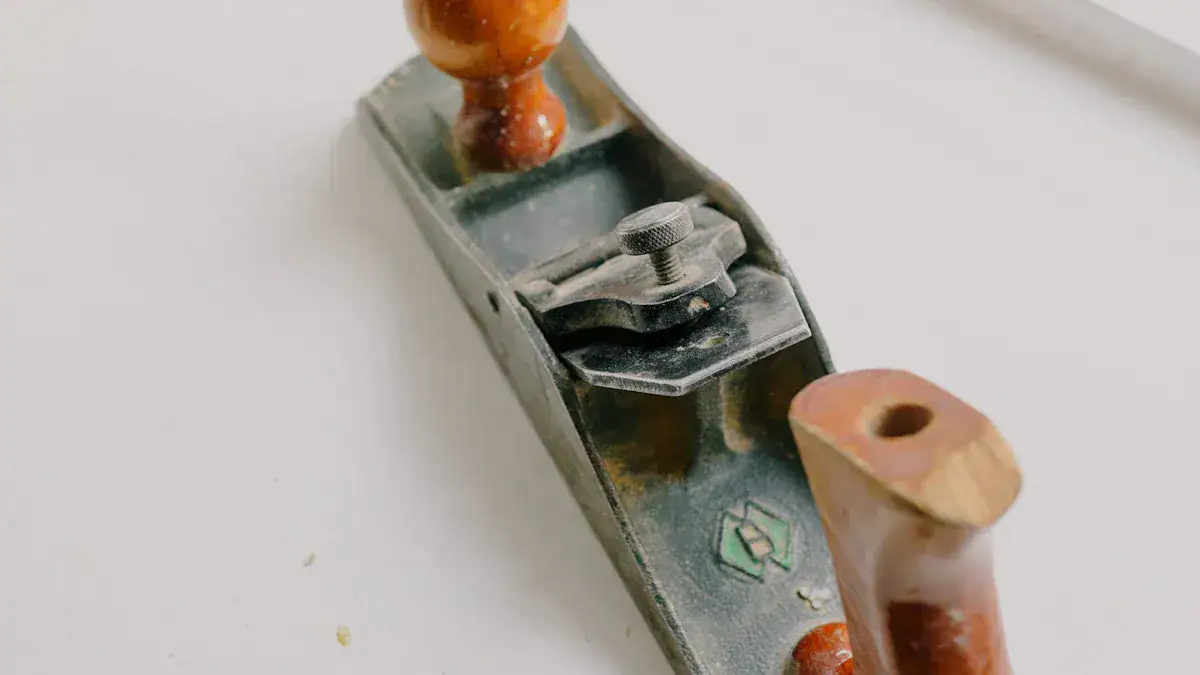
A wood planer is a machine that makes your lumber a consistent thickness. It smooths the face opposite to the one you prepare with a jointer. You adjust the planer’s setting to gradually reduce the board’s thickness. This process ensures the newly planed face is parallel to the previously flattened face. The planer’s primary role is to ensure all stock achieves the same thickness.
Planer vs. Jointer
You might wonder about the difference between wood jointer and planer tools. A jointer flattens one face of a board and squares an edge. It makes warped boards flat. A planer then makes the opposite face parallel to the first. This ensures uniform thickness across the entire board. You use a jointer first to create a flat reference surface. Then, you use a planer to achieve the final thickness.
Aspect | Jointer | Planer |
|---|---|---|
Primary Function | Flattens one face and squares an edge; makes warped boards flat | Makes the opposite face parallel to the first; ensures uniform thickness |
Working Mechanism | Flat bed with blades in the middle; wood passed over blades | Rollers feed wood; cutter head trims to consistent thickness |
Surface Treated | Ideal for warped or twisted surfaces and edges | Best for surfaces already somewhat flat but needing uniform thickness |
Sequential Use | Generally used first to create a flat reference surface and squared edge | Follows the jointer to bring the board to final thickness and smoothness |
Why Both Tools Matter
You need both a jointer and a planer for quality woodworking. A jointer establishes a flat reference surface on one face of rough lumber. It also squares one edge. The planer then uses this jointed face as a reference. It creates a parallel opposing face and achieves the desired thickness. Without a jointer, a planer cannot effectively flatten twisted or cupped boards. This best wood planer guide emphasizes their combined importance. A thickness planer alone cannot correct severe warps.
Choosing the Best Planer
Planer Types
You will find different wood planer types. Benchtop planers are compact and portable, ideal for smaller shops. Stationary planers are larger, heavier machines for continuous, heavy-duty woodworking. Portable planers offer flexibility for job sites. Each type suits different needs. Consider your projects and space when choosing your planer.
Cutterhead Options
Your planer’s cutterhead is crucial. You can choose between straight knife and helical/spiral types. Straight knife heads use 2-4 long blades. Helical heads use many small, staggered carbide inserts. Helical heads offer a smoother finish with less tear-out and are quieter. They simplify blade maintenance with replaceable inserts. While helical heads cost more initially, their long-term maintenance is lower. You can rotate inserts to use intact sides when one side wears.
Feature | Helical Head Planer | Straight-Knife Planer |
|---|---|---|
Noise Level | Low (up to 50% quieter) | High |
Surface Finish | Smoother, minimal tear-out | Rougher, prone to tear-out |
Blade Maintenance | Simple, replaceable carbide inserts | Requires sharpening or full blade swaps |
Initial Cost | Higher ($500-$3,000+) | Lower ($200-$1,000) |
Long-Term Value | Superior (durability, efficiency) | Moderate (higher upkeep costs) |
Power and Capacity
Motor power affects your planer’s performance. For serious thickness planing, machines over 3 HP are recommended. Many 15-inch planers use 3-hp, 220-volt motors. These handle significant cuts, like removing 1/16 inch from 15-inch wide hard maple. For professional workshops, a 5 HP motor or higher is beneficial. A typical benchtop planer accommodates board widths from 12 to 15 inches. For example, the WEN PL1326 handles boards up to 6 inches thick and 13 inches wide.
Blade Material
You also need to consider blade material for your planer. High-speed steel (HSS) blades provide a cleaner cut, especially in softer woods. They are less prone to fracturing on knots. HSS can achieve a sharper edge, giving a better finish. Carbide-tipped inserts offer superior longevity and reduce downtime for sharpening. This leads to lower long-term costs.
Speed Settings
Your planer’s feed rate impacts the final surface finish. A slower feed rate produces smoother cuts, ideal for hardwoods. A faster feed rate allows quicker processing but may result in rougher surfaces. This is acceptable for softwoods or quick shaping.
Feed Rate | Best For | Drawback |
|---|---|---|
Slow | Smooth finishes, hardwoods | Takes more time |
Fast | Quick shaping, softwoods | May leave rough spots |
Snipe Prevention
Snipe is a common issue where board ends are cut deeper. You can prevent snipe with several techniques.
Use Sacrificial Boards: Place boards of equal thickness at the beginning and end of your workpiece. This protects your project.
Flatten First Surface with a Jointer: This helps the planer make a parallel cut.
Ensure Adequate Board Support: Use stands or roller supports. You can also manually lift board ends as they enter and exit. Some planers have features like SNIPE LOCK or SNIPE MINIMIZER to help.
Benchtop Planers
Benchtop planers are excellent for hobbyists and small shops. They offer a compact footprint and affordability. Many users find 12-inch or 13-inch benchtop planer models sufficient for most projects. For wider items, a 15-inch benchtop planer provides extra capacity. For example, the Oliver 10055 15″ Benchtop HCX Helical Cutterhead Planer weighs 158.7 lbs and handles stock up to 15″ wide and 6″ thick. This best wood planer guide helps you choose the best planer for your needs. You can find the best benchtop planers from brands like DeWalt.
Using Your Planer Effectively
Safety Practices
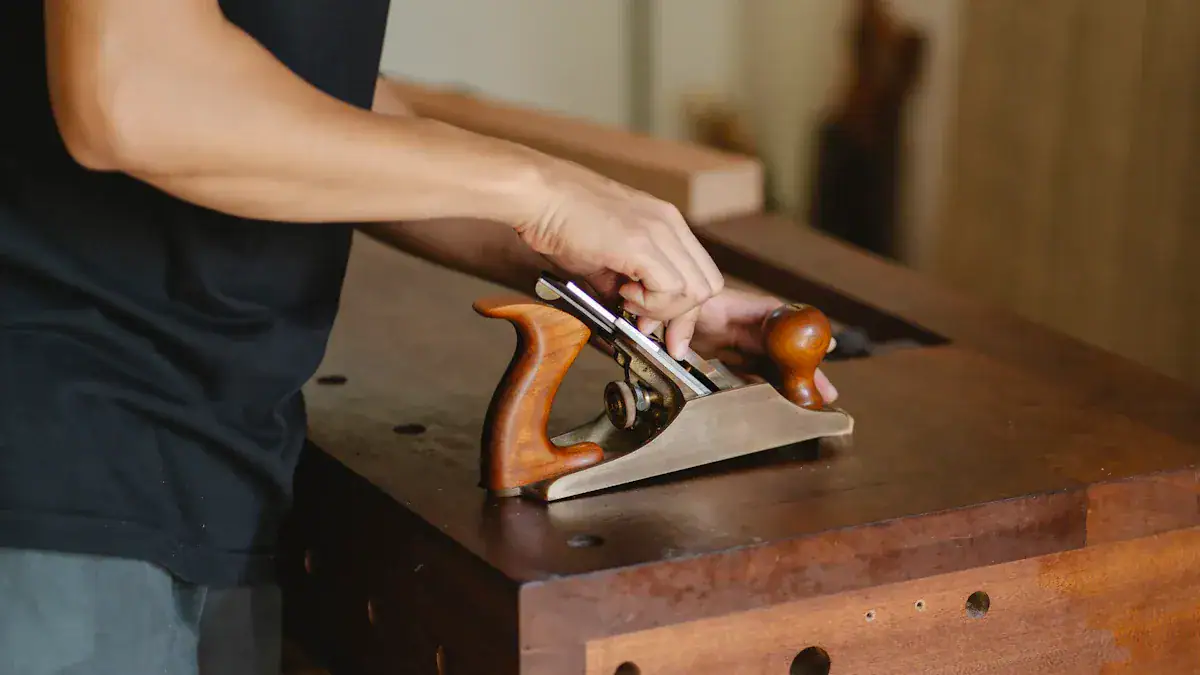
You must prioritize safety when you operate your planer. Always wear safety glasses to protect your eyes from flying debris. Never reach your hands into the planer, even when it is off, because the blades are exposed. Set the depth of cut before you turn on the machine.
Ensure your material is at least 12 inches long and 1/2 inch thick. This prevents kickback. Stand to one side when you run wood through the planer. If material gets stuck, power off and unplug the machine before you fix it. Never change the depth of cut while the planer is running. Do not plane more than 1/8 inch of wood at a time. Always plane with the grain of the wood. Wear hearing protection because planers are loud. Inspect for knots beforehand; knots can cause kickback.
Stock Preparation
Proper stock preparation is key to using your wood planer. First, rough saw your wood slightly oversize. Cut pieces thicker than the final size. Test and mark the wood for any crown or twist warp.
Use a flat surface to find any rocking. Next, use a jointer to flatten the concave face. This creates your first flat surface. Then, your planer smooths the convex face and achieves a specific thickness. A jointer must flatten one face first. This ensures the planer replicates the bottom shape onto the top. Finally, joint one edge straight. This makes a 90-degree angle to the face. This preparation ensures your wood planer works efficiently.
Planing Techniques
You need good techniques for effective planing. Always plane with the grain of the wood. Planing against the grain increases resistance and can cause unpredictable movements. Adjust the thickness setting to control how much material you remove. For example, start by removing 1/8 inch of material.
A slower feed rate gives you a smoother finish, especially on hardwoods. A faster rate is good for softwoods or quick shaping. This helps you achieve the desired thickness and finish for your woodworking projects. Knowing how to use a planer correctly improves your results.
Common Issues
You might encounter some common issues when using your planer. Chatter marks are a frequent problem. Dull or improperly installed knives cause these marks. Worn bearings or an incorrect feed rate also contribute. To fix this, inspect and replace dull knives. Ensure correct installation and height. Adjust the chip breaker to 1/32″ to 1/16″ clearance. This supports wood fibers and reduces vibration. Check the pressure bar to avoid excessive pressure. Maintain cutterhead bearings. Adjust your feed rate; a slower rate often gives a smoother finish. Heavy use or mishandling can dull knives. Regularly inspect them for dullness. Sharpen slightly dull knives or replace severely worn ones. This helps you understand how to use a planer for best results.
Top Thickness Planer Models
Choosing the right thickness planer makes a big difference in your woodworking projects. This best wood planer guide helps you find the perfect machine. You need a planer that matches your project needs and workshop space. Here, you will discover top models for overall performance, benchtop convenience, and great value.
Best Overall Planer
You want a thickness planer that delivers consistent results and offers great features. The DeWalt DW735X 13-Inch 3-Knife 2-Speed Thickness Planer stands out. This planer offers a powerful 15-amp motor and a three-blade cutterhead. It shaves up to ⅛ inch per pass. You get smooth surfaces, even at high cuts per inch. Its robust motor and dual-speed functionality ensure precise cuts with minimal snipe. This model is a solid investment for serious woodworking. You can also upgrade this planer with a Shelix cutting head for an even smoother finish and quieter operation.
Best Benchtop Planers
Benchtop planers offer power in a compact size. They fit well in smaller shops. The DeWalt 13-Inch 3-Knife 2-Speed Thickness Planer (DW735X) is a top choice among best benchtop planers. It features built-in infeed and outfeed tables. This planer also has fan-assisted chip ejection. You will appreciate its high capacity and powerful performance. Another excellent benchtop planer is the JET 13-Inch Helical Benchtop Planer. Its helical cutterhead design provides exceptional cut quality. You will achieve a glass-smooth finish, even on tough grains. This benchtop planer also minimizes snipe and operates quietly. For a strong alternative, consider the Ridgid 13-Inch Thickness Planer. It offers aggressive three-blade planing performance.
Best Value Planer
You might seek a planer that balances performance with an accessible price. The WEN PL1326 13-inch Spiral Benchtop Planer is an excellent budget option. This benchtop planer provides spiral cutter performance without a premium price. It delivers smooth finishes, making it ideal for hobbyists. Another great value choice is the DeWalt DW734 12-1/2-inch Benchtop Planer. This planer balances power and size for home workshops. It delivers smooth finishes at an accessible price. Brands like Performax or Woodtek also offer decent performance without a high cost. You can find a quality planer that fits your budget.
Top Jointer Models
You need a quality jointer to flatten one face of your lumber and square an edge. This prepares your wood for the planer. Choosing the right jointer depends on your workshop size, budget, and project needs. This section guides you through the best jointer models available.
Best Overall Jointer
For professional workshops, you need a jointer that offers exceptional precision, capacity, and build quality. Top-tier jointers feature helical cutter heads. These heads provide a clean finish and require minimal maintenance. Look for models with long cast-iron tables. These tables ensure stable support for large projects. A powerful 2-hp motor or higher is essential. This motor handles demanding tasks. You will find features like a 2-way tilting fence and chrome handwheels. These allow for accurate adjustments. Heavy-duty designs and commercial-grade cutters ensure durability. They also guarantee precise cuts for years of use.
Best Benchtop Jointer
Benchtop jointers are perfect for small workshops or occasional use. They offer a compact footprint and excellent value. The Wahuda 8-inch Jointer is a top pick. It provides an 8-inch cut capacity and features spiral cutter heads for smooth finishes.
The Rikon 6-inch Benchtop Jointer also stands out. It uses helical-style cutter heads with 12 double-edged cutters. This ensures smooth cuts. This portable jointer weighs only 36 pounds. It has a 30-inch long bed and a maximum depth of cut of ⅛ inch. The WEN 8-inch Benchtop Jointer is another solid choice. It offers an 8-inch wide bed and extension arms for longer boards. For a budget-friendly option, consider the Craftsman Benchtop Jointer. It is a 6-inch jointer suitable for edge jointing smaller boards.
Best for Small Shops
If you have limited space, you need tools that maximize efficiency. Benchtop jointers are ideal for small shops. They provide the necessary functionality without taking up too much room.
Models like the Rikon 6-inch Helical Benchtop Jointer offer powerful performance in a compact design. Its 10-amp motor operates at 20,000 RPM. This ensures efficient material removal. The WEN 8-inch Benchtop Jointer also fits well in small spaces. It has a wide bed and extension arms. These features help you handle various board sizes. These jointers allow you to achieve professional results even in a constrained environment.
Jointer Planer Combos
You might consider a jointer planer combo machine if space is a major concern. These machines combine the functions of a jointer and a planer into one unit. This saves significant space in your workshop. They are generally more affordable than buying two separate high-quality machines. You can transition quickly between jointing and planing.
This saves you time. However, you cannot use them for jointing and planing simultaneously. Each machine is optimized for its specific task. Dedicated machines often offer superior performance.
Feature/Aspect | Combination Machines | Separate Units |
|---|---|---|
Space-Saving | Excellent, ideal for small workshops. | Requires more space, as each machine is a standalone unit. |
Cost-Effectiveness | Generally more affordable than buying two separate high-quality machines. | Can be more expensive to purchase two high-quality machines individually. |
Efficiency | Quick transitions between jointing and planing, saving time. | Requires moving between two distinct machines, potentially slowing workflow. |
Simultaneous Use | Cannot be used for jointing and planing simultaneously. | Can be used for jointing and planing at the same time by two different operators or for different tasks. |
Dedicated Functionality | Compromises might be made in the design of each function to accommodate the combination. | Each machine is optimized for its specific task, potentially offering superior performance. |
For beginners or those with tight garage spaces, the Jet JJP-8BT 8″ Jointer Planer Combo is an excellent choice. It is compact, bench-friendly, and portable.
The Jet JJP-10BTOS 10″ Jointer Planer Combo with Open Stand offers more capacity. It balances power, price, and size for hobbyists and small shops. This model provides more than an entry-level machine. It does not require 220V power. Other Jet Tools combo models include the JPJ-12BHH and JPJ-12B. These machines offer space efficiency. They provide the functionality of two machines in one footprint.
You now understand the distinct roles of a wood planer and a jointer. A jointer flattens surfaces, while a wood planer achieves consistent thickness. For quality woodworking, you need both tools. When selecting your best planer, consider critical factors:
Board Size: Ensure the planer accommodates your largest workpieces.
Cutterhead Style: Choose between straight-blade or spiral-blade for your planer.
Space and Budget: Decide on a benchtop or floor-standing planer model.
Motor Amperage: Verify your workshop supports the planer’s power.
Construction Quality: Look for durable materials in your planer.
Assess your project needs and budget. This best wood planer guide helps you choose. Invest in a quality woodworking planer for lasting satisfaction and superior craftsmanship.
FAQ
What is the main purpose of a wood planer?
A wood planer makes lumber a consistent thickness. It smooths the face opposite the jointed side. You adjust the planer to remove thin layers. This ensures parallel surfaces. The planer helps you achieve uniform board thickness for your projects.
What is snipe, and how can you prevent it with your planer?
Snipe is when your planer cuts deeper at the board’s ends. You can prevent it. Use sacrificial boards at the start and end. Ensure adequate board support. Some planers have built-in snipe prevention features.
What are the main types of cutterheads for a planer?
Your planer can have straight knife or helical cutterheads. Straight knives are common and affordable. Helical heads use small, rotating inserts. They offer a smoother finish and less tear-out. A helical planer is quieter.
What is the difference between a benchtop and a stationary planer?
A benchtop planer is compact and portable. It suits smaller shops. A stationary planer is larger and heavier. It handles continuous, heavy-duty work. Both types of planer achieve consistent thickness. Your space and project needs determine the best planer.