

Funny enough, you just asked about whole‑house water filters on the same day your faucet started tasting metallic, so it’s a good time to contemplate upgrades. You want steady flow, fewer contaminants, and manageable maintenance without guessing which parts matter. I’ll walk you through five proven systems and the key factors to match one to your home’s pressure, plumbing, and water test so you can pick with confidence.
| Express Water Whole House 3-Stage Heavy Metal Water Filter |

| Best for Heavy Metals | Application: Whole-house/point-of-entry filtration for drinking, showering, appliances | Connection Size / Port: Designed for whole-home plumbing (standard whole-house size; 4.5″ x 20″ cartridges)* | Filtration Media / Stage Type: Multi-stage: polyphosphate, KDF heavy-metal, activated carbon block | VIEW LATEST PRICE | Read Our Analysis |
| Culligan WH-HD200-C Whole House Water Filter System |

| Reliable Workhorse | Application: Whole-house/point-of-entry filtration to protect pipes and appliances | Connection Size / Port: 1″ inlet/outlet | Filtration Media / Stage Type: Cartridge-based (compatible with sediment and carbon-style cartridges listed) | VIEW LATEST PRICE | Read Our Analysis |
| 3M Aqua-Pure Whole House Water Filter System AP904 |

| Certified Performance | Application: Whole-house/point-of-entry filtration to protect water heaters and appliances | Connection Size / Port: 1″ inlet/outlet | Filtration Media / Stage Type: Activated carbon block with non-woven pleat media | VIEW LATEST PRICE | Read Our Analysis |
| Culligan WH-S200-C Whole House Sediment Filter Housing |

| Sediment Defender | Application: Whole-house/point-of-entry sediment filtration for home water supply | Connection Size / Port: 3/4″ inlet/outlet | Filtration Media / Stage Type: Sediment cartridge housing (compatible with P5, CW-F, CW-MF, S1A-D) | VIEW LATEST PRICE | Read Our Analysis |
| SimPure Whole House 10″ x 4.5″ Filter Housing |
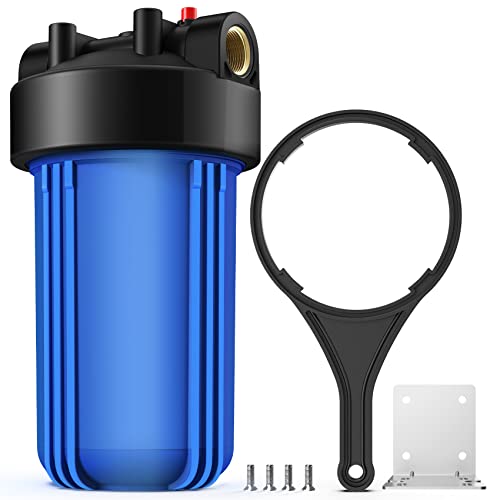
| Versatile Pre-Filter | Application: Whole-house/point-of-entry pre-filtration for well and city water | Connection Size / Port: 1″ NPT brass thread port | Filtration Media / Stage Type: Housing for 4.5″ x 10″ cartridges (compatible with CTO, PP, GAC, etc.) | VIEW LATEST PRICE | Read Our Analysis |
More Details on Our Top Picks
Express Water Whole House 3-Stage Heavy Metal Water Filter
Should you want whole-home protection against heavy metals and scale, the Express Water Whole House 3-Stage Heavy Metal and Anti-Scale set is a strong choice—it’s built for households that need both corrosion/scale control and multi-contaminant reduction without frequent cartridge changes. You get a polyphosphate anti-scale cartridge, a KDF heavy-metal stage with catalytic carbon plus copper/zinc granules for iron, lead, nickel, chromium, and a coconut-shell activated carbon block that cuts chlorine, chloramines, VOCs, TOC, pharmaceuticals, odors, and sediment to 5 microns. It handles up to 0.25 gal/sec, 45–80 psi, 40–100°F, and treats ~100,000 gallons.
- Application:Whole-house/point-of-entry filtration for drinking, showering, appliances
- Connection Size / Port:Designed for whole-home plumbing (standard whole-house size; 4.5″ x 20″ cartridges)*
- Filtration Media / Stage Type:Multi-stage: polyphosphate, KDF heavy-metal, activated carbon block
- Sediment/Particulate Reduction:5-micron rating (reduces rust, dirt, sand, silt, turbidity)
- Flow / Capacity Related:Up to 0.25 gallons/second (~15 gpm peak capability described as whole-home)
- Installation / Maintenance Features:Cartridge replacement set included (6 replacement filters); install in protected, dry location
- Additional Feature:Up to 100,000-gallon life
- Additional Feature:Anti-scale polyphosphate stage
- Additional Feature:KDF heavy-metal media
Culligan WH-HD200-C Whole House Water Filter System
In case you want reliable, point-of-entry protection against sediment and scale throughout your home, the Culligan WH‑HD200‑C is built for that job: it fits 1″ plumbing, accepts common Culligan cartridges (R50‑BBSA, CW25‑BBS, CP5‑BBS, CW5‑BBS, RFC‑BBSA), and comes with a mounting bracket and housing wrench so you can install and maintain whole‑house filtration to improve tap taste and guard pipes and appliances. You’ll remove sediment, rust, dirt, coarse and fine sand, and silt to protect plumbing and appliances. Filters are sold separately, letting you choose cartridge type and micron rating for your specific water issues.
- Application:Whole-house/point-of-entry filtration to protect pipes and appliances
- Connection Size / Port:1″ inlet/outlet
- Filtration Media / Stage Type:Cartridge-based (compatible with sediment and carbon-style cartridges listed)
- Sediment/Particulate Reduction:Removes sediment, rust, sand, silt (cartridge-dependent)
- Flow / Capacity Related:1″ connections (flow depends on cartridge used)
- Installation / Maintenance Features:Housing includes wrench and mounting bracket; cartridges sold separately
- Additional Feature:Point-of-entry protection
- Additional Feature:Includes mounting bracket
- Additional Feature:Housing wrench included
3M Aqua-Pure Whole House Water Filter System AP904
Should you want a low-maintenance, whole-home filtration solution that tackles sediment, chlorine taste and odor, and scale, the 3M Aqua-Pure AP904 is a strong fit—its 100,000-gallon activated carbon block and non-woven pleat media deliver long life and reliable performance for most households. You’ll get up to 20 gpm with 1″ inlet/outlet connections and a 304 stainless steel head built to NSF Standard 42 and NSF/ANSI 372. It works on municipal or well water, helps protect water heaters and appliances, and offers tool-free Sanitary Quick Change cartridge swaps with up to a year of filter life. Straightforward to install.
- Application:Whole-house/point-of-entry filtration to protect water heaters and appliances
- Connection Size / Port:1″ inlet/outlet
- Filtration Media / Stage Type:Activated carbon block with non-woven pleat media
- Sediment/Particulate Reduction:Reduces sediment (via pleated/activated carbon media)
- Flow / Capacity Related:Up to 20 gpm; 100,000 gallon capacity
- Installation / Maintenance Features:Sanitary Quick Change (tool-free/no-touch) filter replacement; stainless steel head
- Additional Feature:NSF 42 & 372 tested
- Additional Feature:Sanitary Quick Change
- Additional Feature:304 stainless-steel head
Culligan WH-S200-C Whole House Sediment Filter Housing
Should you want a simple, visible way to keep sediment out of every tap, the Culligan WH-S200-C delivers with a clear housing and a 3/4″ valve-in-head bypass that makes cartridge changes quick and mess-free. You’ll connect it to your main line (3/4″ inlet/outlet) and monitor cartridge life at a glance. It handles up to 4 GPM, 100°F, and water up to 1000 ppm TDS, using Culligan cartridges like P5, CW-F, CW-MF, or S1A-D. A pressure-relief button and bypass let you service it without draining the house, helping protect appliances and plumbing from sediment damage.
- Application:Whole-house/point-of-entry sediment filtration for home water supply
- Connection Size / Port:3/4″ inlet/outlet
- Filtration Media / Stage Type:Sediment cartridge housing (compatible with P5, CW-F, CW-MF, S1A-D)
- Sediment/Particulate Reduction:Reduces sediment, dirt, sand, silt (clear housing for monitoring)
- Flow / Capacity Related:Maximum flow rate 4 gpm
- Installation / Maintenance Features:Valve-in-head bypass shut-off and built-in pressure relief button; clear housing for visual monitoring
- Additional Feature:Clear housing window
- Additional Feature:Valve-in-head bypass
- Additional Feature:Built-in pressure relief
SimPure Whole House 10″ x 4.5″ Filter Housing
Should you need a rugged, easy-to-service pre-filter for well or city water, the SimPure DB10P 10″ x 4.5″ housing is built for whole-house protection with a brass 1″ NPT port and a built-in pressure-relief button so you can swap cartridges quickly and safely. You’ll mount the reinforced food-grade polypropylene unit with the included bracket and wrench, then drop in any standard 4.5″ x 10″ cartridge (sold separately). It’s NSF-tested, handles up to 20 gpm and 40°C, and supports up to 500 ppm TDS. Brass threads and upgraded mounting holes cut leaks; avoid excess Teflon tape.
- Application:Whole-house/point-of-entry pre-filtration for well and city water
- Connection Size / Port:1″ NPT brass thread port
- Filtration Media / Stage Type:Housing for 4.5″ x 10″ cartridges (compatible with CTO, PP, GAC, etc.)
- Sediment/Particulate Reduction:Intended for pre-filtration (fits sediment cartridges like PP10)
- Flow / Capacity Related:Maximum flow rate up to 20 gpm
- Installation / Maintenance Features:Includes wrench, steel mounting bracket and screws; built-in pressure-relief button and brass threads
- Additional Feature:Brass 1″ NPT port
- Additional Feature:Thickened mounting holes
- Additional Feature:Includes mounting wrench
Factors to Consider When Choosing a Whole House Water Purifier
Start through testing your water so you know the contaminant profile you need to address. Then match filtration technology, flow rate capacity, and cartridge lifespan estimates to your household size and usage. Finally, check installation requirements and compatibility with your plumbing to avoid surprises.
Water Contaminant Profile
Because different contaminants demand different treatments, you’ll need a clear contaminant profile before picking a whole-house purifier. Start through testing for key groups: sediment (sand, silt, rust), dissolved metals (lead, iron, chromium, nickel), chlorine/chloramines, VOCs and solvents, and microbiological indicators like coliforms. Measure concentrations (ppm for TDS, ppb for metals/VOCs) to see whether levels exceed health standards or appliance tolerances and to size capacity and service intervals. Take note your source—municipal systems often bring disinfectants and throughproducts; wells may carry hardness, iron, manganese, or bacteria. Check turbidity, TSS, hardness (grains/gal or ppm as CaCO3), pH, and TDS because they affect media life and need for pre-treatment. Account for seasonal and usage variability that shifts contaminant loads and replacement schedules.
Filtration Technology Type
At the moment you pick a whole-house purifier, match the filtration types to the contaminants, flow demands, and plumbing needs so the system performs reliably and lasts as expected. Choose multi-stage systems whenever you need broad protection: sediment (e.g., 5 µm) initially, then activated carbon blocks for chlorine, chloramines, VOCs, odors and many organics. Add KDF (copper‑zinc) to reduce dissolved heavy metals like iron, lead, chromium and to support chlorine control and microbial suppression when paired with carbon. Use polyphosphate cartridges to sequester hardness minerals and inhibit scale and corrosion—note they don’t remove dissolved hardness salts. Always consider media capacity and lifespan, which depend on incoming water quality and usage, so replacement intervals match your specific conditions.
Flow Rate Capacity
Calculate your household’s peak flow and match it to the purifier’s rated capacity so you won’t suffer pressure drops whenever multiple fixtures run at once. Add up fixture flow rates—showers, faucets, dishwashers, washing machines—to estimate peak instantaneous demand (many homes need 8–20 gpm). Use the purifier’s maximum flow rating (gpm or gps), not just average daily capacity. Confirm whether flow is rated per filter stage or for the assembled system, since a lower-rated stage can bottleneck total throughput. Keep in mind higher flow through a media reduces contact time and can lower contaminant removal, so size the system to maintain performance at your peak. Finally, check the recommended maximum pressure and temperature at rated flow to avoid performance loss or component damage.
Cartridge Lifespan Estimates
Estimate cartridge lifespan in gallons or months, but keep in mind those numbers are just starting points—actual life depends on your water’s quality, temperature, pressure, and how fine the filter is. Manufacturers often quote up to ~100,000 gallons or 6–12 months, but those assume ideal conditions. Should your water have high sediment, turbidity, or contaminant loads—common with well water—you’ll replace cartridges much sooner. Higher continuous flow and system pressure also push more water through media faster, shortening service life. Finer cartridges (1–5 micron) trap more particles but clog earlier than coarse ones, so balance capture needs against replacement frequency. Watch for rising pressure drop, taste or odor changes, or visible sediment and swap cartridges before performance fails.
Installation And Compatibility
Because your whole-house purifier sits at the water main, make sure the inlet/outlet connections and pipe size (for example 3/4″, 1″ NPT, or flange) match your plumbing, the unit’s flow rate meets peak household demand, and the system’s pressure and temperature limits align with your supply — otherwise you’ll need adapters or repiping, and you risk pressure drops or premature wear. Also confirm the purifier’s GPM rating covers simultaneous uses so showers, faucets, and appliances don’t suffer low pressure. Check operating ranges (typical 45–80 psi, 40–100°F) against your supply. Measure space for the housing and cartridge access, a sturdy mounting surface, and room for tools or wrench-free swaps. Plan shutoff valves, a bypass or relief, and nearby drainage to simplify servicing.
Certification And Standards
After you’ve confirmed fittings, flow rates, and space for servicing, check the purifier’s certifications and standards to verify it will actually do what the manufacturer claims. Look for NSF/ANSI 42 for aesthetic reductions—chlorine, taste, odor, and particulate. Should you need health-related removal, choose systems tested to NSF/ANSI 53 for lead, cysts, VOCs, and certain heavy metals. Make certain materials comply with NSF/ANSI 61 so components won’t leach contaminants. For point-of-entry claims like scale control or chloramine reduction, demand third-party test reports or certifications that specify the contaminant and reduction level. Finally, confirm documented rated capacity and flow/pressure testing (gallons treated, psi, gpm) through an accredited lab so certified performance matches your household demand.
