

Should you want to keep food fresher, longer, a good vacuum sealer changes how you shop, store, and cook. You’ll want something that fits your kitchen, handles liquids or delicate items, and stands up to regular use. I’ll compare compact chamber models, heavier-duty units, and dual-pump options so you can match features to your needs—plus the key trade-offs to watch for.
| Avid Armor Ultra Series USV32 Chamber Vacuum Sealer |

| Best for Liquids | Vacuum Capability: High vacuum (chamber vacuum for liquid-rich foods) | Sealing Method / Seal Length: Chamber sealer with 11.5″ seal bar (two sealing wires) | Intended Use / Capacity: Home/small family, sous-vide, liquid-rich and long-term preservation | VIEW LATEST PRICE | Read Our Analysis |
| VEVOR Chamber Vacuum Sealer 12.6″ Sealing Length |

| Heavy-Duty Capacity | Vacuum Capability: -100 kPa (near-total air removal) | Sealing Method / Seal Length: 12.6″ sealing length; 10 mm seal strip | Intended Use / Capacity: Home and commercial (bakeries, butchers, restaurants); deep chamber for large items | VIEW LATEST PRICE | Read Our Analysis |
| VEVOR Chamber Vacuum Sealer 10.2″ Sealing Length |
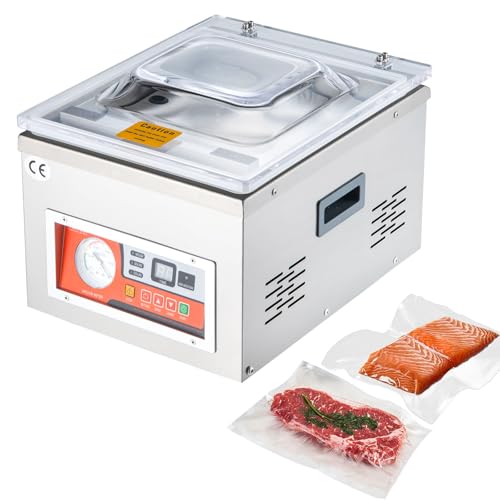
| Professional Performance | Vacuum Capability: 100 kPa (near-total air removal) | Sealing Method / Seal Length: 10.2″ sealing length; 8 mm seal strip (dual lock seal) | Intended Use / Capacity: Home and commercial; deep chamber for large items | VIEW LATEST PRICE | Read Our Analysis |
| Potane Next-Gen Double Pump Vacuum Sealer Machine |

| Most Versatile Tech | Vacuum Capability: Variable suction (0–100% vacuum control; dual commercial-grade pumps) | Sealing Method / Seal Length: Guided seal bar; accepts bags up to 12″ width | Intended Use / Capacity: Home and multi-use (food and household storage); handles larger bags up to 12″ | VIEW LATEST PRICE | Read Our Analysis |
| Food Vacuum Sealer Machine with Dry/Wet Modes |

| Compact & Fast | Vacuum Capability: 75 kPa suction pump | Sealing Method / Seal Length: External/semi-automatic sealer; uses included bags (compact unit; deep air channel) | Intended Use / Capacity: Home kitchen, everyday food preservation (smaller/portable capacity) | VIEW LATEST PRICE | Read Our Analysis |
More Details on Our Top Picks
Avid Armor Ultra Series USV32 Chamber Vacuum Sealer
Should you cook soups, marinate meats, or do sous vide at home, the Avid Armor USV32 delivers leak-free, high vacuum performance that handles liquid-rich foods without mess—so you can preserve meals and intensify flavors reliably. You’ll use one-touch controls and an 11.5-inch seal bar with two wires to pack multiple items quickly. The compact chamber (11.5″ W x 12″ D x 3.5″ H) fits countertops and its clear glass lid makes loading simple for singles or small families. You can marinate in bags or bowls, and attach the accessory hose under the seal bar to vacuum jars and containers.
- Vacuum Capability:High vacuum (chamber vacuum for liquid-rich foods)
- Sealing Method / Seal Length:Chamber sealer with 11.5″ seal bar (two sealing wires)
- Intended Use / Capacity:Home/small family, sous-vide, liquid-rich and long-term preservation
- Controls / Operation:One-touch controls (straightforward operation)
- Material / Build:Chamber unit with clear glass lid (compact countertop design)
- Accessories / Extras:Vacuum accessory hose for external containers and jars
- Additional Feature:Chamber marinating capability
- Additional Feature:Clear glass lid
- Additional Feature:External accessory hose
VEVOR Chamber Vacuum Sealer 12.6″ Sealing Length
In case you regularly seal large cuts of meat, whole loaves, or bulk portions and want near-total air removal without crushing delicate items, the VEVOR Chamber Vacuum Sealer (DZ-260C) is a strong choice for your home or small commercial kitchen. You get a stainless steel, 12.6″ sealing bar with a 320 W heater and 10 mm seal for durable, airtight closures. The 180 W pump reaches -100 kPa to slow spoilage, while the deep chamber fits big items and standard bags. An LED display and pressure gauge prevent crushing, and the unit’s heavy-duty build suits frequent or commercial use.
- Vacuum Capability:-100 kPa (near-total air removal)
- Sealing Method / Seal Length:12.6″ sealing length; 10 mm seal strip
- Intended Use / Capacity:Home and commercial (bakeries, butchers, restaurants); deep chamber for large items
- Controls / Operation:Automatic operation; LED display and simple controls; gauge
- Material / Build:Stainless steel body and chamber
- Accessories / Extras:Built-in gauge; designed for heavy use (no specific hose listed)
- Additional Feature:Built-in pressure gauge
- Additional Feature:Stainless steel body
- Additional Feature:Heavy-duty commercial rating
VEVOR Chamber Vacuum Sealer 10.2″ Sealing Length
In case you want professional-grade vacuum sealing at home without sacrificing space, the VEVOR Chamber Vacuum Sealer is a strong choice thanks to its 100 kPa vacuum power and 10.2″ sealing length. You’ll remove nearly all air to slow oxidation and spoilage for meat, seafood, coffee, dry goods and marinades. Its dual lock 8 mm seal and 260 W heater create durable, leak-resistant seals that resist freezer swelling. The deep stainless chamber fits large cuts or loaves, works with standard bags, and handles oily or salty foods. A 180 W pump, real-time pressure gauge and LED controls make operation reliable and simple.
- Vacuum Capability:100 kPa (near-total air removal)
- Sealing Method / Seal Length:10.2″ sealing length; 8 mm seal strip (dual lock seal)
- Intended Use / Capacity:Home and commercial; deep chamber for large items
- Controls / Operation:LED display and simple controls; built-in pressure gauge
- Material / Build:Stainless steel chamber and construction
- Accessories / Extras:Built-in gauge and compatible with standard vacuum bags (no specific hose listed)
- Additional Feature:Dual lock seal
- Additional Feature:Compact sealing length
- Additional Feature:Built-in pressure gauge
Potane Next-Gen Double Pump Vacuum Sealer Machine
Provided you regularly batch-cook, purchase meat in bulk, or require heavy-duty sealing for long-term storage, the Potane Next-Gen Double Pump Vacuum Sealer is built for those demands with its commercial-grade dual pumps that deliver fast, sustained suction for larger bags. You’ll use one-touch VAC&SEAL for automatic vacuum-to-seal cycles or choose Vacuum Only with 0–100% control for delicate items. Moist Mode and liquid-isolation trays protect seals; foam gaskets absorb moisture. It accepts 12″ textured bags, includes a starter kit, cutter, hose, spare gaskets, and 5-year warranty. Take note viscous oils can clog microchannels—use manual vacuum then.
- Vacuum Capability:Variable suction (0–100% vacuum control; dual commercial-grade pumps)
- Sealing Method / Seal Length:Guided seal bar; accepts bags up to 12″ width
- Intended Use / Capacity:Home and multi-use (food and household storage); handles larger bags up to 12″
- Controls / Operation:One-touch VAC&SEAL; presets and vacuum/seal modes; LED status
- Material / Build:ABS housing with commercial-grade pump components
- Accessories / Extras:Start kit (bag rolls, precut bags), hose, built-in cutter, spare gaskets, removable trays
- Additional Feature:Dual commercial-grade pumps
- Additional Feature:Moisture defense system
- Additional Feature:Built-in cutter included
Food Vacuum Sealer Machine with Dry/Wet Modes
Who benefits most from this vacuum sealer? You do provided you want fast, reliable preservation for both wet and dry foods. This compact unit (11.6 x 5.19 x 2.95 inches) uses a 75 KPA pump to vacuum and seal in 10–15 seconds, outperforming low-power models. One-touch auto operation and a digital countdown make it simple to use and monitor. It includes twenty 9.84 x 6.69-inch premium bags with deep air channels for strong seals, extending freshness up to seven times longer, reducing waste and saving fridge space. Lightweight and portable, it’s ideal for everyday home kitchen use.
- Vacuum Capability:75 kPa suction pump
- Sealing Method / Seal Length:External/semi-automatic sealer; uses included bags (compact unit; deep air channel)
- Intended Use / Capacity:Home kitchen, everyday food preservation (smaller/portable capacity)
- Controls / Operation:One-touch auto operation; digital countdown display
- Material / Build:Compact plastic housing (lightweight portable unit)
- Accessories / Extras:20 premium sealer bags included; uses deep air channel bags
- Additional Feature:Digital countdown display
- Additional Feature:Includes 20 bags
- Additional Feature:Deep air channel
Factors to Consider When Choosing Vacuum Sealers for Home Use
Upon selecting a vacuum sealer for home use, consider the vacuum strength you need and whether a chamber or external unit fits your kitchen and cooking habits. Check bag compatibility, wet vs dry modes, and seal bar width so you can handle different foods and portion sizes. These factors will help you match features to your storage and meal prep needs.
Vacuum Strength Needed
Because different foods and uses demand different suction, you’ll want a sealer that reaches roughly 70–100 kPa (≈21–29 inHg) for most home tasks: aim toward the higher end for long-term storage, sous‑vide, and preventing freezer burn, and use lower settings or adjustable control for fragile items or short-term refrigeration. You should check specifications in kPa or inHg and match pump power to how much sealing you’ll do—stronger pumps hit target vacuum faster for bulk use. Adjustable vacuum control (0–100% or variable suction) is handy for chips, delicate fruit, or soft cheeses to avoid collapse. For wet foods and marinades, pick units with liquid handling features or chamber-style operation to prevent liquids being drawn into the pump.
Chamber vs External
Should you frequently seal liquids, jars, or large batches, pick a chamber sealer; should you mostly pack dry goods, snacks, or single meal portions, an external (edge) sealer will usually do the job. Chamber machines remove nearly all air inside a sealed chamber, so you can vacuum soups, marinades, and jars without liquids being drawn into the pump. They deliver stronger vacuums without crushing delicate items and run faster for bulk work, but they’re larger and pricier. External sealers suck air from the bag mouth outside the unit, making them compact, lighter, and more affordable for occasional home use. They work well for dry foods and sous-vide portions but can struggle with liquids unless you precool or use special techniques.
Bag Compatibility Options
Compatibility matters more than most people assume, so check bag and accessory options before you buy a sealer. Initially, confirm whether the unit needs textured/embossed (channel) bags or can use smooth bags—many external suction and non-chamber models require textured bags for proper air removal. Check maximum bag width (commonly 8–12 inches) so rolls or larger items fit. Verify compatibility with heat-sealable canisters, jars, or zip-top accessories and whether an accessory port and hose are included or required. In case you’ll seal wet or marinated foods, choose bags and machines rated for moisture—look for double-seal capability or extended sealing time and liquid-resistant bag designs. For sous-vide or long-term freezer use, pick heavy-duty bags (about 3–4 mil or thicker) to resist punctures and freezer burn.
Wet Vs Dry Modes
Whenever you’re sealing different foods, choose wet or dry mode based on moisture content: wet mode applies higher heat and longer sealing time to form stronger seals on moist or marinated items, while dry mode uses shorter, cooler seals for chips, nuts, and baked goods to avoid melting or over-sealing the bag. Use wet mode for sauces, marinated meats, and fresh fish to prevent seal failures from surface liquids, but watch viscous or oily marinades—they can clog bag microchannels. Pre-freeze or cool hot liquids and consider partial vacuuming to reduce spillage. Dry mode protects fragile, dry items from heat damage. Prefer machines with adjustable suction and separate “vacuum only” or “seal only” functions so you can remove air without crushing delicate wet foods.
Seal Bar Width
Consider the seal bar width and construction carefully, since wider bars (around 10–12+ mm) and longer lengths give you stronger, more reliable seals and let you close wider bags or multiple edges at once—handy while packing bulk items. Choose wider, heavier-duty bars and solid gaskets should you vacuum fatty or high-moisture foods; they resist freezer burn, punctures, and seam leaks and tolerate repeated high-heat cycles. Look for dual or multiple sealing wires for redundancy so one failing wire won’t ruin a seal. In the event you pack delicate items, pick a unit with narrower or adjustable seal widths and temperature control to avoid melting or crushing thin bags while still forming an adequate seal. Match seal design to your typical food and bag types.
Size And Footprint
When planning where your sealer will live, measure the countertop and storage space initially so you can pick a unit that fits with at least 2–4 inches clearance for lid opening and ventilation. Check the sealer’s footprint (length × width × height) and compare it to your measured area. Consider chamber depth or internal height—3.5–6 inches suits small-to-medium loaves, roasts, and bowls; choose deeper chambers for larger pieces. Match sealing bar length to the bag widths you’ll use because shorter bars limit maximum bag size and batch capacity. Provided counter space is tight, favor compact, lightweight models (around 12×6×4 inches and under ~6 pounds) that store upright. For frequent or heavy use, reserve room for a larger machine plus accessories, cooling, and maintenance.
Ease Of Use
Now that you’ve matched size and footprint to your space, consider how the sealer will actually feel to operate day-to-day. You’ll want one-touch or fully automatic vacuum-to-seal cycles so a single button finishes the job without guesswork. Clear, easy-to-read controls and status indicators—LEDs or digital displays—let you monitor vacuum level and seal progress at a glance. Pick models with adjustable vacuum strength or preset food modes to protect delicate items while handling dense meats. Look for straightforward loading features: wide seal bars, guided channels, or clear lids that make bag alignment quick and consistent. Helpful extras—removable drip trays, built-in cutters, and accessory hoses with simple hookups—cut cleanup and expand tasks without added hassle.
Maintenance And Warranty
Maintaining your vacuum sealer and comprehension of its warranty can save you money and headaches down the line. Check warranty length and coverage—parts, labor, pump, and motor—before buying; typical terms run 1–5 years and affect repair versus replacement costs. Confirm registration requirements, required servicing, and use of approved parts to keep coverage valid, and store proof of purchase and serial numbers safely. Establish a routine: clean the sealing bar, gaskets, and drip trays after each use and replace foam gaskets or sealing strips whenever they wear to prevent leaks and motor strain. Ask about availability and cost of common replacement parts and whether components are user-replaceable. For oil-lubricated or chamber units, follow recommended pump oil changes and service intervals to preserve performance.
