

Most home routers don’t use a dedicated midband backhaul, so you’re probably missing out on steadier multi‑device speeds without even realizing it. You’ll want a tri‑band mesh whenever rooms, floors, and smart devices start competing for bandwidth, since these systems reserve a band for node‑to‑node traffic and keep clients fast. I’ll walk you through five top picks, what each excels at, and which setup fits your home — but initially, let’s match needs to features.
| TP-Link Deco 7 Pro BE63 Wi‑Fi 7 Mesh System (3-Pack) |

| Cutting‑Edge Performance | Tri‑band Support: Tri‑band Wi‑Fi 7 (6 GHz / 5 GHz / 2.4 GHz) | Mesh System (Multi‑node): 3‑pack Deco mesh | App Management: Deco app (Android / iOS) | VIEW LATEST PRICE | Read Our Analysis |
| TP-Link Deco XE75 AXE5400 WiFi 6E Mesh (2-Pack) |
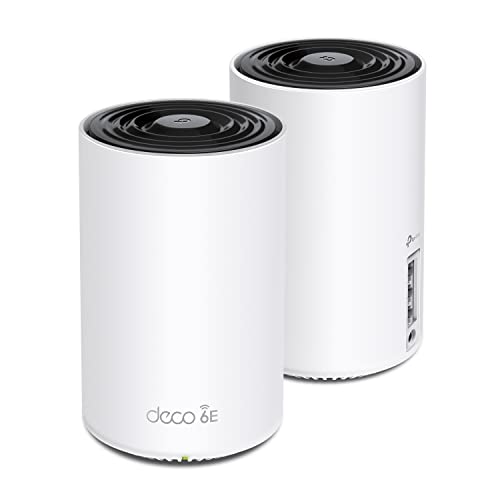
| Value Wi‑Fi 6E | Tri‑band Support: Tri‑band Wi‑Fi 6E (6 GHz / 5 GHz / 2.4 GHz) | Mesh System (Multi‑node): 2‑pack Deco mesh | App Management: Deco app (guided setup, remote management) | VIEW LATEST PRICE | Read Our Analysis |
| TP-Link Deco XE70 Pro AXE4900 Wi‑Fi 6E Mesh (3-Pack) |

| Compact 6E Coverage | Tri‑band Support: Tri‑band Wi‑Fi 6E (6 GHz / 5 GHz / 2.4 GHz) | Mesh System (Multi‑node): 3‑pack Deco mesh | App Management: Deco app (setup and remote management) | VIEW LATEST PRICE | Read Our Analysis |
| TP-Link Deco XE75 Pro AXE5400 WiFi 6E Mesh (3-Pack) |

| Multi‑Gig Powerhouse | Tri‑band Support: Tri‑band Wi‑Fi 6E (6 GHz / 5 GHz / 2.4 GHz) | Mesh System (Multi‑node): 3‑pack Deco mesh | App Management: Deco app (setup and remote management) | VIEW LATEST PRICE | Read Our Analysis |
| ASUS ZenWiFi AX6600 XT8 Tri-Band Mesh WiFi System |

| Trusted Mesh Classic | Tri‑band Support: Tri‑band Wi‑Fi 6 (5 GHz / 5 GHz / 2.4 GHz) | Mesh System (Multi‑node): Single node ZenWiFi (AiMesh compatible for multi‑node setups) | App Management: ASUS Router app (3‑step setup, management) | VIEW LATEST PRICE | Read Our Analysis |
More Details on Our Top Picks
TP-Link Deco 7 Pro BE63 Wi‑Fi 7 Mesh System (3-Pack)
Should you need blistering Wi‑Fi 7 speeds and wide coverage for a busy smart home or small office, the TP‑Link Deco 7 Pro BE63 (3‑pack) delivers — tri‑band Wi‑Fi 7 with Multi‑Link Operation, 320 MHz channels, and combined multi‑gig throughput plus dual wireless/wired backhaul to serve 200+ devices across roughly 7,600 sq. ft. You’ll get 6‑stream, 10 Gbps‑class performance (5188/4324/574 Mbps across 6/5/2.4 GHz), four 2.5G WAN/LAN ports, USB 3.0, and four smart antennas. TP‑Link’s AI roaming and self‑learning optimize handoffs, HomeShield secures devices, and the Deco app simplifies setup; Alexa/Google voice control and full backward compatibility finish the package.
- Tri‑band Support:Tri‑band Wi‑Fi 7 (6 GHz / 5 GHz / 2.4 GHz)
- Mesh System (Multi‑node):3‑pack Deco mesh
- App Management:Deco app (Android / iOS)
- Security & Parental Controls:TP‑Link HomeShield (network protection, parental controls, IoT security)
- Multi‑Gig / Wired Ports:Four 2.5G WAN/LAN ports + USB 3.0
- Seamless Roaming / Mesh Optimization:AI‑Driven seamless roaming, Multi‑Link Operation, self‑learning AI‑Roaming
- Additional Feature:4K‑QAM & 320 MHz
- Additional Feature:USB 3.0 port
- Additional Feature:AI‑Driven VPN client/server
TP-Link Deco XE75 AXE5400 WiFi 6E Mesh (2-Pack)
Should you need blazing multi‑gig Wi‑Fi across a large home, the TP‑Link Deco XE75 AXE5400 (2‑pack) delivers with true tri‑band WiFi 6E speeds—including a dedicated 6 GHz band—and coverage up to 5,500 sq. ft., making it ideal for homes with heavy streaming, gaming, and many smart devices. You’ll get combined throughput up to 5,400 Mbps (2,402 Mbps on 6 GHz and 5 GHz each, 574 Mbps on 2.4 GHz), support for about 200 devices, and AI‑driven mesh that optimizes backhaul and roaming. The Deco app simplifies setup, HomeShield adds security and parental controls, and TP‑Link offers 24/7 support and a two‑year warranty.
- Tri‑band Support:Tri‑band Wi‑Fi 6E (6 GHz / 5 GHz / 2.4 GHz)
- Mesh System (Multi‑node):2‑pack Deco mesh
- App Management:Deco app (guided setup, remote management)
- Security & Parental Controls:TP‑Link HomeShield (network security scan, parental controls, IoT identification)
- Multi‑Gig / Wired Ports:Each unit includes one 2.5G port + two Gigabit ports
- Seamless Roaming / Mesh Optimization:AI‑Driven Mesh with seamless roaming and environment learning
- Additional Feature:HE160 on 6 GHz
- Additional Feature:Compact tower design
- Additional Feature:ASIN B09VW5JHPH
TP-Link Deco XE70 Pro AXE4900 Wi‑Fi 6E Mesh (3-Pack)
In the event you need top-tier Wi‑Fi for many high‑bandwidth devices, the TP‑Link Deco XE70 Pro AXE4900 (3‑pack) is built for you: it adds a congestion‑free 6 GHz band and delivers up to 4.9 Gbps across six streams, covering about 2,900 sq. ft. and supporting as many as 200 devices. You’ll get a 2.5 Gbps WAN/LAN plus two Gigabit ports per unit for fast wired devices and wired backhaul; simultaneous wireless/wired backhaul keeps mesh links resilient. The Deco app handles setup and remote management, AI‑roaming optimizes handoffs, and HomeShield protects devices with parental controls and IoT security.
- Tri‑band Support:Tri‑band Wi‑Fi 6E (6 GHz / 5 GHz / 2.4 GHz)
- Mesh System (Multi‑node):3‑pack Deco mesh
- App Management:Deco app (setup and remote management)
- Security & Parental Controls:HomeShield premium (advanced parental controls, IoT protection)
- Multi‑Gig / Wired Ports:One 2.5 Gbps WAN/LAN + two Gigabit ports per unit
- Seamless Roaming / Mesh Optimization:AI‑roaming technology, algorithm‑driven self‑learning optimization
- Additional Feature:2.5 Gbps + Gigabit
- Additional Feature:6‑stream, 4.9 Gbps total
- Additional Feature:Ideal for NAS/gaming
TP-Link Deco XE75 Pro AXE5400 WiFi 6E Mesh (3-Pack)
Should you need multi-gig performance across a large home, the TP‑Link Deco XE75 Pro AXE5400 (3‑pack) delivers: its true tri‑band design (including a 6 GHz backhaul with HE160) lets you run up to 2.5 Gbps wired plans and serve roughly 200 devices across about 7,200 sq. ft., making it a strong choice for households with heavy streaming, gaming, or many smart devices. You’ll get combined speeds up to 5,400 Mbps (6 GHz 2402 Mbps HE160, 5 GHz 2402 Mbps HE160, 2.4 GHz 574 Mbps), a 2.5 Gbps port plus two Gigabit ports, AI mesh optimization, HomeShield security, Deco app management, and optional Alexa control; just add a modem.
- Tri‑band Support:Tri‑band Wi‑Fi 6E (6 GHz / 5 GHz / 2.4 GHz)
- Mesh System (Multi‑node):3‑pack Deco mesh
- App Management:Deco app (setup and remote management)
- Security & Parental Controls:TP‑Link HomeShield (network & IoT protection, parental controls)
- Multi‑Gig / Wired Ports:One 2.5 Gbps port + two Gigabit Ethernet ports per unit
- Seamless Roaming / Mesh Optimization:AI‑driven mesh learning, seamless roaming and optimization
- Additional Feature:2.5 Gbps port per unit
- Additional Feature:HE160 on 5/6 GHz
- Additional Feature:Supports Multi‑Gig broadband
ASUS ZenWiFi AX6600 XT8 Tri-Band Mesh WiFi System
Should you need consistent Wi‑Fi 6 performance across a larger home, the ASUS ZenWiFi AX6600 XT8 is built to deliver: its tri‑band design and 6 internal antennas push up to 6600 Mbps and cover roughly 2,750 sq. ft., making it a solid choice for multi‑device households that want simple setup, AiMesh expandability, and built‑in Trend Micro security. You’ll get OFDMA and MU‑MIMO for smoother simultaneous connections, three SSIDs, parental controls, and Alexa support. Setup’s a three‑step process via the ASUS Router app, and you can expand coverage with other AiMesh nodes as required. Actual performance varies.
- Tri‑band Support:Tri‑band Wi‑Fi 6 (5 GHz / 5 GHz / 2.4 GHz)
- Mesh System (Multi‑node):Single node ZenWiFi (AiMesh compatible for multi‑node setups)
- App Management:ASUS Router app (3‑step setup, management)
- Security & Parental Controls:Lifetime network security (Trend Micro), parental controls
- Multi‑Gig / Wired Ports:Gigabit ports (internal antennas noted); supports wired backhaul via Ethernet (no explicit 2.5G listed for XT8 single node)
- Seamless Roaming / Mesh Optimization:AiMesh support for seamless mesh roaming and scalable optimization
- Additional Feature:AiMesh interoperability
- Additional Feature:Lifetime Trend Micro
- Additional Feature:Six internal antennas
Factors to Consider When Choosing Tri Band Mesh
While picking a tri-band mesh, you’ll want to compare coverage and range to match your home’s size and layout. Check backhaul options and wired ports so you can optimize performance and connect wired devices. Also consider bandwidth, real-world speeds, and how many devices the system can reliably support.
Coverage And Range
Because coverage needs vary according to layout and construction, start from totaling the square footage of all inhabited areas (including multiple floors) and pick a tri‑band kit rated above that number to allow overlap and margin. Expect effective range to drop 30–70% from walls, floors and dense materials like concrete, brick or metal, so plan extra nodes for thick construction. Recall 5 GHz and 6 GHz deliver higher throughput but much shorter range than 2.4 GHz, so place nodes closer whenever you need low latency or peak speeds. Aim for line‑of‑sight wherever possible and position nodes so each maintains a reliable link—avoid placing any node at the fringe of connectivity. For large, multi‑floor or detached areas, choose systems that support wired or multi‑band backhaul.
Backhaul Options
Coverage and node placement set the stage, but the backhaul determines how well those nodes actually talk to each other and to the internet. With tri‑band systems, one band (often 5 GHz or 6 GHz) can be dedicated as a wireless backhaul, keeping other bands available for clients and enhancing inter‑node throughput. In case you can run Ethernet, wired backhaul delivers steadier, lower‑latency links and lets all wireless bands serve devices. Dual backhaul designs that support both wired and wireless provide redundancy and let nodes pick the best path automatically. Pay attention to backhaul features—HE160/320 MHz channel support and Multi‑Link Operation raise inter‑node capacity. Finally, for gigabit or multi‑gig internet, choose a Multi‑Gig (2.5 Gbps+) wired backhaul to avoid bottlenecks.
Bandwidth And Speeds
In case you need high throughput for multiple simultaneous users, focus on per‑band peak rates and total aggregated capacity rather than just the advertised “tri‑band” label. Check listed link rates for each radio — 5/6 GHz bands often hit hundreds to thousands of Mbps while 2.4 GHz tops around ~574 Mbps — and keep in mind real‑world speeds drop with overhead and interference. A separate dedicated wireless backhaul preserves client bandwidth; a shared backhaul reduces available throughput for devices. Look for Multi‑Link Operation, wider channel support (160/320 MHz), and higher QAM (e.g., 4K‑QAM) to increase peaks, but bear in mind they need compatible clients and are interference‑sensitive. Finally, match aggregated throughput and multi‑gig wired ports to your ISP speed and high‑bandwidth devices to avoid bottlenecks.
Device Capacity Limits
Peak throughput matters, but you also need to know how many devices the mesh can handle before speeds suffer. Look for the advertised device capacity—many home tri‑band systems list around 200 devices—as a baseline, but treat it as a guideline. Capacity hinges on spatial streams and radio counts: 6‑stream architectures support more simultaneous clients than 4‑stream designs. Tri‑band systems help because a dedicated backhaul radio offloads inter‑node traffic, freeing client radios as device counts rise. Bear in mind traffic type: dozens of idle IoT sensors barely use airtime, while several 4K streams or gaming clients consume lots of bandwidth. For future‑proofing, pick a platform whose rated capacity exceeds your current device count with 20–50% to provide headroom for growth and peak usage.
Wired Connectivity Ports
Many mesh buyers overlook wired ports, but they can make or break real‑world performance—especially should you plan to connect NAS, consoles, TVs, or use a wired backhaul. You’ll want at least one multi‑gig Ethernet port (2.5 Gbps or higher) on each node to preserve multi‑gig internet speeds and support high‑speed devices or a wired backhaul. Check how many Gigabit LAN ports each unit offers—2–4 ports reduce the need for extra switches. Confirm there’s a dedicated WAN port and whether any LAN ports can be reassigned as WAN for flexible ISP or uplink setups. Look for USB 3.0+ ports for direct storage or printers. Finally, verify simultaneous wired and wireless backhaul support and link aggregation or port‑bonding options for higher throughput and redundancy.
Security And Privacy
Because your mesh handles all local traffic, you should prioritize strong, up‑to‑date security features to keep devices and data safe. Choose a system that supports WPA3, or at minimum WPA2‑AES, to defend against brute‑force and downgrade attacks. Prefer mesh units with automatic firmware updates, intrusion detection/prevention, and malware/IoT scanning to limit exposure from compromised devices. Use guest networks with client isolation and configurable schedules to prevent lateral movement and protect your main LAN. Verify secure remote management—end‑to‑end encrypted cloud access or an optional local‑only management mode—and require multi‑factor or unique admin passwords. Finally, check VPN support and per‑device VPN client capabilities so you can route sensitive traffic through trusted tunnels without complex per‑device setup.
Setup And Management
Security and management go hand in hand as you set up a tri‑band mesh, so after locking down protections you’ll want a system that’s easy to install and control. Pick a mesh with a user‑friendly mobile app that guides step‑by‑step setup and lets you manage the network remotely. Confirm it supports automatic firmware updates and security patches so you won’t have to chase fixes. Use a system with a single SSID and seamless roaming that hands off clients automatically, preventing repeated device reconfiguration. Check for configurable management features—guest networks, parental controls, QoS, and VPN client/server—so you can tailor behavior. Finally, prefer solutions that let you choose wired or wireless backhaul and make node provisioning and relocation straightforward to preserve performance.
