

Most people don’t realize that even short bouts of laptop use at the wrong height can add months of cumulative strain to your neck and shoulders. You’ll want a setup that moves your screen to eye level, keeps your wrists neutral, and stays cool without wobbling. Below are four top options that balance ergonomics, stability, portability, and cooling—each suited to different spots and needs—so you can pick one that actually makes working away from a desk comfortable and sustainable.
| Lifelong Ergonomic Adjustable Laptop Stand (Fits All Laptops) |
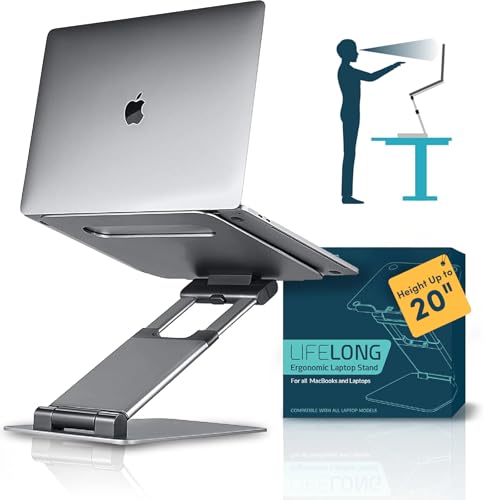
| Portable Ergonomics | Compatibility: Fits laptops/tablets 10″–17″ (MacBook Air/Pro, etc.) | Height Adjustability: Top base rises up to 20″ from stand floor; arm extends up to 13″ with 20 positions | Portability / Foldability: Foldable, portable; backpack-friendly | VIEW LATEST PRICE | Read Our Analysis |
| Tounee Telescopic Height-Adjustable Laptop Stand (10–17″) |

| Smooth Sit-Stand | Compatibility: Compatible with laptops 10″–17″ | Height Adjustability: Telescopic range 2.1″ to 21″ via quick button | Portability / Foldability: Folds for storage; space-saving portable riser | VIEW LATEST PRICE | Read Our Analysis |
| Nulaxy Telescopic 360° Rotating Adjustable Laptop Stand |

| Best for Collaboration | Compatibility: Fits laptops/tablets up to 17″ (10″–17″) | Height Adjustability: Telescopic height adjustable up to 20″ | Portability / Foldability: Foldable pull-out/swivel mechanism for portability/storage | VIEW LATEST PRICE | Read Our Analysis |
| FLEXISPOT H7 Adjustable Overbed Rolling Laptop Table |
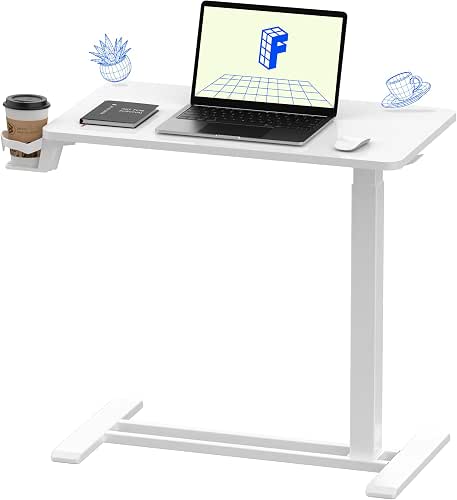
| Mobility & Comfort | Compatibility: Fits most laptops and tablets on 27.6″ x 15.7″ desktop | Height Adjustability: Gas-spring lift, one-hand adjustment 26″ to 41.7″ | Portability / Foldability: Mobile with hidden casters; rolls and tucks under furniture | VIEW LATEST PRICE | Read Our Analysis |
More Details on Our Top Picks
Lifelong Ergonomic Adjustable Laptop Stand (Fits All Laptops)
Should you need a truly portable, all-size solution for better posture, the Lifelong Ergonomic Adjustable Laptop Stand is a smart pick—fitting 10″–17″ laptops and tablets and folding flat for easy backpacking. You’ll use it sitting or standing for Zoom calls, gaming, cooking, DJ sets, or remote work. The arm extends up to 13″ with 20 positions, and the top rises to 20″ so you can set the ideal height and angle. Its ventilated design helps cooling, and the sturdy, multi-orientation build works as a riser, pulpit, or vertical stand—reducing clutter and protecting your back.
- Compatibility:Fits laptops/tablets 10″–17″ (MacBook Air/Pro, etc.)
- Height Adjustability:Top base rises up to 20″ from stand floor; arm extends up to 13″ with 20 positions
- Portability / Foldability:Foldable, portable; backpack-friendly
- Rotation / Swivel:Adjustable for various orientations (implied swivel/angle adjustment)
- Ergonomic Benefits:Improves posture, functions as standing desk/pulpit to reduce back issues
- Stability / Construction:Multi-use construction promotes cooling and stable orientations
- Additional Feature:Cookbook / DJ use
- Additional Feature:Top base rises 20″
- Additional Feature:Multi-orientation support
Tounee Telescopic Height-Adjustable Laptop Stand (10–17″)
In case you need a portable, highly adjustable riser that converts any desk into a sit‑stand workstation, the Tounee Telescopic Laptop Stand is built for you: its 2.1″–21″ telescoping column and quick-release button let you switch heights instantly, while a 360° rotating base and two pivot joints keep heavier laptops (up to 22 lbs) stable for sharing screens or shifting between tasks. You’ll raise your screen to reduce neck and shoulder strain, relieve muscle tension, and break long sitting sessions. Aluminum alloy construction, a weighted base, folding compactness, and 10″–17″ compatibility make it sturdy, portable, and productivity‑focused.
- Compatibility:Compatible with laptops 10″–17″
- Height Adjustability:Telescopic range 2.1″ to 21″ via quick button
- Portability / Foldability:Folds for storage; space-saving portable riser
- Rotation / Swivel:360° rotating base for screen sharing
- Ergonomic Benefits:Enables sit-to-stand, relieves neck/shoulder tension, reduces stress
- Stability / Construction:Aluminum alloy with large heavier base, two pivot joints; supports up to 22 lbs
- Additional Feature:Quick telescoping button
- Additional Feature:360° rotating base
- Additional Feature:Two-pivot joint strength
Nulaxy Telescopic 360° Rotating Adjustable Laptop Stand
Should you need a compact, highly adjustable riser for collaborative work or frequent position changes, the Nulaxy Telescopic 360° Rotating Laptop Stand is a smart choice—its telescoping column reaches up to 20 inches while the 360° swivel makes screen sharing effortless. You’ll adjust tilt and height to raise your screen to eye level, reducing back strain and supporting standing or sitting work. The foldable pull-out/swivel mechanism enhances portability and storage. It fits 10–17″ laptops, supports up to 22 pounds, and has a solid base to prevent tipping. Remove your device before adjusting and use an external keyboard for stable typing.
- Compatibility:Fits laptops/tablets up to 17″ (10″–17″)
- Height Adjustability:Telescopic height adjustable up to 20″
- Portability / Foldability:Foldable pull-out/swivel mechanism for portability/storage
- Rotation / Swivel:360° rotation/swivel design for screen sharing
- Ergonomic Benefits:Raises screen to eye level to reduce back strain; supports standing/sitting
- Stability / Construction:Strong bearing force, solid base; supports up to 22 lbs
- Additional Feature:Model LS18 identification
- Additional Feature:Pull-out swivel mechanism
- Additional Feature:4 lb item weight
FLEXISPOT H7 Adjustable Overbed Rolling Laptop Table
Should you need a compact, mobile workstation that tucks under beds and sofas, the FLEXISPOT H7 is a smart pick—its gas-spring lift lets you raise or lower the 27.6″ x 15.7″ desktop from 26″ to 41.7″ with one hand, so you can switch between sitting and standing without breaking stride. The white overbed table rolls on four concealed casters and a low-profile base that fits under furniture with just 1.2″ clearance. The roomy surface holds laptops, tablets, and snacks for bedside or couch use. Assembly takes about 10 minutes with included tools, and support responds within 24 hours.
- Compatibility:Fits most laptops and tablets on 27.6″ x 15.7″ desktop
- Height Adjustability:Gas-spring lift, one-hand adjustment 26″ to 41.7″
- Portability / Foldability:Mobile with hidden casters; rolls and tucks under furniture
- Rotation / Swivel:Desktop rotates/moves on rolling base for positioning (mobile repositioning)
- Ergonomic Benefits:Promotes ergonomic working/standing; suitable for bedside use to reduce bending
- Stability / Construction:Sturdy gas-spring lift, spacious desktop, low-profile stable base with casters
- Additional Feature:Gas spring pneumatic lift
- Additional Feature:Low-profile tuck-under base
- Additional Feature:Four hidden casters
Factors to Consider When Choosing a Standing Desk for Laptop
Upon choosing a standing desk for your laptop, check the height adjustability range to make sure it fits your sitting and standing postures. You’ll want a stable surface with sufficient load capacity, plus a tabletop large enough for your laptop and accessories and a hinge or design that lets you set an ergonomic viewing angle. Should you need to move or store it, consider portability and foldability so it’s easy to transport and tuck away.
Height Adjustability Range
In choosing a standing desk for your laptop, focus initially on the height adjustability range so the screen reaches your standing eye level and drops to a comfortable seated height—typically about 20–40 inches from the floor depending on your stature. Measure your standing eye height and confirm the desk’s maximum lift clears it to prevent neck flexion. Check the lowest position too, ensuring neutral wrist and forearm alignment during typing with an external keyboard while seated. Prefer fine-grained adjustability—either continuous mechanisms or multiple presets—so you can set ergonomically correct heights for both postures. Finally, verify adjustment ease and speed (gas spring, telescoping, or stepped systems) so switching is quick and encourages frequent sit‑to‑stand movement.
Stability And Load Capacity
Because a wobbly desk undermines both comfort and productivity, prioritize stability and load capacity while choosing a standing desk for your laptop. Check the maximum load rating and pick a model rated at least 20–25% above the combined weight of your laptop and accessories (dock, monitor, keyboard) to prevent strain and wobble. Inspect base design and materials—wide, heavy bases and rigid metals like aluminum or steel give better lateral stability and resist tipping. Evaluate pivot/support points: multiple reinforced joints and thicker arms reduce flex, especially at taller heights. Consider how height extension affects torque; prefer graduated locks and anti-tilt features for high reaches. Finally, review dynamic stability tests or specs and avoid platforms that vibrate under typical typing.
Portability And Foldability
In case you move around with your laptop, pick a stand that packs down small and stays secure in transit—check folded dimensions and weight so it actually fits your bag (aim for under 3–4 inches tall and roughly 5 lbs or less for easy carry). Choose quick-release or single-action folding mechanisms so you’ll deploy and stow it fast without fiddling. Inspect folded depth and locking features to prevent accidental opening or snagging inside a backpack. Prefer aluminum-alloy constructions for strong support at lower weight versus steel. Make sure telescoping or multi-joint parts fold flush and don’t protrude, allowing a protective sleeve or case to fit. These details keep your portable desk reliable, compact, and hassle-free while you’re on the move.
Surface Size And Compatibility
Now that you’ve narrowed portable options, check the usable surface: it needs to fit your laptop plus an external keyboard and mouse—aim for about 18″ wide across 12″ deep for 13–15″ machines—and accommodate devices from roughly 10″–17″ so you won’t get overhang or wobble should you swap gear. Make sure the surface supports your laptop’s weight plus any dock or peripherals; choose a load capacity at least 20–30% higher than the combined weight for safety. Prefer adjustable or tiltable tops that preserve usable area at all settings so your keyboard and mouse stay stable. Confirm there’s edge clearance and basic cable management to keep vents clear and avoid heat buildup. These checks prevent instability and guarantee long-term compatibility.
Ergonomic Viewing Angle
While you set your laptop on a standing desk, aim to place the top of the screen at or just below eye level with a slight 15° downward gaze so your neck stays neutral, and keep the display about 20–30 inches (50–76 cm) away—roughly an arm’s length—to avoid eye strain. Tilt the screen back 10°–20° to cut glare while preserving a neutral head posture and keyboard access. Center the display directly in front of you so you don’t rotate your neck; should you need a different angle, rotate the whole device instead of twisting your torso. Raise the laptop and use an external keyboard and mouse so your forearms stay parallel to the floor and wrists remain neutral, keeping viewing and typing ergonomically aligned.
Cooling And Ventilation
Because laptops trap heat against their undersides, choose a standing desk or riser that leaves at least 1–2 inches of clearance and uses ventilated surfaces, raised feet, or mesh platforms to promote airflow and prevent hot spots. You should prefer open designs that expose bottom and rear vents rather than shallow trays or solid backings that trap heat. Metal or aluminum platforms conduct and dissipate heat faster than thick plastics, so pick materials that help transfer heat away from components. For prolonged heavy workloads, plan for supplemental cooling—an external laptop cooler or a directed fan that targets intake vents will keep CPU/GPU temperatures lower. Check that your setup maintains unobstructed convective paths so airflow isn’t blocked whenever you stand or sit.
Mobility And Base Design
Consider how often you’ll move the desk and where it needs to go—mobility and base design determine whether a standing laptop setup stays stable, fits under furniture, and survives different floors. Should you need frequent repositioning, pick a base with multi-directional, lockable casters for smooth rolling and secure parking. Measure minimum clearance—look for low-profile bases (around ≤1.2″) to slide under beds or sofas. Favor heavier, wider bases with a low center of gravity and substantial footprint to resist tipping during typing or touch interactions. For portability, consider foldable or detachable bases and verify folded dimensions fit your carrying bag or storage space. Finally, match caster and base materials to your floors—hardwood, carpet, or tile—to prevent scuffs and guarantee consistent mobility.
Build Material Quality
Choose stands built from high-strength materials like aluminum alloy or steel, since they deliver far better durability, stiffness, and higher load capacity (typically 20–22 lbs or more) than plastic alternatives. You should also check for corrosion-resistant or anodized finishes and reinforced joints so repeated height and angle changes don’t loosen components. Pick a model with a solid, weighted base or broad footprint made from dense materials to minimize tipping and wobble while you type or use touch controls. Inspect hinge and pivot construction: multi-pivot or bolted joints with metal bearings offer far greater rigidity and longevity than single plastic pivots. In the event passive cooling matters, favor ventilated metal surfaces or thermally conductive materials that dissipate heat better than closed plastic platforms.
