A sturdy above ground pool ladder is essential. It is not just about convenience. It is about safety. Choosing the right one prevents serious accidents. Unsafe ladders can cause broken bones, brain injuries, or spinal cord injuries. You need the best pool ladders to ensure everyone’s well-being. This guide helps you select safe options. It covers features, types, installation, and maintenance for your pool safety.
Key Takeaways
Choose the right pool ladder for your pool type. A-frame ladders work for pools without a deck. Deck-to-pool ladders are for pools with a deck.
Check the ladder’s weight capacity. Most ladders hold 250 to 400 pounds. Only one person should use the ladder at a time.
Look for important safety features. These include non-skid steps, strong handrails, and lockable gates. Anti-entrapment barriers protect children.
Install your ladder correctly. This ensures stability. Anchor it firmly. Perform safety checks after installation.
Maintain your pool ladder regularly. Clean it often. Store it properly in winter. Make small repairs quickly. Replace it if it has major damage.
Choosing Your Best Pool Ladder
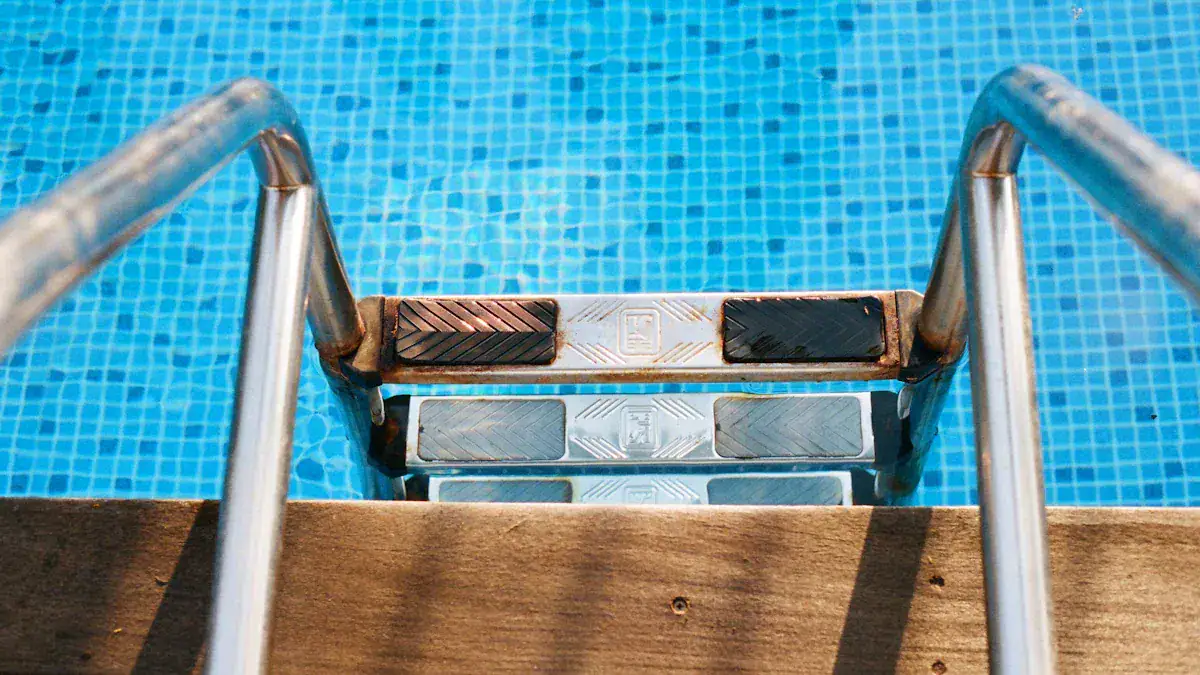
You need the right pool ladder for your above-ground pool. This choice ensures everyone’s safety. It also makes getting in and out of the water easy. You must consider several factors. These factors help you pick the best pool ladders for your needs.
Ladder Types and Materials
Above-ground pool ladders come in different types. They also use various materials. You will find two main types: A-frame ladders and deck-to-pool ladders.
Feature/Application | A-Frame Ladders | Deck-to-Pool Ladders |
|---|---|---|
Design | Two-sided | Single-sided |
Pool Type | For above-ground pools without a deck | For above-ground pools with a deck |
Stability | Weighted with sand or pebbles to sit solidly on the pool floor | Connects to pool deck, stable |
Safety Features | Outside safety gate (e.g., Roll Guard, Evolution, Deluxe Entry System, Combo Step Entry System) | Wider and safer pool steps available (e.g., Heavy Duty In-Pool Ladder, 5-Step Stainless Steel, Staircase Steps, Curve Step System) |
Cost-Efficiency | Double-sided pool ladder for pools without a deck | Single pool ladder that attaches to your pool deck |
A-frame ladders are best for pools without a deck. They stand on both sides of the pool wall. You can use a deck ladder if your pool has a deck. This type offers smooth, safe entry. In-pool steps are also wide and stable. They work well for older adults or children. For example, the Deluxe Innov-A-Frame ladder adjusts for pools 48 to 54 inches high. It has an inner ladder with side barriers. This prevents entrapment. Its self-closing and self-latching outer ladder stops unauthorized access.
Materials also matter for your above ground pool ladder. Different materials offer various benefits.
Material | Durability | Cost Benefits |
|---|---|---|
Stainless Steel | Highly durable, resistant to corrosion (especially 316 marine-grade), strong, and long-lasting. | Higher initial cost, but excellent longevity and resistance to wear and tear can make it a cost-effective choice over time. Requires proper maintenance to prevent rust. |
Resin (Plastic) | Durable, resistant to UV rays, chemicals, and corrosion. Less prone to rust than stainless steel. | Generally more affordable than stainless steel. Lightweight and easy to install. Low maintenance. |
Aluminum | Lightweight, corrosion-resistant, and strong. | More affordable than stainless steel, but typically more expensive than resin. Good balance of durability and cost. |
Plastic (PVC/Polypropylene) | Lightweight, inexpensive, and resistant to chemicals. Can be less durable than other options, especially with prolonged sun exposure. | Most affordable option. Easy to install and replace. May need more frequent replacement due to wear and tear. |
Fiberglass | Strong, lightweight, and resistant to corrosion and chemicals. | Mid-range cost. Good durability and low maintenance. |
Resin and heavy-duty plastic are popular choices. They resist weather and need little maintenance. Stainless steel is very strong and lasts a long time. However, it costs more. You can find excellent options like the Confer Step 1X. It is a top choice for overall quality. The Champlain Plastics Smops offers great value. Many ladders feature 16-inch steps and wide top platforms. These features make climbing easier and safer.
Weight Capacity and Stability
You must check the weight capacity of any above ground pool ladder. This ensures safety for all users. Standard ladders typically hold 250 to 400 pounds. Some models, like Coleman pool ladders, offer a much higher weight capacity, up to 672 pounds.
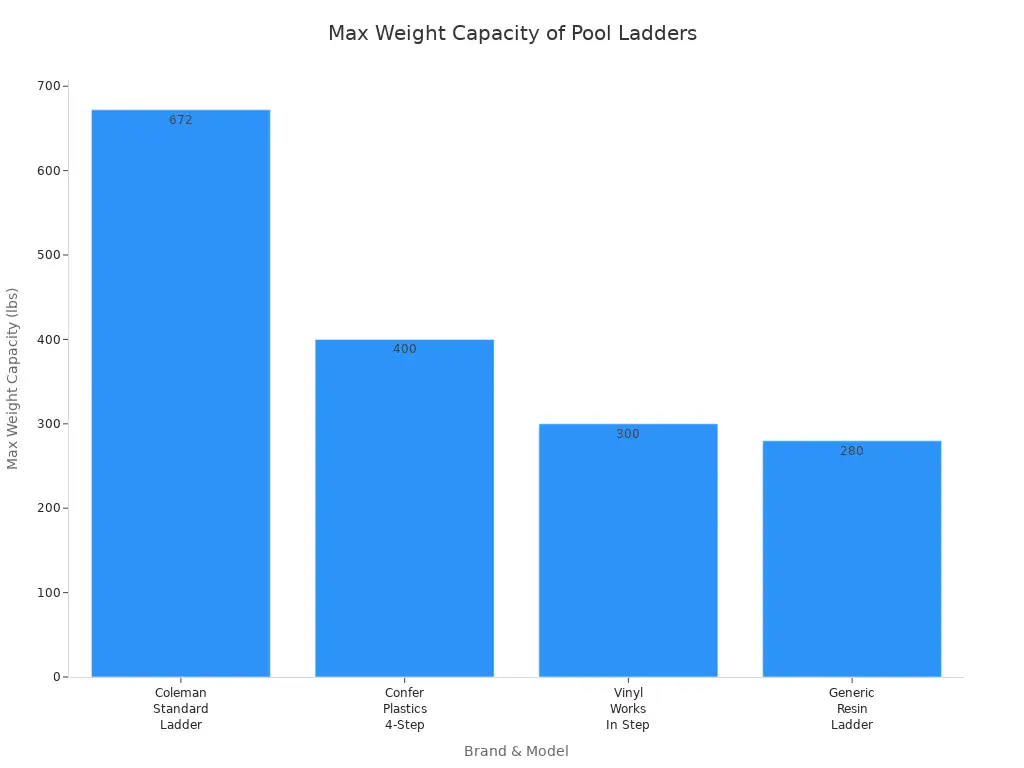
Always remember: only one person should use the ladder at a time. This rule applies no matter the weight limit. The ladder’s maximum load capacity should easily handle the heaviest user. Solid ladders often support 300-500 pounds.
Stability is also key for safety. Several design elements make a ladder stable.
Sturdy steel construction provides strength.
An A-frame design with a flared base improves stability. This is especially true for pools without a deck.
Broad steps offer more stability for users.
You can weight some ladders with sand. This stops them from floating or shifting.
High railings make entering and exiting the pool easier and safer.
Broad bases prevent shifting or tipping over.
Strong materials like injection-molded resin and high-grade stainless steel offer reliable access and durability.
Wide, non-slip treads prevent accidents. They ensure stable footing.
Secure installation is vital. You must fix the ladder firmly to the ground. This prevents swaying.
Adjustability for Pool Height
Above-ground pools come in various heights. Your ladder must fit your pool perfectly. Many best pool ladders offer adjustability. This feature ensures a snug and safe fit. Adjustable ladders can fit pool walls from 48 to 54 inches high. Some models, like the Confer Plastics 7000X and CCX-AG, fit this range. The Blue Torrent Pool Products ‘The Antigua’ also works for pools 48 to 54 inches deep.
Adjustable designs accommodate various pool depths. This ensures proper fit and stability. Some ladders adjust to any pool deck height between 46 and 56 inches. Other models fit pools 48-54 inches high. You can find ladders that fit decks up to 60 inches. This pool height accommodation is crucial for a secure setup.
Prioritizing Pool Safety Features
Safety features are paramount when choosing your above ground pool ladder. These features protect swimmers, especially children.
Non-skid steps prevent slips and falls.
Solid handrails provide support when entering or exiting.
A lockable gate stops unauthorized access to the pool.
A childproof barrier adds another layer of protection.
Some A-frame ladders and pool entry systems include integrated pool safety gates. These add security. More advanced entry systems replace traditional ladders with steps, handrails, and wider platforms. This enhances security and stability.
Anti-entrapment barriers are also important. These barriers prevent children from swimming behind or through the ladder rungs. This directly stops accidental submersion. Modern ladders include these barriers. They protect children while swimming.
Always look for ladders that meet industry standards. The ANSI/PHTA/ICC-4 2025 American National Standard for Aboveground/Onground Residential Swimming Pools sets benchmarks. This standard helps ensure the safety of pool products.
Above Ground Pool Safety
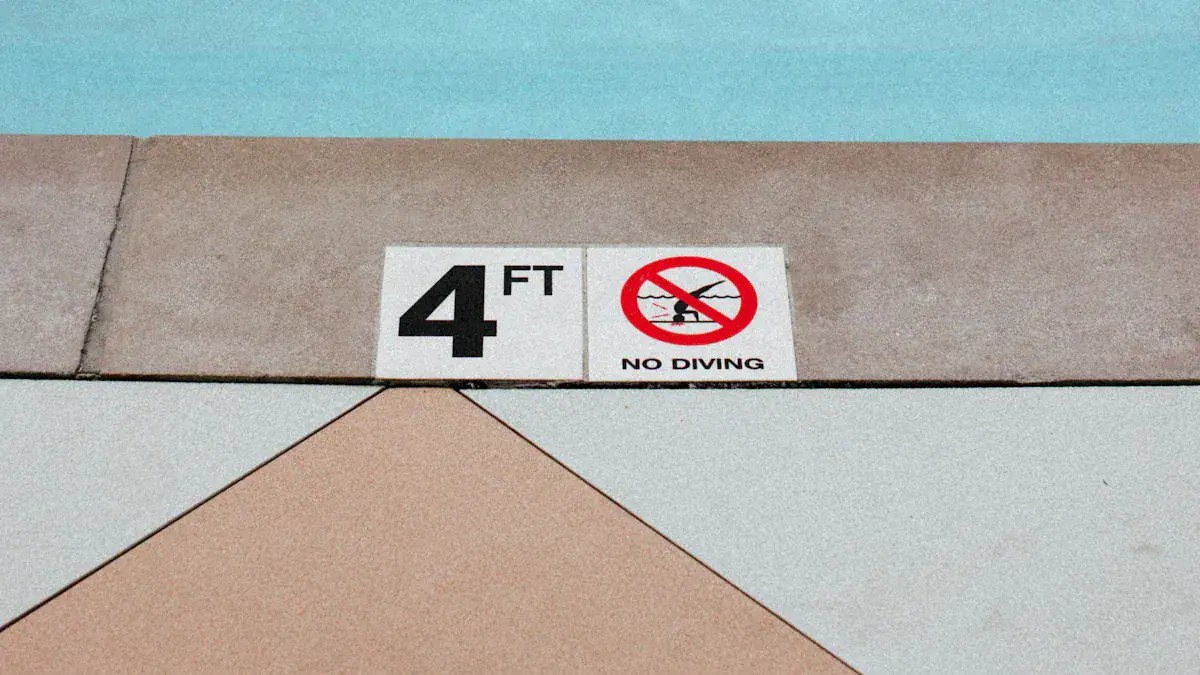
You must ensure your above-ground pool is a safe place. This goes beyond just having a good ladder. You need to think about the entire pool area. Proper planning and equipment prevent accidents.
Securing the Pool Area
You must secure your pool area. This prevents unsupervised access. Legal requirements for pool barriers vary. However, international guidelines help shape best practices. You should install a pool fence at least four feet high. Gaps in the fence should be no wider than four inches. This stops small children from getting through. Gates must be self-closing and self-latching. They should open outward, away from the pool. The fence should sit close to the ground. Leave no more than a two-inch space. Vertical spaces between fence parts should be no more than four inches apart.
You can also use pool covers for added safety.
Benefits of Safety Covers:
Keeps out large debris.
Prevents access to the pool.
Looks good.
Needs little maintenance.
Lasts a long time.
Limitations of Safety Covers:
Costs more than a simple winter cover.
Custom covers take time to make.
Installation needs tools and effort.
Mesh covers are lighter. Rain and snow pass through them. Solid covers block all sunlight. This stops algae growth. Automatic covers offer daily safety. They save money on chemicals and heating.
Essential Safety Accessories
You need more than just a fence. Essential accessories add layers of safety. Pool alarms are very effective. They detect unauthorized access.
Alarm Type | Suitability for Above-Ground Pools | Key Features |
|---|---|---|
Surface Sensor Alarms | Yes, ideal for above-ground pools. | Floats on water, detects disturbances, sounds alarm. |
Gate/Door Alarms | Yes, essential for above-ground pools with fencing or gates. | Mounts on gates, sounds alarm when opened. |
Wristband Alarms | Yes, for children and pets. | Worn by individuals, sounds alarm if wet. |
You should also have life-saving equipment. Keep these items near the pool.
Safety hooks (also called shepherd’s crooks)
Life rings (24-inch diameter is good for homes)
Rescue cans
Rescue tubes
A strong aluminum alloy safety hook helps struggling swimmers. You can connect it to a standard telescopic pole. Keep it ready for emergencies.
Supervision and Rules
You must establish clear rules. You also need constant supervision. Educate everyone in your household about pool safety. Tell them no running near the pool. Tell them no swimming alone. Children who cannot swim well should always wear flotation devices. Place visible safety stickers on the pool wall. Put them near the entry system.
Always have an adult watching swimmers. This person is a designated water watcher. They should focus only on the pool. For young children, use “touch supervision.” Stay within arm’s reach. Teach children to ask permission before entering the pool. Teach them to walk, not run, on wet surfaces. Show them how to use pool ladders correctly.
Above Ground Pool Ladder Installation
Installing your above ground pool ladder correctly is crucial. Proper installation ensures the ladder’s stability and your family’s safety. Follow these steps carefully for a secure setup.
Pre-Installation Steps
Before you begin, prepare your work area. First, unpack all ladder components. Lay out the side rails, steps, handrails, braces, and hardware. This includes bolts, nuts, washers, and screws. Next, check the parts list in your manual. Confirm all components are present before you start assembly. Inspect the pool area. Make sure the ground is level. The pool wall should also be clean. Review all safety guidelines. Understand the precautions for installation.
Step-by-Step Setup
Assemble your ladder according to the manufacturer’s instructions. Most ladders require you to attach the steps to the side rails. Then, secure the handrails. For ladders with hollow chambers, add weight. Pour about 40 pounds of sand into these chambers. Use a funnel for this. This added weight prevents the ladder from shifting.
Securing Your Ladder
Anchoring your ladder properly is vital. This prevents movement or tipping. Position the ladder. Mark precise drill locations on your deck if applicable. Drill holes. Attach deck flanges or mounting brackets with stainless steel fasteners. This prevents rust. For the ladder’s base, choose a location away from high-traffic areas. Ensure the ground is flat and solid. Clear any debris. Use a 4-foot level to verify. Place heavy-duty ladder pads or patio stones under each leg. This improves traction and protects your pool liner.
Post-Installation Checks
After installation, perform important safety checks. Walk up and down the steps. Ensure the ladder can support your weight. For vinyl pools, confirm the ladder does not rub against the pool liner. This prevents tears. Add protective padding if needed. Finally, tighten all screws, bolts, and connector parts. Make them snug to eliminate wobbling.
Avoid overtightening plastic or nylon nuts. Gently shake the ladder. It should not move. This confirms its stability and your continued safety.
Ladder Maintenance and Care
You must properly maintain your pool ladder. This ensures its longevity. It also guarantees continued safety.
Routine Cleaning
You must keep your pool ladder clean. This ensures hygiene. It also extends its life. Use a pH-neutral cleaner. This prevents corrosion and buildup. You can also use a non-abrasive cleaner with warm water. This prevents scratching metal surfaces. It also stops potential corrosion. Scrub gently but firmly. Remove all debris and stains. Rinse thoroughly with fresh water.
This removes any residual cleaner. Apply a high-quality protectant regularly. This prevents corrosion. It also extends equipment lifespan. Use a scrub brush with stiff, non-abrasive bristles. Opt for a mild detergent.
Or use a specialized cleaning solution for pool equipment. Use a soft cloth or sponge. Gently remove residual dirt or grime. Avoid chlorine-based cleaners for stainless steel ladders. They can cause corrosion. Do not use harsh chemicals for plastic ladders. They can damage structural integrity. Use pool-specific products. This avoids damaging the ladder’s surface.
Seasonal Checks and Storage
Proper storage protects your ladder during the off-season. First, clean it thoroughly. Remove dirt, debris, or chemical build-up. Use a soft brush and mild detergent. Then, rinse it well. Next, dry it completely. Use a towel. Allow it to air dry. This ensures no moisture remains. Lubricate moving parts. Apply a silicone-based lubricant to joints and bolts.
This prevents corrosion. Store your ladder indoors if possible. A garage, basement, or shed works well. If you store it outdoors, wrap it in a heavy tarp or plastic sheeting. Keep it elevated. Use cinder blocks. This avoids contact with wet ground. Cover openings. Place end caps or plugs. This prevents insects or rodents from nesting inside.
Never leave your pool ladder in for the winter. This prevents rust, freeze damage, and structural breakdown. It also protects your liner and pool cover. Drain all water from the ladder. Trapped water expands when it freezes. This can crack or split metal and plastic parts. Inspect for physical damage annually. Do this before winter storage. Repair or replace worn parts.
Minor Repairs
You can perform minor repairs. This keeps your ladder in top shape. Tighten all bolts and screws on the ladder weekly. Regularly inspect bolts and nuts for looseness. Do this after each use.
Tighten them as needed. Use the correct tool. Replace any worn feet on the ladder annually. Add non-slip mats or treads to the steps. This prevents slips. Remove and replace any compromised hardware. This includes rusted brackets or stripped bolts. Do this before further use. Do not delay in replacing cracked or damaged steps. Most manufacturers offer replacement parts for modular ladders.
When to Replace
Even with good care, ladders wear out. You must know when to replace yours. Look for significant cracks in plastic components. Check for severe rust on metal parts.
If the ladder wobbles even after tightening all fasteners, it might be unsafe. Any structural damage that affects the ladder’s integrity means it is time for a new one. Prioritize your family’s safety. A damaged ladder is a hazard. Replacing it ensures everyone can enjoy the pool without worry.
Prioritize safety when you select and maintain your above ground pool ladder. You learned about ladder types, materials, and key safety features. Proper installation and regular maintenance are also vital. Make informed decisions to choose the best pool ladders for your needs. This ensures a safe, enjoyable swimming experience for everyone. Always choose the best pool ladders and stay vigilant.