

Most home routers don’t fully use new Wi‑Fi features unless their firmware and antennas are tuned for them. You’ll want a model that balances real‑world speed, security and easy setup without forcing you to be a network geek. I’ll highlight reliable Wi‑Fi 6 and Wi‑Fi 7 options across budgets, plus travel‑friendly units and key buying factors so you can pick what actually improves your daily connections — and avoid common traps.
| TP-Link Archer AX55 AX3000 Wi‑Fi 6 Router |

| Best All‑Around | Wi‑Fi Standard: Wi‑Fi 6 (AX3000) | Bands (frequency): Dual‑band (2.4 GHz + 5 GHz) | VPN Support: VPN server and VPN client supported | VIEW LATEST PRICE | Our Analysis |
| TP-Link Archer A54 AC1200 Dual-Band WiFi Router |

| Budget-Friendly Pick | Wi‑Fi Standard: Wi‑Fi 5 (AC1200) | Bands (frequency): Dual‑band (2.4 GHz + 5 GHz) | VPN Support: (Not explicitly listed) — no dedicated VPN notes in summary | VIEW LATEST PRICE | Our Analysis |
| GL.iNet Slate 7 (GL-BE3600) Portable Wi‑Fi 7 Router |

| Travel Powerhouse | Wi‑Fi Standard: Wi‑Fi 7 (dual‑band) | Bands (frequency): Dual‑band (2.4 GHz + 5 GHz) | VPN Support: OpenVPN and WireGuard preinstalled (client & server) | VIEW LATEST PRICE | Our Analysis |
| GL.iNet Opal GL-SFT1200 Portable Travel WiFi Router |
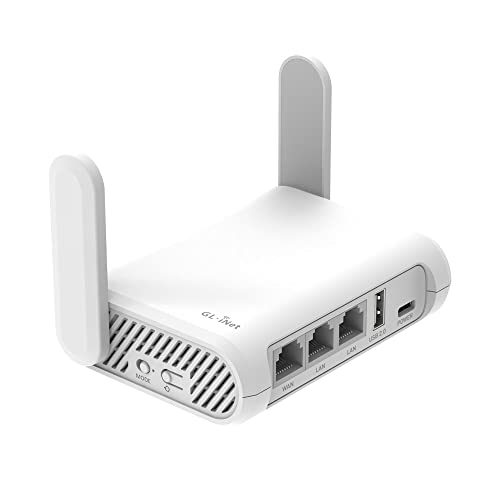
| Compact VPN Traveler | Wi‑Fi Standard: Wi‑Fi 5 (AC1200) | Bands (frequency): Dual‑band (2.4 GHz + 5 GHz) | VPN Support: OpenVPN and WireGuard preinstalled (client) | VIEW LATEST PRICE | Our Analysis |
| GL.iNet Flint 3e WiFi 7 Router (GL-BE6500) |

| Future-Proof Performance | Wi‑Fi Standard: Wi‑Fi 7 | Bands (frequency): Multi/dual‑band (Wi‑Fi 7 up to multi‑Gbps; 2.4 & 5 GHz implied) | VPN Support: WireGuard and OpenVPN supported | VIEW LATEST PRICE | Our Analysis |
More Details on Our Top Picks
TP-Link Archer AX55 AX3000 Wi‑Fi 6 Router
Should you want a reliable, budget-friendly Wi‑Fi 6 router that boosts multi‑device performance and battery life, the TP‑Link Archer AX55 delivers: AX3000 speeds (2402 Mbps on 5 GHz, 574 Mbps on 2.4 GHz), OFDMA/MU‑MIMO for smoother gaming and streaming, and Target Wake Time to help connected devices last longer. You’ll get four high‑gain antennas with beamforming for wider coverage, a USB 3.0 port, and improved cooling to prevent throttling. HomeShield offers basic security, parental controls, QoS, and reports; VPN server/client support and EasyMesh compatibility round out flexibility. TP‑Link support helps with setup and issues.
- Wi‑Fi Standard:Wi‑Fi 6 (AX3000)
- Bands (frequency):Dual‑band (2.4 GHz + 5 GHz)
- VPN Support:VPN server and VPN client supported
- Ethernet Ports:Gigabit LAN ports (typical consumer router; includes USB 3.0) [summary notes external antennas, USB 3.0]
- Parental / Security Controls:TP‑Link HomeShield (basic & premium network/IoT protection, parental controls)
- Portability / Travel Modes:Designed as home router (not portable; typical desktop form)
- Additional Feature:Four high‑gain antennas
- Additional Feature:USB 3.0 port
- Additional Feature:EasyMesh compatible
TP-Link Archer A54 AC1200 Dual-Band WiFi Router
Offering solid dual-band speeds and EasyMesh compatibility, the TP-Link Archer A54 is a practical choice for small homes and budget-conscious users who want reliable Wi-Fi without extra complexity. You’ll get up to 867 Mbps on 5 GHz and 300 Mbps on 2.4 GHz, four external antennas for roughly 1,000 sq. ft. coverage, and EasyMesh support to expand coverage with compatible devices. It has four 10/100 Mbps LAN ports, AP mode, IPv6, guest Wi‑Fi, parental controls, IGMP/Bridge/VLAN for IPTV, and WPA3 security. Manage settings and updates via the TP-Link Tether app; a separate modem is usually required.
- Wi‑Fi Standard:Wi‑Fi 5 (AC1200)
- Bands (frequency):Dual‑band (2.4 GHz + 5 GHz)
- VPN Support:(Not explicitly listed) — no dedicated VPN notes in summary
- Ethernet Ports:Four 10/100 Mbps Fast Ethernet ports
- Parental / Security Controls:Parental controls + WPA3 security
- Portability / Travel Modes:Home/desktop router (not travel‑focused)
- Additional Feature:Four Fast Ethernet ports
- Additional Feature:100–240V universal power
- Additional Feature:TP-Link Tether app
GL.iNet Slate 7 (GL-BE3600) Portable Wi‑Fi 7 Router
Should you travel frequently and need a compact router that doubles as a high-speed VPN gateway, the GL.iNet Slate 7 (GL-BE3600) is built for you: its portable Wi‑Fi 7 radios plus dual 2.5G Ethernet ports deliver fast wireless and wired throughput, while a touchscreen and preinstalled OpenWrt let you quickly toggle VPNs, monitor speeds, and customize services on the go. You’ll get dual-band Wi‑Fi 7 (688 Mbps + 2882 Mbps), USB 3.0, tethering/repeater/cellular modes, and color-coded status indicators. OpenWrt 23.05 enables plugins, WireGuard/OpenVPN support (up to ~540/100 Mbps), WPA3, DoH/DoT, IPv6, and VPN cascading for flexible secure travel networking.
- Wi‑Fi Standard:Wi‑Fi 7 (dual‑band)
- Bands (frequency):Dual‑band (2.4 GHz + 5 GHz)
- VPN Support:OpenVPN and WireGuard preinstalled (client & server)
- Ethernet Ports:Dual 2.5G Ethernet (1 WAN, 1 LAN)
- Parental / Security Controls:WPA3, DoH/DoT, VPNs (privacy/security focused)
- Portability / Travel Modes:Portable travel router (designed for hotels, RVs, planes)
- Additional Feature:Touchscreen interface
- Additional Feature:Dual 2.5G Ethernet
- Additional Feature:Preinstalled OpenWrt firmware
GL.iNet Opal GL-SFT1200 Portable Travel WiFi Router
Should you need a truly portable router that prioritizes secure, travel-ready VPN access, the GL.iNet Opal GL-SFT1200 is a top pick—small enough to slip in a pocket yet powerful enough to run WireGuard or OpenVPN out of the box. You’ll get AC1200 dual-band speeds (2.4 GHz up to 300 Mbps, 5 GHz up to 867 Mbps) and full Gigabit ports (2 LAN, 1 WAN). It converts public wired/wireless networks into private Wi‑Fi, supports IPv6 and Cloudflare encryption, and works with 30+ VPN providers. A physical toggle toggles VPN after admin setup; antennas retract for travel. Setup’s straightforward with manuals and video guides.
- Wi‑Fi Standard:Wi‑Fi 5 (AC1200)
- Bands (frequency):Dual‑band (2.4 GHz + 5 GHz)
- VPN Support:OpenVPN and WireGuard preinstalled (client)
- Ethernet Ports:Full Gigabit ports: 2 LAN + 1 WAN
- Parental / Security Controls:Parental controls; privacy via VPNs and Cloudflare encryption
- Portability / Travel Modes:Portable travel router (pocket‑friendly with retractable antennas)
- Additional Feature:Retractable antennas
- Additional Feature:Physical VPN toggle
- Additional Feature:Pocket‑friendly 145 g
GL.iNet Flint 3e WiFi 7 Router (GL-BE6500)
Should you need a compact Wi‑Fi 7 router that’s built for low‑latency gaming and high‑density homes, the GL.iNet Flint 3e (GL‑BE6500) is a strong choice — it packs Wi‑Fi 7 features like MLO and 4K‑QAM for up to 6.5 Gbps, covers around 2,500 sq ft, and handles 100+ devices while offering five 2.5G Ethernet ports and VPN (WireGuard/OpenVPN) speeds up to about 680 Mbps. You’ll get improved OFDMA, preamble puncturing and Multi‑RUs for stable multi‑device performance, 1 GB DDR4, flexible AdGuard Home and Bark parental controls, DIY plugin support, and a straightforward web setup.
- Wi‑Fi Standard:Wi‑Fi 7
- Bands (frequency):Multi/dual‑band (Wi‑Fi 7 up to multi‑Gbps; 2.4 & 5 GHz implied)
- VPN Support:WireGuard and OpenVPN supported
- Ethernet Ports:Five 2.5G Ethernet ports
- Parental / Security Controls:AdGuard Home support and Bark parental controls
- Portability / Travel Modes:Home/desktop router (larger, long‑range unit)
- Additional Feature:Five 2.5G ports
- Additional Feature:DDR4 1 GB memory
- Additional Feature:AdGuard Home support
Factors to Consider When Choosing a Network Router
Upon choosing a router, you’ll want to match speed and wireless standards to your internet plan and devices. Consider coverage and wired ports for where you need reliable connections, and check how many devices the router can manage without slowing down. Also prioritize strong security and privacy features to protect your network and connected gadgets.
Speed And Standards
Because wireless tech keeps advancing, choose the newest Wi‑Fi standard your devices support (Wi‑Fi 6, 6E, or 7) and then compare band speeds, channel widths, and features like OFDMA and MU‑MIMO to judge real-world capacity; also factor in available 2.4/5/6 GHz bands and multi‑gig Ethernet or wired backhaul should you need consistent, wired‑class performance. You’ll want to check advertised per‑band rates and aggregate throughput to estimate how many simultaneous users the router can handle. Confirm support for OFDMA and MU‑MIMO to reduce contention and latency with many clients. Verify supported channel widths (20/40/80/160 MHz) and whether a 6 GHz band is present for cleaner, higher‑speed links. Should you depend on NAS, gaming, or fiber, prioritize multi‑gig ports or wired backhaul.
Coverage And Range
For reliable whole‑home Wi‑Fi you’ll need to evaluate range as much as raw speed: antenna layout and beamforming determine how well signals punch through walls, 2.4 GHz reaches farther while 5 GHz gives faster links, and manufacturer’s square‑foot claims assume ideal open‑floor conditions so expect less in multi‑story or dense‑wall homes. Whenever choosing, inspect antenna count and gain plus beamforming support—these focus energy toward devices and improve penetration. Favor routers or systems with mesh/EasyMesh support or multiple radios for dedicated backhaul to eliminate dead zones in larger layouts. Don’t rely on transmit power alone; prioritize central, raised placement away from metal, concrete, microwaves, and large water sources to realize rated coverage in real homes.
Wired Connectivity Options
Good wireless coverage won’t remove the need for solid wired connections, so you’ll want to assess a router’s wired options next. Check the number and speed of Ethernet ports — Fast Ethernet won’t cut it provided your modem or devices support Gigabit or multi‑gig (2.5/5/10 Gbps). Make sure there’s a dedicated WAN plus multiple LAN ports so you can keep the uplink separate and attach switches or wired clients. Should you run NAS, a gaming PC, or a media server, prioritize multi‑gig ports or link aggregation to enhance throughput. Verify VLAN tagging and multiple LAN interfaces for segmentation, guest networks, or IPTV. Finally, look for USB or SFP/SFP+ ports when you need direct‑attached storage, cellular failover, or fiber uplink.
Security And Privacy
While a fast router keeps your network humming, its security features protect everything on it, so prioritize strong encryption, timely updates, and resilient segmentation. Choose devices that support WPA3 to secure Wi‑Fi credentials and resist offline dictionary attacks. Should you need private remote access or plan to tunnel traffic, pick a router with built‑in VPN server/client support and hardware that sustains VPN throughput without big slowdowns. Verify the vendor provides regular, signed firmware updates and offers automatic patching to reduce exposure. Prefer routers that let you enable DoH or DoT and set secure DNS providers to prevent spoofing and enhance privacy. Finally, use guest networks, VLANs, and fine‑grained access controls to isolate IoT and limit lateral movement were a device is compromised.
Device Capacity Management
Handling many devices smoothly means picking a router built for concurrency and control: check its rated simultaneous-client capacity, prioritize MU‑MIMO and OFDMA support, and favor stronger CPUs and more RAM so background tasks and multiple streams don’t bog the system down. You should verify the router’s maximum concurrent-client specification to avoid overload in busy homes or small offices. Choose hardware with MU‑MIMO and OFDMA to serve multiple clients at once, and pick a model with a capable CPU and ample RAM to sustain throughput under load. Use QoS to prioritize work or streaming traffic and prevent one device from hogging bandwidth. Finally, prefer routers offering advanced client management—grouping, time‑based access, per‑device limits and usage monitoring—to control congestion and enforce fair use.
Ease Of Setup
After you’ve picked hardware that can handle many clients, you’ll want a router that’s painless to set up so those capabilities actually get used. Look for guided setup wizards in the web UI or mobile app that walk you through WAN configuration, SSID/password creation, and firmware updates to cut initial time. Prefer devices with clear physical labels (WAN/LAN, power) and intuitive LEDs or touchscreen feedback so you can verify links and troubleshoot quickly. Choose routers that auto‑detect ISP types (DHCP, PPPoE, static), sense modem link speed, and offer automatic or one‑click OTA firmware updates for ongoing security. Should you require advanced features, pick a model with an easy basic UI plus an accessible expert mode you can enable later.
