

You’ll want reliable water that matches your household’s needs, whether for daily drinking, emergencies, or whole‑home protection. This roundup compares portable EPA‑registered P&G packets, countertop and under‑sink reverse osmosis with UV and remineralization, whole‑house two‑stage filtration, and ionizers for pH control—covering certifications, performance, installation, and upkeep—so you can pinpoint the best fit and avoid costly mistakes.
| P&G Portable Water Purification Packets (12-Pack) |

| Emergency Essential | Purpose: Emergency/portable water disinfection | Contaminant reduction / disinfection: EPA-registered disinfectant (kills bacteria/viruses) | Installation / portability: Portable, no installation (single-use packets) | VIEW LATEST PRICE | Read Our Analysis |
| Bluevua RO100ROPOT-UV 6-Stage Countertop Reverse Osmosis System |
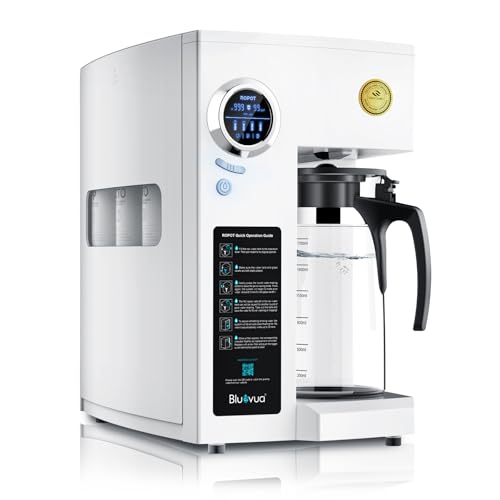
| Countertop Powerhouse | Purpose: Countertop home drinking water purification | Contaminant reduction / disinfection: RO + UV + filters reduce TDS, PFAS, fluoride, metals, chlorine, etc. | Installation / portability: Countertop, plug-in, no plumbing required | VIEW LATEST PRICE | Read Our Analysis |
| SimPure Whole House 2-Stage Water Filter System |

| Whole-Home Protector | Purpose: Whole-house pre/post-filtration for household use | Contaminant reduction / disinfection: Sediment + CTO carbon removes sediment, chlorine, taste/odor, some metals | Installation / portability: Hard-plumbed whole-house install (fits standard pipelines; DIY possible) | VIEW LATEST PRICE | Read Our Analysis |
| Bluewater Cleone Classic Under-Sink Reverse Osmosis System |

| Premium Under‑Sink | Purpose: Under-sink RO drinking water system | Contaminant reduction / disinfection: Reverse osmosis removes ~99% contaminants (PFAS, metals, microplastics) | Installation / portability: Under-sink installation (plumbing required; professional recommended) | VIEW LATEST PRICE | Read Our Analysis |
| Aqua Ionizer Deluxe 5.0 Home Alkaline Water Ionizer |

| Alkaline Wellness | Purpose: Home alkaline water ionizer (drinking/household uses) | Contaminant reduction / disinfection: Activated carbon + electrochemical ionization reduces chlorine/solids and alters water chemistry | Installation / portability: Countertop/under-sink compatible ionizer (home countertop unit; not for well water) | VIEW LATEST PRICE | Read Our Analysis |
More Details on Our Top Picks
P&G Portable Water Purification Packets (12-Pack)
In case you need a lightweight, no-fuss solution for emergency and outdoor water treatment, the P&G Purifier of Water 12-pack is made for you: each EPA-registered packet treats 2.5 gallons in 30 minutes, removing 99.9999% of bacteria and 99.99% of viruses so you can carry a handful of packets instead of extra water. You’ll mix a packet into cloudy or clear water, wait 30 minutes as contaminants settle, then pour or filter for use. Twelve packets fit a small kit, weigh about a pound, and expire August 2027. They’re ideal for camping, travel to untreated areas, and preparedness kits.
- Purpose:Emergency/portable water disinfection
- Contaminant reduction / disinfection:EPA-registered disinfectant (kills bacteria/viruses)
- Installation / portability:Portable, no installation (single-use packets)
- Maintenance / consumables:Single-use packets; expiration date (Aug 2027)
- Capacity / output metric:One packet treats 2.5 gallons (10 L) per use; 12 packets total
- Certifications / approvals:EPA-registered disinfectant
- Additional Feature:Lightweight single‑dose packets
- Additional Feature:Visible purification process
- Additional Feature:30‑minute treatment time
Bluevua RO100ROPOT-UV 6-Stage Countertop Reverse Osmosis System
Should you want a portable, installation-free purifier that still knocks out the toughest contaminants, the Bluevua RO100ROPOT-UV delivers: its 6-stage system combines a 0.0001 μm RO membrane, UV sterilization and remineralization to cut TDS, PFAS, fluoride, heavy metals and chlorine while returning healthy minerals—ideal for renters, small kitchens, or anyone who prefers bottled-quality water without plumbing changes. You’ll plug in this countertop unit and use a high-borosilicate glass carafe to avoid plastic contamination. Expect a 2:1 pure-to-drain ratio, auto standby power savings, filter life of 12–24 months, and display monitoring for filter and water quality. ClimatePartner certified and WQA-tested.
- Purpose:Countertop home drinking water purification
- Contaminant reduction / disinfection:RO + UV + filters reduce TDS, PFAS, fluoride, metals, chlorine, etc.
- Installation / portability:Countertop, plug-in, no plumbing required
- Maintenance / consumables:Replaceable filters/RO membrane every ~12–24 months
- Capacity / output metric:Approx. 2:1 pure-to-drain ratio; countertop production (no daily GPD specified)
- Certifications / approvals:WQA tested; NSF/ANSI/CAN 372 lead-free certification; SGS tested; ClimatePartner certified
- Additional Feature:Glass carafe included
- Additional Feature:2:1 pure-to-drain ratio
- Additional Feature:Plug‑in portable countertop
SimPure Whole House 2-Stage Water Filter System
Choose the SimPure Whole House 2-Stage should you want clear visual monitoring and reliable filtration for the entire home: its two transparent 10″ housings let you spot sediment buildup at a glance while the MPP sediment and high-performance CTO carbon cartridges remove sand, rust, chlorine, odors, and discoloration for up to roughly 80,000 gallons a year. You’ll get whole-home protection—drinking, cooking, bathing, cleaning—via 1″ NPT brass ports, brass fittings and 2×2 O-rings for leak-proof sealing. Filters fit standard 10″ x 4.5″ cartridges; sediment lasts 6–12 months, carbon 3–6 months. Install DIY with included accessories; BPA-free construction protects appliances.
- Purpose:Whole-house pre/post-filtration for household use
- Contaminant reduction / disinfection:Sediment + CTO carbon removes sediment, chlorine, taste/odor, some metals
- Installation / portability:Hard-plumbed whole-house install (fits standard pipelines; DIY possible)
- Maintenance / consumables:Sediment filter 6–12 months; carbon 3–6 months; replaceable cartridges
- Capacity / output metric:Up to ~80,000 gallons per year (whole-home capacity)
- Certifications / approvals:Manufactured under quality control by established brand (no specific NSF listed)
- Additional Feature:Clear visual housings
- Additional Feature:1″ NPT brass connections
- Additional Feature:Protects home appliances
Bluewater Cleone Classic Under-Sink Reverse Osmosis System
Provided you want a space-saving, high-performance under-sink system that tackles PFAS, microplastics, heavy metals and chemical residues, the Bluewater Cleone Classic is built for modern kitchens and compact setups. You’ll get a Scandinavian-designed RO unit with a single-handle faucet and compact 4.5-gallon tank that fits most cabinets. Its 3-stage reverse osmosis removes up to 99% of contaminants and carries NSF/ANSI 58 certification. It yields up to 50 gallons per day with a 35% recovery rate and automatic membrane flush. Plan for professional under-sink installation, expect manufacturer warranty support, and observe Amazon’s 30-day return option.
- Purpose:Under-sink RO drinking water system
- Contaminant reduction / disinfection:Reverse osmosis removes ~99% contaminants (PFAS, metals, microplastics)
- Installation / portability:Under-sink installation (plumbing required; professional recommended)
- Maintenance / consumables:RO membrane and filters (periodic replacement; service/warranty support)
- Capacity / output metric:Up to 50 gallons per day (RO production)
- Certifications / approvals:NSF/ANSI 58 certified
- Additional Feature:Compact Scandinavian design
- Additional Feature:35% recovery rate
- Additional Feature:Automatic membrane flush
Aqua Ionizer Deluxe 5.0 Home Alkaline Water Ionizer
Should you want customizable alkaline and acidic water with strong antioxidant potential, the Aqua Ionizer Deluxe 5.0 delivers—its adjustable pH (4.5–10.5) and up to -600 mV ORP make it ideal for households that want customized water for drinking, cooking, cleaning, and skincare. You’ll get seven settings: four variable alkaline, two acidic presets, and one purified mode. Activated carbon filtration treats up to 4,000 liters, removing chlorine, odors, and dissolved solids, but it’s not compatible with well water. Micro-clustered alkaline water promotes faster absorption and less “full” feeling. The unit self-cleans via polarity reversal and plate washing roughly every ten gallons.
- Purpose:Home alkaline water ionizer (drinking/household uses)
- Contaminant reduction / disinfection:Activated carbon + electrochemical ionization reduces chlorine/solids and alters water chemistry
- Installation / portability:Countertop/under-sink compatible ionizer (home countertop unit; not for well water)
- Maintenance / consumables:Activated carbon filter (treats ~4,000 L); automatic self-cleaning plates
- Capacity / output metric:Filter treats ~4,000 liters; adjustable pH output (flow depends on source)
- Certifications / approvals:(No specific third‑party certification listed) filter and self‑cleaning described
- Additional Feature:Seven pH settings
- Additional Feature:Up to -600 mV ORP
- Additional Feature:Self‑cleaning polarity reversal
Factors to Consider When Choosing Home Water Purifier Comparisons
While you’re comparing home water purifiers, focus on the filtration technology and how effectively it removes the specific contaminants you care about. Check installation and maintenance requirements, plus capacity and flow rate to make sure the system fits your household’s needs. Finally, factor in long-term operating costs so you’re not surprised at replacement filters or energy use down the line.
Filtration Technology Type
Because different technologies target different contaminants, choosing the right filtration type comes down to matching your water quality issues with what each method actually removes. Should you be dealing with dissolved salts, heavy metals, fluoride, or many organics, reverse osmosis (RO) uses an ultra-fine membrane to lower TDS. For microbiological concerns, ultrafiltration and microfiltration block bacteria and protozoa while leaving dissolved minerals intact. Activated carbon handles chlorine, VOCs, taste and odor problems, and some pesticides but won’t reliably remove inorganic dissolved contaminants like fluoride or nitrates. UV disinfection inactivates bacteria and viruses without chemicals but won’t remove particulates or dissolved pollutants. Multi-stage systems combine sediment, carbon, membranes, UV, and remineralization to balance safety, taste, and mineral retention.
Contaminant Removal Efficiency
Should you want a purifier that actually protects your household, start upon checking verified removal rates and matching them to the contaminants in your water. Look for systems claiming ≥99.99% virus and ≥99.999% bacteria removal or specific log reductions (3-log, 6-log, etc.). Match technology to need: RO and ultrafiltration handle dissolved solids and many microbes/chemicals; activated carbon targets chlorine, VOCs, taste and odor; UV inactivates microbes but won’t remove particulates. Verify claims with NSF/ANSI certifications (e.g., 53 for health contaminants, 58 for RO) and lab results for lead, arsenic, PFAS, fluoride. Consider treatment capacity, contact time or UV dose required for stated log reductions, plus finished-water metrics like TDS reduction, percent recovery, and any remineralization.
Installation And Maintenance
In case you’re considering options, check installation type and ongoing upkeep up front so the system fits your space, skills, and budget: confirm whether it’s countertop, under‑sink, whole‑house, or point‑of‑use, what plumbing or electrical work and drain access are needed, how much cabinet or wall clearance and tank space you’ll require, and who will handle routine tasks like filter swaps, membrane flushing, sanitizing cycles, and monitoring—plus factor in replacement frequency and cost, ease of getting parts, self‑cleaning features or service indicators, and the warranty/tech‑support network for long‑term serviceability. Measure space and plan access for filter changes. Compare replacement intervals, parts availability, and whether you can swap filters without tools. Prefer systems with flushing routines, service lights, or remote diagnostics. Verify warranty coverage and local technician availability for repairs to avoid downtime and surprise costs.
Capacity And Flow Rate
Match a purifier’s capacity and flow rate to your household’s real use to avoid running out of treated water or waiting at the tap. Estimate daily needs—drinking, cooking, appliances—and compare to the unit’s daily capacity (gallons per day or liters per hour) so you won’t face shortages during peak demand. Check flow rate (gpm or L/min) for taps and fridges; units under 0.5 gpm can struggle with simultaneous use. For whole-house systems, verify continuous and peak flow ratings against showers and washers to prevent pressure drops. For membrane systems, consider recovery rate and storage tank size—low recovery needs bigger tanks. Finally, match filter life and rated throughput to your annual consumption to avoid frequent replacements and downtime.
Long-Term Operating Costs
You’ve picked a purifier with the right capacity and flow, but ongoing costs can quickly eclipse the purchase price provided you don’t plan for them. Estimate annual parts needs—sediment/carbon cartridges every 3–12 months, RO membranes every 2–3 years—multiply unit prices to get yearly replacement costs. Add electricity for powered systems: convert device wattage and daily runtime to kWh/year and apply your local rate. For RO or other reject systems, calculate extra municipal water from the reject ratio (e.g., 2:1) and its annual cost. Include periodic professional service or labor for inspections, sanitization, or membrane swaps using local rates. Finally, budget indirect costs—storage, tubing, seals, plumbing repairs and a 5–10% contingency of the initial system cost.
Certifications And Testing
Because certifications and lab tests spell out what a purifier actually removes, you should make them your initial checkpoint while comparing systems. Look for NSF/ANSI numbers that match your concerns—42 for taste/chlorine, 53 for health contaminants like lead, 58 for RO units, and 401 for emerging contaminants. Verify independent lab reports or third‑party verification showing percent reductions (for example, ≥99.99% virus removal or ppm/ppb drops for lead, fluoride, PFAS). Check each certification’s scope: which contaminants, influent concentrations, flow rates, and water chemistry were tested, since real‑world efficacy can vary. Confirm material approvals (NSF/ANSI 61, NSF/ANSI/CAN 372) so components won’t leach. Finally, review certificate details and dates to make certain current, model‑specific coverage.
