

You’ll get neat, durable finishes fast with six top trims for 2026: a 118″ flexible silicone quarter-round for wet areas, a grey wood-look PVC junction strip for wider gaps, a brown wood-grain self-adhesive PVC for doorways, a 16.4 ft TPE baseboard quarter-round for curves, a 39″ heat‑resistant silicone quarter-round for tight spots, and a paintable white peel-and-stick quarter-round for clean lines—each balances flexibility, adhesive strength, and wear resistance, and the guide that follows shows whenever to pick each.
| Flexible Peel-and-Stick Quarter Round Silicone Trim (118″) |

| Best for Bathrooms | Material: Premium silicone | Shape / Profile: Quarter-round / U-shape (concave) | Adhesive Type: Double-sided expanded adhesive backing | VIEW LATEST PRICE | Read Our Analysis |
| Self-Adhesive PVC Floor Transition Strip (Grey Wood) |
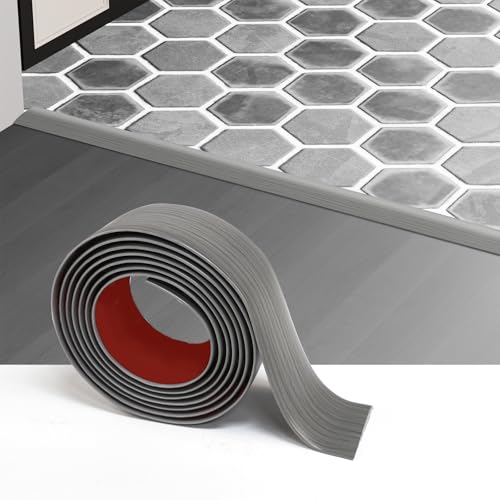
| Best for Transitions | Material: High-density PVC | Shape / Profile: Flat transition strip / low-profile threshold | Adhesive Type: Pre-applied peel-and-stick adhesive | VIEW LATEST PRICE | Read Our Analysis |
| Self-Adhesive Wood Grain Floor Transition Strip (Brown) |

| Best for Wood Floors | Material: High-quality PVC | Shape / Profile: Flat/rounded floor transition strip (2 in width) | Adhesive Type: Self-adhesive with strong acrylic tape | VIEW LATEST PRICE | Read Our Analysis |
| Frienda Peel-and-Stick Flexible Baseboard Quarter Round Trim |

| Best Durability | Material: TPE (thermoplastic elastomer) | Shape / Profile: Quarter-round baseboard molding | Adhesive Type: Self-adhesive peel-and-stick backing | VIEW LATEST PRICE | Read Our Analysis |
| Flexible Self-Adhesive Quarter Round Molding Trim |

| Best Value | Material: Silicone / rubber (flexible silicone) | Shape / Profile: Quarter-round molding (0.5″ W × 0.5″ H) | Adhesive Type: Strong double-sided adhesive strips (peel-and-stick) | VIEW LATEST PRICE | Read Our Analysis |
| Flexible Peel-and-Stick Quarter Round Molding (White) |
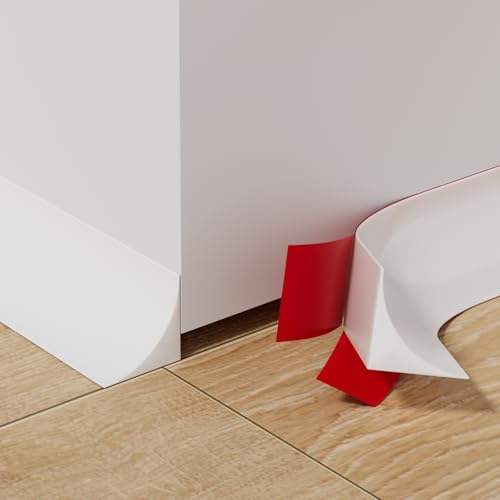
| Best All-Purpose | Material: High-quality silicone | Shape / Profile: Quarter-round profile (0.6″ W × 0.6″ H) | Adhesive Type: Self-adhesive strips on both sides (peel-and-stick) | VIEW LATEST PRICE | Read Our Analysis |
More Details on Our Top Picks
Flexible Peel-and-Stick Quarter Round Silicone Trim (118″)
Choose this flexible peel-and-stick quarter round silicone trim should you want a durable, watertight finish that’s easy to install in wet areas—its 118-inch length and U-shaped, 9/16″ profile molds to right-angle gaps around tubs, countertops, and stairs, while premium elastic silicone resists stains and deformation better than PVC so it keeps edges clean and protected. You’ll stick the 7/16″ doubled-sided expanded adhesive to smooth surfaces—tile, glass, wood, metal—after cleaning and using the included promoter. Heat the backing briefly in cold weather, press firmly, and repeat along the length. It blocks moisture, dust, grease, and pests, and looks neat.
- Material:Premium silicone
- Shape / Profile:Quarter-round / U-shape (concave)
- Adhesive Type:Double-sided expanded adhesive backing
- Flexibility / Bendability:Flexible silicone for corners and curves
- Water Resistance:Hydrophobic / stain-resistant / suitable for bathrooms
- Installation Preparation / Tips:Clean dry surface; apply adhesive promoter; warm with hairdryer in cold
- Additional Feature:Doubled-sided expanded adhesive
- Additional Feature:Long 118-inch length
- Additional Feature:Manufacturer 24-hour support
Self-Adhesive PVC Floor Transition Strip (Grey Wood)
Provided you need a low-profile, waterproof connector that installs in minutes, the Greymond Self-Adhesive PVC Floor Connector Strip (Grey Wood) is built for quick fixes and long-term wear. You’ll get a 4 ft × 1.57 in, 0.12 in-thick PVC strip that fills gaps up to 1.57 in and keeps trips down with a 0.14 in profile. Peel-and-stick backing lets you clean with alcohol, cut to size, warm for curves, and press firmly. It’s scratch- and stain-resistant, paintable, lightweight, and suitable for vinyl, wood, tile, carpet edges, showers, and uneven floors.
- Material:High-density PVC
- Shape / Profile:Flat transition strip / low-profile threshold
- Adhesive Type:Pre-applied peel-and-stick adhesive
- Flexibility / Bendability:Can be warmed with hairdryer to flex for curves
- Water Resistance:Waterproof / moisture-proof
- Installation Preparation / Tips:Clean with alcohol; cut to size; warm with hairdryer for curves
- Additional Feature:Grey wood finish
- Additional Feature:Low-profile 0.14″ height
- Additional Feature:Paintable & lightweight
Self-Adhesive Wood Grain Floor Transition Strip (Brown)
Should you want a quick, low‑effort way to bridge gaps between similar or differing floor surfaces, the self‑adhesive brown wood‑grain threshold strip is ideal — it sticks down with strong acrylic tape and installs in minutes through cutting to length, peeling the backing, and pressing into place. You’ll get a 2 m, 5 cm PVC strip with a realistic brown wood grain that covers gaps up to 1 cm between wood, laminate, or tile and fits under doors. Clean and dry surfaces before sticking; reverse any bend and weigh flat, and warm with a hot air blower in cold conditions for easier handling.
- Material:High-quality PVC
- Shape / Profile:Flat/rounded floor transition strip (2 in width)
- Adhesive Type:Self-adhesive with strong acrylic tape
- Flexibility / Bendability:Flexible PVC; can be softened with hot air if cold
- Water Resistance:Implicit water resistance (PVC, for floors) — keep surface dry recommended
- Installation Preparation / Tips:Clean floor; may reverse-bend to flatten; use hot air if cold
- Additional Feature:78.7-inch length
- Additional Feature:Reverse-bend flattening tip
- Additional Feature:Recommended gap ≤0.39″
Frienda Peel-and-Stick Flexible Baseboard Quarter Round Trim
Assuming you want an easy, no-fuss way to hide gaps and protect high-traffic edges, the Frienda peel-and-stick quarter-round is built for DIYers and busy spaces—its flexible TPE material sticks on smoothly, bends around corners without creasing, and gives a paintable, polished finish that holds up to daily wear. You get a 16.4 ft continuous strip, 1/2-inch thickness, that covers gaps, door thresholds, stairs, and window sills. It’s moisture- and crack-proof, warp-resistant, and self-adhesive, so you won’t need special tools. The refined corner design creates seamless shifts while protecting floors in homes, offices, and gyms.
- Material:TPE (thermoplastic elastomer)
- Shape / Profile:Quarter-round baseboard molding
- Adhesive Type:Self-adhesive peel-and-stick backing
- Flexibility / Bendability:Flexible TPE that bends without creases
- Water Resistance:Moisture-proof / crack-proof
- Installation Preparation / Tips:Peel-and-stick—no tools required; press firmly
- Additional Feature:Extra-long 16.4 ft
- Additional Feature:Paintable finish
- Additional Feature:TPE crack- and warp-resistant
Flexible Self-Adhesive Quarter Round Molding Trim
Should you want a quick, waterproof trim that adapts to curves and tight corners, this 39″ flexible self-adhesive quarter round is a smart choice for DIYers and pros alike. You’ll peel-and-stick the 0.5″ x 0.5″ silicone strip onto clean, dry surfaces, cutting to fit stairs, countertops, backsplashes, or bathroom fixtures. Its strong double-sided adhesive holds well, and you can add extra glue for heavy-use areas. The durable, heat- and corrosion-resistant rubber maintains shape and cleans easily. Use it to seal gaps along floors, window sills, tubs, and baseboards for a smooth, professional finish.
- Material:Silicone / rubber (flexible silicone)
- Shape / Profile:Quarter-round molding (0.5″ W × 0.5″ H)
- Adhesive Type:Strong double-sided adhesive strips (peel-and-stick)
- Flexibility / Bendability:Bendable rubber/silicone for curves and edges
- Water Resistance:Waterproof / corrosion-resistant
- Installation Preparation / Tips:Clean, dry, smooth surface; cut to size; optional extra glue for durability
- Additional Feature:Compact 39-inch size
- Additional Feature:Manufacturer luya (model DST-1501)
- Additional Feature:Heat-resistant silicone
Flexible Peel-and-Stick Quarter Round Molding (White)
Should you want a fast, waterproof finishing touch for tricky curves and stair edges, this flexible peel-and-stick quarter round is a top pick for 2026 — its bendable silicone profile lets you press it into inside 90° corners and around rounded surfaces without fuss. You get 9.8′ lengths of a 0.6″ x 0.6″ quarter-round with two 90° bottom edges to fit tight inside corners. The high-quality silicone is stable, heat- and corrosion-resistant, and truly waterproof. Self-adhesive strips make installation minutes work; add extra adhesive at joints for permanent, watertight seams on stairs, showers, counters, and sills.
- Material:High-quality silicone
- Shape / Profile:Quarter-round profile (0.6″ W × 0.6″ H)
- Adhesive Type:Self-adhesive strips on both sides (peel-and-stick)
- Flexibility / Bendability:Stable, bendable silicone for corners and curves
- Water Resistance:Waterproof / heat-resistant / corrosion-resistant
- Installation Preparation / Tips:Peel-and-stick; press within minutes; optional extra adhesive at connections
- Additional Feature:Two 90° bottom edges
- Additional Feature:9.8-foot length
- Additional Feature:Both-sides adhesive strips
Factors to Consider When Choosing Floor Trims
Whenever choosing floor trims, you’ll want to compare materials and durability to match traffic and longevity needs. Consider installation methods, water resistance, and how much gap the trim must cover, plus whether it needs to flex for curved surfaces. These factors will help you pick trims that fit the room and hold up over time.
Material And Durability
Because floor trims face different stresses depending on room conditions, you’ll want materials that guarantee moisture and corrosion resistance, appropriate hardness and flexibility, and good UV/temperature stability. For wet areas choose silicone, TPE, or PVC that resist swelling, warping, and corrosion from prolonged water exposure. Match hardness to function: softer elastomers absorb impacts and follow curves, while firmer PVC or wood alternatives handle abrasion and loads. Check temperature and UV ratings so trims keep shape and color in sunlit or heated rooms. Compare surface wear—scratch and stain resistance matter in high traffic. Finally, weigh expected lifespan against cost through reviewing tensile strength, tear resistance, and manufacturer durability ratings to make certain the trim meets your service-life needs.
Installation Method Options
In case you want a secure, long-lasting finish, pick an installation method that matches your floor type, traffic levels, and environmental conditions. Peel-and-stick trims work fast but demand a clean, dry, smooth surface; allow at least 24 hours after cleaning for surfaces to fully dry and use pre-applied adhesive or double-sided tape as directed. Mechanical fasteners—screws, nails, or clips—give stronger hold on uneven or high-traffic floors but need pilot holes, proper anchors, and precise alignment. Use heat-softening with a hairdryer or heat gun on flexible PVC or silicone trims to improve adhesion and bend around curves without creasing. For gaps or height differences, choose floating trims or ones with flexible backing to permit movement. In wet areas, add waterproof sealant at joints and use moisture-rated adhesives and fasteners.
Water Resistance Needs
Should your floors see moisture, pick trims made and rated to resist it—silicone, TPE, or PVC trims won’t swell or rot like wood or low-grade composites, and marine-grade or waterproof adhesives and sealed joints keep water from seeping under finishes. You should confirm the trim’s surface is hydrophobic or stain-resistant so cleaning stays simple and waterborne staining or bacterial growth is minimized in kitchens and bathrooms. Check adhesive backing and seams for wet-environment ratings; marine-grade or specialized acrylic adhesives outperform basic peel-and-stick tapes. For spots with standing water or heavy splash, choose continuous-profile trims and plan to apply additional sealant at seams to maintain a true watertight barrier. Also verify temperature tolerance—heat-resistant silicone withstands thermal cycling that can degrade lesser materials.
Gap Coverage Capacity
After handling moisture resistance, you’ll want to confirm that the trim actually covers the gaps you have. Measure the maximum gap width and depth in inches or millimeters before buying, since many trims specify a coverage limit (for example, up to 1/2 in or 1.57 in) and won’t conceal larger voids. Match the trim’s profile thickness and cross‑section to the gap geometry—quarter‑round, U‑shaped, and flat connectors differ in coverage depth and required clearance. Allow for uneven floors by choosing trims with compressible backing or tolerances and plan extra overlap at ends or joints for continuous coverage. Account for underfloor obstructions by measuring the tallest point the trim must clear, and verify the edge profile and adhesive can form a continuous seal.
Flexibility And Shape
Whenever you’re choosing trims for curved runs, corners, or uneven floors, flexibility and shape matter because they determine how well a profile conforms without creasing or leaving gaps. You’ll want trims in silicone, TPE, or soft PVC for tight curves; they bend around corners without creasing, improving seal integrity. Pick quarter-round or U-shaped profiles for 90° inside corners and uneven surfaces—they sit smoother and bulge less than fully round trims. Match cross-section dimensions (around 9/16″–3/8″ or 0.5″–0.6″) to the gap size so the trim can flex adequately. Consider material elasticity and thickness: thinner, elastic trims mold easily but can compress over time; thicker elastomers resist deformation but take more force to shape. Account for temperature sensitivity—cold stiffens many flexible trims.
Adhesive Strength Requirements
Because the bond is what keeps trims in place under daily use, you need to match adhesive type, coverage, and strength to the substrate, traffic, and environment. For porous surfaces like unfinished wood or concrete, use wider beads, stronger adhesives, or mechanical anchoring; smooth nonporous substrates (tile, glass, metal) work well with thin double-sided or pressure-sensitive tapes. Calculate bond needs according to load: decorative, low-traffic trims can manage 10–20 N/25 mm peel, while high-traffic edges should target 30+ N/25 mm shear/peel or supplemental adhesive. Choose adhesives rated for expected temperature and humidity ranges (silicone or acrylic for −20°C to 80°C and moisture resistance). Improve cold-install bonds through preheating surfaces or using promoters, and reinforce seams, corners, and ends with extra sealant.
Aesthetic And Finish
Strong adhesion keeps trims in place, but their look finishes the job—so you’ll want to pick profiles and finishes that complement the room’s lines and palette. Choose a profile—quarter‑round, flat changeover, T‑molding, or overlap strip—that echoes your design so trims feel intentional, not patched on. Match color or finish to the dominant floor tone or to baseboards and door trim; contrasts can work but use them sparingly. Consider texture and sheen—matte, satin, gloss, or wood grain—to help trims blend with adjacent surfaces and hide scuffs or adhesive marks. Size trims so they fill gaps without creating a step or looking oversized. In case you’ll paint or stain, pick a paintable material (PVC, TPE, silicone) that accepts finish and resists warping.
Maintenance And Cleaning
Assuming you want trims that stay looking good and performing well, factor routine maintenance and safe cleaning into your choice: wipe surfaces regularly with a damp microfiber cloth and mild detergent, avoid abrasive pads or harsh solvents on silicone and PVC, and mop up standing water at seams to prevent adhesive failure or mold. You should inspect seams and adhesive edges every 6–12 months for lifting, cracks, or gaps and reapply a compatible adhesive or sealant whenever needed to keep a watertight bond. Use pH-neutral cleaners on sensitive trims, and should flexible profiles stiffen in cold conditions, warm them gently with a hairdryer before cleaning or reseating to avoid cracking and improve pliability.
