

You’ll want a reliable pilot kit that matches your fuel and control style; top picks for 2026 include Duluth Forge (remote conversion for vented logs), Hearth Products MVRC255 (flame‑modulating remote), RealFyre SPK‑26 (manual On/Pilot/Off), Duheri ODS pilot with thermocouple, and ProCom NVDWA2 (LP conversion and safety kit). Each offers distinct safety and installation features, so confirm fuel type, valve compatibility, and ODS needs before buying - keep going to get model details and installation tips.
| Duluth Forge Remote Control Pilot Kit for Gas Logs |

| Best for Convenience | Fuel Type: Vented gas (compatible with natural gas setups; converts vented gas logs) | Intended Use / Application: Converts vented gas log sets to remote-control operation (residential fireplaces) | Pilot / Ignition Included: Pilot control system included (remote pilot kit) | VIEW LATEST PRICE | Read Our Analysis |
| Hearth Products MVRC255 Flame Modulating Pilot Kit |

| Flame Control Leader | Fuel Type: Natural gas | Intended Use / Application: Indoor built-in fireplaces (vent-free or natural vent) | Pilot / Ignition Included: Complete 90° pilot assembly included | VIEW LATEST PRICE | Read Our Analysis |
| RealFyre SPK-26 Manual On/Pilot/Off Valve (Natural Gas) |

| Reliable Classic | Fuel Type: Natural gas | Intended Use / Application: Fireplace standing pilot valve for natural gas logs/stoves | Pilot / Ignition Included: Standing pilot (manual) included as part of valve | VIEW LATEST PRICE | Read Our Analysis |
| Duheri Gas Fireplace ODS Pilot Assembly with Thermocouple |
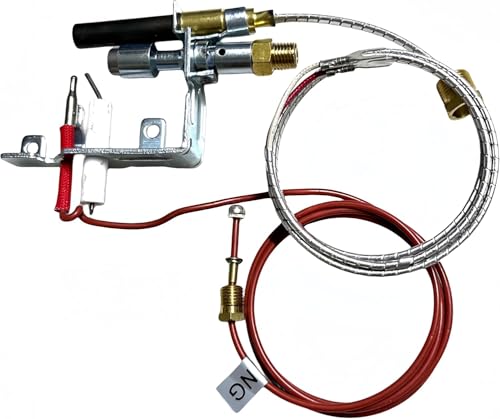
| Plug-and-Play Replacement | Fuel Type: LP (propane) - pilot assembly specified for LP | Intended Use / Application: Vent-free/ventless gas fireplaces and gas log sets (replacement pilot assembly) | Pilot / Ignition Included: Complete pilot assembly with igniter and thermocouple included | VIEW LATEST PRICE | Read Our Analysis |
| ProCom Safety Pilot & LP Conversion Kit (NVDWA2) |

| Best for LP Conversion | Fuel Type: LP (conversion kit for vented logs to LP) | Intended Use / Application: Conversion and manual valve kit for ProCom vented logs (residential) | Pilot / Ignition Included: Safety pilot/manual valve included as part of conversion kit | VIEW LATEST PRICE | Read Our Analysis |
More Details on Our Top Picks
Duluth Forge Remote Control Pilot Kit for Gas Logs
Provided you want simple, reliable remote control for your vented gas logs, the Duluth Forge VLRK-00 is a solid choice - it converts existing setups to remote operation so you can ignite and adjust the fire from your seating area without crawling to the fireplace. You’ll find it compatible with most vented gas log sets and designed to integrate into existing installations. The pilot system delivers dependable, consistent ignition and operation, while built-in safety mechanisms reduce accident risk. Installation is straightforward: the kit includes all necessary components and detailed instructions so you can set it up quickly and confidently.
- Fuel Type:Vented gas (compatible with natural gas setups; converts vented gas logs)
- Intended Use / Application:Converts vented gas log sets to remote-control operation (residential fireplaces)
- Pilot / Ignition Included:Pilot control system included (remote pilot kit)
- Control Type:Remote control operation (electronic remote kit)
- Safety Features:Built-in safety mechanisms to prevent accidents (safety pilot controls)
- Installation / Compatibility Notes:Easy installation; includes necessary components; fits most vented gas log sets
- Additional Feature:Remote conversion capability
- Additional Feature:Includes all components
- Additional Feature:Quick, simple installation
Hearth Products MVRC255 Flame Modulating Pilot Kit
Should you want precise flame control for a built-in, vent-free or naturally vented gas fireplace, the Hearth Products MVRC255 is a strong choice - its flame-modulating pilot and included Acumen RCK-M remote let you raise or lower the flame without rewiring or extra power sources. You’ll get a polished, modern 90° pilot assembly designed for natural gas and household-room use, with a Standard Maxitrol valve rated to 175°F and up to 85,000 BTU output. Installation’s straightforward provided you follow manufacturer directions and local codes. The kit weighs 4.86 pounds, carries a limited warranty, and has a mixed 3.6-star user rating.
- Fuel Type:Natural gas
- Intended Use / Application:Indoor built-in fireplaces (vent-free or natural vent)
- Pilot / Ignition Included:Complete 90° pilot assembly included
- Control Type:Remote control with flame modulation (RCK-M remote included)
- Safety Features:Flame-modulating safety pilot kit (safety pilot features)
- Installation / Compatibility Notes:Straightforward installation; follow manufacturer directions and codes; fits indoor fireplaces
- Additional Feature:Flame height modulation
- Additional Feature:High 85,000 BTU output
- Additional Feature:Polished finish styling
RealFyre SPK-26 Manual On/Pilot/Off Valve (Natural Gas)
Provided you want a simple, reliable pilot control for a natural-gas fireplace, the RealFyre SPK-26 delivers with its manual On/Pilot/Off operation and standing pilot ignition, making it ideal for homeowners or installers who value straightforward, long-lasting performance in a low-profile package. You’ll appreciate its compact 4 x 5 x 12-inch housing and 1.86-pound weight that fit tight firebox spaces. Operation is manual On/Pilot/Off with a standing pilot for dependable starts. It’s built for natural gas and durable use, carries a manufacturer warranty (check details), and scores 4.3/5 from buyers seeking basic, trusted performance.
- Fuel Type:Natural gas
- Intended Use / Application:Fireplace standing pilot valve for natural gas logs/stoves
- Pilot / Ignition Included:Standing pilot (manual) included as part of valve
- Control Type:Manual On/Pilot/Off valve (manual control)
- Safety Features:Standing pilot design for reliable ignition and safety (manual pilot control)
- Installation / Compatibility Notes:Low-profile design for fireplace fit; compatible with natural gas setups; straightforward plumbing
- Additional Feature:Low-profile housing
- Additional Feature:Durable construction
- Additional Feature:Compact physical dimensions
Duheri Gas Fireplace ODS Pilot Assembly with Thermocouple
Should you run a vent-free gas fireplace and want a straightforward replacement pilot that’s ready to drop in, the Duheri 14D0473 ODS pilot assembly is a strong pick-its integrated 34″ thermocouple and 750 mV thermopile deliver reliable pilot sensing and millivolt output to operate the main valve without extra parts. You’ll get a complete assembly (pilot burner, ceramic igniter, thermocouple/thermopile) with a 0.22 injector and 3/8-24 UNF gas connection, sized for LP systems and common brands like Monessen and Majestic. Installation is tool-free, lightweight, and backed with a seller warranty; igniter wiring isn’t included.
- Fuel Type:LP (propane) - pilot assembly specified for LP
- Intended Use / Application:Vent-free/ventless gas fireplaces and gas log sets (replacement pilot assembly)
- Pilot / Ignition Included:Complete pilot assembly with igniter and thermocouple included
- Control Type:Manual/thermocouple-operated pilot assembly (thermopile/thermocouple)
- Safety Features:Thermocouple/thermopile and ODS-type pilot assembly (safety shutoff features)
- Installation / Compatibility Notes:Direct-replacement design; no modifications required; compatible with multiple stove/log brands
- Additional Feature:Integrated thermopile output
- Additional Feature:Ceramic spark igniter
- Additional Feature:Long 34″ thermocouple
ProCom Safety Pilot & LP Conversion Kit (NVDWA2)
Should you run ProCom vented logs and want a quick, reliable LP conversion, the NVDWA2 Safety Pilot & LP Conversion Kit is built for you - it drops in with simplified installation and includes a knob shield made specifically for Glass B gas. You’ll find it’s a complete conversion solution engineered for ProCom vented logs, offering improved compatibility and dependable performance. Installation is straightforward, minimizing downtime. The kit uses high-quality materials for durability and years of service. Packaged compactly at 9.0 x 5.0 x 5.0 inches and weighing 3.0 lb, it’s easy to store and handle.
- Fuel Type:LP (conversion kit for vented logs to LP)
- Intended Use / Application:Conversion and manual valve kit for ProCom vented logs (residential)
- Pilot / Ignition Included:Safety pilot/manual valve included as part of conversion kit
- Control Type:Manual valve with conversion hardware (manual control)
- Safety Features:Safety pilot and valve kit designed for safe LP conversion (safety-focused components)
- Installation / Compatibility Notes:Designed for ProCom vented logs; includes knob shield for specific models; simplified install
- Additional Feature:LP conversion included
- Additional Feature:Knob shield included
- Additional Feature:ProCom vented-log fit
Factors to Consider When Choosing Fireplace Safety Pilot Kits
Upon selecting a pilot kit, you should initially confirm compatibility with your fireplace model and the fuel type it uses. Check the available pilot control options and the safety mechanisms included so you get the level of control and protection you need. Also verify the kit’s heat output capacity to make certain it matches your fireplace’s performance requirements.
Compatibility With Fireplace
How will you know a pilot kit will work with your fireplace? Start by confirming the fuel type-natural gas and propane/LP kits and thermocouples aren’t interchangeable. Next, match the ignition system: standing pilot assemblies differ from electronic or continuous pilots, and kits are built for one or the other. Measure available space and compare valve/pilot assembly dimensions, thread sizes (for example 3/8-24 UNF), and low-profile housing to guarantee a physical fit and proper piping connections. Check whether your appliance is vented or vent-free, since vent-free units often need ODS sensors and different pilot assemblies. Finally, make certain the kit’s control interface-manual on/pilot/off, flame modulation, or remote-ready-aligns with your fireplace’s wiring and valve requirements.
Fuel Type Requirements
Because fuel type determines component sizing, pressure ratings, and sealing materials, you need a pilot kit that’s explicitly rated for either natural gas (NG) or liquid propane (LP). Confirm the kit matches your fuel: thermocouple/thermopile outputs and orifice sizes differ between NG and LP. Make certain orifice and injector flow characteristics meet the fuel’s pressure and BTU needs so the pilot flame is correct and combustion stays safe. Use valves and seals specified for the fuel because LP runs at higher pressure than NG; mismatched components risk leaks or failures. Verify fuel-line fittings and thread types align with your supply standard and pressure ratings to avoid improper connections. Finally, verify the pilot thermopile/thermocouple millivolt output matches the valve’s operating range.
Pilot Control Options
Choose pilot controls that match how you intend to use the fireplace and how it’s installed: simple manual On/Pilot/Off valves give reliable, mechanical control but require you to be near the valve, while remote-control systems add convenience through letting you ignite and adjust the flame from seating areas. Pick flame-modulating pilots in case you prefer variable flame height and better heat control rather than simple on/off operation. Consider power needs: millivolt thermopile/thermocouple systems run without batteries and operate main valves directly, whereas electronic remotes and modulators might need batteries or household power. Make certain the pilot control design includes proper safety interlocks-flame sensing and automatic shutoff-so gas flow stops should the pilot go out. Match features to installation and usage.
Safety Mechanisms Included
Whenever you evaluate pilot kits, focus on the built‑in safety mechanisms that stop gas flow and confirm a reliable flame-these are the features that actually prevent leaks, asphyxiation, and unsafe repeated ignition attempts. You’ll want a thermocouple or thermopile sensor to detect pilot heat and cut gas should the flame goes out (thermocouples ~20–30 mV, thermopiles ~300–750 mV). In vent‑free systems, choose an oxygen depletion sensor (ODS) that shuts gas off once room O2 drops near 18%–19%. Flame rectification electrodes give rapid electrical confirmation and close the valve within seconds upon flame loss. Manual On/Pilot/Off valves require holding to light and rely on sensors. Electronic controls and remotes add timed lockouts, diagnostics, and automatic retry/shutdown to prevent unsafe ignition attempts.
Heat Output Capacity
Match the pilot kit’s BTU/hr and thermal output to your fireplace’s maximum burner input so the pilot can reliably light and sustain the main flame without being undersized or wastefully oversized. Check your fireplace’s listed maximum burner input and choose a pilot rated to support that range-residential systems can span from a few thousand up to about 85,000 BTU/hr. Make certain the pilot/thermopile produces sufficient millivolts or thermal power at the expected flame size to actuate the main gas valve under full load. Account for altitude and fuel type (natural gas vs. LP), since both change effective heat output and pilot flame characteristics. Should you want modulation, select a pilot with documented capability across the fireplace’s full heat-output range to guarantee reliable control.
Installation Complexity Level
Because installation can range from a quick DIY swap to a licensed gas-fit job, you should evaluate the tool, skill, and compliance demands before buying a pilot kit. Initially, check whether the kit uses only basic hand tools or needs specialized gear like a flaring tool, pipe cutter, or multimeter - specialized tools add time and risk. Confirm whether gas-line work or conversion between natural gas and LP is required; cutting, sealing, and pressure testing typically demand certified skills. Note whether the pilot is electronic (needs wiring or batteries) or fully mechanical, since electronics often require electrical know-how. See whether the assembly is direct-fit or needs trimming, bracket work, or new tubing routing. Finally, verify local codes or manufacturer rules that might mandate licensed inspection or certification.
Build Quality Materials
Check the materials before you buy: corrosion‑resistant metals like brass or stainless for assemblies and valve bodies, high‑grade alloys and proper insulation for thermocouples/thermopiles, heat‑resistant ceramics (and platinum‑tipped contacts where used) for ignition parts, and thick‑wall, properly threaded fittings and tubing to minimize leaks. You’ll want thermocouples/thermopiles that hold stable millivolt output and are insulated against heat drift. Inspect valve bodies and moving parts for precision machining and heavy‑duty construction so seals and tolerances reduce leakage and wear. Verify fittings use standard thread forms (for example 3/8‑24 UNF or equivalent) and thick walls to tolerate repeated installs. Choosing durable materials up front means fewer failures, safer operation, and longer service life.
Warranty And Support
Whenever you evaluate warranty and support, focus on duration, coverage, and the practical steps for getting help so you’re not left with a nonworking pilot or surprise costs; confirm how long parts and labor are protected, whether replacements are included, what actions void coverage (like improper installation or unauthorized repairs), provided the warranty transfers with a home sale, and whether you’ll need to ship units back or can get in‑field service from authorized technicians. Check length (one year vs multi‑year) and whether the warranty covers pilot assembly, thermocouple/thermopile, and valve, plus replacement versus repair. Verify exclusions-wrong fuel, poor maintenance, unauthorized fixes-and confirm technical support availability (phone/email), clear installation guides, and the service process so you can resolve issues without voiding coverage.
