

Like finding the right key for an old lock—your modem and router have to match or nothing turns, and many homes still rely on DSL. You’ll want gear that handles ADSL/VDSL, gives decent Wi‑Fi, and won’t force frequent upgrades. I’ll outline six practical options across budgets and features so you can match tech, ISP provisioning, and future needs—stick around to see which fits your setup.
| CenturyLink C4000LG CenturyLink Modem by GreenWave (Renewed) |

| High-Speed DSL | DSL Compatibility: ADSL and VDSL (supports all ADSL & VDSL profiles up to 17a) | Dual/Multiple Wi‑Fi Bands: Dual-band (2.4 & 5 GHz) with 802.11ac (implied dual-band) | Ethernet Ports / Wired Gigabit Support: DSL port + (implied Gigabit Ethernet ports for LAN typical of modem routers; supports WAN-to-LAN throughput) | VIEW LATEST PRICE | Read Our Analysis |
| TP-Link Archer AXE75 AXE5400 WiFi 6E Router |

| Best for Gaming | DSL Compatibility: Requires a modem for most ISPs (router only) — compatible with ISP setups (not a built-in DSL modem) | Dual/Multiple Wi‑Fi Bands: Tri‑band (2.4, 5, 6 GHz) — Wi‑Fi 6E | Ethernet Ports / Wired Gigabit Support: Gigabit Ethernet ports (router — standard wired LAN ports; modem required separately) | VIEW LATEST PRICE | Read Our Analysis |
| TP-Link Archer AX55 AX3000 Wi‑Fi 6 Router |

| Balanced Performance | DSL Compatibility: Works with major ISPs (router only) — requires separate modem for DSL | Dual/Multiple Wi‑Fi Bands: Dual‑band (2.4 & 5 GHz) — Wi‑Fi 6 | Ethernet Ports / Wired Gigabit Support: Four Gigabit Ethernet LAN ports | VIEW LATEST PRICE | Read Our Analysis |
| Centurylink C3000A Wireless DSL Modem Router (Renewed) |

| Budget-Friendly DSL | DSL Compatibility: Integrated VDSL2 and ADSL2+ modem | Dual/Multiple Wi‑Fi Bands: Dual‑band (2.4 & 5 GHz) — 802.11ac | Ethernet Ports / Wired Gigabit Support: Four Gigabit Ethernet ports | VIEW LATEST PRICE | Read Our Analysis |
| CenturyLink Technicolor C1100T Vdsl2 Modem 802.11n WiFi Router |
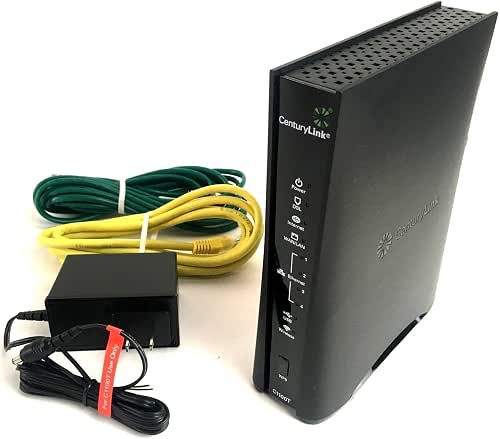
| Reliable & Stable | DSL Compatibility: VDSL2 (with vectoring) and ADSL2/ADSL2+ | Dual/Multiple Wi‑Fi Bands: Single‑band 2.4 GHz Wi‑Fi N (note: focused on 2.4 GHz 802.11n) — primarily 2.4 GHz with 2×2 MIMO | Ethernet Ports / Wired Gigabit Support: 1 Gigabit WAN + 4 Gigabit LAN ports | VIEW LATEST PRICE | Read Our Analysis |
| C4000LZ Gigabit xDSL Wi‑Fi Modem Router (Renewed) |

| Future-Ready Wi‑Fi | DSL Compatibility: xDSL Gigabit modem router (compatible with CenturyLink and DSL/fiber services) | Dual/Multiple Wi‑Fi Bands: Dual‑band (2.4 & 5 GHz) — Wi‑Fi 6 (802.11ax), backward compatible | Ethernet Ports / Wired Gigabit Support: Five Gigabit ports (1 WAN + 4 LAN) | VIEW LATEST PRICE | Read Our Analysis |
More Details on Our Top Picks
CenturyLink C4000LG CenturyLink Modem by GreenWave (Renewed)
Should you want a refurbished DSL modem that balances fast Wi‑Fi and broad DSL compatibility, the CenturyLink C4000LG (renewed through GreenWave) is a strong pick. You get one DSL port supporting ADSL and VDSL up to 17a, so it’ll work with most ISPs offering DSL. Wireless totals up to 3 Gbps (600 + 2400 Mbps) using 2‑stream links and 160 MHz channels for compatible devices. It uses 802.11ac with 1024‑QAM, enhancing rates roughly 38% over 256‑QAM, and a networking‑optimized dual‑core CPU improves wireless, wired, and WAN‑to‑LAN throughput. It’s sold refurbished through GreenWave.
- DSL Compatibility:ADSL and VDSL (supports all ADSL & VDSL profiles up to 17a)
- Dual/Multiple Wi‑Fi Bands:Dual-band (2.4 & 5 GHz) with 802.11ac (implied dual-band)
- Ethernet Ports / Wired Gigabit Support:DSL port + (implied Gigabit Ethernet ports for LAN typical of modem routers; supports WAN-to-LAN throughput)
- Security / Network Management:Standard wireless security (802.11ac) — renewed unit; implied WPA/WPA2 support
- Designed for Home Use / Multi‑Device Activities:Designed for home broadband use, improved wireless/wired performance for multi-device usage
- Renewed / Retail Condition Note (where applicable):Renewed (refurbished) by GreenWave
- Additional Feature:160 MHz channel support
- Additional Feature:1024‑QAM modulation
- Additional Feature:Dual‑core networking CPU
TP-Link Archer AXE75 AXE5400 WiFi 6E Router
Should you want low-latency performance for gaming and 4K/8K streaming across many devices, the TP-Link Archer AXE75 (AXE5400) is a strong pick because it adds a clean 6 GHz band alongside 5 GHz and 2.4 GHz, giving you higher throughput and less congestion. You’ll get tri-band Wi‑Fi 6E with up to 5400 Mbps aggregate (2402/2402/574 Mbps), 160 MHz channels, OFDMA, and a 1.7 GHz quad-core CPU with 512 MB RAM to handle many clients. It supports OneMesh, WPA3, HomeShield basics, and VPN server/client. You’ll need a modem for ISP connections.
- DSL Compatibility:Requires a modem for most ISPs (router only) — compatible with ISP setups (not a built-in DSL modem)
- Dual/Multiple Wi‑Fi Bands:Tri‑band (2.4, 5, 6 GHz) — Wi‑Fi 6E
- Ethernet Ports / Wired Gigabit Support:Gigabit Ethernet ports (router — standard wired LAN ports; modem required separately)
- Security / Network Management:WPA3 support, HomeShield security features, VPN server/client support
- Designed for Home Use / Multi‑Device Activities:Designed for gaming, streaming, browsing, video chat — home use emphasis
- Renewed / Retail Condition Note (where applicable):New retail product (no built‑in DSL modem; standard retail router)
- Additional Feature:Tri‑Band Wi‑Fi 6E
- Additional Feature:1.7 GHz quad‑core CPU
- Additional Feature:OneMesh whole‑home support
TP-Link Archer AX55 AX3000 Wi‑Fi 6 Router
In case you want a solid Wi‑Fi 6 router that augments speeds for gaming and multiple 4K streams without breaking the bank, the TP‑Link Archer AX55 delivers AX3000 performance (2402 Mbps on 5 GHz and 574 Mbps on 2.4 GHz) along with OFDMA/MU‑MIMO to keep latency low for everyone on your network. You’ll get four high‑gain antennas with beamforming for broader, focused coverage, USB 3.0, EasyMesh support and VPN server/client capability. Target Wake Time helps device battery life, and improved cooling reduces throttling. HomeShield provides basic security, parental controls and QoS; TP‑Link support is available over phone and online.
- DSL Compatibility:Works with major ISPs (router only) — requires separate modem for DSL
- Dual/Multiple Wi‑Fi Bands:Dual‑band (2.4 & 5 GHz) — Wi‑Fi 6
- Ethernet Ports / Wired Gigabit Support:Four Gigabit Ethernet LAN ports
- Security / Network Management:TP‑Link HomeShield (premium/free), VPN server/client support
- Designed for Home Use / Multi‑Device Activities:Targeted at gaming/streaming/live feeds and multi‑client environments
- Renewed / Retail Condition Note (where applicable):New retail product (standard TP‑Link router)
- Additional Feature:Target Wake Time (TWT)
- Additional Feature:USB 3.0 port
- Additional Feature:Four external high‑gain antennas
Centurylink C3000A Wireless DSL Modem Router (Renewed)
Provided that you want a refurbished all-in-one that avoids monthly rental fees and handles VDSL2/ADSL2+ lines, the Centurylink C3000A (renewed) is a solid pick for gamers and streamers who need dual-band 802.11ac performance with smart band steering. You’ll get WPA3 security, EasyConnect onboarding, and EasyMesh support to expand coverage. Four Gigabit Ethernet ports handle wired consoles or NAS, while the integrated VDSL2/ADSL2+ modem simplifies setup with compatible ISPs. Refurbished units are professionally inspected under Amazon Renewed, carry a replacement/refund guarantee, and have a 3.8/5 average from 177 customer reviews.
- DSL Compatibility:Integrated VDSL2 and ADSL2+ modem
- Dual/Multiple Wi‑Fi Bands:Dual‑band (2.4 & 5 GHz) — 802.11ac
- Ethernet Ports / Wired Gigabit Support:Four Gigabit Ethernet ports
- Security / Network Management:Built‑in firewall, WPA3, EasyConnect, EasyMesh
- Designed for Home Use / Multi‑Device Activities:Designed for gaming, HD streaming, multi‑device usage
- Renewed / Retail Condition Note (where applicable):Renewed (pre‑owned/refurbished; Amazon Renewed)
- Additional Feature:Smart band steering
- Additional Feature:Four Gigabit Ethernet
- Additional Feature:EasyConnect onboarding
CenturyLink Technicolor C1100T Vdsl2 Modem 802.11n WiFi Router
Should you want a straightforward, carrier-ready modem/router that just works on CenturyLink’s DSL, the Technicolor C1100T delivers VDSL2 with vectoring plus ADSL2/2+ fallback to keep speeds and stability up on mixed lines. You’ll get G.vector and G.INP to reduce crosstalk and retransmits, improving reliability on noisy lines. The 2.4 GHz 802.11n 2×2 MIMO Wi‑Fi suits smart devices and HD streaming, while one Gigabit WAN and four auto-MDI/MDIX Gigabit LAN ports handle low-latency gaming and NAS. TR-069 zero-touch provisioning and IPv4/IPv6 support simplify setup and future compatibility for CenturyLink deployments.
- DSL Compatibility:VDSL2 (with vectoring) and ADSL2/ADSL2+
- Dual/Multiple Wi‑Fi Bands:Single‑band 2.4 GHz Wi‑Fi N (note: focused on 2.4 GHz 802.11n) — primarily 2.4 GHz with 2×2 MIMO
- Ethernet Ports / Wired Gigabit Support:1 Gigabit WAN + 4 Gigabit LAN ports
- Security / Network Management:TR‑069/operator provisioning, remote management, standard security (G.INP/G.vector focus)
- Designed for Home Use / Multi‑Device Activities:Suitable for smart home devices, phones, HD streaming (CenturyLink-focused home deployment)
- Renewed / Retail Condition Note (where applicable):Carrier‑issued retail device (CenturyLink hardware; new/standard)
- Additional Feature:G.vector + G.INP
- Additional Feature:TR‑069 remote provisioning
- Additional Feature:Dual‑stack IPv4/IPv6
C4000LZ Gigabit xDSL Wi‑Fi Modem Router (Renewed)
Should you need a renewed modem router that handles multiple 4K streams and heavy gaming without breaking the bank, the Zyxel C4000LZ delivers Wi‑Fi 6 dual‑band performance with Smart Connect to keep devices on the best band. You’ll get up to 2.5 Gbps download and 1 Gbps upload, backward compatibility with older Wi‑Fi standards, and five gigabit ports (1 WAN + 4 LAN). Adaptive QoS prioritizes traffic, and a user‑friendly interface eases setup. Compatible with CenturyLink and fiber services, this renewed unit offers solid security and reliable coverage via a powerful antenna array, though reviews average 3.6/5.
- DSL Compatibility:xDSL Gigabit modem router (compatible with CenturyLink and DSL/fiber services)
- Dual/Multiple Wi‑Fi Bands:Dual‑band (2.4 & 5 GHz) — Wi‑Fi 6 (802.11ax), backward compatible
- Ethernet Ports / Wired Gigabit Support:Five Gigabit ports (1 WAN + 4 LAN)
- Security / Network Management:Advanced security protocols and user interface for management
- Designed for Home Use / Multi‑Device Activities:Suited for homes/offices, multi‑device high‑demand activities (ultra‑HD streaming, gaming)
- Renewed / Retail Condition Note (where applicable):Renewed (refurbished) — Zyxel renewed listing
- Additional Feature:Smart Connect single SSID
- Additional Feature:Up to 2.5 Gbps download
- Additional Feature:Dynamic QoS traffic prioritization
Factors to Consider When Choosing a DSL Router
Upon selecting a DSL router, you’ll want to confirm DSL compatibility and supported standards so it works with your line and ISP. Check wireless speed/bands and wired ports/throughput for the devices and activities you plan to run, and don’t overlook processor power for stable performance under load. Finally, make sure the router offers current security protocols and features to keep your network protected.
DSL Compatibility And Standards
Because DSL comes in several distinct flavors, you should match the router’s modem to the exact DSL standard your ISP uses (ADSL/ADSL2/ADSL2+, VDSL/VDSL2) to get the expected speed and range. Check supported DSL profiles (Annex A/B/M/L, ITU‑T profiles) and the modem’s maximum attainable line rates so they align with your plan and copper quality. Look for vectoring and G.INP on VDSL2 models to cut crosstalk and retransmissions, improving stability. Confirm the device supports your ISP’s provisioning and management protocols (TR‑069 or zero‑touch) for remote setup and firmware updates. In case you’ve got older copper or expect upgrades, pick a modem with wide profile coverage and backward compatibility to avoid replacing hardware after network changes.
Wireless Speed And Bands
Provided that you desire smooth streaming and responsive gaming, pick a router with modern Wi‑Fi standards (Wi‑Fi 6/802.11ax or Wi‑Fi 5/802.11ac) and the right band mix for your home, since newer protocols and multiple frequency bands directly affect peak throughput, device density, and real‑world range. Choose dual‑band for basic separation (2.4 GHz for IoT and range, 5 GHz for speed); consider tri‑band should you need an extra 5 GHz or 6 GHz for lots of high‑bandwidth clients. Compare aggregate and per‑band rates and support for wide channels (80/160 MHz) to gauge peak wireless speeds. Also confirm advanced features like 1024‑QAM, OFDMA, and MU‑MIMO for efficient multi‑device performance, and match band choices to your home layout and client capabilities.
Wired Ports And Throughput
Check the router’s wired capabilities to make sure your LAN won’t choke on high-bandwidth tasks: count the number and type of Ethernet ports (look for at least four Gigabit ports), confirm the WAN/DSL port supports gigabit or multi‑gig backhaul, and consider link aggregation or multi‑gig LAN/WAN if you need higher combined throughput; also keep in mind that a slow CPU or basic switch can bottleneck sustained WAN‑to‑LAN speeds, so prioritize models with sturdy internal switching and QoS/traffic‑shaping to keep latency‑sensitive wired devices performing well. Beyond port counts, verify each port’s true throughput and whether the router supports LACP for bonding. Check CPU benchmarks and vendor specs for sustained transfer rates. Make sure wired QoS lets you prioritize gaming, VoIP, NAS backups and streaming simultaneously without drops.
Security Protocols And Features
Whenever you shop for a DSL router, prioritize security features that actually reduce risk: look for WPA3 wireless encryption, a stateful firewall with SPI, automatic signed firmware updates, and options for guest/VLAN isolation so IoT and visitors stay segmented from your main LAN. You should also pick devices with IDS/IPS or anomaly detection to spot and block suspicious traffic before it reaches devices. Make sure the router supports secure, automatic firmware delivery to patch vulnerabilities and rejects unsigned images. Check for thorough logging and remote management that requires strong authentication—multi-factor or certificate-based—so administrative access stays locked down. These capabilities collectively lower your attack surface and make compromise and lateral movement far less likely.
Processor And Performance
Because your router’s CPU and memory determine how well it handles real traffic, prioritize models with faster multi‑core processors and ample RAM to keep latency low and throughput high. Choose dual‑ or quad‑core chips at higher GHz to improve WAN‑to‑LAN throughput and handle simultaneous DSL, wired, and wireless streams. More RAM and networking‑optimized architectures reduce packet drops under many clients, VPN, QoS, or NAT sessions. Hardware offloads for NAT, AES VPN encryption, and QoS sustain higher sustained throughput by relieving the main CPU, crucial once you approach gigabit‑class speeds. Pick processors that support OFDMA, MU‑MIMO, and 160 MHz channels so wireless features aren’t bottlenecked by compute. Check benchmarks and rated aggregate throughput to avoid thermally constrained, underpowered models.
Future Proofing And Support
While you shop, prioritize routers that support current and emerging wireless standards (Wi‑Fi 6/6E or at least 802.11ac) and higher‑order modulation like 1024‑QAM so your network keeps pace as devices progress; also confirm multi‑core CPUs, ample RAM, wide channel support (160 MHz), and multi‑band operation to avoid performance bottlenecks as device counts and feature demands grow. You should also verify ongoing software and security support—regular firmware updates, WPA3, and published patch timelines—to keep threats at bay. Favor modular, standards‑based interoperability (OneMesh/EasyMesh, IPv6, TR‑069, common VPN protocols) so the router integrates with advancing ISP provisioning and mesh expansions. Choosing hardware with headroom plus a clear update policy maximizes longevity and protects your home network investment.
